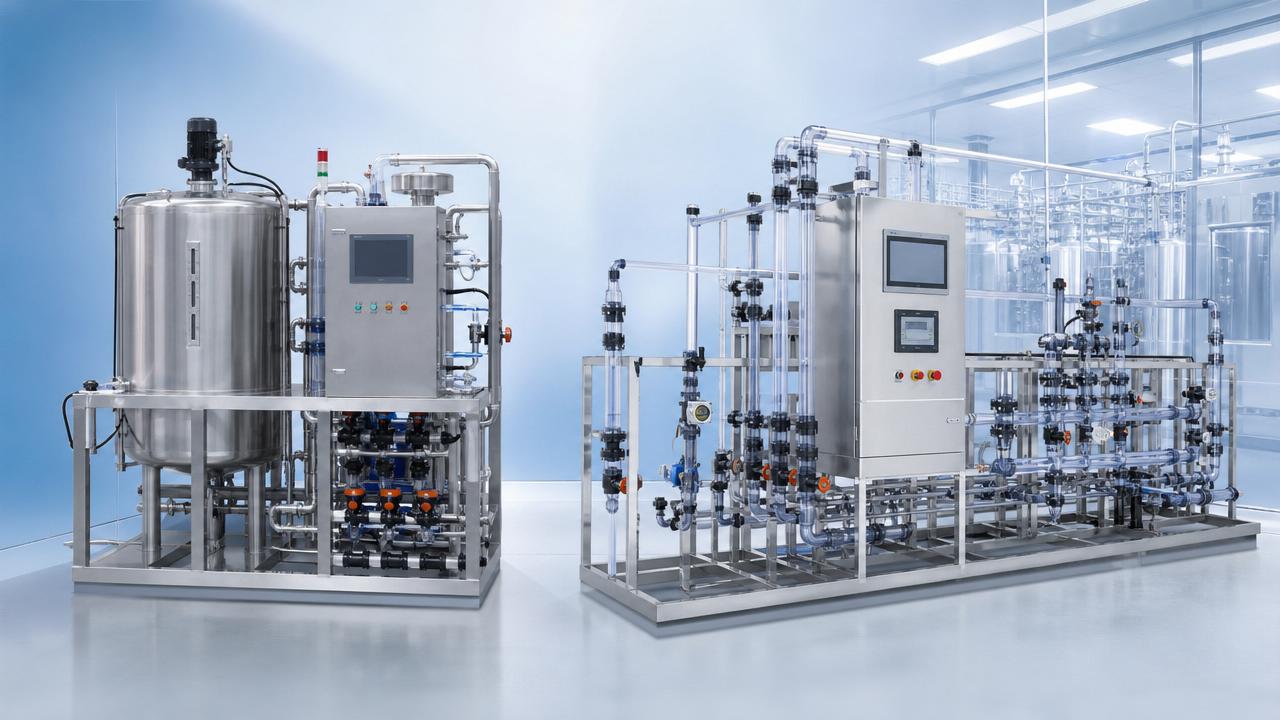
Hypochlorous Acid Machine Types: Batch vs Continuous Systems and Their Use Cases
Choosing the right hypochlorous acid machine often comes down to one practical question.
Do you need flexible output in cycles, or steady production around the clock?
That decision affects stability, labor demand, maintenance planning, and downstream integration.
In real projects, the best hypochlorous acid machine is not always the largest or most automated one.
It is the system that matches water quality, production rhythm, compliance targets, and site conditions.
This comparison explains how batch and continuous designs work, where each fits best, and what to review before approval.
What Defines a Batch Hypochlorous Acid Machine
A batch hypochlorous acid machine produces solution in separate, controlled cycles.
Each run starts with dosing, electrolysis, monitoring, and collection into a storage tank.
This structure is simple to understand and easier to manage in variable-demand environments.
It also helps when operators need to switch concentrations or sanitize small production areas.
- Best for intermittent output schedules
- Suitable for pilot lines and decentralized use
- Usually lower initial investment
- Easier concentration adjustment between batches
From a selection standpoint, batch systems work well when production peaks are short and predictable.
They are common in small appliance workshops, healthcare support areas, and localized disinfection stations.
What Defines a Continuous Hypochlorous Acid Machine
A continuous hypochlorous acid machine runs with uninterrupted feed, reaction, and discharge.
It is designed for stable output over long operating hours.
This makes it attractive for automated production environments and central disinfection supply systems.
More importantly, continuous systems reduce the stop-start variability seen in some batch operations.
- Best for constant demand profiles
- Stronger fit for PLC and line integration
- Better for centralized piping networks
- Often higher efficiency at scale
This type of hypochlorous acid machine is often favored in food processing, hospital utilities, and larger sanitation systems.
Where uptime matters, continuous production usually offers a clearer operational advantage.
Batch vs Continuous: The Core Evaluation Points
A useful comparison starts with output logic, not marketing claims.
The more obvious signal is this.
If the site consumes disinfectant unevenly, batch may be enough.
If the line depends on a constant chemical profile, continuous usually wins.
Use Cases by Industry and Operating Pattern
Application fit matters more than a generic equipment ranking.
When Batch Systems Make More Sense
- Small healthcare rooms needing scheduled surface disinfection
- Kitchen and bathroom appliance assembly with shift-based sanitation
- R&D validation lines with changing concentration targets
- Multi-site operations using independent local units
When Continuous Systems Make More Sense
- Food and beverage sanitation with repetitive daily loads
- Hospital utility systems requiring stable dosing
- Industrial disinfection processes tied to conveyors or CIP loops
- Facilities targeting lower labor input through automation
For manufacturers serving appliances, health care, disinfection, and clean energy segments, mixed demand is common.
That is why some sites use batch units for satellite points and continuous units for central supply.
Water Quality, Pretreatment, and System Reliability
No hypochlorous acid machine performs well if feed water quality is unstable.
This is often overlooked during fast procurement cycles.
Conductivity, hardness, suspended solids, and microbial load all affect cell life and output consistency.
In practical terms, pretreatment can influence reliability as much as the electrolysis module itself.
This is where broader water infrastructure becomes relevant.
Projects that also need reverse osmosis, ultrafiltration, water softening, or PLC-based automation may benefit from integrated planning.
A supporting solution such as Water Treatment Equipment can be relevant when raw water quality varies by region or process.
That is especially true for overseas projects, hospitals, catering businesses, and industrial pure water preparation.
Automation, Compliance, and Total Cost Considerations
Selection decisions should not stop at output volume.
A hypochlorous acid machine also needs to support traceability, alarm logic, and operating discipline.
Continuous systems often align better with PLC intelligent control and fully automatic operation.
Batch systems, however, may reduce unnecessary runtime in low-demand settings.
This means total cost should include more than purchase price.
- Energy use during actual operating hours
- Electrode and membrane replacement cycles
- Operator attention and training needs
- Downtime risk from poor water pretreatment
- Validation and documentation workload
Where supplier capability matters, integrated engineering support is a real advantage.
Teams often prefer partners with design, manufacturing, installation, commissioning, and after-sales coverage under one system approach.
A Practical Selection Checklist
Before approving any hypochlorous acid machine, check these points in order.
- Define hourly and daily demand, including peaks.
- Review raw water conductivity and pretreatment needs.
- Confirm target concentration stability and control tolerance.
- Check whether the unit must connect with PLC or plant SCADA.
- Estimate maintenance access, spare parts speed, and service response.
- Compare lifecycle cost, not only initial budget.
If upstream water conditions are complex, supporting assets like Water Treatment Equipment may strengthen long-term output consistency.
That can be valuable in sectors where stable disinfection performance directly affects compliance and production continuity.
Final Takeaway
The right hypochlorous acid machine depends on how the site really operates, not on a generic preference for one design.
Batch systems fit flexible, smaller, or multi-point use.
Continuous systems fit stable, automated, and higher-throughput operations.
Once water quality, automation level, and service support are reviewed together, the selection path becomes much clearer.
Start with demand profile, verify feed water conditions, and choose the hypochlorous acid machine that supports reliable performance over time.
NEWS
 Next-Generation Hypochlorous Acid System Solution for Sterile Self-Service Laundromats Officially Released
- Upgrade in Healthy Living: Hypochlorous Acid Generators Become the New Standard for Luxury Villas
- The Ultimate Solution to Pet Shop Disinfection Challenges! XIAOYA Hypochlorous Acid Generator: Safe Pet Protection with Peace of Mind
 Hypochlorous Acid Generator vs Sodium Hypochlorite Generator
- Hypochlorous Acid Generator Supplier
Leave us a message

Xiaoya Group was founded in 1979,expert in the electrolyzed water industry.
Get in Touch
*We respect your confidentiality and all information are protected.