news
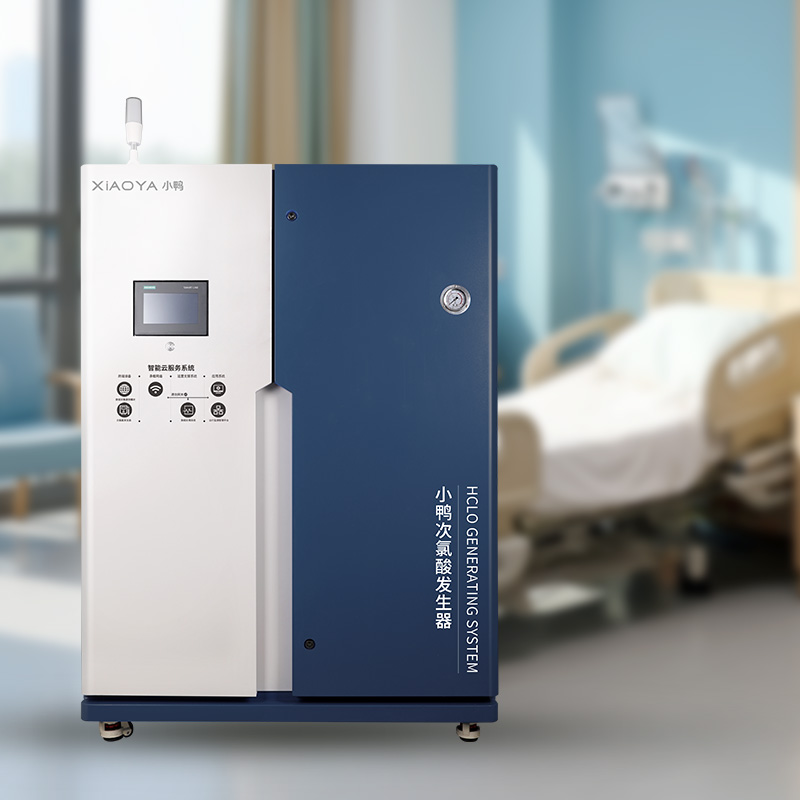
Why do people keep talking about residual control in a Dentistry Hypochlorous AcidGenerator?
Because in dental disinfection, what remains after generation matters almost as much as what gets generated in the first place. When buyers look at a Dentistry Hypochlorous AcidGenerator, they often focus on whether it can produce hypochlorous acid water at all. The more practical question is whether the device can keep unwanted residue, unstable byproducts, or poorly balanced output under control.
That matters in oral care settings because dental tools, rinse systems, trays, and nearby surfaces are used in places where cleanliness is non-negotiable and irritation is a real concern. If residuals are poorly managed, the disinfecting solution may become less consistent, harsher than expected, or simply less reliable from one batch to the next.
What does “residual control” actually mean here?
In simple terms, residual control is the ability of the generator to produce a disinfecting solution with a stable, appropriate composition while limiting leftover substances that can affect safety or performance. For hypochlorous acid generation, this usually comes down to how well the machine controls factors like concentration, pH balance, water quality response, and the overall electrolysis process.
Consumers do not need to become chemists, but they should understand one point: a generator is not automatically “good” just because it makes disinfectant. A better unit produces a solution that is repeatable, suitable for the intended use, and less likely to leave behind problematic chemical load on treated items or in the treatment environment.
Why is this especially important in dental environments?
Dentistry is a sensitive use case. Instruments and surfaces come into close contact with the mouth, gums, and sometimes compromised tissue. That means a disinfection solution must do two things at once: reduce microbial risk and stay controlled enough for the environment where it is used.
If residual control is weak, several problems can follow:
- Output strength may swing from batch to batch.
- The solution may be more irritating than expected.
- Equipment compatibility can become harder to predict.
- Staff may assume they are disinfecting effectively when the chemistry is no longer in the right range.
For a home buyer or small clinic buyer, that translates into a very practical concern: you want a machine that behaves consistently, not one that gives good results only under perfect conditions.
Is residue the same thing as available chlorine concentration?
Not exactly. Available chlorine concentration tells you how much active disinfecting capacity is present, usually expressed in ppm. Residual control is broader. It includes whether that concentration is being produced in a controlled way and whether the surrounding chemical balance stays appropriate for the intended application.
A device can advertise a concentration range and still perform poorly if the pH drifts too far, if the water source changes the output too much, or if the electrolysis process leaves the solution less stable than the user expects. So concentration matters, but it should never be the only number you look at.
What should a consumer check before buying?
Look for evidence that the machine is designed to keep output under control, not just to generate liquid. The most useful checkpoints are these:
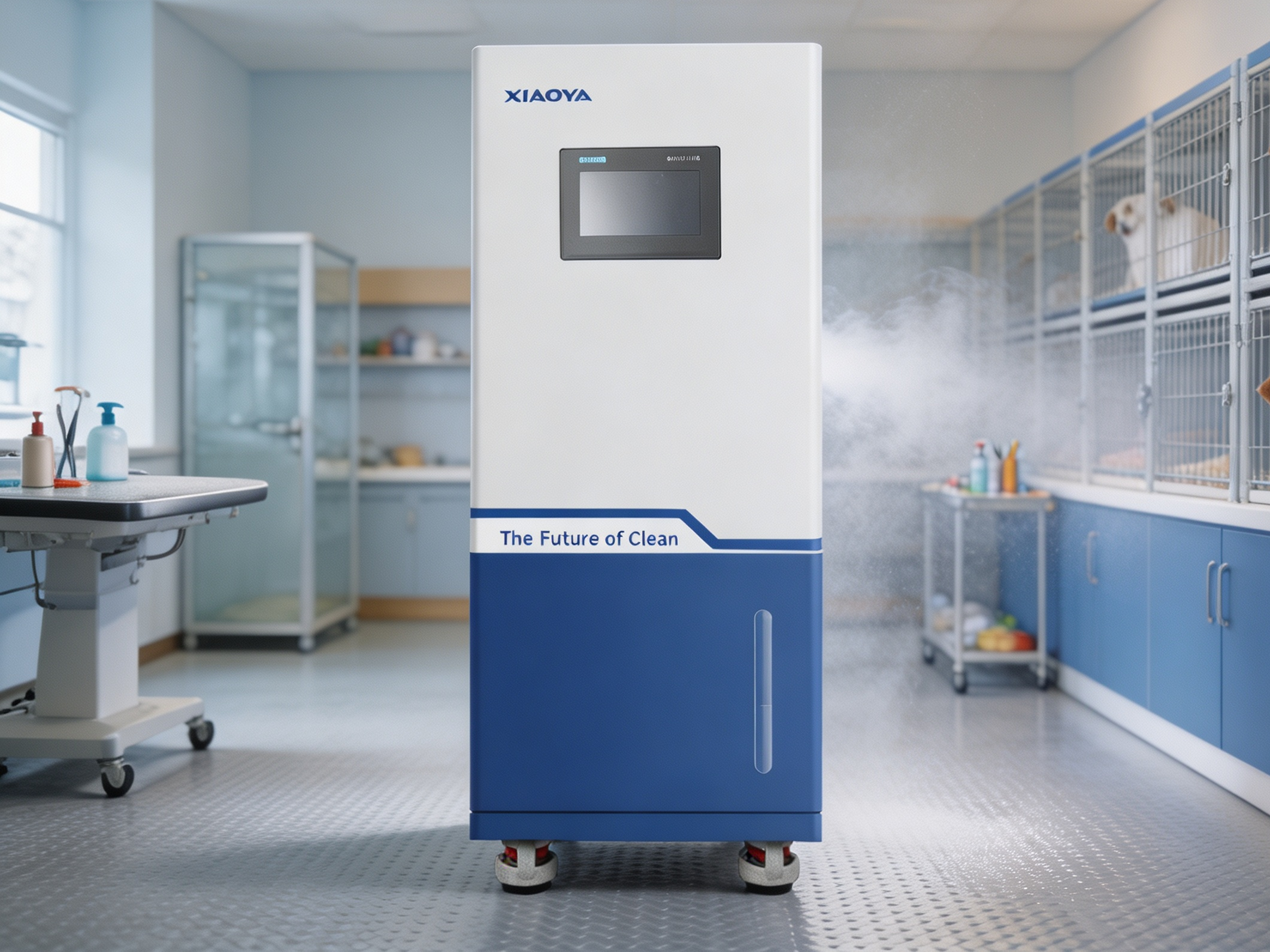
For example, a product such as Hypochlorous Acid Generator for the Pet Industry (P100-4G) shows the kind of details buyers should pay attention to: pH 5.0 to 6.5, customizable available chlorine concentration from 10 to 80 ppm depending on the scenario, an automatic control system, and an electrolyzer service life rated at 5000 hours or more. Even though that model is aimed at pet-related settings, the buying logic is relevant: stable control features tell you more than a marketing claim about “strong sterilization.”
Can poor residual control damage user trust even if the machine still works?
Absolutely. This is one of the most common disconnects in disinfection equipment. A machine may still turn on, run, and produce liquid, yet no longer deliver output with the same reliability. For the buyer, that is a hidden failure mode. You may not notice it immediately, but the practical signs show up over time: odd smell changes, inconsistent treatment results, more frequent manual adjustments, or uncertainty about whether the solution can be used for sensitive applications.
That is why residual control should be treated as part of product quality, not a technical extra.
Does a low-residue solution mean no maintenance is needed?
No. Low residue after use and low maintenance are not the same thing. Some hypochlorous acid solutions are valued because they break down relatively quickly after use, which can help reduce leftover chemical burden in the treated area. But the generator itself still needs proper operation and upkeep.
A buyer should check:
- Whether the water source matches the machine’s requirements.
- Whether the electrolyte is used as specified.
- Whether the unit has a clear operating interface.
- Whether core parts have a defined service life.
If those basics are ignored, residual control tends to drift, even in a well-designed machine.
Are certifications a shortcut for judging residual control?
They are useful, but they are not a shortcut. Certifications and institutional references can support confidence in a product family or disinfection approach, especially when they come from recognized bodies. They do not replace reading the actual operating parameters of the device you plan to buy.
If a product mentions organizations such as FDA, EPA, CDC, or public health institutions, the next step is to pair that information with the machine’s concrete specifications. Does it state the pH range? Does it explain concentration range? Does it indicate how the system controls output? That combination is far more useful than a badge alone.
What mistakes do first-time buyers make with a Dentistry Hypochlorous AcidGenerator?
The biggest one is assuming all hypochlorous acid generators behave the same. They do not. Buyers also tend to overvalue output volume and undervalue control quality.
Another common mistake is choosing a unit based only on a single “sterilization” claim without checking whether the machine can match the sensitivity of the intended environment. Dental use is not the place for vague product selection. A controlled pH window, suitable concentration range, and stable generation process are the details that separate a dependable unit from one that creates uncertainty.
So what is the smartest way to judge a machine before buying?
Start with the intended use, then work backward to control. Ask whether the generator is likely to produce a stable solution for a sensitive hygiene environment, not just whether it can generate hypochlorous acid at all. Check the pH range, concentration range, automation level, component life, and operating conditions. If the product information is specific and technically coherent, that is a good sign.
In this category, the best buying principle is simple: choose the machine that gives you the clearest path to consistent output with the least guesswork. In dental disinfection, residual control is not a minor detail. It is one of the clearest indicators of whether the generator will be safe, predictable, and worth relying on.
NEWS
 Next-Generation Hypochlorous Acid System Solution for Sterile Self-Service Laundromats Officially Released
- Upgrade in Healthy Living: Hypochlorous Acid Generators Become the New Standard for Luxury Villas
- The Ultimate Solution to Pet Shop Disinfection Challenges! XIAOYA Hypochlorous Acid Generator: Safe Pet Protection with Peace of Mind
 Hypochlorous Acid Generator vs Sodium Hypochlorite Generator
- Hypochlorous Acid Generator Supplier
Leave us a message

Xiaoya Group was founded in 1979,expert in the electrolyzed water industry.
Get in Touch
*We respect your confidentiality and all information are protected.