news
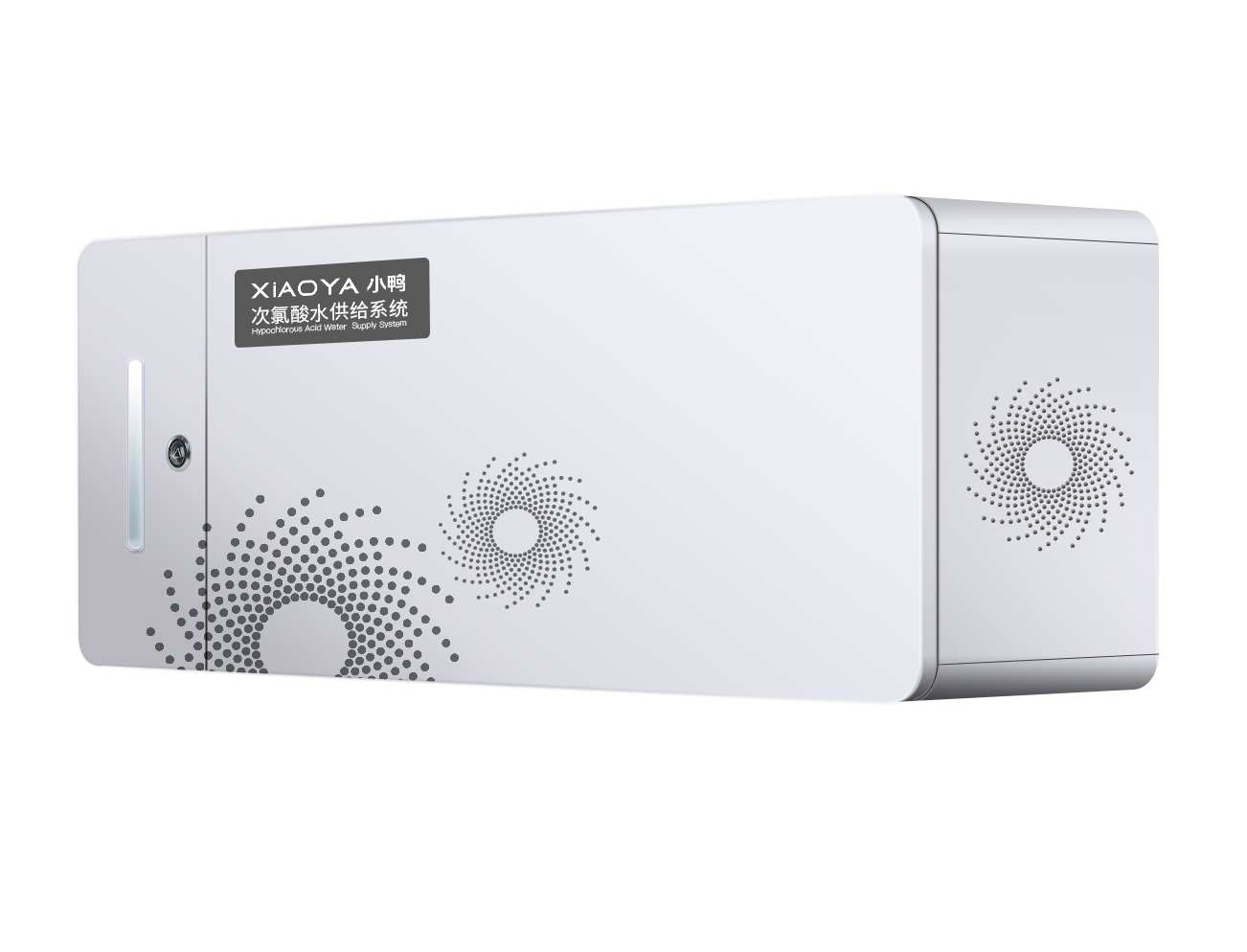
Understanding the anatomy and components of a hypochlorous acid generator is essential for safer, smarter, and more efficient disinfection.
As hygiene expectations rise across kitchens, bathrooms, healthcare spaces, and household cleaning, automated devices now support reliable disinfectant production on demand.
A hypochlorous acid generator combines electrochemical conversion, fluid control, safety protection, and intelligent automation into one compact system.
Its structure determines output stability, user convenience, service life, and suitability for different appliance and sanitation applications.
Basic Structure of a Hypochlorous Acid Generator
A hypochlorous acid generator produces HOCl through controlled electrolysis of water and salt, or a prepared electrolyte solution.
The device usually includes a water inlet, brine or electrolyte module, electrolytic cell, control board, sensors, outlet, and enclosure.
In automated equipment design, these modules must work together with stable flow, accurate voltage, and predictable concentration control.
For kitchen and bathroom appliances, compact layout and easy maintenance are especially important for daily consumer use.
Electrolytic Cell
The electrolytic cell is the core reaction chamber of a hypochlorous acid generator.
It contains electrodes that convert chloride ions into active chlorine species, including hypochlorous acid under suitable pH conditions.
Electrode material affects conversion efficiency, corrosion resistance, heat generation, and long-term system reliability.
Water and Electrolyte Pathway
The water pathway controls raw water delivery, electrolyte mixing, and finished solution discharge.
A stable pathway helps maintain concentration consistency and reduces blockage, scaling, or uneven electrolysis.
Valves, pumps, filters, tubes, and connectors must be selected for chemical compatibility and sanitation safety.
Key Components and Their Functions
Each part of a hypochlorous acid generator serves a practical role in safety, automation, and output control.
The table below summarizes common components found in appliance-grade and small commercial systems.
A well-designed hypochlorous acid generator should minimize manual steps while keeping the operating process clear and safe.
In modern automated appliances, indicator lights, touch panels, and error alarms improve daily usability.
Industry Background and Current Focus
The market for disinfection appliances is shaped by health awareness, convenience demand, and stricter hygiene expectations.
A hypochlorous acid generator fits this trend because it can generate fresh disinfectant without long storage cycles.
Automation equipment companies increasingly integrate water treatment, electrolysis, sensing, and intelligent control into complete solutions.
- Household appliances require compact size, quiet operation, and simple maintenance.
- Healthcare and disinfection appliances require stable concentration and dependable safety protection.
- Commercial cleaning needs higher output, durable pumps, and consistent production cycles.
- Clean energy thinking encourages lower chemical storage, reduced transport, and on-site generation.
Water quality also influences performance, especially electrode life, scaling risk, and finished solution stability.
For larger hygiene systems, supporting pretreatment may be required before electrolysis.
In these cases, Water Treatment Equipment can support stable inlet quality through reverse osmosis, ultrafiltration, nanofiltration, or softening.
Application Value in Automated Disinfection Equipment
A hypochlorous acid generator provides practical value by connecting production, dosing, and user control in one system.
Fresh generation helps avoid performance loss linked to long-term storage of ready-made disinfectant.
Automated concentration settings can help match different tasks, from surface wiping to appliance sanitation.
When paired with sensors, the device can stop operation during low water, abnormal current, overheating, or open-cover conditions.
Operational Benefits
- On-demand production reduces dependence on packaged disinfectant.
- Automated cycles improve repeatability and reduce user error.
- Compact integration supports kitchen, bathroom, and small household appliances.
- Smart alarms support safer use and easier troubleshooting.
For enterprise equipment design, the value lies not only in disinfection effect.
It also lies in consistent user experience, lower service burden, and scalable product architecture.
Typical Scenarios and Configuration Priorities
Different scenarios require different configurations for a hypochlorous acid generator.
Output capacity, tank size, concentration range, control interface, and maintenance access should match actual usage frequency.
A household hypochlorous acid generator may focus on convenience and appearance.
A commercial model may require stronger pumps, larger tanks, and more detailed operating records.
Practical Design and Maintenance Considerations
Reliable performance depends on component quality, operating logic, and routine maintenance.
The electrolytic cell should be protected from excessive scaling, dry running, and unstable power input.
Seals and tubing should resist oxidation, pressure fluctuation, and repeated cleaning cycles.
- Confirm raw water quality before deciding whether pretreatment is needed.
- Select electrode materials based on expected duty cycle and solution strength.
- Use sensors to detect abnormal water level, flow, current, and temperature.
- Keep the outlet, spray nozzle, and tank clean to avoid residue buildup.
- Define clear replacement intervals for filters, seals, and worn electrolysis parts.
For projects involving unstable source water, pretreatment improves equipment consistency and protects downstream components.
Certified systems such as ISO9001, ISO14001, and ISO45001 also reflect disciplined production and management processes.
Solutions with PLC intelligent control, automatic operation, remote commissioning, and spare parts support are valuable for global deployment.
Integration with Water Quality and Control Systems
The performance of a hypochlorous acid generator is closely linked to inlet water quality.
Hardness, conductivity, suspended solids, and impurities can affect electrolysis efficiency and maintenance frequency.
Where higher water stability is required, Water Treatment Equipment may provide reverse osmosis, ultrafiltration, softening, or desalination support.
Typical technical targets can include high desalination performance, long membrane service life, and improved water recovery.
Such integration is relevant for hospitals, schools, hotels, catering businesses, environmental projects, and overseas water supply applications.
Actionable Next Steps for System Selection
Before selecting a hypochlorous acid generator, define the required output volume, target concentration, usage frequency, and installation environment.
Review the electrolytic cell design, sensor configuration, control logic, cleaning method, and after-sales support model.
For appliance integration, evaluate size, noise, heat dissipation, sealing, refill convenience, and user interface clarity.
For commercial or healthcare use, place greater emphasis on reliability, traceability, maintenance access, and water pretreatment planning.
A well-matched hypochlorous acid generator turns electrochemical disinfection into a practical automated solution for modern hygiene needs.
NEWS
 Public Facility HOCl Storage: Managing Heat, Light, and Shelf Life
 On-Site HOCl vs. Purchased Disinfectant for Municipal Buildings
- Sizing a Public Facility HOCl Generator for Peak Cleaning Demand
- What Can a Hypochlorous Acid Generator Do for Public Facility Cleaning?
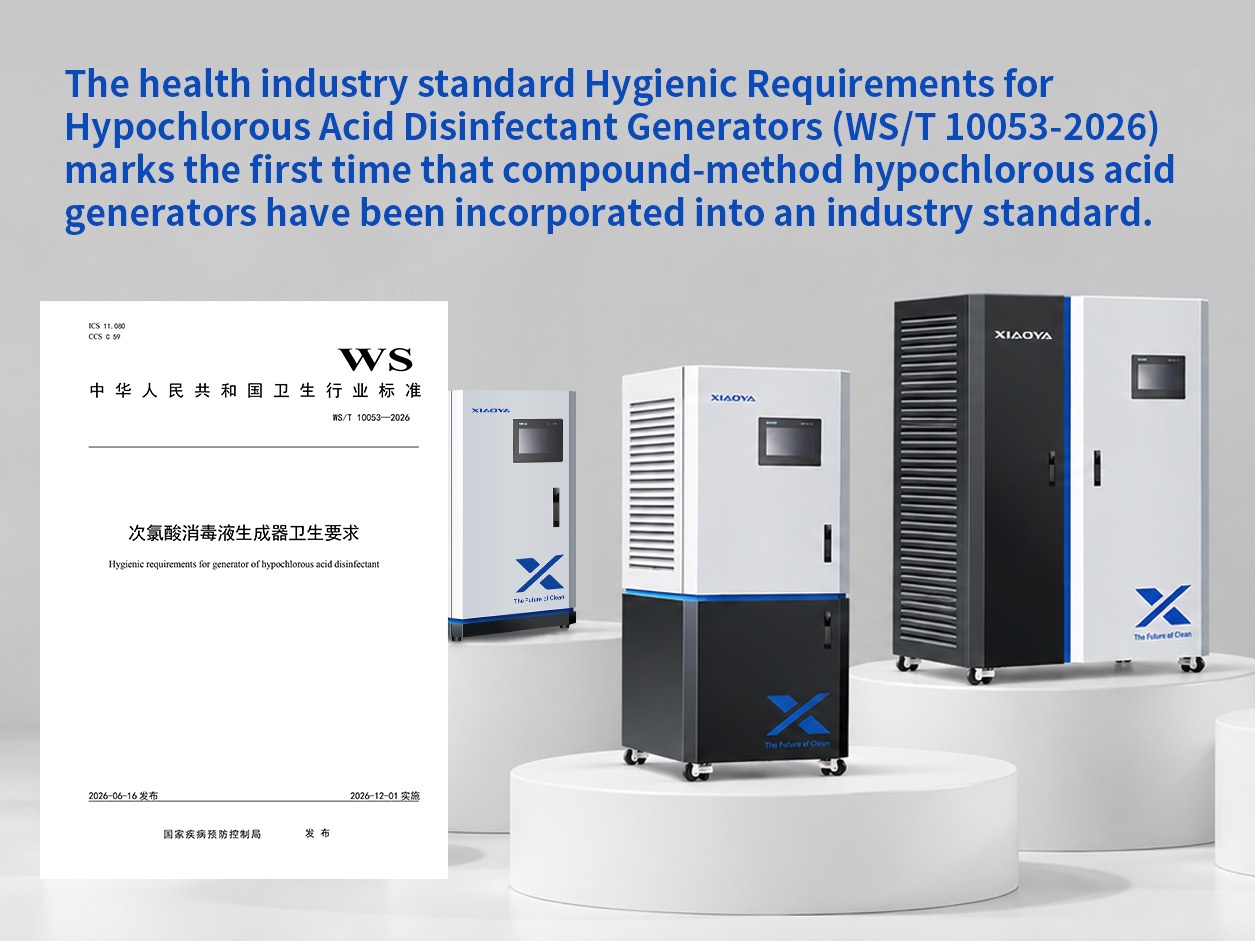
 WS/T 10053-2026 Includes the Compound Method for the First Time: Standard Signals and Market Opportunities for Mass Agricultural Production of Hypochlorous Acid Generators

Leave us a message

Xiaoya Group was founded in 1979,expert in the electrolyzed water industry.
Get in Touch
*We respect your confidentiality and all information are protected.