news
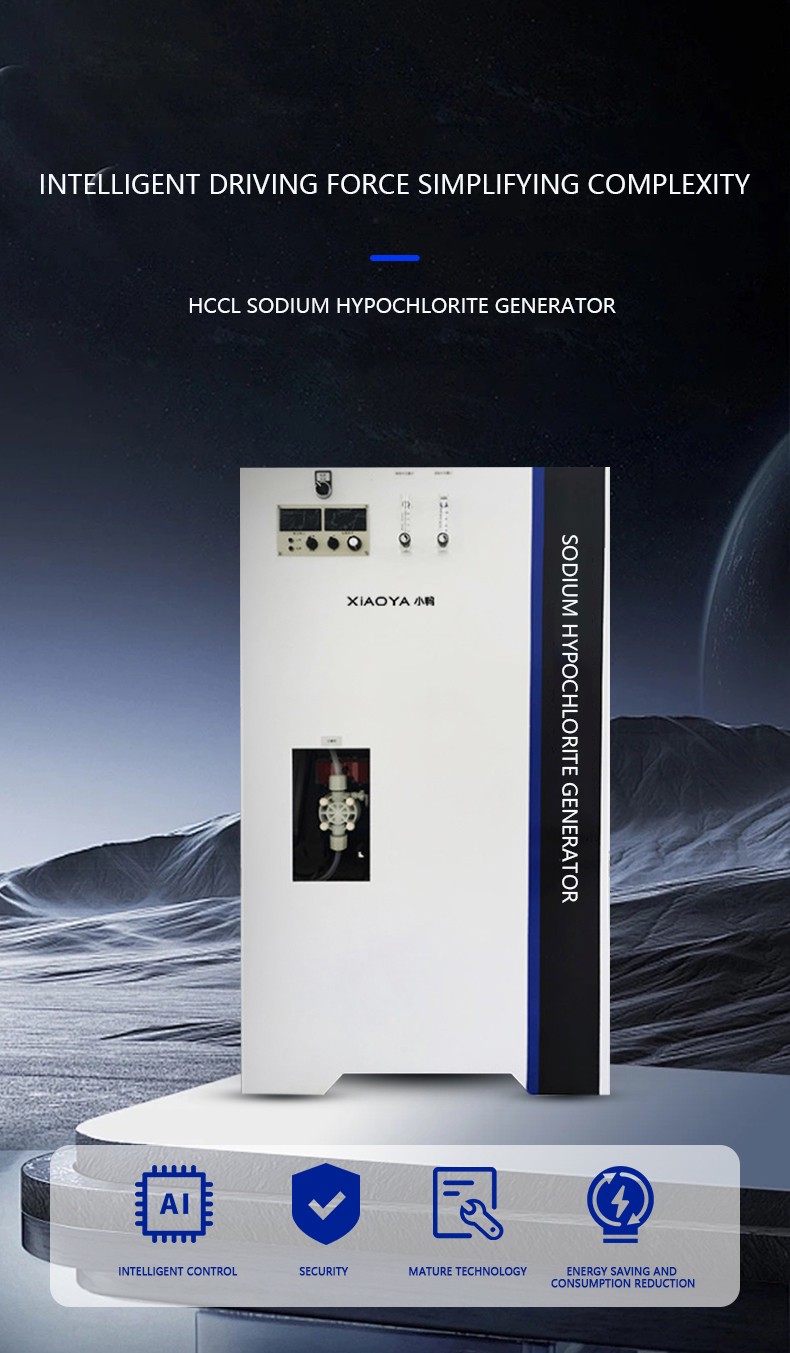
Hypochlorous Acid Generator Technology is reshaping modern disinfection by combining automated electrolysis, precise concentration control, and safer on-site production.
For automated equipment used in sanitation, appliances, health care, clean energy support systems, and small household devices, its principles directly affect safety and performance.
This guide explains how the technology works, what to check before integration, and how to avoid common design and operation risks.
Why Hypochlorous Acid Generator Technology Needs a Clear Checklist
Disinfection equipment is no longer judged only by output volume. Stability, automation, chemical safety, and compliance now define long-term value.
Hypochlorous Acid Generator Technology converts salt, water, and electricity into active disinfectant on site, reducing dependence on transported chemicals.
A checklist prevents mismatched capacity, unstable pH, inaccurate dosing, poor sensor feedback, and excessive maintenance in automated disinfection systems.
It also helps evaluate whether a generator can support schools, food factories, swimming pools, tap water pre-oxidation, wastewater treatment, and aquaculture.
Core Technical Checklist for Reliable Operation
- Verify the electrolysis principle, including brine concentration, electrode material, cell structure, and current efficiency before selecting any automated disinfection system.
- Confirm the target disinfectant range, because effective chlorine concentration influences microbial kill rate, corrosion risk, storage stability, and application safety.
- Control pH within the optimal band, since hypochlorous acid performs best when the solution balance favors active HClO over less active ions.
- Check PLC control logic, alarm handling, flow monitoring, and dosing pump coordination to ensure repeatable production without constant manual intervention.
- Assess salt and water quality, because hardness, impurities, and unstable feed conditions can reduce electrode life and concentration consistency.
- Evaluate tank capacity, production rate, dosing flow, and peak demand to avoid undersized equipment during high-frequency disinfection cycles.
- Inspect material compatibility, including PVC shells, pipelines, seals, and fittings, to reduce corrosion and leakage in wet operating environments.
- Review service life data for electrolyzers and pumps, then align maintenance schedules with actual operating hours and local water conditions.
How the Electrolysis Process Creates Disinfection Value
The foundation of Hypochlorous Acid Generator Technology is controlled electrolysis. A salt solution passes through an electrolytic cell under defined voltage and current.
Inside the cell, chloride ions are converted into active chlorine species. Under suitable pH conditions, hypochlorous acid becomes the main bactericidal factor.
Compared with manually mixed disinfectants, on-site generation improves freshness, reduces storage hazards, and supports automated dosing based on real demand.
This is important for automated equipment because concentration drift can affect microbial control, user safety, appliance durability, and regulatory acceptance.
Automation Controls That Matter
A mature control system should coordinate water intake, brine mixing, electrolysis, storage, dosing, flushing, and fault alarms as one process.
PLC control improves consistency by reducing operator error and keeping production within preset limits for concentration, flow, and operating time.
Microcomputer control can also support compact equipment designs, which is useful for health care disinfection appliances and small sanitation systems.
Product Integration Example for Automated Disinfection Systems
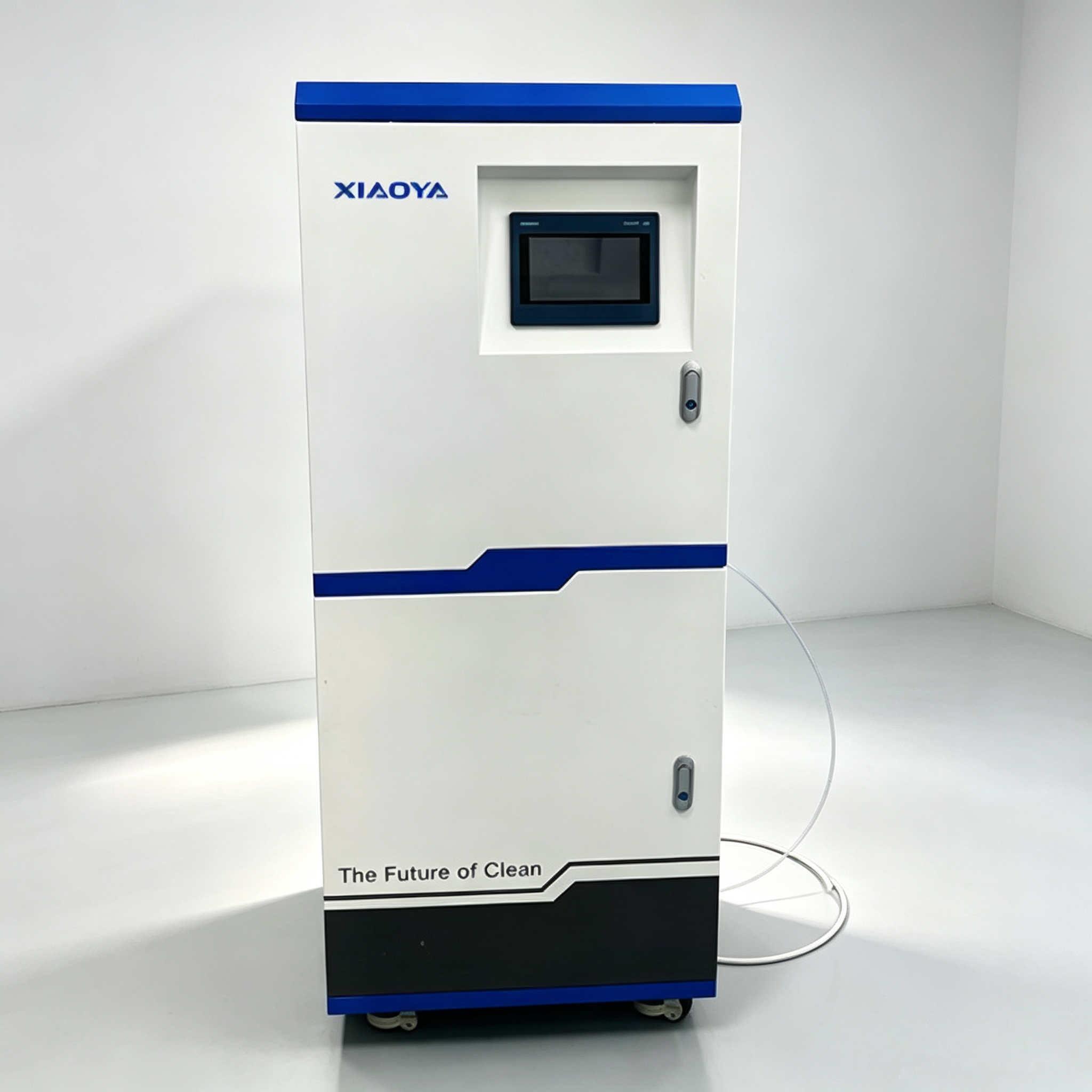
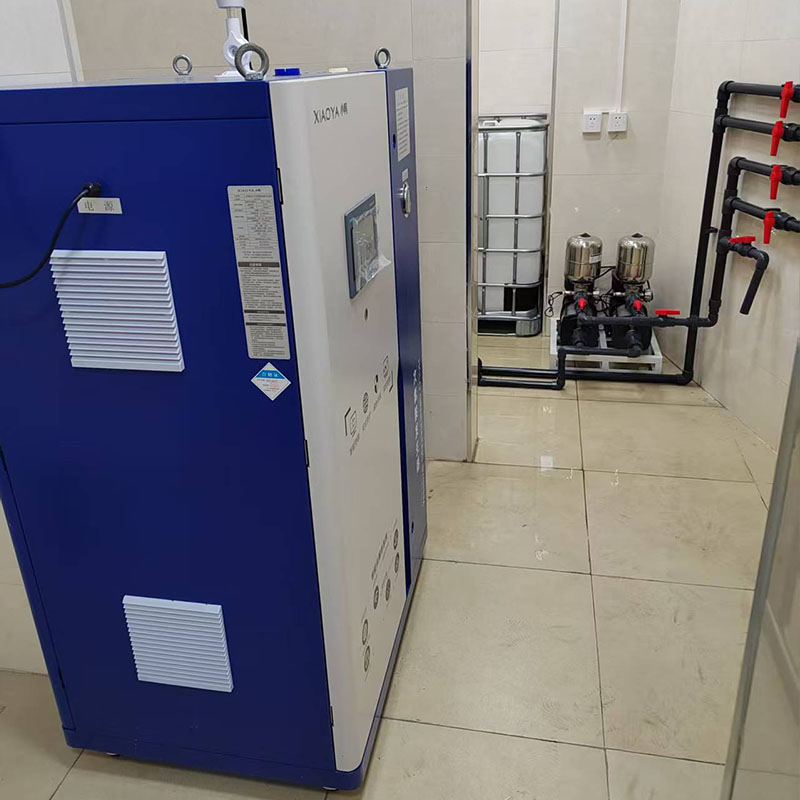
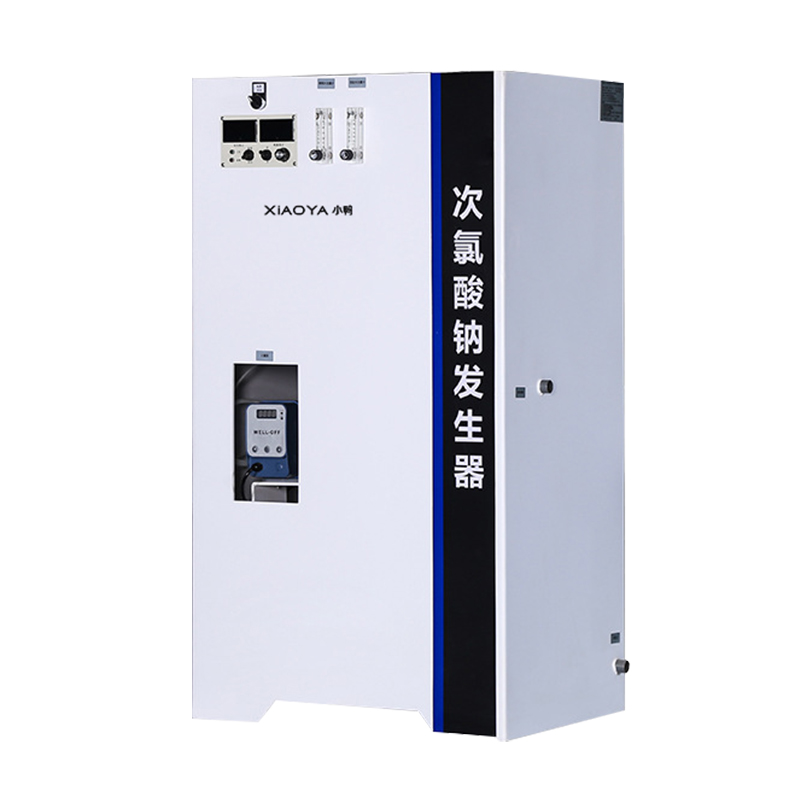
A practical reference is the Sodium hypochlorite generator, designed for on-site disinfectant preparation using food-grade salt and tap water.
Its PVC shell, PLC control, 30L salt tank, and 30L storage tank support stable operation in demanding public and industrial environments.
Typical parameters include 6.3L/H production, 50g/h single chlorine output, 0.5kW rated power, and a 9L/h dosing pump flow.
With pH around 5–6.5 and effective chlorine concentration of 10–120mg/L, it fits many controlled disinfection scenarios.
The electrolyzer service life above 8000 hours helps reduce downtime when maintenance planning is based on real operating records.
Application Notes by Scenario
Schools, Kindergartens, and Public Facilities
These locations require safe procurement, simple operation, and predictable disinfectant quality. On-site generation reduces chemical handling pressure and storage risk.
Automated dosing should be matched with surface cleaning routines, room ventilation, and clear operator instructions to avoid misuse.
Food Factories and Kitchen Appliance Environments
Food-related spaces need controlled concentration, residue awareness, and corrosion management. Hypochlorous Acid Generator Technology supports fresh solution preparation near use points.
When integrated with washing, rinsing, or sanitation lines, flow rate and contact time must be verified through actual process testing.
Swimming Pools, Water Treatment, and Aquaculture
Large water systems require stable dosing and fast response to changing organic load. Automated feedback reduces under-dosing and excessive chemical use.
For tap water pre-oxidation and wastewater treatment, compliance records, concentration verification, and equipment acceptance procedures are especially important.
Common Overlooked Risks
Ignoring water quality: Hard water and suspended impurities may scale electrodes, block valves, and reduce the efficiency of Hypochlorous Acid Generator Technology.
Oversizing without demand analysis: Excessive capacity can increase cost, enlarge storage needs, and create unnecessary solution aging problems.
Relying only on theoretical concentration: Actual output should be tested under local water, salt, temperature, and flow conditions.
Neglecting ventilation and drainage: Even safer on-site production requires proper installation planning for wet areas and equipment rooms.
Skipping operator training: Automated equipment still needs basic checks, alarm recognition, cleaning procedures, and documented maintenance actions.
Practical Execution Guide
- Map the disinfection points, daily consumption, peak flow, and required concentration before confirming generator capacity.
- Test water quality and salt specifications, then define pretreatment needs to protect the electrolyzer and dosing components.
- Set acceptance standards for pH, effective chlorine, dosing accuracy, leakage protection, and alarm response before installation.
- Create a maintenance calendar covering electrode inspection, tank cleaning, pump calibration, valve checks, and sensor verification.
- Record production batches, concentration readings, faults, and corrective actions to support compliance and long-term optimization.
Key Selection Criteria Before Purchase
Select equipment with mature technology, stable output, simple structure, low maintenance needs, and familiar regulatory acceptance pathways.
Prioritize systems that use inexpensive salt, reduce hazardous chemical handling, and support economical large-scale operation over time.
Check whether dimensions, weight, rated voltage, power consumption, tank design, and installation space match the target site.
For appliance integration, compact design, high integration, and reliable control logic are as important as disinfectant output.
Conclusion and Next Action
Hypochlorous Acid Generator Technology combines electrochemical production, automated control, and safer on-site disinfection into one practical equipment platform.
The best results come from matching capacity, pH control, effective chlorine range, materials, and maintenance planning to the real application.
Before deployment, build a checklist, test local operating conditions, confirm compliance requirements, and select equipment that supports stable long-term automation.
NEWS
 Public Facility HOCl Storage: Managing Heat, Light, and Shelf Life
 On-Site HOCl vs. Purchased Disinfectant for Municipal Buildings
- Sizing a Public Facility HOCl Generator for Peak Cleaning Demand
- What Can a Hypochlorous Acid Generator Do for Public Facility Cleaning?
 WS/T 10053-2026 Includes the Compound Method for the First Time: Standard Signals and Market Opportunities for Mass Agricultural Production of Hypochlorous Acid Generators

Leave us a message

Xiaoya Group was founded in 1979,expert in the electrolyzed water industry.
Get in Touch
*We respect your confidentiality and all information are protected.