news
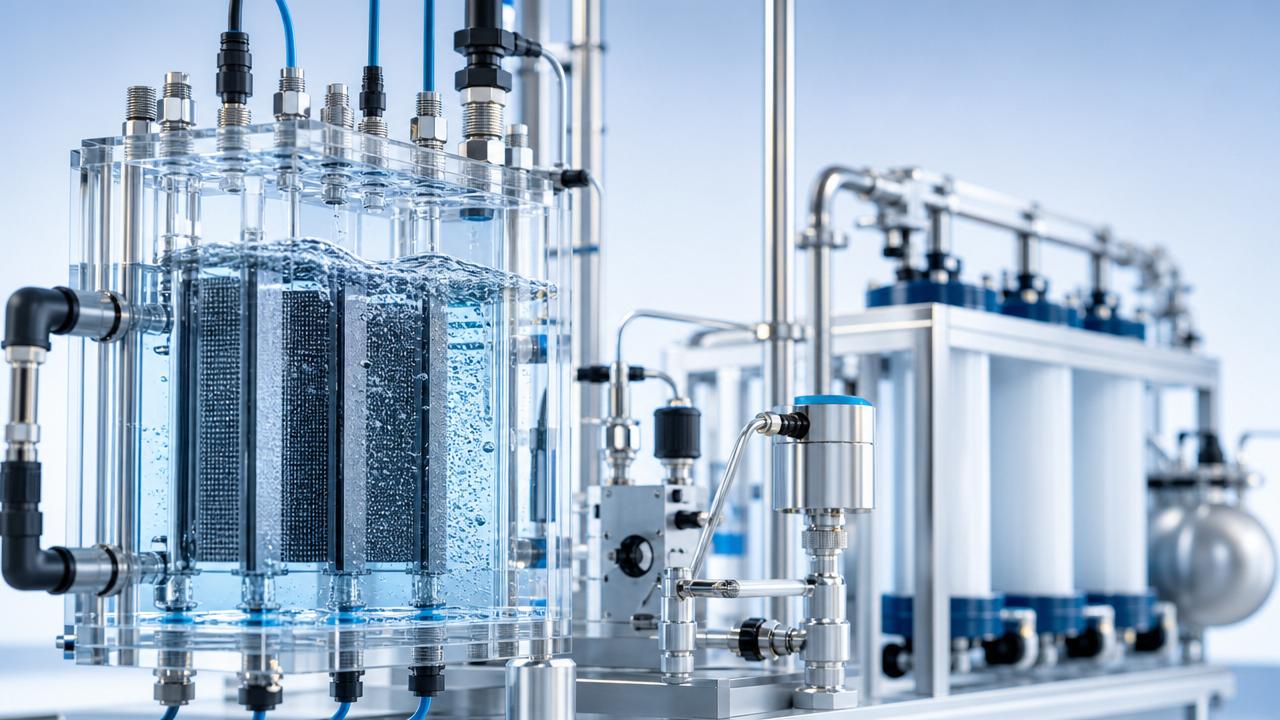
Selecting the right electrode material is critical to the performance, efficiency, and service life of a hypochlorous acid generator.
In automated disinfection equipment, the electrode affects electrolysis stability, HOCl concentration, power consumption, and maintenance frequency.
As demand grows in kitchens, bathrooms, healthcare devices, clean energy, and household appliances, electrode material selection becomes a key design decision.
Why Electrode Material Selection Changes by Application Scenario
A hypochlorous acid generator does not work in one fixed environment.
Water quality, chloride concentration, flow rate, temperature, duty cycle, and cleaning habits all change the electrode load.
For automation equipment, these differences affect sensor feedback, dosing accuracy, control logic, and safety protection.
Good electrode material selection should match the actual disinfection scenario, not only the rated output value.
Kitchen and Bathroom Appliance Scenarios Need Stable Low-Residue Output
Kitchen and bathroom appliances often require compact structure, quiet operation, and safe hypochlorous acid generation.
The electrode material should support stable HOCl production under intermittent use and variable tap water conditions.
Titanium-based coated electrodes are commonly considered because titanium offers corrosion resistance and dimensional stability.
Mixed metal oxide coatings can improve catalytic activity and reduce unnecessary energy loss during electrolysis.
For these appliances, electrode material selection should avoid excessive scaling, unstable current, and rapid coating degradation.
Healthcare Disinfection Devices Need Predictable HOCl Concentration
Healthcare disinfection devices require consistent concentration, reliable sterilization effect, and controlled by-product formation.
In this scenario, electrode material selection must focus on catalytic selectivity and long-term electrochemical stability.
A hypochlorous acid generator used for surface disinfection should deliver repeatable output after frequent start-stop cycles.
Coated titanium anodes are often suitable when the system needs high chlorine evolution efficiency and reduced maintenance downtime.
Automation control should also monitor current, voltage, temperature, conductivity, and residual disinfectant concentration.
Water Treatment Scenarios Require Pretreatment and Sterilization Matching
In water-related automation systems, electrode performance depends strongly on incoming water quality.
Suspended solids, hardness, organic matter, and microbial load can shorten electrode life or reduce HOCl consistency.
For integrated water disinfection, a Water purification system can support upstream stability before electrolysis or final sterilization.
Its ultrafiltration flow rate reaches 1000L/H, using a hollow fiber PVC ultrafiltration membrane filter element.
The UV-C 254nm sterilization module offers a maximum sterilization capacity of 0.35T/H and a sterilization rate above 99.9%.
Such pretreatment helps reduce electrode fouling and supports more predictable hypochlorous acid generator operation.
Clean Energy and Industrial Automation Need Long Duty-Cycle Durability
Clean energy and industrial automation systems often operate for longer periods than household equipment.
Electrode material selection must consider continuous current density, electrolyte temperature, and coating fatigue resistance.
A hypochlorous acid generator in these settings may need remote monitoring and predictive maintenance functions.
Titanium substrate quality, coating thickness, noble metal composition, and surface structure become major decision points.
If the electrode is underspecified, power consumption rises and the control system compensates more frequently.
Small Household Appliances Need Compact Electrodes with Safe Operation
Small household appliances face strict limits on space, cost, heat, and user maintenance.
The electrode material should work efficiently at low voltage while maintaining acceptable hypochlorous acid concentration.
Plate spacing, coating uniformity, and anti-scaling performance matter more when the cell volume is small.
For compact designs, electrode material selection should balance output efficiency with safe touch temperature and low gas accumulation.
Scenario Differences for Electrode Material Selection
Practical Adaptation Advice for Hypochlorous Acid Generator Design
- Match electrode material selection with real water conductivity and chloride concentration.
- Choose titanium-based coated electrodes for corrosion resistance and dimensional stability.
- Evaluate coating composition according to required HOCl concentration and current density.
- Use pretreatment when hardness, turbidity, or microbial load may increase fouling.
- Design automation logic to detect abnormal voltage rise and current drift.
- Set maintenance intervals based on actual operating hours, not only calendar time.
Common Misjudgments in Electrode Material Selection
One common mistake is choosing an electrode only by initial price.
Lower upfront cost may lead to shorter life, higher power use, and unstable disinfection performance.
Another mistake is ignoring water pretreatment when designing a hypochlorous acid generator.
Scaling and organic contamination can reduce active surface area and increase cell voltage.
A third issue is using laboratory output data without validating field conditions.
Real equipment must handle fluctuating temperature, water source changes, and variable operating cycles.
Action Guide for Better Equipment Reliability
Start by defining the target disinfection scenario, duty cycle, water quality range, and required HOCl concentration.
Then compare electrode material options through accelerated life testing and real-water electrolysis trials.
For automated disinfection equipment, link electrode data with sensors, control boards, and maintenance reminders.
This approach improves hypochlorous acid generator stability, reduces service cost, and supports safer product operation.
Careful electrode material selection is therefore not a single component choice.
It is a system-level decision that connects electrochemistry, automation control, water treatment, and long-term market reliability.
NEWS
 Public Facility HOCl Storage: Managing Heat, Light, and Shelf Life
 On-Site HOCl vs. Purchased Disinfectant for Municipal Buildings
- Sizing a Public Facility HOCl Generator for Peak Cleaning Demand
- What Can a Hypochlorous Acid Generator Do for Public Facility Cleaning?
 WS/T 10053-2026 Includes the Compound Method for the First Time: Standard Signals and Market Opportunities for Mass Agricultural Production of Hypochlorous Acid Generators

Leave us a message

Xiaoya Group was founded in 1979,expert in the electrolyzed water industry.
Get in Touch
*We respect your confidentiality and all information are protected.