news
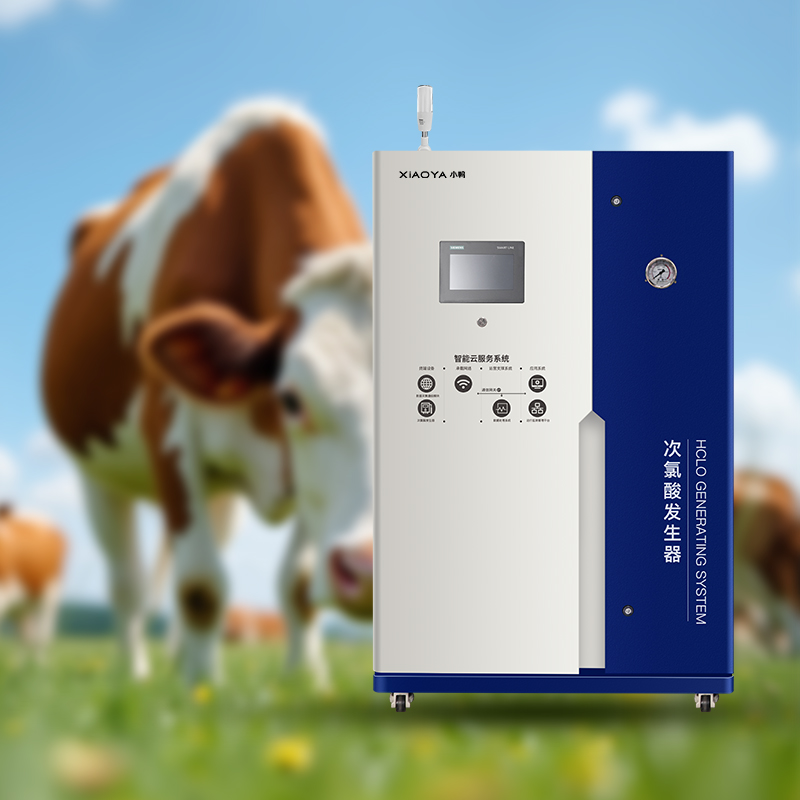
Before investing in Animal husbandry disinfection equipment, procurement teams need a clear way to judge performance, reliability, and long-term value. With rising standards for biosecurity, automation, and operational efficiency, the right choice can directly affect farm safety and cost control. This guide outlines the key evaluation points buyers should review to make a practical, informed purchasing decision.
Why Animal husbandry disinfection purchasing standards are changing
The buying logic for Animal husbandry disinfection equipment has changed noticeably over the last few years. Procurement teams are no longer comparing only upfront price and basic sterilization claims. They are increasingly evaluating automation level, water and energy efficiency, maintenance cycles, and compatibility with farm management systems. In many livestock environments, even a 12 to 24 hour interruption in sanitation can increase operational risk, so equipment stability is now a core purchasing factor rather than a secondary concern.
Another clear signal is the shift from isolated devices to integrated sanitation solutions. Farms, hatcheries, and breeding facilities often need coordinated control across water treatment, surface disinfection, personnel access points, and air or pipeline sanitation. This trend matters in the automation equipment industry because buyers want systems that can work within broader production workflows, not just standalone units with limited monitoring capability.
For procurement professionals, this means evaluation must move from “Does it disinfect?” to “How well does it support long-term biosecurity and operating efficiency?” A useful review window is usually 3 to 5 years, which aligns with common lifecycle planning for filters, lamps, pumps, and control parts. In Animal husbandry disinfection projects, lifecycle value often matters more than the lowest bid.
The table below highlights several market shifts that now influence equipment selection decisions in automated livestock sanitation environments.
This shift shows why procurement teams should build a scoring model that includes performance, operability, and serviceability. It also explains why Animal husbandry disinfection suppliers with R&D, manufacturing, and operational integration are often better positioned to support long-term equipment performance.
What is driving the new evaluation model
Biosecurity pressure and production continuity
Livestock operations are under stronger pressure to reduce contamination risk across water, feeding lines, housing, and personnel movement. In practical terms, buyers are asking for more than one control point. They want predictable sterilization performance, traceable maintenance records, and fewer weak links in the sanitation chain. A unit that performs well in a short demonstration but becomes unstable after 6 to 12 months may create more risk than value.
Water-related Animal husbandry disinfection has become especially important because untreated or poorly treated water can carry sediments, microorganisms, and organic load that reduce downstream sanitation efficiency. In this context, a combined purification and sterilization approach is often more practical than relying on a single-stage process. That is why some buyers review ultrafiltration capacity and UV sterilization together during technical assessment.
For example, buyers comparing water sanitation options may consider equipment such as Duckling ultrafiltration water purification and sterilization device XYCL-1000, especially when the project requires both pretreatment and sterilization in one automated workflow. In evaluation terms, combined systems can reduce process fragmentation, but only if flow, lamp life, and maintenance access are clearly specified.
Automation and service expectations
Another driver is the labor and maintenance reality on farms. Procurement teams increasingly prefer equipment that can be operated by standard technical staff rather than highly specialized technicians. This raises the importance of alarm logic, replacement access, cleaning intervals, and spare parts availability. If a lamp change, membrane service, or control reset requires long downtime, the system may not fit a high-throughput livestock environment.
Suppliers from the automation equipment field that also work in health care and disinfection appliances, clean energy, and household-scale system engineering often bring stronger design discipline in control integration and product consistency. For procurement teams, that cross-industry manufacturing capability can be relevant when judging production quality, assembly repeatability, and after-sales coordination.
A practical buyer response is to request a maintenance map covering daily, weekly, and annual service points. In Animal husbandry disinfection, this often reveals hidden costs faster than a sales brochure does.
How procurement teams should evaluate equipment before purchase
Build a technical checklist around operating conditions
The most useful evaluation method is to match technical parameters to the real use environment. Buyers should confirm water quality, flow demand, target treatment capacity, daily running hours, and sanitation frequency before comparing models. A system that looks sufficient on paper may underperform if the incoming water has higher turbidity or if usage peaks exceed the designed flow for several hours each day.
Below is a practical checklist for Animal husbandry disinfection procurement decisions in automated farm operations.
When reviewing specifications, buyers should also separate headline numbers from usable numbers. For instance, ultrafiltration flow may be listed at 1000L/H, but real throughput depends on feed water condition and maintenance state. UV components may use a 254nm wavelength, but actual sterilization consistency depends on exposure, flow rate, fouling control, and lamp replacement discipline.
Questions that help avoid misalignment
- What is the required disinfection volume per hour during peak breeding or hatchery periods?
- How often must filters, lamps, or membranes be replaced within a 12 month cycle?
- Can the system maintain stable operation if incoming water quality changes seasonally?
- Does the supplier provide clear support for installation, commissioning, and spare parts planning?
These questions help procurement teams turn broad Animal husbandry disinfection requirements into measurable purchasing criteria. That improves comparison quality and reduces the risk of selecting a technically acceptable but operationally weak solution.
How to interpret product parameters in a real farm setting
Technical parameters are useful only when translated into farm conditions. A sterilization rate above 99.9% sounds strong, but buyers still need to ask under what water quality and flow assumptions that figure is achievable. Likewise, a membrane service life of 3 to 5 years is meaningful only when maintenance, pretreatment discipline, and feed water quality are controlled within normal operating ranges.
In a water-focused Animal husbandry disinfection project, a configuration using hollow fiber PVC ultrafiltration membrane media can be suitable when suspended solids reduction is important before UV sterilization. If the UV section is designed for 0.35T/H maximum sterilization capacity and the lamp is rated for 8000 hours, procurement teams should still plan replacement around the recommended 7200 hour point rather than the absolute design limit. That is a more realistic maintenance strategy.
The same principle applies to physical footprint and handling. Equipment dimensions such as 1000 × 1000 × 1300 mm and a unit weight around 22.28 kg may appear manageable, but site access, drainage, electrical layout, and maintenance clearance should be verified before approval. Buyers should treat installation compatibility as part of total value, not as an afterthought.
For procurement teams comparing integrated solutions, Duckling ultrafiltration water purification and sterilization device XYCL-1000 illustrates the kind of specification set worth reviewing in detail: flow rate, UV wavelength, lamp replacement timing, and expected service life all affect whether a system is a good fit for the intended Animal husbandry disinfection workload.
What smart buyers should do next
Turn trend signals into a procurement framework
The strongest purchasing decisions now come from structured evaluation, not from isolated quotations. In today’s market, Animal husbandry disinfection equipment should be judged through three connected lenses: biosecurity performance, automation fit, and lifecycle serviceability. If one of these is weak, long-term operating stability may suffer even when the purchase price looks attractive.
A practical next step is to create a scoring sheet with 5 to 8 weighted criteria, such as effective capacity, replacement cycle, ease of cleaning, installation fit, response time for spare parts, and supplier technical support. This is especially useful when comparing multiple systems across breeding farms, hatcheries, or integrated livestock operations.
Procurement teams should also ask suppliers to clarify project details early: parameter confirmation, model selection, lead time, customization scope, and sample or test support where applicable. These discussions often reveal whether the supplier can support real deployment rather than only provide standard catalog data.
Why choose us
As an enterprise integrating R&D, production, and operation across kitchen and bathroom appliances, health care and disinfection appliances, clean energy, and small household appliances, we understand how to translate technical design into manufacturable, serviceable automated equipment. For buyers of Animal husbandry disinfection solutions, that means more practical support during model matching, parameter review, and long-term use planning.
Contact us if you want to review treatment capacity, confirm operating parameters, compare configuration options, estimate delivery cycles, discuss customized solutions, or check ongoing consumable planning. A clear technical discussion before purchase can reduce later maintenance pressure and help you select equipment that fits both farm safety goals and cost control targets.
NEWS
 Next-Generation Hypochlorous Acid System Solution for Sterile Self-Service Laundromats Officially Released
- Upgrade in Healthy Living: Hypochlorous Acid Generators Become the New Standard for Luxury Villas
- The Ultimate Solution to Pet Shop Disinfection Challenges! XIAOYA Hypochlorous Acid Generator: Safe Pet Protection with Peace of Mind
 Hypochlorous Acid Generator vs Sodium Hypochlorite Generator
- Hypochlorous Acid Generator Supplier
Leave us a message

Xiaoya Group was founded in 1979,expert in the electrolyzed water industry.
Get in Touch
*We respect your confidentiality and all information are protected.