Choosing between an on-site hypochlorous acid generation system and bulk chemical supply is not only a cost question. It also affects storage risk, dosing stability, workflow design, and long-term scalability across automated production environments.
For businesses active in kitchen and bathroom appliances, health care and disinfection appliances, clean energy, and small household appliances, the decision matters even more. Production and sanitation standards now connect directly with equipment integration and operational resilience.
An informed comparison helps clarify where each model fits, what trade-offs are acceptable, and which option supports future expansion without creating hidden handling or compliance burdens.
What the two supply models really mean
Bulk chemical supply usually means buying prepared disinfectant or chlorine-based solution in containers, then storing, diluting, and feeding it into a process when needed.
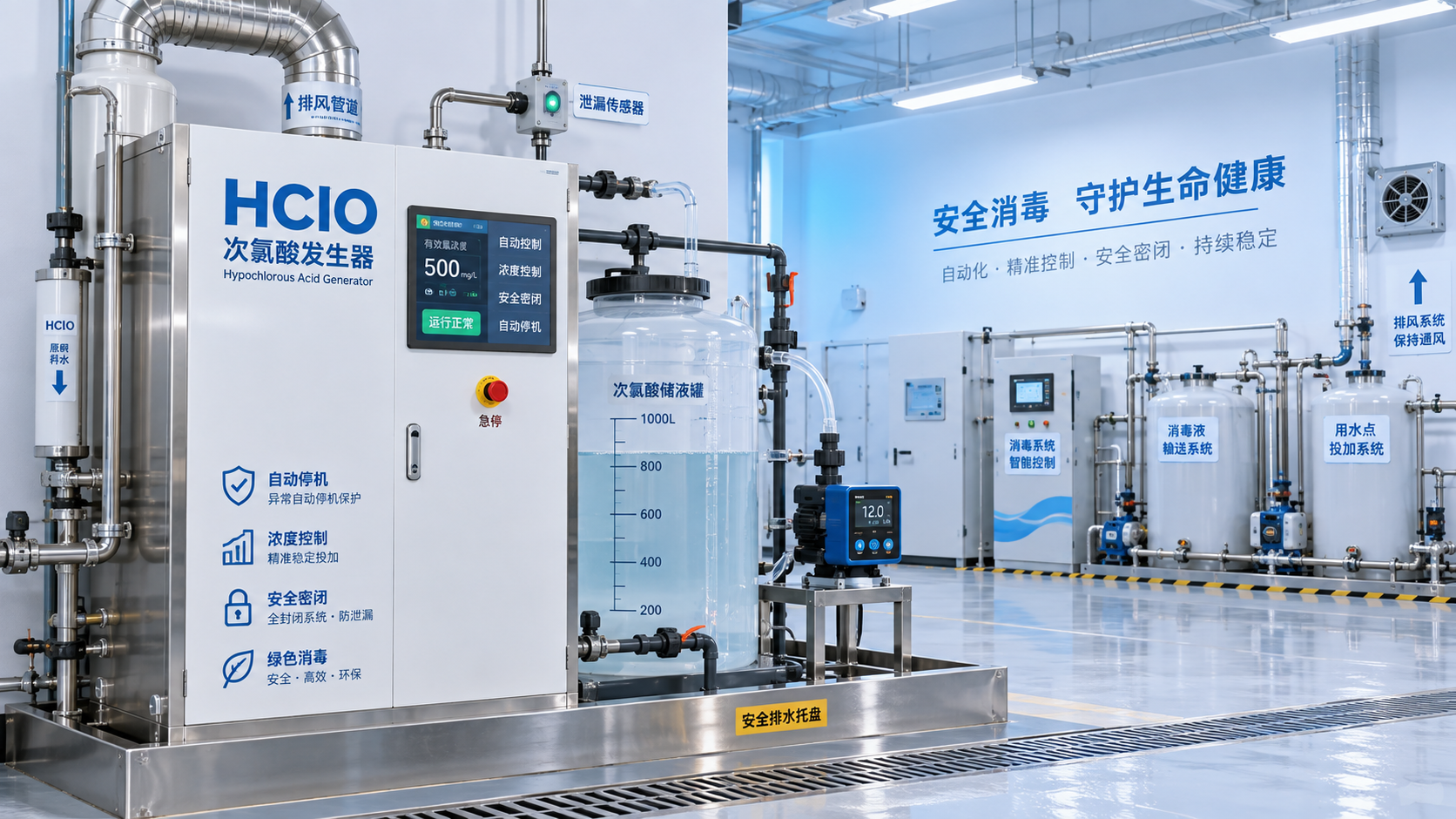
An on-site hypochlorous acid generation system works differently. It produces hypochlorous acid at the point of use, typically through electrolysis, using controlled inputs and automation-friendly operating parameters.
That difference changes the procurement logic. One model purchases volume and logistics. The other purchases equipment capability, production control, and repeatable output.
Why this comparison is getting more attention
Manufacturing lines are becoming more connected, traceable, and space-sensitive. Chemical rooms, manual transfer steps, and inconsistent concentration control now create more friction than they did before.
At the same time, buyers are under pressure to balance total cost with safety, environmental responsibility, and production continuity. A lower purchase price per drum does not always mean a lower operating cost.
This is where the on-site hypochlorous acid generation system becomes relevant. It aligns with automation strategies because supply can be generated in a controlled, measurable, and demand-based manner.
How to compare beyond the purchase price
A useful evaluation starts with total operating conditions, not only invoice value. Several decision points usually reveal the real difference.
In practice, the better option depends on usage frequency, required concentration range, site layout, and the cost of interruptions or compliance deviations.
Operational details that often change the decision
Storage and site safety
Bulk chemicals demand dedicated storage, labeling, transport routines, and spill response planning. Those requirements consume floor space and add procedural complexity.
An on-site hypochlorous acid generation system reduces dependence on large-volume chemical storage. That can be valuable where factory layouts are compact or where multiple sanitation points exist.
Output consistency
Disinfection performance is only reliable when concentration and pH stay within process targets. Prepared chemicals may degrade over time or vary after dilution.
By contrast, an on-site hypochlorous acid generation system can support more stable production when the equipment is correctly specified and maintained.
Maintenance and utility needs
On-site generation is not maintenance-free. Water quality, component life, power supply, and operator checks still matter. That said, these variables are usually measurable and easier to standardize inside an automated facility.
Where application context should guide the choice
Different industries prioritize different outcomes. Appliance and disinfection-related manufacturing may focus on sanitation control, repeatability, and integration with existing equipment platforms.
Food-chain applications bring another layer of value. For example, Hypochlorous Acid Generator for Fruit Fresh-keeping shows how the same technology can move beyond general disinfection into quality preservation.
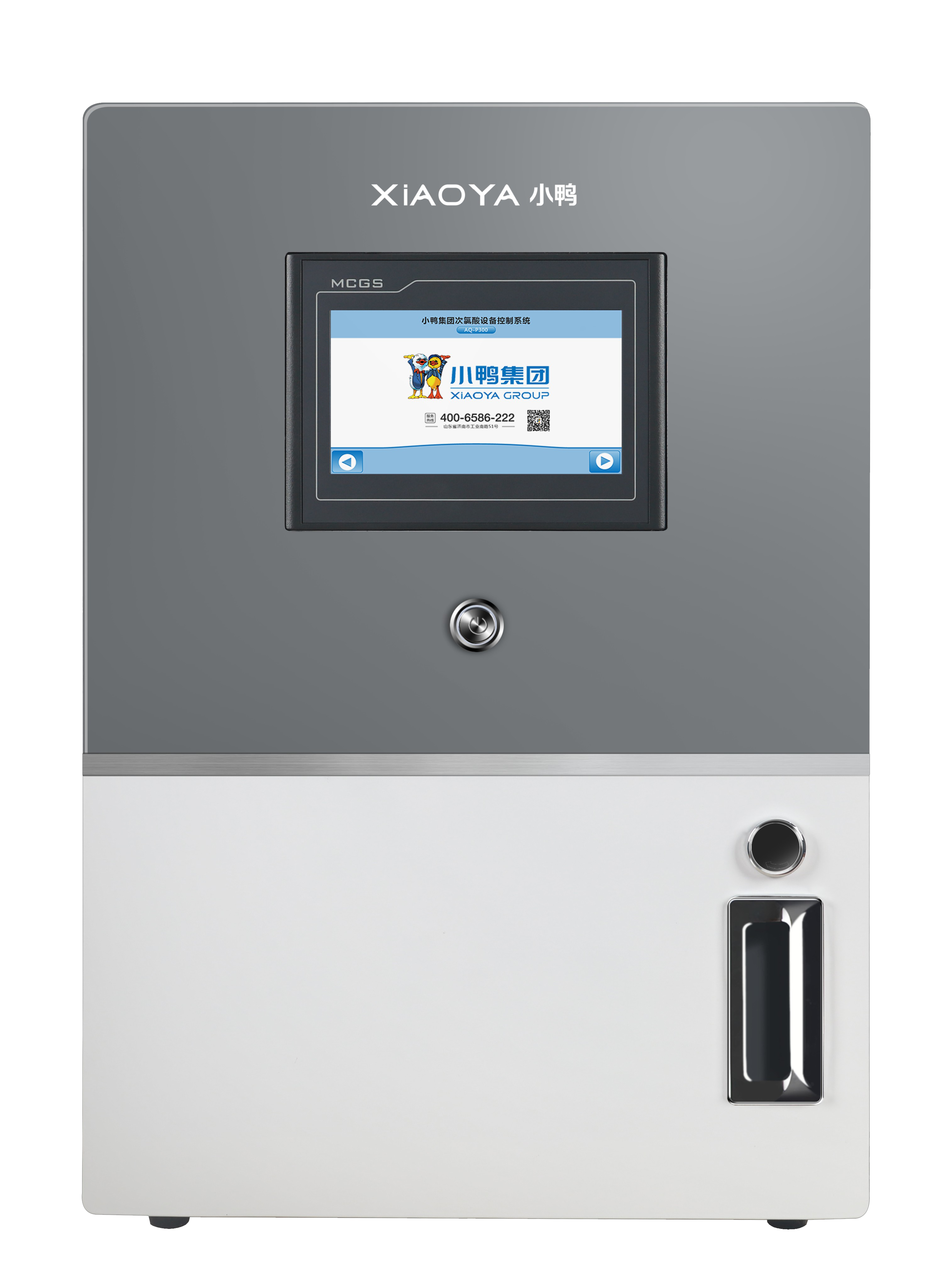
A unit such as model AQ-P300-A can deliver 120 to 300 L/h, with effective chlorine concentration adjustable from 10 to 200 mg/L and pH maintained at 5.0 to 6.5.
That matters in fruit planting bases, processing workshops, cold storage, logistics links, wholesale channels, and export processing zones, where residue-free treatment and process flexibility are both important.
In such settings, slightly acidic hypochlorous acid water can support surface sterilization, help regulate post-harvest respiration, inhibit ethylene production, and reduce decay from the source.
A practical checklist for evaluation
- Map actual consumption by shift, line, and sanitation point before comparing quotes.
- Calculate full handling cost, including storage space, labor, training, and disposal.
- Check whether concentration, pH, and output need adjustment across different products or seasons.
- Review equipment life, such as electrolyzer durability, utility requirements, and service support.
- Confirm whether the disinfection method must meet food contact or process hygiene expectations.
- Assess how easily the system can connect with automation controls and future capacity expansion.
This kind of checklist usually reveals whether bulk supply is still efficient for intermittent use, or whether on-site generation offers better control in continuous operations.
What to do next
The best comparison starts with process reality rather than product labels. Usage volume, concentration accuracy, storage limits, and compliance risk should be measured together.
If a site depends on frequent sanitation, multiple application points, or tighter automation integration, the on-site hypochlorous acid generation system deserves closer review as a strategic asset, not just a utility item.
A sensible next step is to build a side-by-side matrix using operating hours, chemical turnover, maintenance expectations, and expansion plans. That approach makes the final decision clearer, more defensible, and easier to scale.
NEWS
 WS/T 10053-2026 Includes the Compound Method for the First Time: Standard Signals and Market Opportunities for Mass Agricultural Production of Hypochlorous Acid Generators
 Evaluating HClO Generator Lifecycle Costs Beyond the Initial Equipment Price
 HClO Generator pH Control: Why It Determines Disinfection Performance
- Which Safety Features Matter Most When Buying an HClO Generator?
 Troubleshooting Low ORP Readings on a Hypochlorous Acid Machine
Leave us a message

Xiaoya Group was founded in 1979,expert in the electrolyzed water industry.
Get in Touch
*We respect your confidentiality and all information are protected.