news
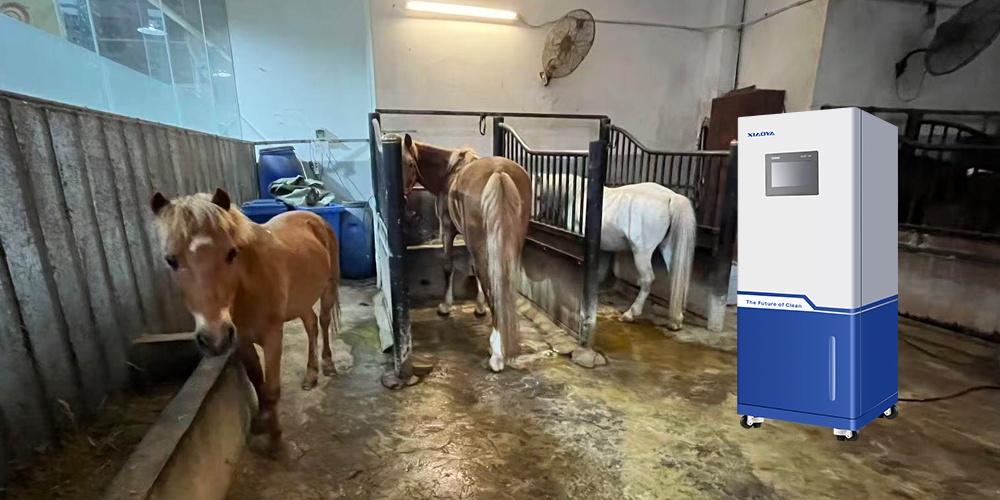
What should a procurement team actually include in the operating cost of an HOCl system?
The biggest mistake is treating operating cost as only electricity and disinfectant output. For a Hypochlorous Acid Full-Scenario Disinfection System for Horse Farms, the real cost picture is broader: water use, power draw, consumables, routine maintenance, nozzle or pipeline cleaning, operator time, downtime risk, and the consistency of dosing across barns, walkways, equipment, transport areas, and quarantine zones.
Procurement teams usually get better comparisons when they ask suppliers to break costs into monthly categories instead of quoting a vague “low running cost.” A practical structure looks like this:
Is electricity usually a major expense?
Usually not the biggest one, but it should still be measured properly. In horse farm applications, labor and inefficient coverage often outweigh pure power cost. That said, power use matters more when the system runs multiple zones, uses automated pumping over long distances, or integrates with heated water or steam-assisted sanitation steps.
If your workflow includes warm-water cleaning before HOCl application, the utility side becomes more relevant. In those setups, the heating equipment should be reviewed alongside the disinfection line. For example, a compact steam source such as Thermal Engine may be considered where nearby or distributed installation is preferred, since its published specifications include a 2 square meter footprint, 380V power supply, and low listed power consumption below 2kW or 5kW depending on model. That does not replace the HOCl system cost analysis, but it affects the full sanitation budget.
Where do horse farms tend to lose money in daily operation?
Three places come up again and again: over-application, under-coverage, and labor drag.
- Over-application means too much solution is used for each zone because spray duration, pressure, or nozzle selection is not matched to the surface and distance.
- Under-coverage is the opposite problem. The farm thinks it is disinfecting thoroughly, but corners, stall fronts, vehicle tires, shared tools, and entry points are missed. That raises disease-control risk and often leads to repeated cycles.
- Labor drag happens when “automatic” systems still require frequent setup, repositioning, manual valve switching, or repeated flushing.
Procurement teams should ask for a zone map and workflow estimate, not just machine specifications. If the supplier cannot explain how the system handles stable interiors, wash areas, trailers, hoof-care tools, and staff access points, the running cost estimate is probably incomplete.
How can you compare dosing efficiency without relying on marketing language?
Ask operational questions that force a measurable answer. You do not need a lab-style evaluation to spot weak assumptions. Start with these:
- How many square meters or zones can be treated per hour under normal farm conditions?
- What is the expected solution consumption per cycle for stalls, corridors, equipment areas, and vehicle entry points?
- Does the system maintain stable output when several nozzles run at once?
- How often do lines, nozzles, or filters need cleaning to keep spray performance stable?
Good procurement decisions come from matching output to your actual disinfection schedule. A low-dose system that needs extra passes is not low cost. A high-output system that wastes solution through drift is not efficient either.
What maintenance costs are easy to underestimate?
Filters, pumps, seals, sensors, and pipe cleaning are the obvious ones. The less obvious cost is interruption. If a system stops during a high-risk movement period, such as new arrivals, shared transport, or post-treatment turnout rotation, the farm may need to switch back to manual disinfection immediately. That creates unplanned labor cost and inconsistency.
For that reason, maintenance questions should include service intervals, replacement part access, fault alarms, and whether staff can handle routine upkeep without a specialist on every visit. Reliability features in associated utility equipment matter too. If the sanitation process includes steam or heated washdown support, a unit like Thermal Engine is typically reviewed for stability and maintenance burden because its published product details highlight more than 20 protection units, compact installation, and reduced maintenance costs. Those points are relevant only if your farm’s hygiene workflow actually uses that stage.
Should labor savings be counted as a real operating benefit?
Yes, but only when the labor calculation is honest. Count actual staff time spent preparing the system, moving hoses, checking concentration, cleaning components, and documenting completed disinfection. In many farms, labor savings come less from “fewer people” and more from shorter task duration and better repeatability.
That difference matters in purchasing. If one system costs more upfront but removes 30 to 60 minutes of repetitive work every day across several zones, it may beat a cheaper system over the year. On the other hand, if the farm runs a small stable with low traffic and limited shared equipment, a highly automated setup may be harder to justify.
Which documents should procurement request before approving a cost model?
Ask for documents that let you trace the operating assumptions, not just sales literature. At minimum, request:
- Equipment configuration list
- Rated utility consumption data
- Recommended preventive maintenance schedule
- Consumables and replacement part list
- Coverage plan by farm zone
- Operator workflow or SOP outline
If a supplier quotes monthly operating cost without tying it to these documents, the number is too weak to use in a serious procurement comparison.
What is a sensible way to make the final buying decision?
Use a simple rule: compare systems by cost per completed disinfection task, not by equipment price alone. That means the cost model should reflect the farm’s actual zones, cleaning frequency, staffing pattern, and maintenance capacity. For buyers evaluating a Hypochlorous Acid Full-Scenario Disinfection System for Horse Farms, the strongest option is usually the one that delivers stable coverage with the fewest repeated passes, the least operator intervention, and the clearest maintenance plan.
If two suppliers look close on price, the better decision usually comes from the one that can map daily operating cost to specific farm tasks instead of offering a generic “low-cost” claim.
NEWS
 What Output Capacity Does a Public HClO Generator Need for Large Venues?
 Selecting a Public Hypochlorous Acid Generator for Schools and Transit Hubs
- How Public Hypochlorous Acid Generators Support Safer Facility Disinfection
 Next-Generation Hypochlorous Acid System Solution for Sterile Self-Service Laundromats Officially Released
- Upgrade in Healthy Living: Hypochlorous Acid Generators Become the New Standard for Luxury Villas
Leave us a message

Xiaoya Group was founded in 1979,expert in the electrolyzed water industry.
Get in Touch
*We respect your confidentiality and all information are protected.