news
What Areas Should a Horse Farm HOCl Disinfection System Cover
The biggest mistake people make when evaluating a Hypochlorous Acid Full-Scenario Disinfection System for Horse Farms is assuming that “spraying the stable” is enough. It is not. On a horse farm, contamination does not stay in one obvious place. It moves with hooves, buckets, halters, grooming tools, transport carts, water splash, manure handling, and human traffic. So when professionals talk about full-scenario disinfection, they are not describing a stronger chemical. They are describing a coverage logic: every surface or zone that can carry organic residue, moisture, or repeated contact needs to be considered as part of one hygiene system.
That matters because horse farms are mixed environments. Some areas are animal-living spaces, some are feed-related, some are equipment zones, and some sit in between. A useful HOCl setup has to work across those boundaries without creating unnecessary irritation, complicated handling, or inconsistent routines. Hypochlorous acid is often chosen in these settings because it can fit daily-use disinfection needs more comfortably than harsher options, especially where both animals and caretakers are moving through the same space throughout the day. But the product chemistry is only one part of the decision. Coverage planning is what determines whether the system actually reduces cross-contamination.
Stalls are the obvious starting point, but not the whole picture
Individual stalls are usually the first area owners think about, and for good reason. They concentrate urine, manure particles, bedding dust, and repeated contact with walls, doors, latches, and partitions. If one horse has a skin issue, respiratory sensitivity, or an infectious concern, the stall becomes a high-priority zone. A practical disinfection system should cover not just the floor and bedding-contact surfaces after cleaning, but also door handles, bars, feeding corners, and any surface horses regularly lick, rub, or breathe close to.
Still, stall disinfection has a limit. If the aisle, wash area, and shared tools are neglected, the stall gets re-contaminated quickly. That is why experienced farm managers treat stalls as one node in a traffic network, not as an isolated room.
Feeding and watering zones need stricter attention than many owners expect
Feeding areas deserve a different level of scrutiny because they combine moisture, residue, and direct oral contact. Feed tubs, hay racks, bucket handles, water trough edges, automatic drinker surfaces, and nearby splash zones can all become repeat exposure points. In practice, these are not just “dirty surfaces.” They are ingestion-related contact points. That changes the standard. The goal is not simply odor control or visual cleanliness; it is reducing microbial load on surfaces the horse repeatedly noses or drinks from.
This is also where a common misunderstanding shows up: people sometimes assume that if water looks clear and buckets are rinsed, the hygiene risk is low. On working farms, residue film and frequent handling matter more than appearance. A full-scenario system should therefore include routine treatment for water-contact surfaces and for the tools used to refill, carry, or clean them.
Grooming, tack, and treatment spaces are cross-contact zones
Grooming bays, tack rooms, and basic care areas are often where pathogens move quietly between horses. Brushes, curry combs, lead ropes, cross ties, saddle pads, storage hooks, and treatment counters are all handled repeatedly, sometimes with limited downtime between animals. Even when farms assign equipment by horse, shared surfaces remain. A horse with a skin condition does not need direct stall-to-stall contact for contamination to spread; the transfer can happen through hands, tools, or a wash rack wall.
For that reason, a horse farm HOCl disinfection plan should include all handling spaces where horses are stationary and touched often. These zones tend to be missed because they do not always smell bad or look unsanitary. Yet operationally, they are some of the busiest contact points on the property.
Walkways, entry points, and shared traffic lanes are where “clean” and “dirty” mix
Aisles, barn entrances, wash-down paths, loading edges, and transitions between indoor and outdoor areas carry a different kind of risk. They collect runoff, hoof debris, wheel traffic, and boot traffic. These are the places where a farm’s hygiene system either holds together or breaks down. If staff disinfect stalls carefully but move contaminated wheelbarrows and boots through every central walkway, the site is only partially controlled.
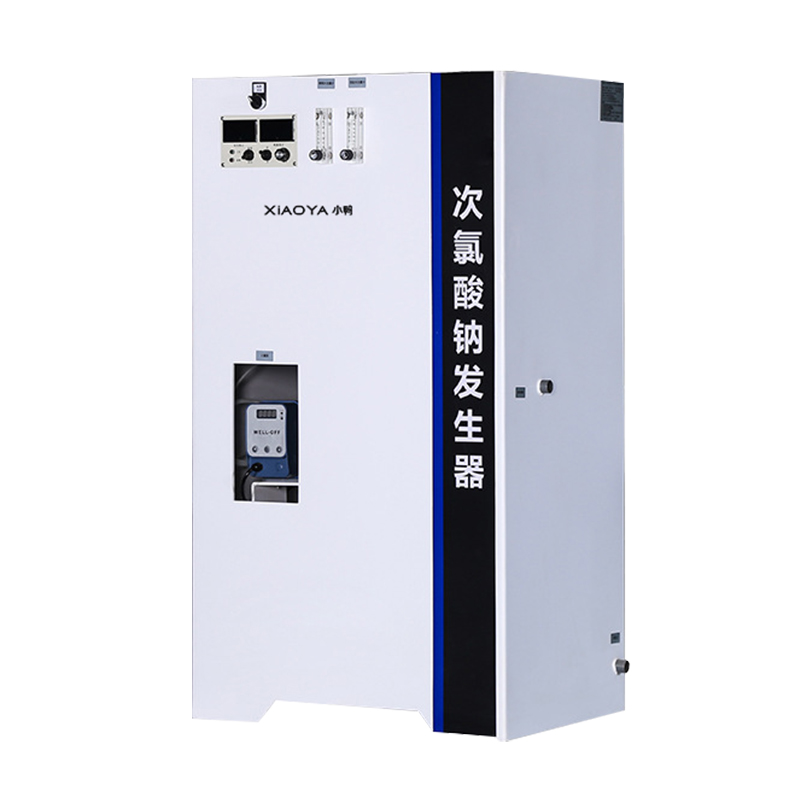
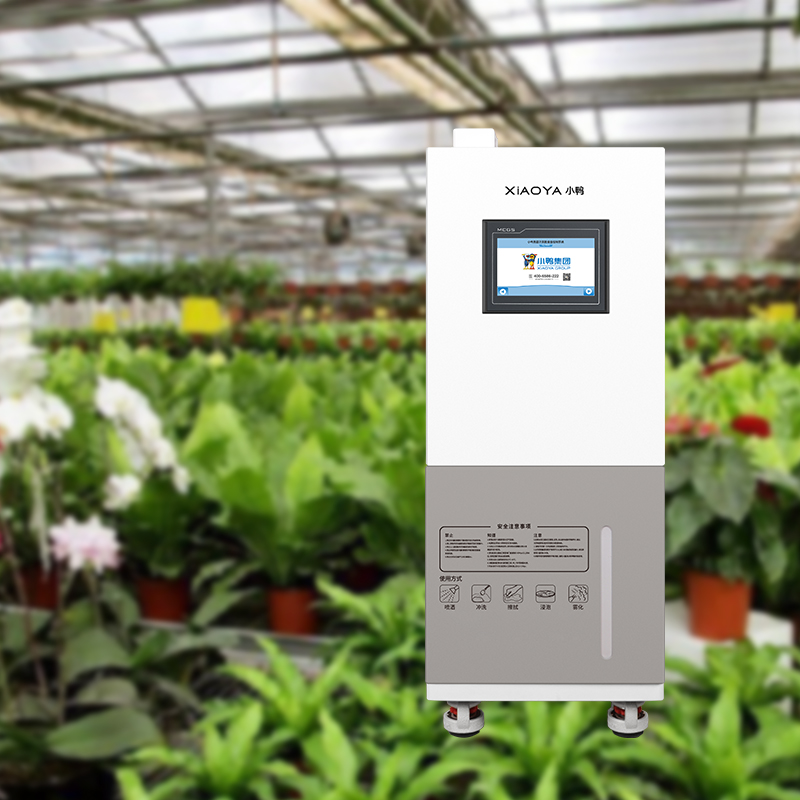
This is one reason automated or semi-automated disinfection equipment can be useful beyond its original application category. For example, systems designed for frequent sanitation in waste-handling environments illustrate the value of stable output, adjustable concentration, and on-demand production. A unit such as Hypochlorous Acid Generator for Garbage Disinfection (AQ-P300-W) is not a horse-specific device, but its operating logic is relevant: broad-spectrum sterilization, deodorization, adjustable available chlorine concentration from 10-200ppm, and continuous hypochlorous acid output can support facilities that need repeatable sanitation across multiple zones rather than occasional spot treatment.
Transport and waste-handling equipment should be part of the same map
Many farms under-scope disinfection because they think in terms of rooms instead of equipment flows. Wheelbarrows, manure carts, forks, shovels, trailer ramps, transport partitions, and collection bins all move contamination from one area to another. A trailer used for one horse today and another next week is not just a logistics asset; it is a biosecurity surface. The same is true for waste staging points near the stable.
This is where the phrase full-scenario really earns its meaning. If manure handling equipment and transport contact points are excluded, a farm may still have a neat-looking barn with weak hygiene control. A more complete system considers where waste is generated, where it travels, and what touches that route.
What “coverage” should mean in practical terms
When comparing options, farm owners should look beyond whether a system can generate HOCl. The better question is whether it can support the way the farm actually operates. That usually comes down to a few practical checks:
- Can it be used across animal-contact, feed-adjacent, equipment, and waste-related areas without forcing separate workflows?
- Is the concentration adjustable for different sanitation tasks rather than fixed at one output?
- Can the farm produce disinfectant on demand, or does it depend on stored solution with replacement and handling burdens?
- Will the equipment tolerate humid, high-frequency, utility-style use?
- Does the disinfection plan include workers’ touchpoints as well as horses’ contact surfaces?
Those questions matter more than a broad promise of “whole-barn disinfection.” Coverage is not measured by how much area a mist can reach. It is measured by whether the system fits the actual contamination routes on the farm.
For businesses experienced in disinfection appliances and automated sanitation equipment, the core value is usually not a single machine feature but the ability to match output, concentration control, and operating durability to real working conditions. That is why some industrial HOCl generation platforms, including Hypochlorous Acid Generator for Garbage Disinfection (AQ-P300-W) , attract attention outside their original use scenario. Their specifications, such as 120-300L/h output, adjustable pH range of 5.0-6.5, and component life of at least 5000 hours for the electrolyzer, show the kind of operational consistency that larger or more hygiene-sensitive facilities often need to evaluate.
A horse farm does not need every surface disinfected every hour. It does need a system that understands where contamination starts, where it spreads, and which surfaces matter most. If a HOCl disinfection setup covers stalls, feeding and watering points, grooming and care zones, shared walkways, transport equipment, and waste-contact surfaces, it is moving in the right direction. If it covers only the places that are easiest to spray, it is not really full-scenario at all.
NEWS
 Next-Generation Hypochlorous Acid System Solution for Sterile Self-Service Laundromats Officially Released
- Upgrade in Healthy Living: Hypochlorous Acid Generators Become the New Standard for Luxury Villas
- The Ultimate Solution to Pet Shop Disinfection Challenges! XIAOYA Hypochlorous Acid Generator: Safe Pet Protection with Peace of Mind
 Hypochlorous Acid Generator vs Sodium Hypochlorite Generator
- Hypochlorous Acid Generator Supplier

Leave us a message

Xiaoya Group was founded in 1979,expert in the electrolyzed water industry.
Get in Touch
*We respect your confidentiality and all information are protected.