news
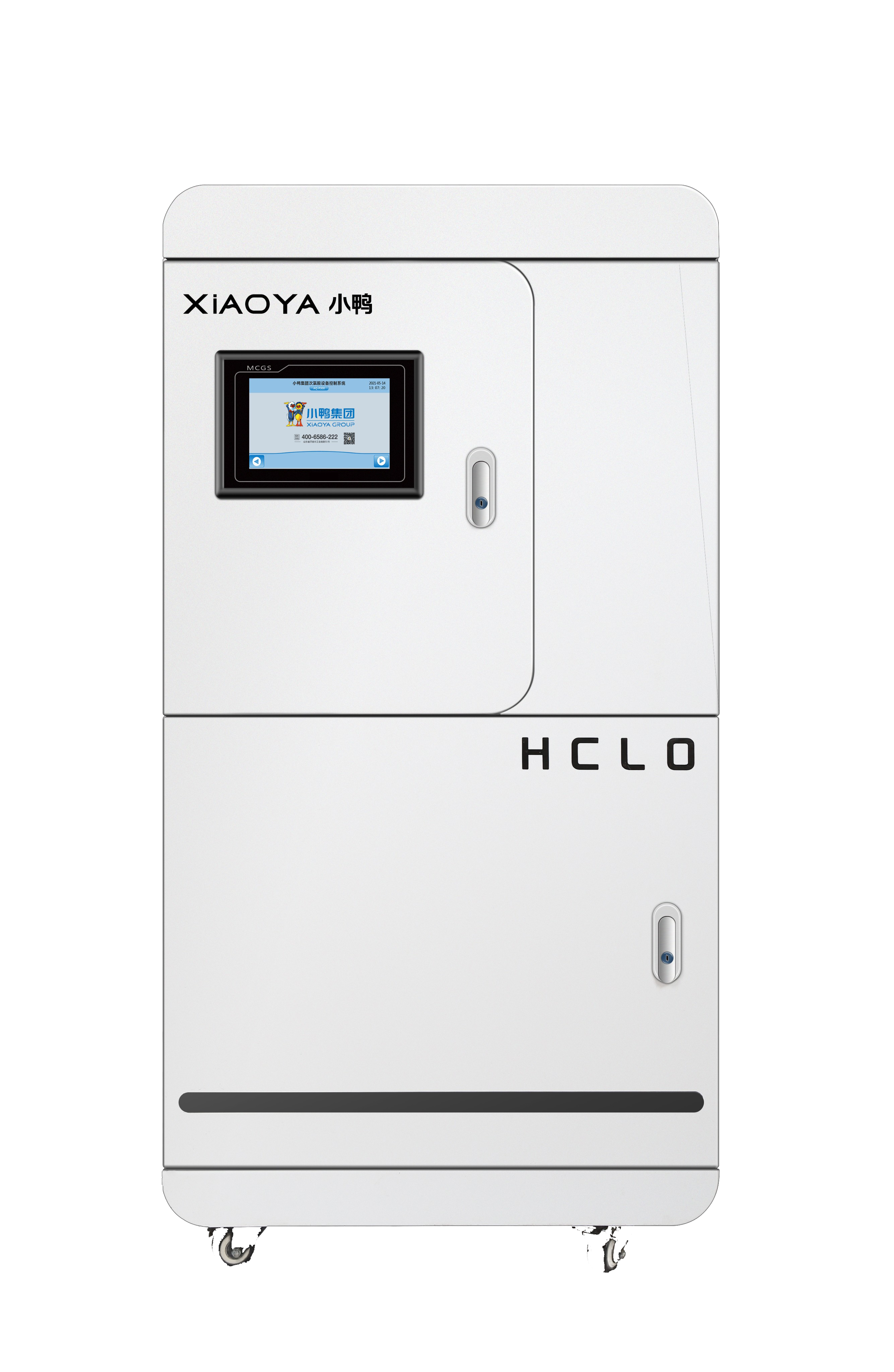
From clean energy systems to health care and disinfection appliances, hypochlorite generator technology is becoming a key solution for safe, efficient, and sustainable sterilization. Understanding the fundamentals of a hypochlorite generator helps manufacturers, buyers, and industry professionals evaluate its role in automation equipment, product innovation, and modern sanitation standards across household and commercial applications.
For companies active in kitchen and bathroom appliances, small household appliances, and disinfection equipment, the topic is no longer limited to chemistry. It directly affects equipment design, control logic, maintenance cycles, operating cost, and product competitiveness in both consumer and commercial markets.
In automation equipment, a hypochlorite generator is valued because it can convert basic inputs such as water, salt, and electricity into on-site disinfecting solution within minutes. That reduces chemical storage risk, supports compact product integration, and helps manufacturers build safer sanitation functions into appliances and treatment systems.
How Hypochlorite Generator Technology Works in Automated Systems
At its core, hypochlorite generator technology uses electrolysis. A controlled DC power supply, an electrolytic cell, electrodes, water flow management, and dosing logic work together to generate a disinfecting solution with stable concentration.
The basic operating principle
The process usually begins with brine preparation or low-salinity feed water. When current passes through the cell, chloride ions are converted into active chlorine species. Under controlled pH and oxidation-reduction conditions, the system can produce sodium hypochlorite or hypochlorous acid for disinfection use.
In automated equipment, output concentration is commonly managed within application ranges such as 10–200 ppm for light sanitation and several hundred ppm for stronger disinfection tasks. The exact range depends on water quality, contact time, and target microorganisms.
Key system components
- Electrolytic cell with coated electrodes
- Power module for stable current and voltage control
- Flow sensors and conductivity monitoring
- Dosing pump or circulation loop
- PLC or embedded controller for automation logic
- Safety interlocks for dry-run, overheat, and low-salt conditions
The table below outlines the main building blocks of a typical automated hypochlorite generator and their practical relevance in appliance and equipment design.
For equipment manufacturers, the most important takeaway is that generator performance depends on the full control chain, not only on the cell itself. Weak sensing or unstable current control can cause concentration drift, inconsistent sterilization, and shorter service intervals.
Why this matters for appliance and equipment integration
In kitchen, bathroom, and health-care related appliances, space is often limited to a compact footprint. Designers usually need a module that can start quickly, respond within 30–120 seconds, and operate under repeated daily cycles without complex chemical handling.
This is where integrated options such as the Pure Hypochlorous Acid (HClO) Electrolyzer can be relevant. For disinfection and water treatment applications, buyers often look for solutions that are both cost-effective and efficient, especially when scaling from prototype validation to regular production.
Where Hypochlorite Generators Deliver Value Across Industries
The value of a hypochlorite generator becomes clearer when viewed through application scenarios. In automation equipment, the technology is not only a chemical process unit. It is a sanitation function that can be embedded into a product, line, or treatment system.
Typical application scenarios
In household appliance development, it can support self-cleaning water paths, anti-odor cycles, and periodic sanitation functions. In commercial disinfection systems, it can feed spray, rinse, or circulation modules. In water treatment, it can help control microbial load in small to medium systems.
Manufacturers usually evaluate at least 4 dimensions: output concentration, daily operating hours, installation footprint, and maintenance complexity. These factors affect both BOM cost and after-sales service pressure.
The following comparison shows how application priorities can differ across sectors that use automated disinfection equipment.
This comparison highlights why one-size-fits-all selection rarely works. A module sized for intermittent home appliance use may not be suitable for 8–16 hours of daily operation in a commercial water treatment loop.
Main pain points for buyers and engineers
- Unclear output target: buyers often request disinfection without defining ppm range or contact time.
- Water quality variation: hardness, conductivity, and organic load can change generator behavior.
- Maintenance underestimation: electrode cleaning frequency may range from monthly to quarterly depending on duty.
- Integration mismatch: the generator may perform well alone but fail in the full automated process.
These issues are especially important in B2B procurement, where equipment must perform consistently after installation, not just during sample testing. Clear technical alignment at the RFQ stage can prevent redesign delays of 2–6 weeks.
How to Evaluate and Select the Right Hypochlorite Generator
Selection should begin with the application logic rather than the lowest purchase price. In automation equipment, the right generator is the one that fits the process window, control architecture, and service model over the full life cycle.
Five practical selection criteria
1. Output requirement
Define whether you need batch output or continuous dosing. A compact appliance may need short bursts several times per day, while a treatment system may require stable flow across 4–12 operating hours.
2. Water and salt conditions
Feed water quality affects efficiency and maintenance. If conductivity is too low or scaling tendency is high, the controller and cell design must compensate, or output consistency will drop.
3. Control and communication
For automated lines and smart appliances, check whether the system supports sensor feedback, status alarms, and communication with a PLC or embedded board. Even a basic 3-signal interface can simplify integration and troubleshooting.
4. Serviceability
A practical module should allow routine inspection, cleaning, or replacement without major disassembly. In many B2B environments, service time targets are expected within 15–30 minutes per maintenance cycle.
5. Supply chain fit
R&D teams often approve a sample quickly, but mass production needs stable sourcing, repeatable assembly, and support during ramp-up. For this reason, buyers should evaluate production support, not only prototype performance.
The checklist below can help procurement and engineering teams review a candidate solution before final approval.
When a supplier can address these 4 areas clearly, buyers are in a better position to assess long-term suitability. This is often more valuable than comparing unit price alone, especially for equipment expected to support repeated sanitation cycles over several years.
A note on modular product options
For projects focused on disinfection and water treatment, modular electrolyzer solutions can shorten development time and reduce integration risk. The Pure Hypochlorous Acid (HClO) Electrolyzer is an example of a direction many buyers consider when they need efficient on-site HClO generation with practical cost control.
Implementation, Maintenance, and Risk Control
Even a well-selected hypochlorite generator can underperform if implementation is rushed. In automation equipment projects, success often depends on a disciplined rollout plan that covers technical validation, installation, and operating training.
A practical 5-step deployment flow
- Define sanitation target, concentration range, and contact time.
- Test feed water and verify conductivity and scaling tendency.
- Integrate electrical control, flow path, and safety interlocks.
- Run pilot validation for 7–14 days under real duty conditions.
- Finalize maintenance SOP, spare parts list, and operator training.
This sequence is especially useful for enterprises that combine R&D, production, and operation. It helps align design intent with manufacturability and after-sales requirements before volume launch.
Common operational risks
Scaling and electrode fouling
If feed water hardness is not managed, scale can build up and reduce efficiency. In many cases, inspection every 30–90 days is a practical starting point, adjusted by actual water conditions and operating hours.
Output inconsistency
Inconsistent flow, unstable power supply, or poor sensor calibration can cause concentration swings. That is why buyers should ask for operating windows and calibration guidance instead of relying only on nominal output values.
Mismatch between lab and field use
A sample may perform well on a bench, yet fail in a final appliance with heat, vibration, confined airflow, or variable user behavior. Field-oriented validation remains essential, particularly for consumer-facing equipment.
Hypochlorite generator technology is most valuable when treated as part of a complete automation solution. For manufacturers of disinfection appliances, water treatment systems, clean energy equipment, and small household devices, the right design can reduce chemical handling, improve sanitation reliability, and support more competitive product development.
If you are evaluating generator integration, comparing module options, or planning a new automated sanitation function, now is the right time to review output targets, control requirements, and service strategy together. Contact us to get a tailored solution, discuss product details, and explore more equipment-ready disinfection options.
NEWS
 Public Facility HOCl Storage: Managing Heat, Light, and Shelf Life
 On-Site HOCl vs. Purchased Disinfectant for Municipal Buildings
- Sizing a Public Facility HOCl Generator for Peak Cleaning Demand
- What Can a Hypochlorous Acid Generator Do for Public Facility Cleaning?
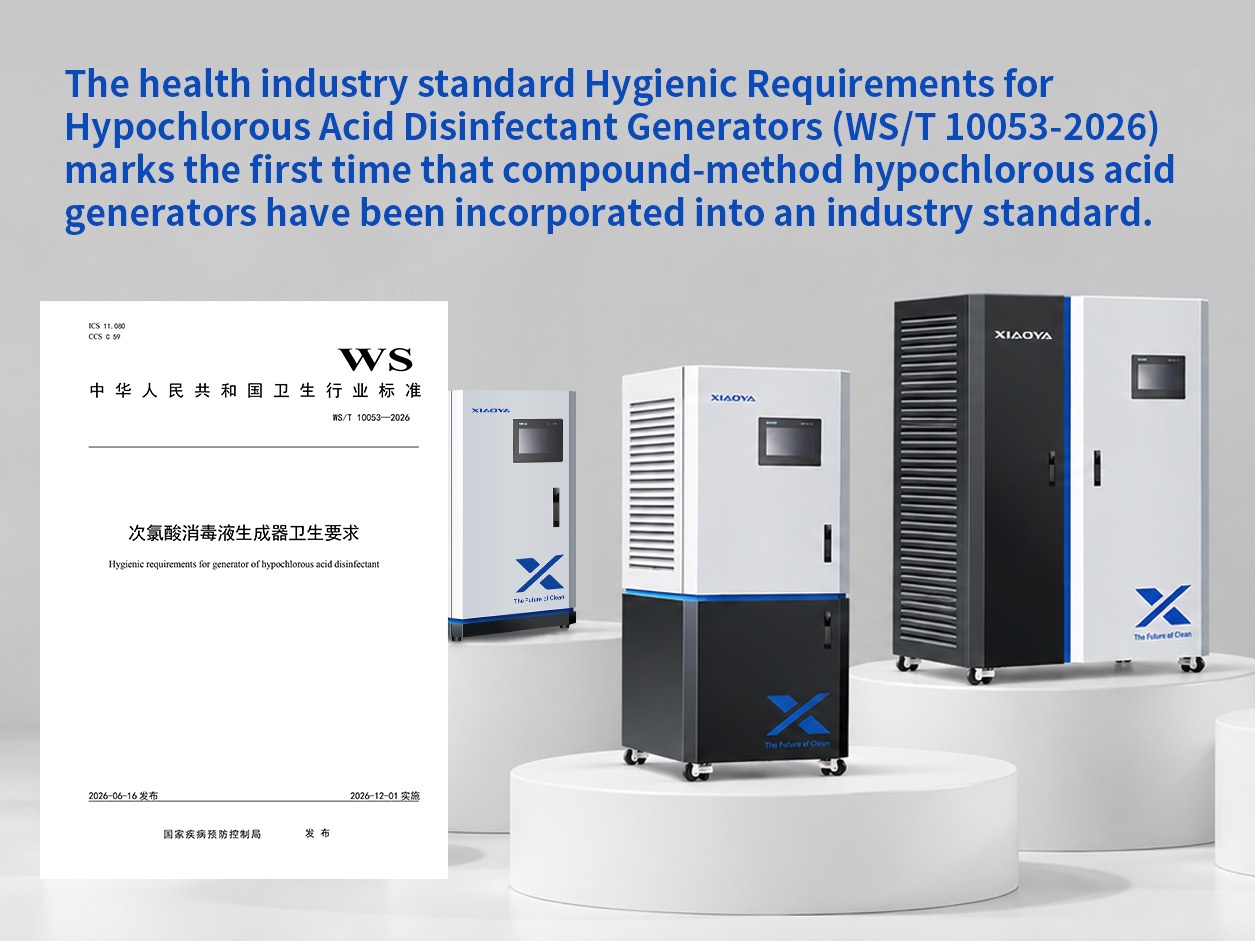
 WS/T 10053-2026 Includes the Compound Method for the First Time: Standard Signals and Market Opportunities for Mass Agricultural Production of Hypochlorous Acid Generators

Leave us a message

Xiaoya Group was founded in 1979,expert in the electrolyzed water industry.
Get in Touch
*We respect your confidentiality and all information are protected.