news
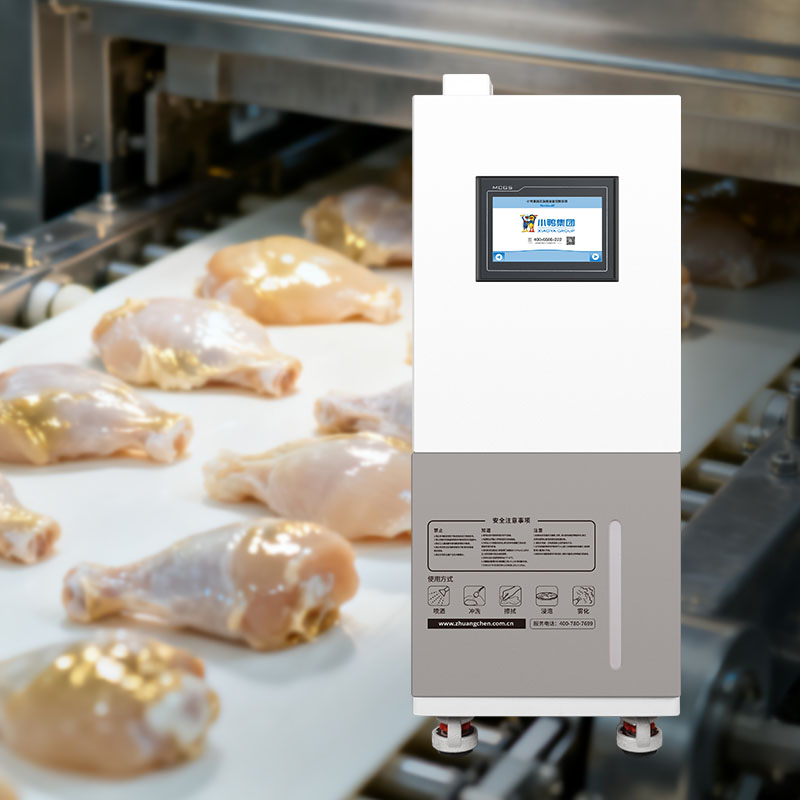
Understanding Free Available Chlorine in Food HClO Generator Applications
Free available chlorine (FAC) is one of the first numbers operators look for when checking a hypochlorous acid solution. In food processing, however, it is also one of the most commonly misunderstood numbers. A reading may show that chlorine is present, yet the actual sanitizing performance can still be weak if pH, water quality, organic load, contact time, or application method are not under control.
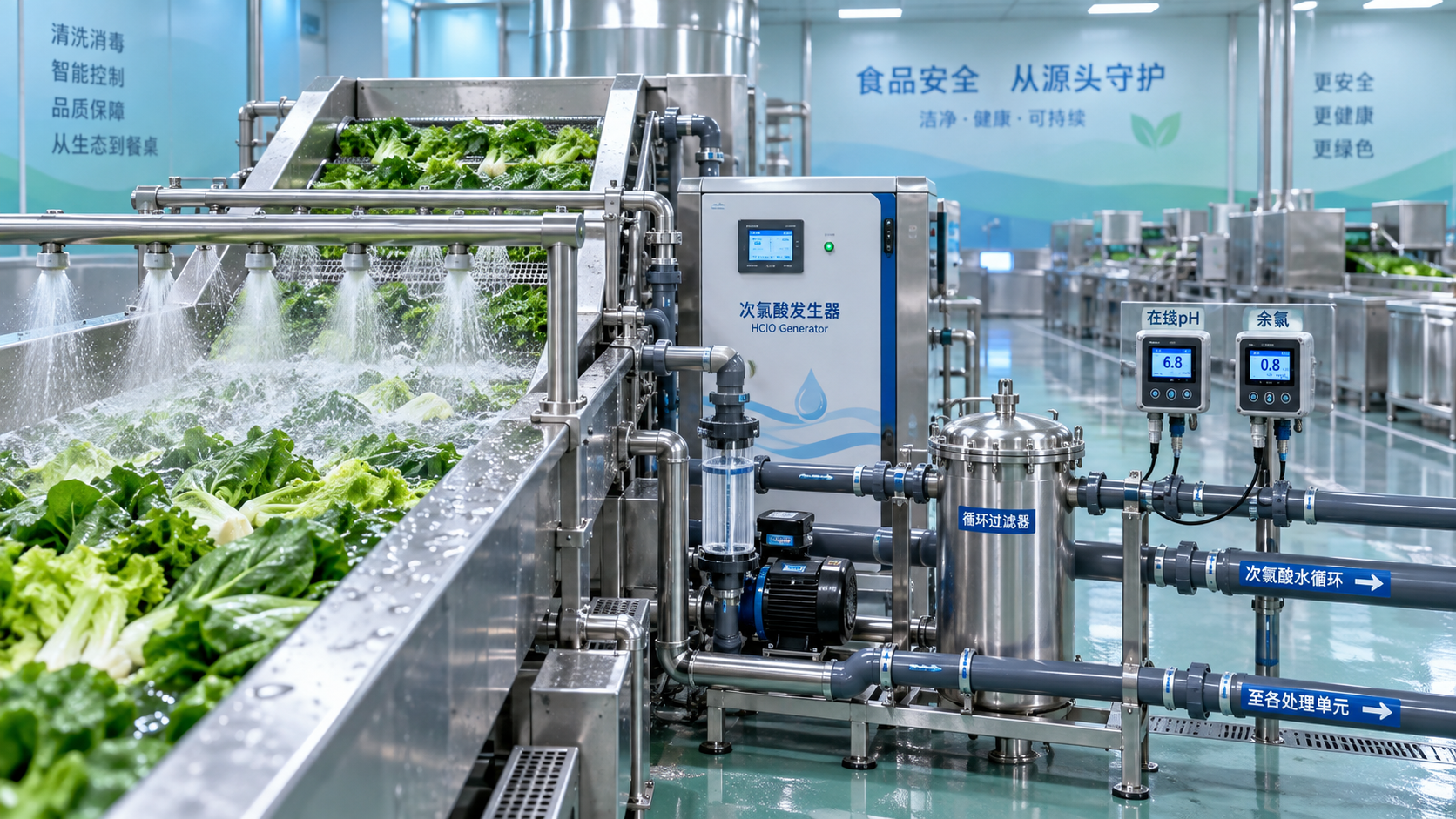
For a Food Hypochlorous AcidGenerator, FAC should be treated as an operating indicator rather than a stand-alone guarantee of disinfection. It helps confirm whether the generator is producing an oxidizing chlorine-based solution within the expected range, but it does not by itself tell the operator how much of that chemistry is present as hypochlorous acid (HClO), the form generally valued for rapid antimicrobial activity.
That distinction matters on production floors. A spray system may deliver a solution with a measurable FAC value, but residues on conveyor belts, foam remaining after cleaning, hard-water scale inside a line, or an incorrect pH can reduce the practical effect long before the solution reaches the target surface.
FAC Is a Family Measurement, Not a Direct HClO Reading
In an electrochemically generated chlorine solution, “free available chlorine” generally refers to the active chlorine species available in water, mainly hypochlorous acid (HClO) and hypochlorite ion (OCl−). The relative balance between those two species changes with pH. At a lower, mildly acidic pH, more of the available chlorine is present as HClO. As pH rises, a larger portion shifts toward OCl−.
This is why two solutions with the same FAC result may not behave the same way in use. A solution at a near-neutral pH may contain a more favorable proportion of HClO than a more alkaline solution with the same total available chlorine. Operators should therefore avoid the shortcut of saying that “more FAC always means better sanitation.” Higher concentration can be useful in certain applications, but the right target depends on the process, the surface, the soil level, the required contact time, and the applicable food-safety program.
FAC also differs from total chlorine. Total chlorine can include chlorine that has already reacted with organic substances or other contaminants. Once chlorine is tied up in those reactions, it may no longer be available in the same way for sanitation. For routine generator checks, measuring free chlorine is generally more useful than relying only on total chlorine.
Why Water Quality Changes the Result More Than Many Teams Expect
Generator performance begins with incoming water. The electrolysis cell may be operating normally, but poor feed-water conditions can make the finished solution inconsistent. Hardness minerals can contribute to scaling; suspended solids can affect sensors and fittings; unstable inlet pressure can interfere with flow control. Water containing a high organic burden can consume active chlorine quickly after generation.
A useful operational habit is to distinguish between “generator output” and “point-of-use concentration.” Test both when troubleshooting. If the FAC is on target at the generator outlet but lower at the spray nozzle, wash station, or storage tank, the issue may be dilution, line contamination, excessive storage time, or an unrecognized mixing point. If the value is low directly at the outlet, inspect salt or electrolyte dosing, water supply, electrode condition, and the generator’s operating settings.
This is especially relevant in automated sanitation systems. A dosing pump, solenoid valve, or PLC-controlled rinse cycle can make a process repeatable, but only if its sensors, flow rates, and calibration checks remain reliable. Automation reduces variability; it does not eliminate the need for verification.
A Practical Way to Interpret FAC on the Floor
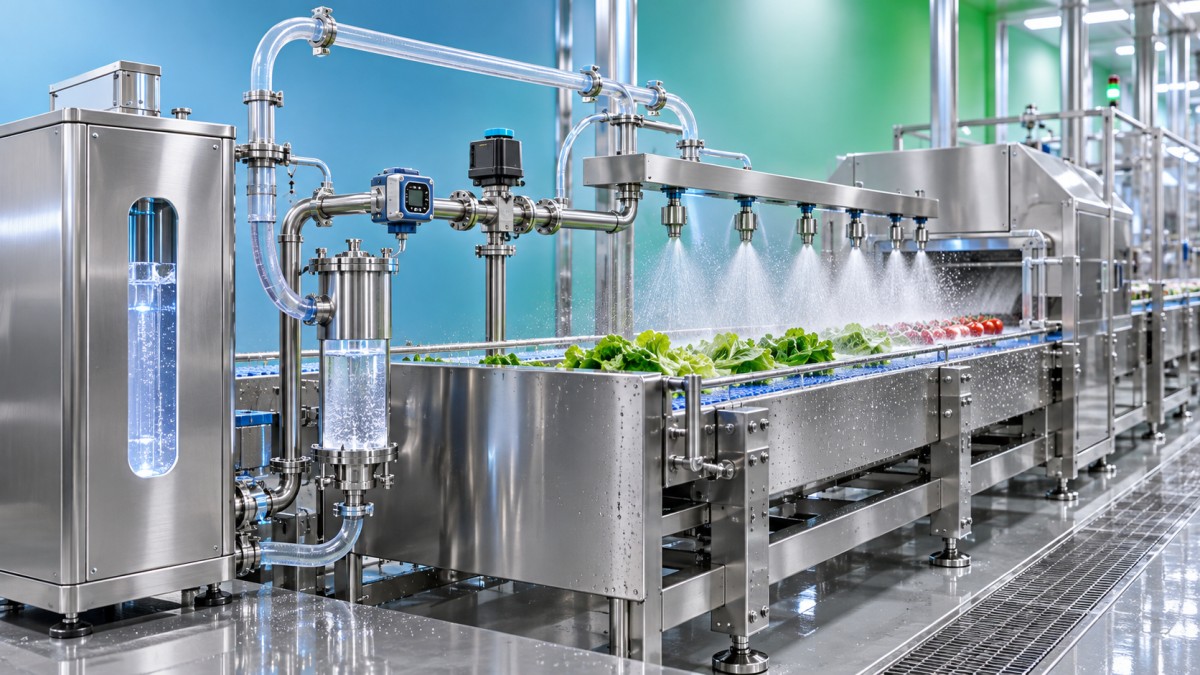
When an FAC result appears outside the expected range, operators should not immediately adjust concentration upward. First, look at the actual condition of the process. Was the surface cleaned before sanitizing? Has the solution been held for an extended period? Is the spray pattern reaching hinges, guards, drain edges, and underside surfaces? Is the pH still within the equipment’s intended operating range?
- Check FAC with a method appropriate to the expected concentration range and follow the test-kit instructions carefully.
- Record pH alongside FAC. The two readings together are more informative than either one alone.
- Test at the point of use, not only at the generator discharge.
- Confirm that cleaning occurs before sanitizing. Hypochlorous acid is not a substitute for removing visible soil and fats.
- Review contact time and coverage before changing the generator setpoint.
There is also a food-contact consideration. The suitable concentration and rinse requirement can vary by jurisdiction, food category, and intended use. A concentration appropriate for a floor drain or equipment exterior may not automatically be appropriate for direct food-contact equipment or produce washing. The site’s validated sanitation procedure and local regulatory requirements should determine the final operating limits.
Generator Parameters That Deserve Attention
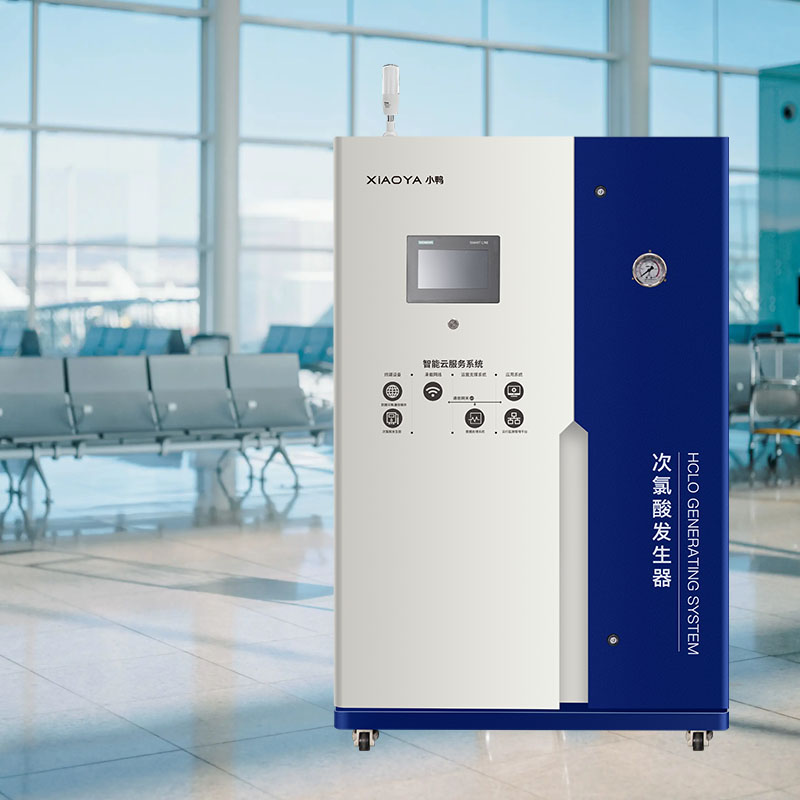
A reliable Food Hypochlorous AcidGenerator is not defined by concentration alone. Operators should understand the relationship between production capacity, water pressure, electrode life, electrolyte supply, and control logic. A generator designed for a small hand-spray operation may be unsuitable for a high-flow central sanitation loop, even if both units can produce a similar FAC reading in a sample bottle.
For comparison, equipment built for demanding livestock environments often illustrates the same engineering priorities seen in food sanitation: stable output, controlled water supply, sensor protection, and easy maintenance. The AQ-P1000 Hypochlorous Acid Generator for Animal Husbandry and Breeding is specified with a 1,000 L/h production capacity, pH 6.37, and an available chlorine range of 10–300 mg/L, with customization depending on requirements. Its stated inlet water pressure range is 0.15–0.25 MPa, while the electrolyzer service life is listed as at least 3,000 hours.
Those figures should not be copied directly into a food process specification. Different applications have different risk controls. They do show why buyers and operators should ask practical questions: Can the unit maintain concentration during peak demand? How does it respond to pressure variation? What alerts are provided when water, electrolyte, or sensor conditions are abnormal? How accessible is the cell for inspection and replacement?
For manufacturers working across kitchen and bathroom appliances, healthcare and disinfection equipment, clean-energy systems, and small household appliances, the value of integrated R&D, production, and operational support is often visible in these details. The chemistry may be familiar; making it repeatable in real working conditions is the harder part.
The Storage and Application Mistakes That Reduce Available Chlorine
Freshly generated solution is not automatically stable forever. Exposure to heat, direct light, open air, contaminated containers, and incompatible materials can change FAC over time. A common problem is generating a large batch because the equipment has available capacity, then holding that solution longer than the sanitation schedule really requires. In many operations, producing closer to the time of use is easier to control than trying to manage long storage periods.
Spray application creates another trade-off. Fine droplets may improve coverage on some equipment, but overspray, drift, and uneven deposition must be managed. In enclosed areas, ventilation and worker procedures matter. On heavily soiled surfaces, more solution is not necessarily the answer; the chlorine demand from organic residues can consume the active species rapidly. Better pre-cleaning often produces a more dependable result than simply increasing FAC.
Build Verification Into the Routine
The most useful FAC program is simple enough to be followed every shift. Record generator outlet FAC and pH, verify at a representative point of use, note unusual water-supply conditions, and document corrective actions when readings drift. If values repeatedly change despite normal operation, inspect the complete chain: feed water, electrolyte, electrolysis cell, storage vessel, piping, dosing equipment, and test method.
FAC is a valuable control point because it is measurable. But it becomes meaningful only when read alongside pH, surface cleanliness, contact time, and the actual use location. For food applications, that disciplined approach is safer than chasing a single concentration number—and it gives operators a clearer basis for deciding whether the generator, the process, or the sanitation procedure needs attention.
NEWS
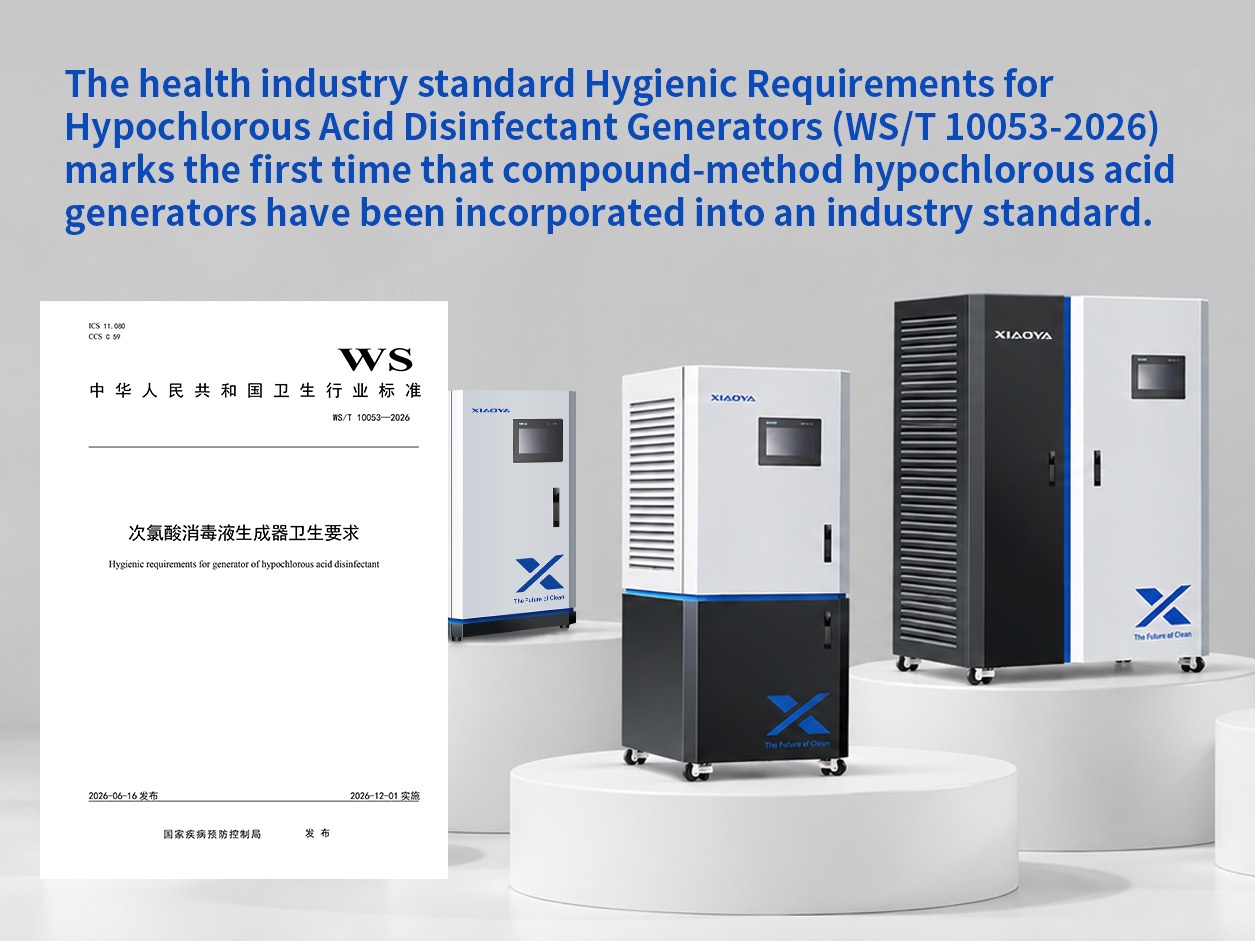
 WS/T 10053-2026 Includes the Compound Method for the First Time: Standard Signals and Market Opportunities for Mass Agricultural Production of Hypochlorous Acid Generators
 Understanding Free Available Chlorine in Food HClO Generator Applications
 Which Food Hypochlorous Acid Generator Fits a High-Volume Packing Line?
- Food Hypochlorous Acid Generators for Produce Washing: Key Process Controls
- On-Site HClO Production Versus Ready-Made Disinfectants for Public Facilities
Leave us a message

Xiaoya Group was founded in 1979,expert in the electrolyzed water industry.
Get in Touch
*We respect your confidentiality and all information are protected.