news
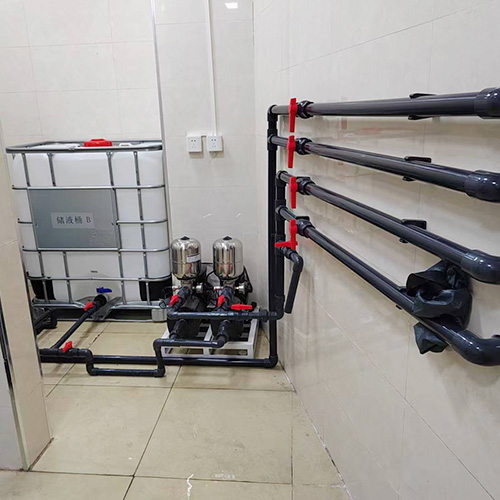
Choosing the right medical disinfection equipment is critical for healthcare facilities aiming to ensure patient safety, regulatory compliance, and operational efficiency. As a leading integrated R&D, manufacturing, and service enterprise specializing in healthcare and disinfection appliances—alongside clean energy and smart home solutions—we understand the unique demands of clinical environments. This guide walks you through key considerations—from sterilization efficacy and automation compatibility to maintenance requirements and certification standards—helping facility managers select reliable, future-ready medical disinfection equipment that aligns with modern infection control protocols.
What Sterilization Efficacy Metrics Actually Matter?
Sterilization performance isn’t just about “killing germs.” It’s about speed, spectrum, and reproducibility under real-world conditions. For healthcare settings, validated log-reduction values against critical pathogens—including Staphylococcus aureus, Pseudomonas aeruginosa, influenza A (H1N1), and SARS-CoV-2—are non-negotiable. Look for systems delivering ≥4-log (99.99%) reduction within 30 seconds across bacteria, viruses, and fungi—not just in lab petri dishes, but on stainless steel, plastic, and porous surfaces.
Equally important is residual impact. Traditional chlorine-based disinfectants often leave corrosive residues or volatile organic compounds (VOCs) that compromise HVAC integrity and staff respiratory health. Hypochlorous acid (HOCl), by contrast, achieves rapid microbial inactivation without corrosion, odor, or toxic byproducts—making it ideal for high-frequency use in ICUs, operating rooms, and ambulatory care units.
Real-world validation matters more than theoretical claims. Equipment must demonstrate consistent output stability: ±10 ppm concentration tolerance across 8–12 hours of continuous operation, verified via inline sensors and PLC-controlled electrolyte dosing—not manual titration or periodic sampling.
This table reflects peer-reviewed performance benchmarks from EPA-registered disinfectant testing protocols (EPA Method MB-23-01) and WHO-recommended environmental hygiene guidelines. HOCl systems outperform legacy chemistries not only in speed and safety—but also in infrastructure longevity and air quality management.
How Automation Integration Impacts Workflow Efficiency
Modern healthcare disinfection isn’t standalone—it’s part of an automated ecosystem. Equipment must support seamless integration with hospital building management systems (BMS), IoT sensor networks, and centralized maintenance dashboards. Key interface requirements include Modbus TCP/RTU, RS485, and optional MQTT for cloud-based monitoring of runtime, electrolyte levels, and real-time concentration data.
PLC-driven control logic enables scenario-based programming: e.g., automatic dilution adjustment for endoscope reprocessing vs. surface fogging, or timed activation during off-peak hours to reduce staffing dependency. Touchscreen HMI interfaces should allow role-based access—nurses adjusting concentration, engineers viewing diagnostics, and administrators exporting audit logs compliant with Joint Commission EC.02.05.01.
For facilities upgrading legacy infrastructure, retrofit readiness is essential. Look for modular designs with standardized mounting brackets, plug-and-play power (220 V~/50 Hz), and compact footprints (<0.5 m² floor space). The Hypochlorous Acid Full-Scenario Disinfection System for Horse Farms exemplifies this—featuring a 5L electrolyte tank, 420W rated power, and PLC touch screen with data export capability—designed for flexible deployment across diverse operational scales.
Key Automation Readiness Checks
- Support for scheduled disinfection cycles (e.g., 3x daily in waiting areas, continuous low-dose in isolation wards)
- Real-time alerting for low electrolyte, pH drift (>±0.3), or flow interruption (threshold: ≤15 s)
- Compliance-ready reporting: timestamped usage logs, operator ID traceability, and PDF export for ISO 13485 audits
- Remote firmware updates via secure HTTPS—no onsite technician required for version upgrades
Certification & Compliance: Beyond CE and FDA
Regulatory alignment isn’t checklist compliance—it’s risk mitigation. While CE marking confirms EU Machinery Directive adherence, healthcare-grade disinfection systems require layered validation: US FDA 510(k) clearance for medical device classification, EPA registration for public health claims, USDA approval for veterinary/animal contact use, and WHO Essential Medicines List inclusion for global procurement eligibility.
Critically, certifications must cover *the full system*, not just the active ingredient. Electrolyzer lifespan ≥5000 hours, stable concentration delivery (±10 ppm), and non-toxicity verification per OECD 404 (skin irritation) and OECD 437 (eye irritation) are mandatory for clinical adoption. Japan’s Ministry of Health, Labour and Welfare (MHLW) further mandates 24-month shelf-life validation for on-site generated HOCl—ensuring reliability across seasonal demand fluctuations.
Our integrated R&D-manufacturing model ensures every unit undergoes dual-track validation: factory-level performance testing *and* third-party certification audits—reducing procurement lead time to 7–10 business days for standard configurations.
Why Partner With an Integrated R&D-Production Enterprise?
Healthcare procurement isn’t transactional—it’s lifecycle-dependent. You need partners who co-develop solutions, not resell commodities. As an enterprise integrating R&D, production, and operation across healthcare disinfection, clean energy, and smart appliance domains, we deliver three distinct advantages:
- Customization velocity: From AQ-P300 system adaptations for equine biosecurity to ICU-grade HOCl foggers—hardware modifications completed in ≤15 working days post-approval
- Total cost transparency: HOCl generation costs as low as $0.008/L (≈0.06 CNY/L), with ROI typically achieved in 8–12 months versus single-use wipes or bottled disinfectants
- End-to-end accountability: Single-point responsibility for certification renewals, software updates, spare parts logistics (48-hour dispatch), and on-site technician training—all backed by ISO 9001:2015 certified processes
We invite facility managers, infection control specialists, and biomedical engineers to request a tailored evaluation: share your facility size, disinfection frequency targets, integration requirements, and current pain points. We’ll provide a technical proposal—including configuration recommendations, compliance mapping, and 3-year TCO analysis—within 3 business days.
NEWS
 Public Facility HOCl Storage: Managing Heat, Light, and Shelf Life
 On-Site HOCl vs. Purchased Disinfectant for Municipal Buildings
- Sizing a Public Facility HOCl Generator for Peak Cleaning Demand
- What Can a Hypochlorous Acid Generator Do for Public Facility Cleaning?
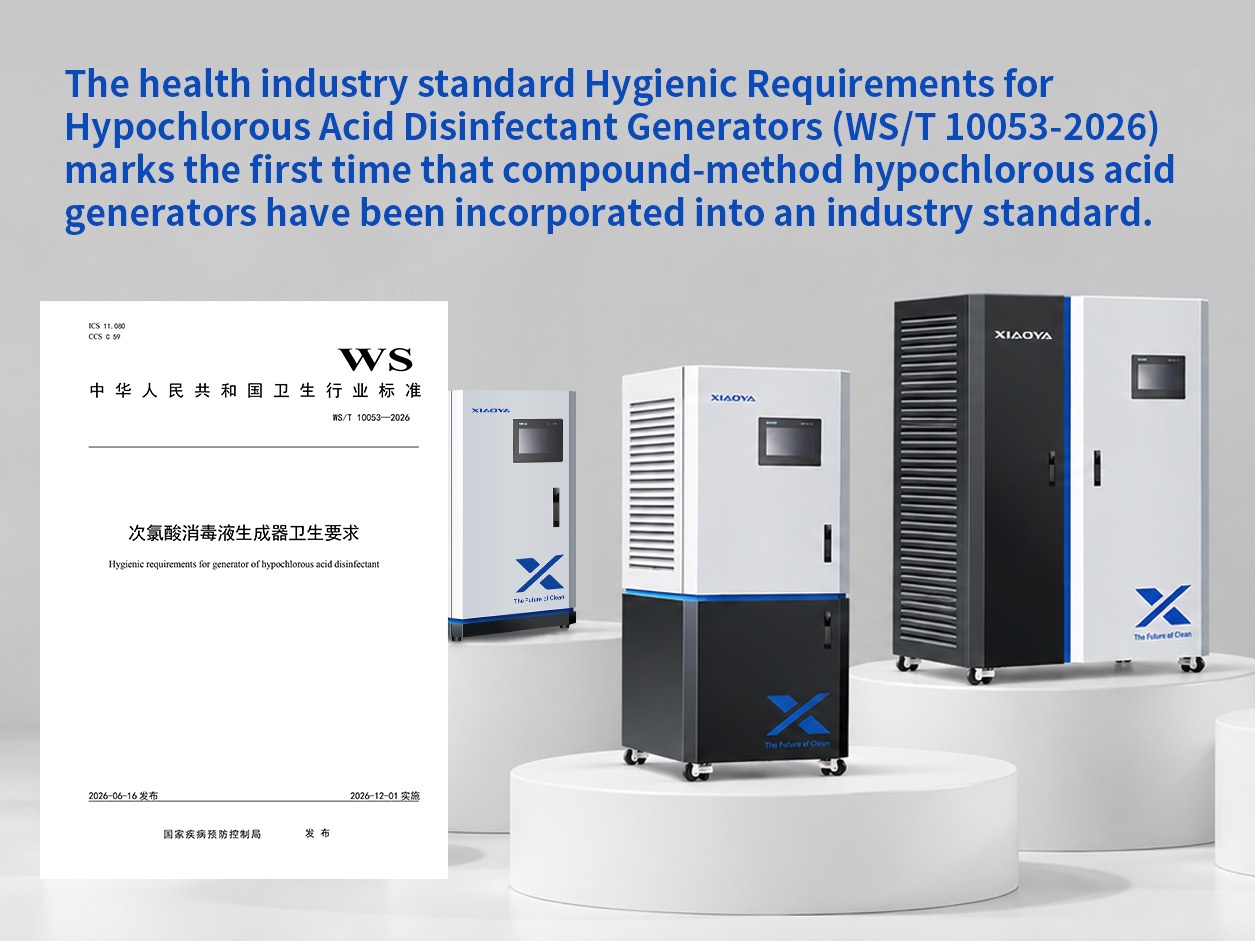
 WS/T 10053-2026 Includes the Compound Method for the First Time: Standard Signals and Market Opportunities for Mass Agricultural Production of Hypochlorous Acid Generators

Leave us a message

Xiaoya Group was founded in 1979,expert in the electrolyzed water industry.
Get in Touch
*We respect your confidentiality and all information are protected.