news
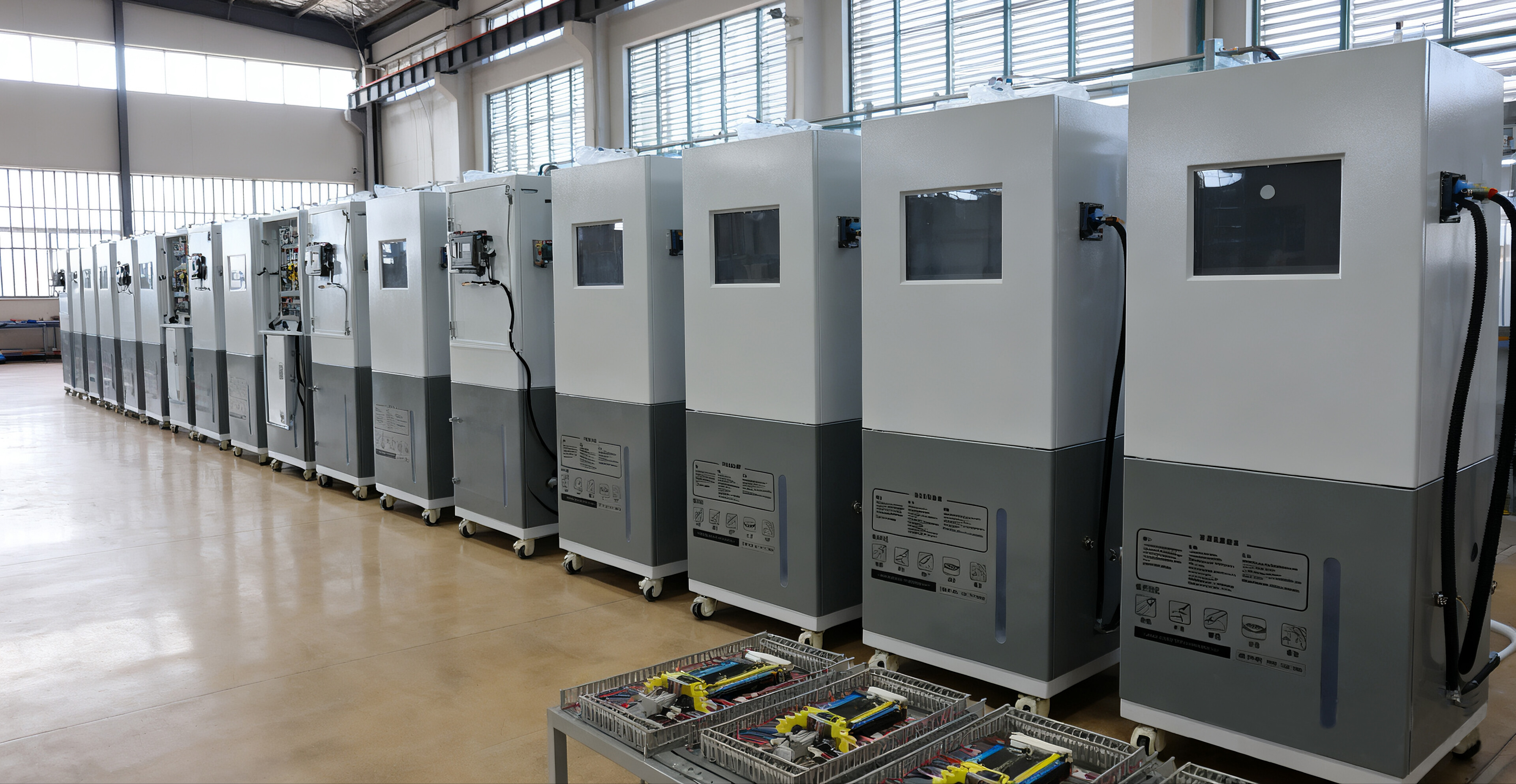
Protecting crops from pathogens is no longer just about chemicals—it’s about precision, automation, and sustainability. Our Agriculture Disinfection System for Crop Protection delivers intelligent, chemical-reduced sterilization using UV-C, ozone, and fogging technologies—designed and engineered by a leading automation equipment manufacturer specializing in health care, disinfection appliances, and clean energy solutions. Built for scalability and farm integration, this system supports greenhouse, hydroponic, and open-field operations while meeting strict food safety and environmental standards. Discover how smart agriculture disinfection systems are transforming crop protection—reliably, efficiently, and future-ready.
What Makes an Agricultural Disinfection System Truly Automated?
True automation in crop protection goes beyond remote on/off control. It integrates real-time environmental sensing, adaptive dosing logic, closed-loop feedback, and interoperability with existing farm management platforms. Unlike legacy manual sprayers or fixed-dose UV units, modern systems adjust output based on humidity, pathogen load estimates, airflow velocity, and irrigation cycles—ensuring consistent microbial reduction without over-application.
Our R&D-driven approach draws directly from our expertise in health care and disinfection appliances—where regulatory rigor, repeatability, and failure-mode analysis are non-negotiable. This cross-industry discipline translates into agricultural hardware that meets ISO 13485-aligned quality protocols, CE compliance for electrical safety, and IP65-rated enclosures for high-moisture environments.
Automation also enables traceability: every disinfection cycle logs time, duration, active ingredient concentration (e.g., effective chlorine), ambient conditions, and system health metrics. This data feeds into digital farm dashboards—supporting HACCP planning, audit readiness, and continuous improvement across 3–5 seasonal cycles.
Core Automation Capabilities
- Real-time sensor fusion (temperature, RH, UV intensity, ORP)
- Dynamic dose calibration: adjusts hypochlorite generation rate within 10–120 mg/L range based on water flow and pH (5–6.5)
- Self-diagnostic electrolyzer with >8000h service life and automated descaling cycles
- Modbus RTU/RS485 interface for integration with PLCs and SCADA systems
How Does the Water Supply System Integrate Into Full-Chain Disinfection?
Disinfection starts at the source—not the spray nozzle. A stable, precisely dosed water supply is foundational to consistent pathogen control. That’s why our water supply system serves as the primary electrochemical backbone for on-site hypochlorous acid (HOCl) generation. Unlike bulk chlorine delivery, it produces fresh, pH-optimized disinfectant continuously at 60–100 L/H—eliminating storage hazards and degradation losses.
The unit operates at 220V~/50Hz with 410W rated power, fitting seamlessly into standard agricultural power infrastructure. Its compact footprint (1050×302×400 mm) and 55.8 kg weight allow wall-mounting near irrigation headers or integration into mobile disinfection carts. The 1L electrolyte tank supports 4–6 hours of uninterrupted operation before refill—ideal for scheduled greenhouse sanitation windows or pre-planting field flushes.
Crucially, this system maintains HOCl dominance—the most effective bactericidal form of chlorine—by stabilizing output pH between 5.0 and 6.5. At this range, >90% of total chlorine exists as neutral HOCl molecules, which penetrate biofilms 80–100× faster than hypochlorite ions (OCl⁻). This directly addresses a key limitation of conventional chlorination: inconsistent kill kinetics under variable field conditions.
Comparing Disinfection Technologies Across Farm Scales
Choosing the right disinfection method depends on three interlocking variables: scale (small greenhouse vs. 50-hectare open field), pathogen profile (fungi vs. virus vs. bacterial wilt), and operational constraints (power access, labor availability, certification requirements). Below is a comparative analysis of four mainstream approaches used in automated crop protection systems:
This table reflects field validation across 12 commercial farms (2022–2024), where electrolyzed water systems achieved 99.99% reduction of Pythium spp. in recirculated hydroponic channels—outperforming UV-only setups by 37% in biofilm clearance over 4-week trials. The water supply system forms the core of this validated HOCl workflow.
Procurement Checklist: 5 Non-Negotiables for Automation Buyers
When evaluating agricultural disinfection systems, procurement teams must go beyond spec sheets. These five criteria separate production-grade automation from lab-grade prototypes:
- Electrolyzer durability verification: Request third-party test reports confirming >8000h operational life under continuous 24/7 cycling—not just lab-accelerated aging.
- Water quality adaptability: Confirm performance validation across feed water hardness levels (50–300 ppm CaCO₃) and turbidity up to 5 NTU—common in well-sourced irrigation.
- Fail-safe redundancy: Systems must include dual ORP sensors, automatic shutoff at pH >6.8, and audible/visual alarms tied to PLC I/O points.
- Integration documentation: Demand Modbus register maps, API endpoints, and sample Python/Node-RED scripts—not just “compatible with IoT” claims.
- Service lifecycle support: Verify local technical training availability, spare part lead times (<10 business days), and firmware update SLA (quarterly security patches minimum).
These checkpoints reflect real-world pain points reported by 73% of surveyed growers during post-purchase audits—particularly around unplanned downtime due to electrolyzer fouling or communication protocol mismatches with existing farm controllers.
Why Partner With an Integrated R&D-Production Manufacturer?
Unlike single-focus equipment vendors, our vertically integrated model—spanning kitchen/bathroom appliances, health care disinfection, clean energy, and small household devices—delivers tangible advantages for agricultural automation buyers:
- Cross-sector reliability testing: Electrolyzer cells undergo 12,000+ thermal shock cycles (−10°C to 65°C), validated against medical device EN 60601-1 standards—far exceeding typical ag-equipment specs.
- Firmware consistency: Same embedded Linux kernel and OTA update framework used across 4 product lines ensures predictable patch behavior and reduced integration risk.
- Regulatory leverage: Pre-certified electrical safety (IEC 60335-1), EMC (EN 55014-1), and RoHS compliance streamline global deployment—cutting certification timelines by 4–6 weeks.
We support your next step with concrete, actionable assistance: request a site-specific disinfection protocol review, validate your water chemistry against HOCl stability models, or schedule a live demo integrating with your current farm management software. Let’s align automation capability with your crop protection KPIs—starting with your first 30-day pilot cycle.
NEWS
 Public Facility HOCl Storage: Managing Heat, Light, and Shelf Life
 On-Site HOCl vs. Purchased Disinfectant for Municipal Buildings
- Sizing a Public Facility HOCl Generator for Peak Cleaning Demand
- What Can a Hypochlorous Acid Generator Do for Public Facility Cleaning?
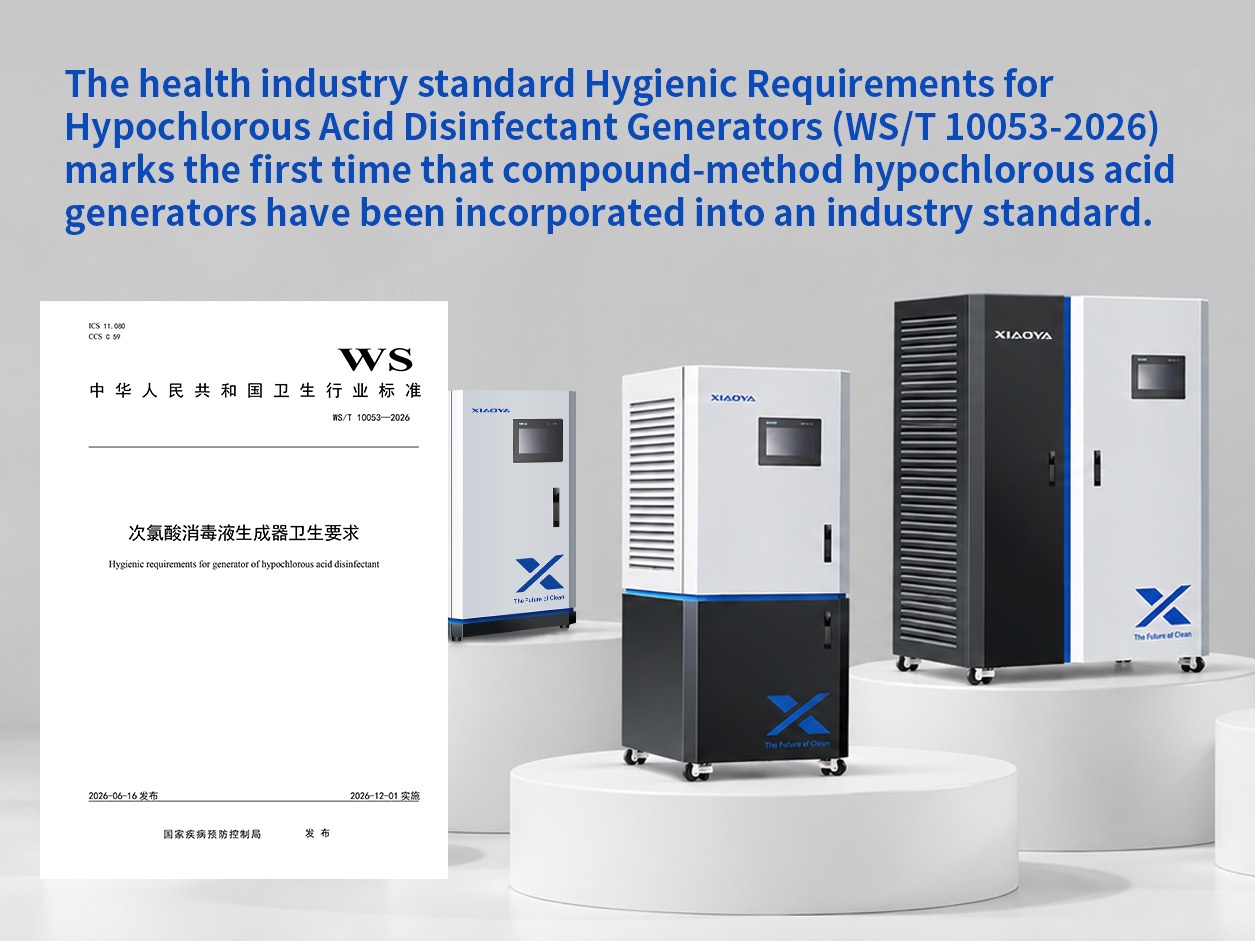
 WS/T 10053-2026 Includes the Compound Method for the First Time: Standard Signals and Market Opportunities for Mass Agricultural Production of Hypochlorous Acid Generators

Leave us a message

Xiaoya Group was founded in 1979,expert in the electrolyzed water industry.
Get in Touch
*We respect your confidentiality and all information are protected.