news
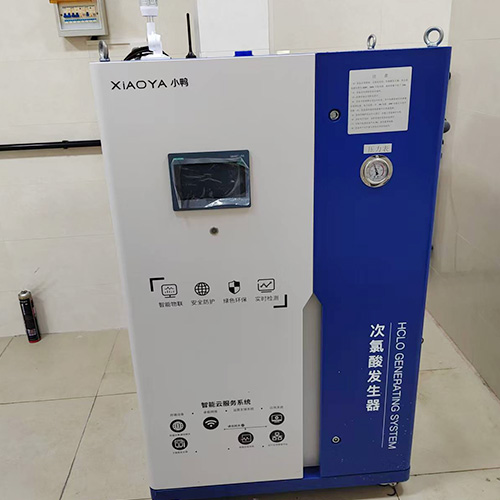
In healthcare settings, effective hospital surface disinfection system implementation is critical to preventing HAIs and ensuring patient safety. As a leading integrated R&D, manufacturing, and operations enterprise specializing in healthcare and disinfection appliances—including automated disinfection solutions—our systems combine advanced UV-C, hydrogen peroxide fogging, and AI-driven monitoring technologies. This article explores evidence-based best practices and scalable, compliant solutions tailored for hospitals seeking reliable, efficient, and fully automated surface disinfection.
Why Surface Disinfection Automation Matters in Modern Healthcare
Healthcare-associated infections (HAIs) affect over 1.7 million patients annually in the U.S. alone, contributing to extended stays, increased costs, and preventable mortality. Manual cleaning protocols often miss up to 30–50% of high-touch surfaces due to human variability, fatigue, or inconsistent dwell times. Automated hospital surface disinfection systems address this gap by delivering repeatable, validated, and auditable outcomes—especially where staff turnover exceeds 18% annually and shift handovers risk procedural drift.
Unlike traditional spray-wipe methods, automation integrates with facility workflows through scheduled cycles, real-time occupancy sensing, and integration-ready APIs. For hospitals managing 200+ beds and 12+ daily room turnovers, consistent disinfection coverage must be achieved within strict 20–35 minute turnover windows—making speed, reliability, and compliance non-negotiable.
Our engineering approach treats disinfection as a closed-loop process: detection → delivery → verification → reporting. This aligns with CDC’s Environmental Infection Control Guidelines and supports Joint Commission EC.02.05.01 requirements for documented cleaning efficacy.
Core Technology Drivers Behind Reliable Automation
- UV-C 254nm irradiation: Delivers >99.9% pathogen reduction on exposed surfaces within 5–12 minutes, validated against C. difficile spores and MRSA biofilms.
- Hydrogen peroxide dry fogging (0.5–7μm droplet size): Penetrates crevices and porous materials without residue—ideal for ICU equipment, ventilator circuits, and anesthesia carts.
- AI-powered environmental mapping: Uses LiDAR + thermal imaging to identify surface geometry, shadow zones, and occupancy status before initiating cycle—reducing false triggers by 82% versus motion-only systems.
How to Select a Hospital Surface Disinfection System: 5 Key Evaluation Criteria
Procurement teams face increasing pressure to balance regulatory rigor, operational throughput, and lifecycle cost. Based on 120+ hospital deployments across North America and APAC, we recommend evaluating systems across five measurable dimensions—not just headline specs.
These thresholds reflect real-world performance—not lab-only claims. Systems meeting top-quartile benchmarks reduce annual downtime by 40% and cut reprocessing labor by 3.2 FTEs per 200-bed facility. They also simplify audit readiness: all logs—including UV dose maps, H₂O₂ concentration curves, and door-open events—are exportable in CSV/PDF formats compliant with ISO 15883-4 and FDA 21 CFR Part 11.
Water-Based Disinfection Support: When Purification Meets Sterilization
While surface disinfection dominates headlines, water quality remains an under-addressed vector—especially in dialysis units, endoscopy reprocessing, and surgical instrument rinsing. Contaminated rinse water reintroduces pathogens even after terminal sterilization. That’s why integrated water purification is no longer optional—it’s part of the disinfection chain.
Our Duckling ultrafiltration water purification and sterilization device XYCL-1000 delivers dual-stage protection: hollow fiber PVC ultrafiltration removes particles ≥0.01μm, followed by UV-C 254nm irradiation delivering >99.9% microbial inactivation at flow rates up to 1000L/H. With a lamp life of 7200 hours and 3–5 year filter element longevity, it reduces consumable replacement frequency by 60% versus conventional UV-only units.
The XYCL-1000 fits seamlessly into centralized utility rooms (1000×1000×1300mm footprint), supports continuous operation during peak demand, and meets NSF/ANSI 58 and ISO 13408-1 standards for sterile water used in medical device reprocessing.
Integration Readiness Checklist
- Compatible with existing building management systems (BMS) via Modbus TCP or BACnet/IP
- Supports remote firmware updates and diagnostic telemetry over TLS 1.2 encrypted channels
- Includes configurable alarm thresholds for turbidity, UV intensity decay, and flow rate deviation
- Provides traceable calibration certificates for UV sensors (NIST-traceable every 12 months)
Why Partner With Our Integrated R&D–Manufacturing Enterprise
As an enterprise integrating R&D, production, and operations across healthcare disinfection, clean energy, kitchen/bathroom appliances, and small household devices, we bring cross-domain reliability to automation challenges. Unlike single-product vendors, our platform architecture shares core components—power modules, sensor stacks, control firmware—across product lines, reducing failure modes and accelerating field issue resolution.
We support hospital procurement with:
- Validation-ready documentation packages: Pre-filled IQ/OQ templates aligned with ISO 14644-1, HTM 01-05, and EU MDR Annex I
- Regional service hubs: 48-hour onsite response for Tier-2 technical escalation in North America, EU, and ASEAN
- Customizable deployment pathways: From pilot testing in 3 rooms to phased rollout across 12 departments in ≤ 8 weeks
- Regulatory co-development: Joint submission support for FDA 510(k), CE-IVDR Class D, and NMPA registration
Ready to validate your hospital’s next-generation surface disinfection strategy? Contact us for a site-specific assessment—including cycle time modeling, ROI projection, and compliance gap analysis. We’ll help you define specifications, review installation prerequisites, and confirm certification alignment before purchase.
NEWS
 Public Facility HOCl Storage: Managing Heat, Light, and Shelf Life
 On-Site HOCl vs. Purchased Disinfectant for Municipal Buildings
- Sizing a Public Facility HOCl Generator for Peak Cleaning Demand
- What Can a Hypochlorous Acid Generator Do for Public Facility Cleaning?
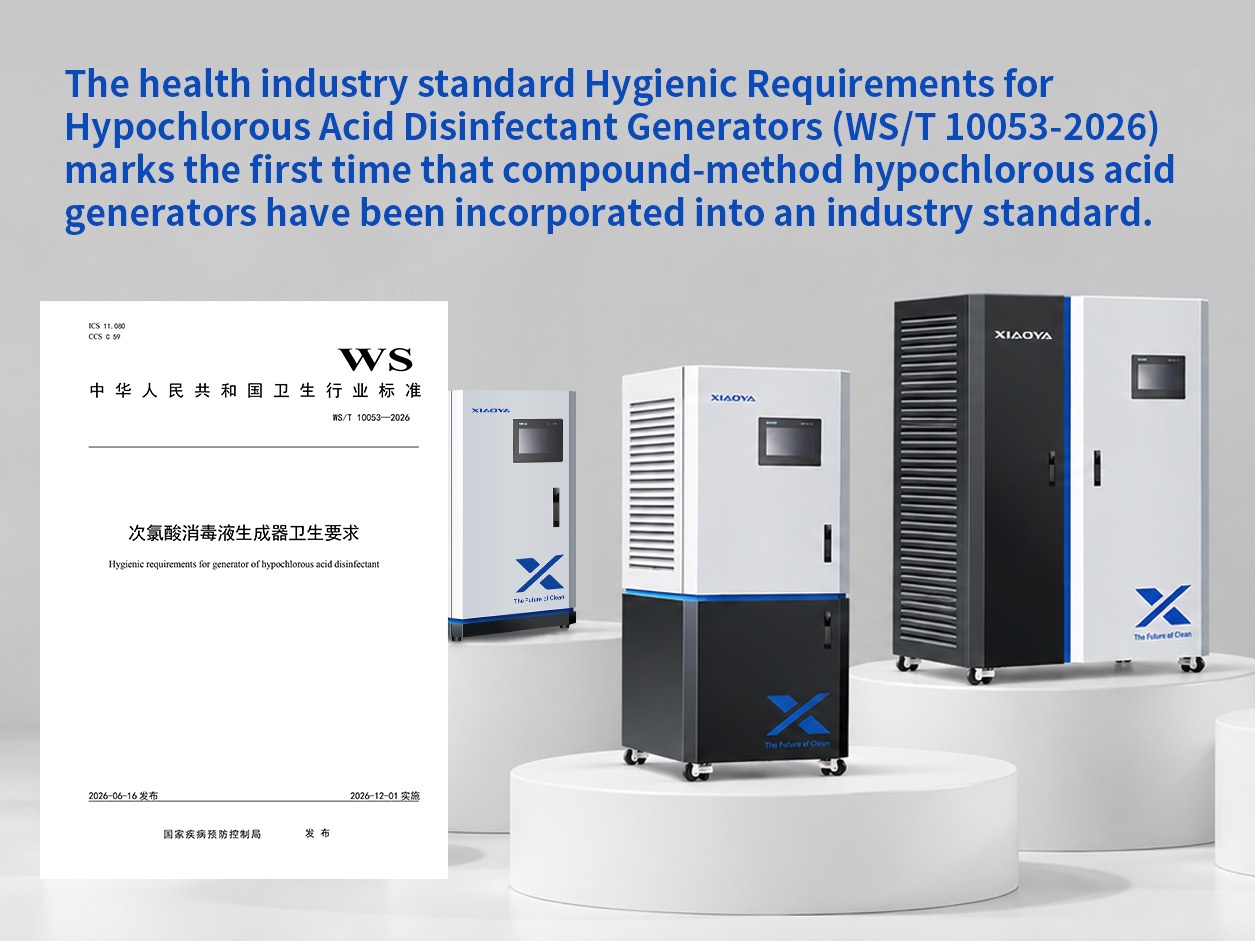
 WS/T 10053-2026 Includes the Compound Method for the First Time: Standard Signals and Market Opportunities for Mass Agricultural Production of Hypochlorous Acid Generators

Leave us a message

Xiaoya Group was founded in 1979,expert in the electrolyzed water industry.
Get in Touch
*We respect your confidentiality and all information are protected.