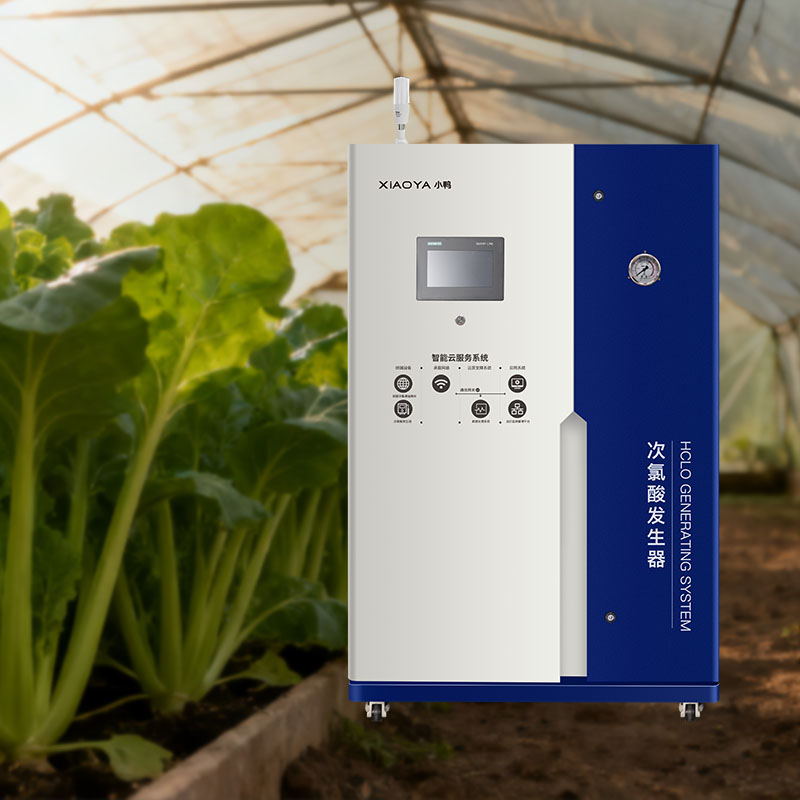
What chlorine concentration is actually appropriate in a barn?
For barn sanitation, the right answer is usually not “the higher the better.” In practice, a Farming Hypochlorous AcidGenerator should deliver an available chlorine concentration matched to the task, the organic load, the contact time, and the sensitivity of the environment. For many routine barn sanitation jobs, operators often work within a moderate range rather than pushing to the top end of output. That is because disinfection performance depends not only on chlorine level, but also on whether the active form is really hypochlorous acid, whether the surface was cleaned first, and whether the solution remains stable during use.
As a working reference, low-range solutions may be suitable for light environmental spraying and odor-sensitive areas, while medium-range concentrations are more commonly considered for floors, walls, walkways, and equipment surfaces after manure and visible soil have been removed. Higher concentrations may be used in tougher contamination scenarios, but they also raise more questions around residue, corrosion, mist exposure, and compatibility with local protocols. If a site is trying to sanitize a heavily soiled barn without pre-cleaning, even a stronger concentration may disappoint.
That is why quality and safety teams usually evaluate concentration together with pH, dosing consistency, and application method. A badly controlled 150 ppm can perform worse than a stable, fresh solution at a lower concentration.
A practical range for barn sanitation
If the goal is general barn sanitation, a system with flexible output in roughly the 10-200 ppm range is easier to manage across different tasks than a fixed-output unit. In real farm environments, the same barn may need one concentration for routine misting near traffic areas, another for pen partitions and feeding-contact surfaces after washing, and another for boots, tools, or transfer points.
This is also where automation matters. A unit that can hold concentration steadily is usually more useful than one that simply advertises a high maximum value. Farms do not operate in laboratory conditions. Water quality shifts, operators change, and treatment demand can swing across the day.
Why pH matters as much as ppm
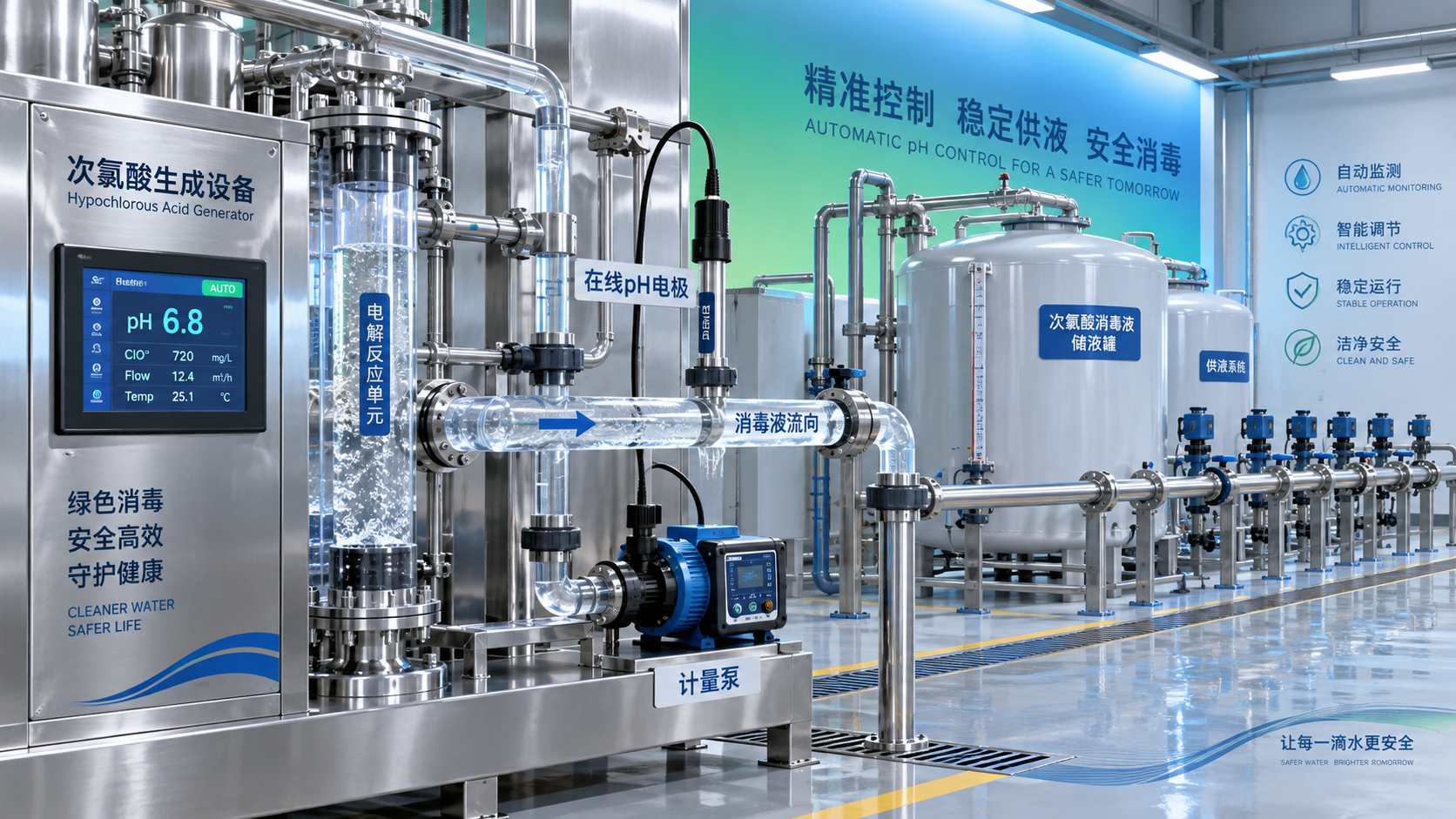
When people ask about chlorine concentration, they often mean available chlorine only. But in hypochlorous acid systems, pH strongly affects how much of that chlorine exists in the more effective HClO form. For barn sanitation, that makes a real difference. A generator producing solution in a mildly acidic window, often around pH 5.0-6.5, is generally better positioned to maintain useful disinfecting activity without relying on unnecessarily high chlorine numbers.
This is one reason many buyers now look beyond simple output claims and focus on automated control. Manufacturers with backgrounds spanning health care and disinfection appliances, household equipment, clean energy, and integrated R&D-to-production capability tend to approach these systems less like chemical accessories and more like process equipment. That matters in barns, where uptime and repeatability are usually more valuable than headline specs.
What quality and safety managers usually check first
There are a few questions worth asking before choosing a Farming Hypochlorous AcidGenerator setting or supplier.
- Is the target surface pre-cleaned, or is the disinfectant expected to fight through manure and dust?
- Will the solution be sprayed, foamed, wiped, or used through a line or arch system?
- Does the barn contain sensitive metals, electronics, rubber seals, or ventilation components?
- How fresh is the generated solution at the point of use?
- Is there a site SOP or veterinary sanitation protocol that already defines concentration and contact time?
These are not small details. In the field, weak sanitation results often come from poor application discipline rather than inadequate generator capability. A stable 50-100 ppm solution applied to a cleaned surface with enough dwell time can be more defensible than a stronger spray used casually on dirty surfaces.
Output flexibility is more valuable than chasing the highest number
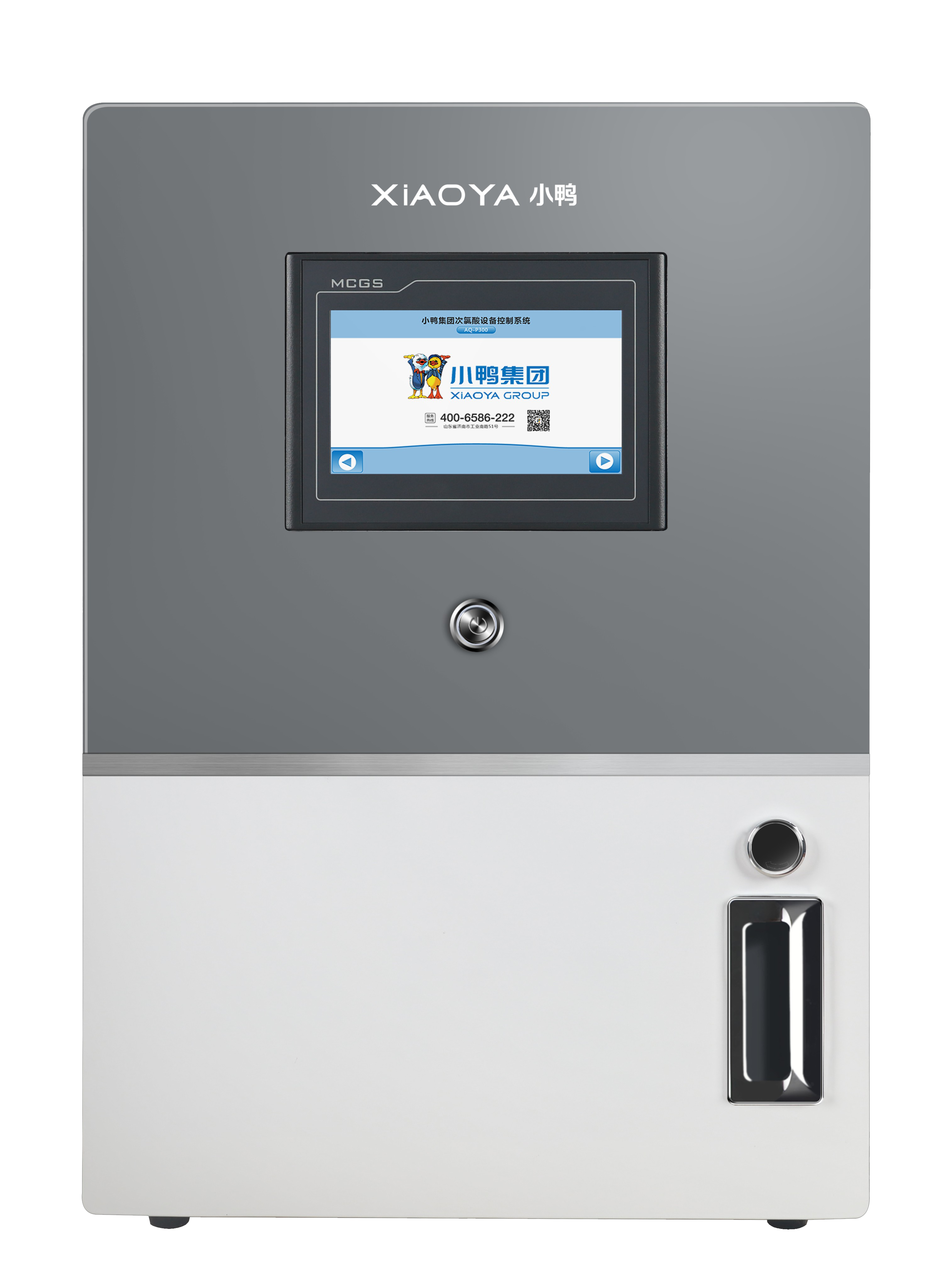
For multi-zone facilities, adjustable output gives the sanitation team room to standardize procedures instead of improvising. A useful comparison can be found outside the barn itself. Equipment such as the Hypochlorous Acid Generator for Garbage Disinfection (AQ-P300-W) is designed for demanding sanitation and deodorization settings, with available chlorine adjustable from 10-200 ppm and pH adjustable from 5.0 to 6.5 according to water quality. Although its listed application scenarios focus on waste collection points, transfer stations, vehicles, and worker protection, that parameter logic is relevant to livestock environments too: different contamination points require different strengths, and safe operation depends on controlled output rather than guesswork.
The same principle applies in barns. If one system can cover low-concentration routine use and moderate-strength surface sanitation without drifting badly, it simplifies documentation, training, and verification. That is usually a better fit for quality control than keeping several inconsistent chemical mixes in circulation.
Common mistakes when setting chlorine concentration
One common mistake is selecting concentration based only on pathogen concern while ignoring material compatibility. Another is assuming a generator’s maximum rating reflects what should be used every day. Barns are hard on equipment already; unnecessary overconcentration can accelerate wear on metal fixtures, nozzles, and dosing lines.
There is also the human side. Safety managers tend to prefer solutions that are effective but practical for repeated worker exposure in real operating conditions. Hypochlorous acid is generally favored because it can be less irritating than harsher disinfectant chemistries when properly generated and applied, but that does not remove the need for ventilation checks, mist control, and SOP discipline.
So what should your target be?
If you need one concise answer: choose a Farming Hypochlorous AcidGenerator that can reliably deliver adjustable, stable available chlorine in a practical barn-use range, rather than a fixed high output. For many sanitation routines, moderate concentrations are the real working zone, provided surfaces are cleaned first and contact time is respected. A system that can produce fresh solution on demand, maintain pH in the effective range, and adapt between light and heavy-duty tasks will usually serve the barn better than a machine selected on peak ppm alone.
Before locking in a target value, match the concentration to your barn’s actual workflow, water quality, materials, and local hygiene requirements. That is the point where disinfection stops being a spec sheet exercise and becomes a controllable sanitation process.
NEWS
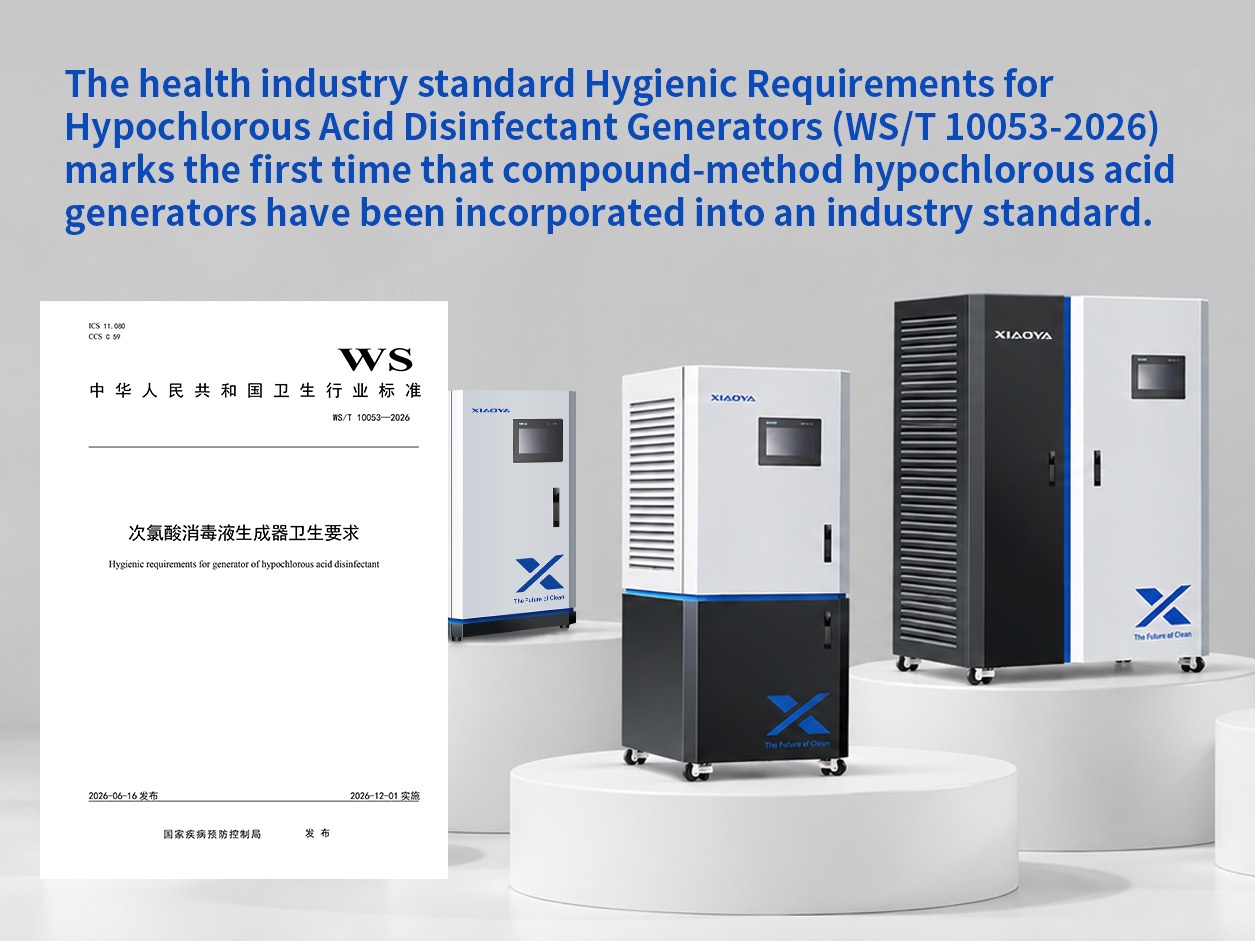
 WS/T 10053-2026 Includes the Compound Method for the First Time: Standard Signals and Market Opportunities for Mass Agricultural Production of Hypochlorous Acid Generators
 Evaluating HClO Generator Lifecycle Costs Beyond the Initial Equipment Price
 HClO Generator pH Control: Why It Determines Disinfection Performance
- Which Safety Features Matter Most When Buying an HClO Generator?
 Troubleshooting Low ORP Readings on a Hypochlorous Acid Machine
Leave us a message

Xiaoya Group was founded in 1979,expert in the electrolyzed water industry.
Get in Touch
*We respect your confidentiality and all information are protected.