What makes water purification technology suitable for continuous automated production lines
In modern automated manufacturing, water purification technology plays a critical role in maintaining product quality, equipment stability, and production efficiency. For enterprises engaged in kitchen and bathroom appliances, healthcare and disinfection products, clean energy, and small household appliances, choosing the right purification system is essential for continuous automated production lines. This article explores the key factors that make these technologies reliable, scalable, and suitable for high-volume industrial operations.
The main question is not whether purified water is useful. In automated production, it usually is. The more practical question is what kind of water treatment can keep running hour after hour without becoming a hidden source of downtime, contamination, or unstable output.
That distinction matters because continuous lines are unforgiving. A manual process can absorb small fluctuations in water quality, pressure, or dosing. An automated line cannot. If rinse water conductivity drifts, if scaling starts to form inside valves, if microbial load rises in circulation tanks, the problem rarely stays local. It spreads into sensors, nozzles, surfaces, yields, and maintenance schedules.
Consistency matters more than peak performance
When engineers evaluate water purification technology, they sometimes focus too much on maximum purity and not enough on stability. For a continuous automated production line, the best system is often the one that delivers repeatable water quality within the required range, not the one with the most extreme laboratory specification.
In appliance manufacturing and related sectors, water may be used for component cleaning, surface treatment, humidification, disinfection support, cooling loops, or solution preparation. Each use case has different tolerance limits. Some processes care most about hardness and scaling risk. Others care about microbes, residual chlorine, particles, or pH. A suitable system is one that matches those process limits and holds them steadily during long operating cycles.
This is why a well-designed combination of pretreatment, filtration, reverse osmosis, deionization, UV, ozone, or electrolyzed water generation can be more suitable than chasing a single “high-end” technology. The right sequence depends on the process, the source water, and the line’s sensitivity to variation.
Integration with automation is not optional
A purification skid may produce clean water, but if it cannot communicate with the rest of the production environment, it is only half finished. For continuous automated lines, suitability usually depends on how well the system integrates with PLC logic, alarms, interlocks, dosing controls, and maintenance prompts.
In real factory conditions, operators need more than output. They need visibility. Conductivity, flow, pressure, tank level, filter life, oxidation-reduction behavior, and fault history are all useful signals. If a water system only works when a technician keeps checking it manually, it may be acceptable in a workshop, but it is not ideal for a line designed around unattended or lightly attended operation.
This is also where manufacturers with in-house R&D, production, and operating experience tend to have an advantage. In sectors such as kitchen and bathroom appliances, health care and disinfection appliances, clean energy, and small household appliances, water-related equipment often has to fit into a broader automation architecture rather than act as a standalone utility box.
Reliability is built from ordinary details
People often associate reliability with large design choices, but on automated lines it is frequently determined by smaller decisions: whether inlet pressure stays within range, whether consumables are easy to replace, whether the system tolerates humidity, whether drainage is properly managed, and whether critical parts have a realistic service life.
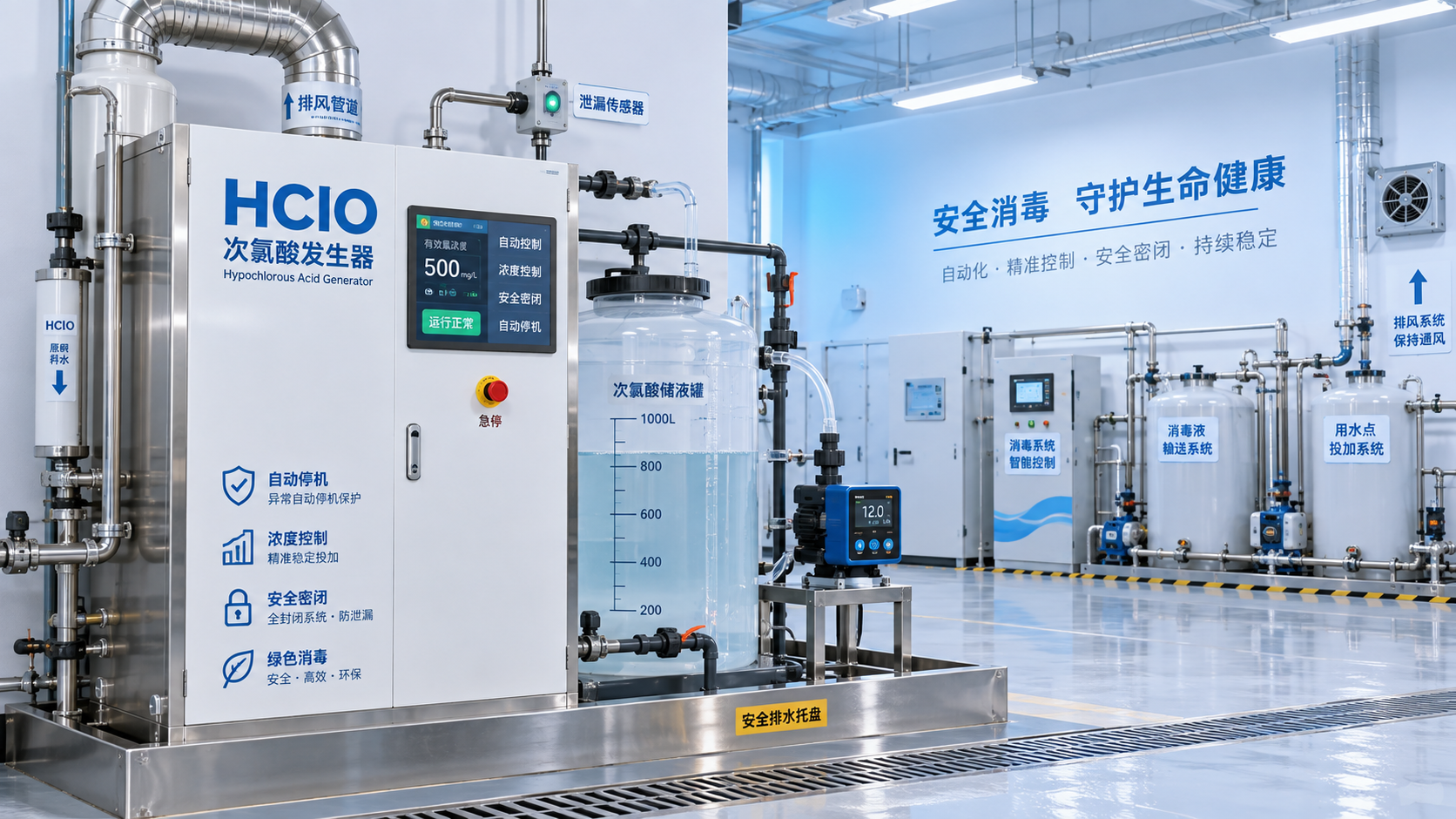
Take electrolyzed water applications as an example. In some disinfection-related processes, slightly acidic hypochlorous acid water is valued because it combines broad-spectrum antimicrobial action with low residue characteristics. But for continuous operation, the chemistry alone is not enough. Output range, concentration adjustability, power stability, and electrode durability all affect whether the system can actually support production instead of interrupting it.
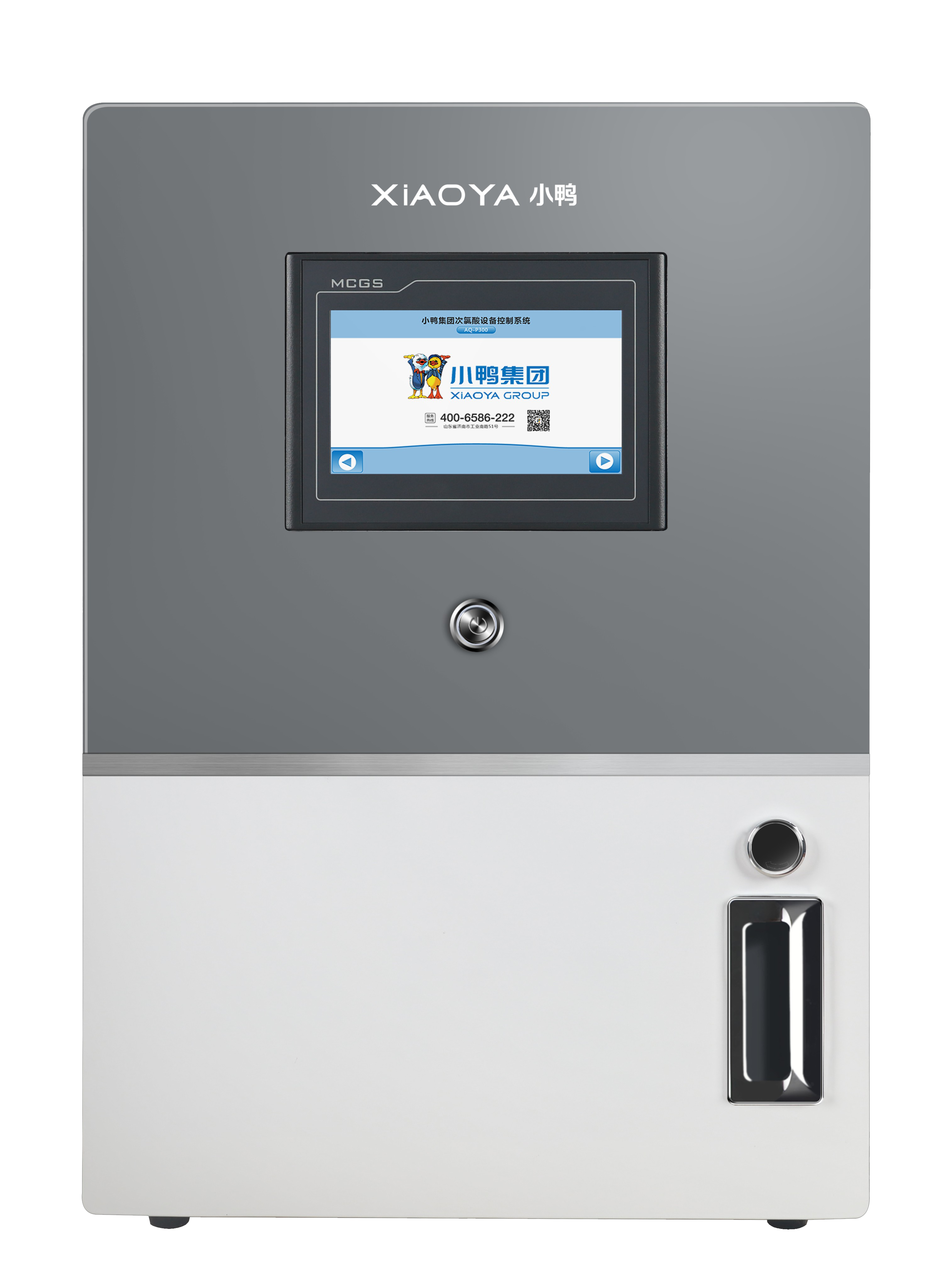
A compact unit such as Hypochlorous Acid Generator for Floriculture (P300-W) illustrates this principle well, even though its primary use is outside factory assembly lines. Its published parameters show the kind of engineering considerations automation teams usually look for: output of 120–300 L/h, slightly acidic pH of 5.0–6.5, adjustable available chlorine concentration of 10–200 ppm, inlet water pressure of 0.15–0.25 MPa, and electrolyzer service life of at least 5000 hours. Those figures do not tell the whole story, but they do show why “fit for continuous use” is always a parameter question, not just a functional claim.
Scalability is about matching production rhythm
Many water systems perform well in pilot runs and then struggle when production ramps up. The reason is simple: continuous lines have a rhythm. Water demand is rarely flat. It spikes during cleaning cycles, product changeovers, surface preparation, or synchronized multi-station operation. A suitable purification solution must absorb those variations without pressure collapse, inconsistent concentration, or excessive tank residence time.
This is especially relevant when the line combines manufacturing with sanitation-sensitive steps. In healthcare and disinfection appliance production, for example, the water system may need to support both process quality and hygiene control. In clean energy or small appliance manufacturing, it may be more about protecting components and preventing deposits. The design logic changes, but the operational requirement stays the same: the system must keep pace with the line, not slow it down.
Low residue and downstream compatibility can be decisive
Not every production line wants the purest possible water. Some need water or water-based sanitizing media that do not leave problematic residues, do not interfere with coatings or plastics, and do not create secondary cleaning work. This is one reason why water purification technology is often discussed together with process chemistry and material compatibility.
For instance, in sectors that handle export-oriented goods or appearance-sensitive products, residue control can be just as important as microbial control. Systems based on on-demand generation and adjustable concentration are often easier to tune than fixed-chemical routines, provided the operating window is validated for the application. In agricultural post-processing and horticultural environments, equipment like the AQ-P300-W is used because hypochlorous acid can decompose into water and trace salts and is intended to reduce residue concerns. The same decision logic often appears in industrial environments too, although the final choice should always depend on the production standard and the material being treated.
What buyers and technical teams should check early
Before comparing brands or configurations, it helps to clarify a few points:
- What is the actual source water condition, and how much does it fluctuate seasonally?
- Which process variables matter most: conductivity, microbial load, pH, hardness, particles, or available chlorine?
- Is the line continuous, batch-assisted, or mixed-mode?
- What happens if the water system stops for 10 minutes, 1 hour, or a full shift?
- Which maintenance tasks can be handled by operators, and which require specialists?
- Are there market-specific voltage, compliance, or export requirements?
These questions sound basic, but they often reveal whether a system is genuinely suitable for automation or just technically functional in isolation.
In the end, water purification technology becomes suitable for continuous automated production lines when it does three things at once: it keeps water quality within process limits, it behaves predictably inside an automated control environment, and it remains maintainable under real factory conditions. If any one of those is missing, the line will eventually notice. Usually before the purchasing team does.
For companies evaluating next steps, the most useful approach is usually to start with process water requirements, then verify integration, maintenance, and scaling assumptions against actual operating conditions. That usually leads to better decisions than choosing equipment based on headline specifications alone.
NEWS
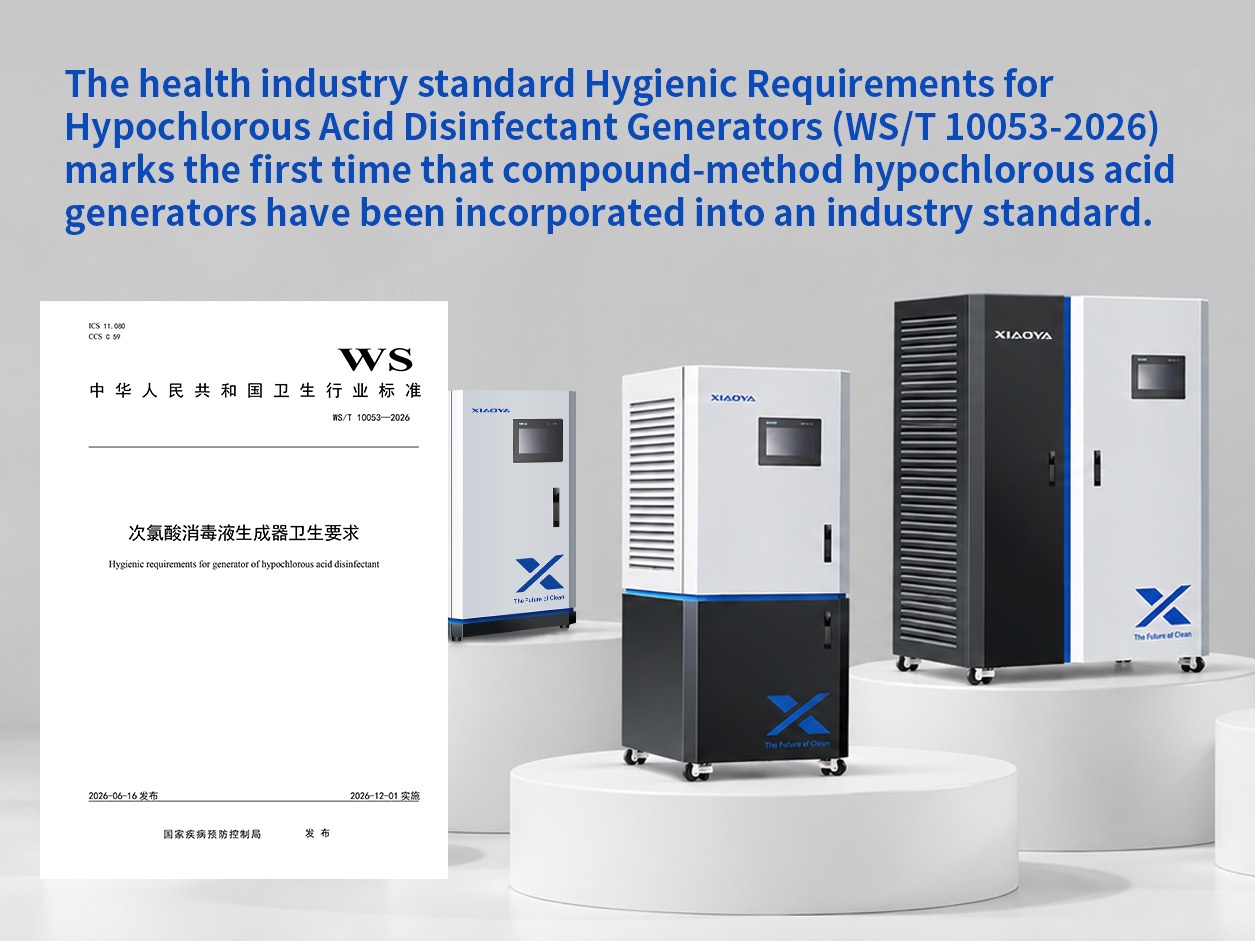
 WS/T 10053-2026 Includes the Compound Method for the First Time: Standard Signals and Market Opportunities for Mass Agricultural Production of Hypochlorous Acid Generators
 Evaluating HClO Generator Lifecycle Costs Beyond the Initial Equipment Price
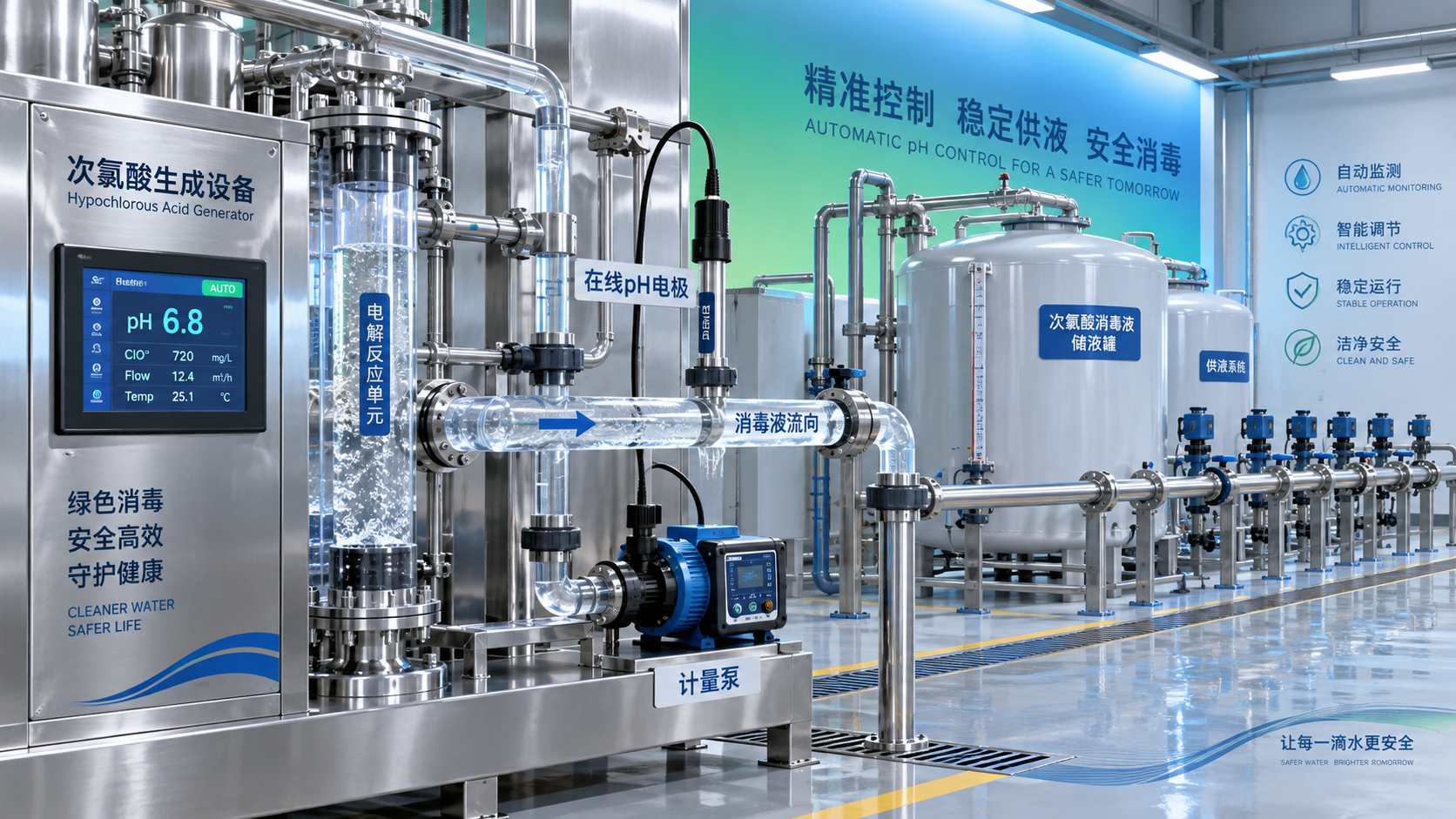
 HClO Generator pH Control: Why It Determines Disinfection Performance
- Which Safety Features Matter Most When Buying an HClO Generator?
 Troubleshooting Low ORP Readings on a Hypochlorous Acid Machine
Leave us a message

Xiaoya Group was founded in 1979,expert in the electrolyzed water industry.
Get in Touch
*We respect your confidentiality and all information are protected.