news
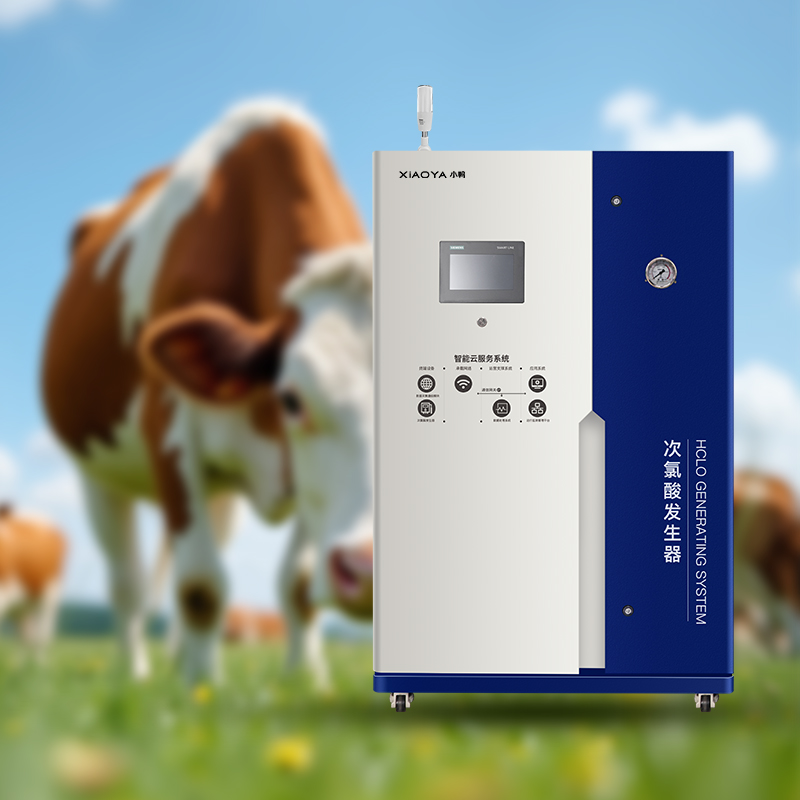
Hypochlorous acid generator maintenance has a direct effect on whether a disinfection process remains predictable from one production shift to the next. A unit may still power on, circulate water, and display a normal operating status while producing solution that is outside the concentration or pH range required by the application. For facilities using generated hypochlorous acid in food processing, healthcare-related sanitation, kitchens, bathrooms, or automated cleaning equipment, maintenance should be treated as part of process control rather than an occasional repair task.
The most useful maintenance question is not simply, “Is the generator running?” It is whether the system is consistently generating, delivering, and verifying the intended solution at the point of use. That depends on water quality, electrolyte handling, electrode condition, flow stability, sensor accuracy, and the cleanliness of the downstream lines. A good maintenance routine addresses these connected factors before output instability becomes a sanitation or production problem.
Start with the conditions that affect solution quality
Hypochlorous acid generation is sensitive to the water and electrolyte entering the system. Changes in inlet water hardness, suspended solids, mineral content, or pressure can alter how the generator performs over time. These conditions can also accelerate scale formation inside the electrolyzer, restrict small passages, and interfere with flow or conductivity readings.
Operators should establish a baseline for the incoming water supply during commissioning and revisit it when there is a change in municipal supply, filtration equipment, source water, or seasonal operating conditions. The objective is not to create a laboratory program for every site. It is to identify the factors that can cause a previously stable generator to drift.
In particular, maintenance teams should watch for:
- Reduced output volume at the same programmed setting.
- Inconsistent available chlorine concentration between batches or shifts.
- pH readings that no longer remain within the process target.
- Visible deposits, discoloration, or residue around water and electrolyte connections.
- Unexpected alarms related to flow, conductivity, low liquid level, or pressure.
A sudden loss of performance can indicate a mechanical failure, but gradual drift more often points to scale, filtration issues, aging consumables, sensor fouling, or changing feed-water conditions. Treating all performance issues as an electrical fault can lead teams to replace the wrong component while the original cause remains in the system.
Electrolyzer cleaning deserves a planned interval
The electrolyzer is the component most closely associated with generator output and should have a documented inspection and cleaning schedule. Its service life is influenced by operating hours, water conditions, cleaning practices, and whether the generator regularly runs near its maximum capacity. Waiting until the machine can no longer meet the concentration target is usually too late; by that point, output instability may already have affected disinfection consistency.
Scale on electrode surfaces reduces electrolysis efficiency. In practical terms, the system may require more time or energy to produce the same amount of active solution, or it may fail to achieve the expected concentration at the selected flow rate. Deposits can also affect fluid pathways and create uneven operating conditions inside the cell.
Cleaning procedures should follow the equipment manufacturer's approved method. This matters because inappropriate acid concentration, incompatible cleaning chemicals, excessive cleaning frequency, or incomplete rinsing can damage components or introduce a different quality problem. Maintenance staff should document the cleaning date, observed deposits, cleaning method, rinse completion, and output verification after the unit returns to service.
For a generator used in continuous food production, a stated electrolyzer life should be viewed as a planning reference rather than a reason to postpone inspection. For example, the AQ-P300-W model used for meat processing lists an electrolyzer service life of at least 5,000 hours. That figure helps schedule asset planning, but actual replacement timing should still be based on output stability, inspection findings, cleaning history, and the facility's sanitation validation requirements.
Verify concentration and pH at the point of use
Display values are useful for routine operation, but they are not a substitute for checking the solution delivered to the application point. A generator may produce acceptable solution at its outlet while concentration changes in a storage tank, recirculation loop, spray manifold, or long distribution line. Residual liquid from a prior run, dilution from flushing, poor mixing, or deposits in downstream components can all affect what reaches the product or surface.
This is especially important where hypochlorous acid is applied through automated rinsing, spraying, soaking, or atomization. The sanitation result depends on concentration, pH, contact conditions, coverage, and the cleanliness of the application equipment. Increasing concentration to compensate for a poorly maintained nozzle system or an unreliable flow rate is not a sound correction.
Facilities should define an operating range appropriate to the process and verify it with methods suitable for that range. The record should identify the date, production area, generator setting, measured concentration, measured pH where applicable, operator, and any corrective action. This creates a usable trend record: a gradual increase in adjustment frequency is often an earlier warning sign than a complete equipment shutdown.
For meat slaughtering, processing, or cold-chain operations, output requirements can vary considerably by application step. A system such as the Hypochlorous Acid Generator for Meat Product Disinfection and Fresh-keeping can be configured across an available chlorine range of 10–120 ppm, with a pH range of 5.0–6.5 and production capacity of 160–300 L/h. Those values are useful only when the maintenance program can hold the selected condition steadily. A wide adjustable range does not remove the need to verify concentration after changes in flow, water supply, or cleaning status.
Do not overlook pumps, filters, tanks, and spray hardware
Generator maintenance often focuses heavily on the main unit, while problems occur elsewhere in the system. Filters can clog, inlet pressure can fall outside the intended operating range, tank level sensors can foul, pump output can decline, and spray nozzles can partially block or deliver uneven coverage. In automated systems, these faults may develop without immediately stopping the line.
A practical inspection route should follow the solution from inlet to application:
- Check water filters and replace or clean them on a defined schedule based on site conditions.
- Inspect inlet pressure and confirm that it remains within the equipment's specified operating range.
- Examine electrolyte tanks, caps, feed lines, and level sensing points for leaks, crystallization, contamination, or incorrect connections.
- Inspect pumps, tubing, seals, and fittings for wear, vibration, leaks, and restricted flow.
- Clean and inspect spray nozzles, atomizers, rinse heads, and manifolds to confirm even delivery.
- Flush lines when prescribed by the operating procedure, particularly after downtime or maintenance work.
Equipment intended for high-throughput applications should be assessed as a complete delivery system. A generator producing 160–300 L/h, for example, needs downstream piping and application hardware that can handle the required flow without excessive pressure loss, stagnant zones, or uneven distribution. Capacity on the data sheet does not guarantee capacity at the processing point.
Calibration and alarms need ownership
Automated generators may use sensors for flow, conductivity, pH, liquid level, pressure, or other operating controls. These sensors make automated operation more reliable only if their readings remain credible. Fouling, aging, improper installation, wiring issues, or calibration drift can cause a system to compensate incorrectly or continue operating under unsuitable conditions.
Each sensor should have a defined owner, inspection interval, calibration or functional-check method, and clear action when readings fall outside acceptable limits. Teams should also review alarm history rather than merely clearing alarms as they occur. Repeated low-flow warnings, electrolyte-related alarms, or concentration deviations may reveal a developing issue even when the machine later resumes normal operation.
When a sensor is replaced, it is sensible to record the before-and-after verification results. This makes it easier to distinguish a true process change from an instrument problem. The same approach applies after replacing pumps, electrolyzer components, filters, or control parts: confirm that the generator produces the required output under normal operating flow, then verify the solution where it is actually used.
Build maintenance around risk, not only calendar dates
A calendar-based checklist is necessary, but it should not be the only trigger for maintenance. Units operating intermittently in a small appliance environment face different wear patterns from units serving a long production line. A system used for poultry or livestock processing may need closer attention during periods of extended operation, high water demand, or frequent sanitation cycles. Cold-chain and storage applications may have lower flow requirements but longer distribution paths and a greater need to manage solution stability before use.
A useful maintenance program separates routine operator checks from technician work. Operators can confirm tank levels, leaks, alarms, visual condition, programmed setpoints, and basic output checks before or during operation. Technicians can manage electrolyzer cleaning, deeper inspection, sensor checks, pump servicing, electrical inspection, and component replacement. This division reduces the risk that routine observations are missed because every task has been assigned to specialist maintenance personnel.
Before restarting after a major clean, repair, or extended shutdown, the system should be flushed and verified under the same operating conditions used in production. The restart record should confirm stable flow, absence of leaks, correct alarms and interlocks, and acceptable solution measurements. That final check is often more valuable than a long maintenance checklist because it confirms the equipment has returned to its intended sanitation function.
Reliable hypochlorous acid generation comes from controlling small variables before they become large deviations. Facilities that track water conditions, clean the electrolyzer before output falls, verify solution at the point of use, and maintain the complete delivery path are better positioned to protect both equipment availability and disinfection consistency.
NEWS
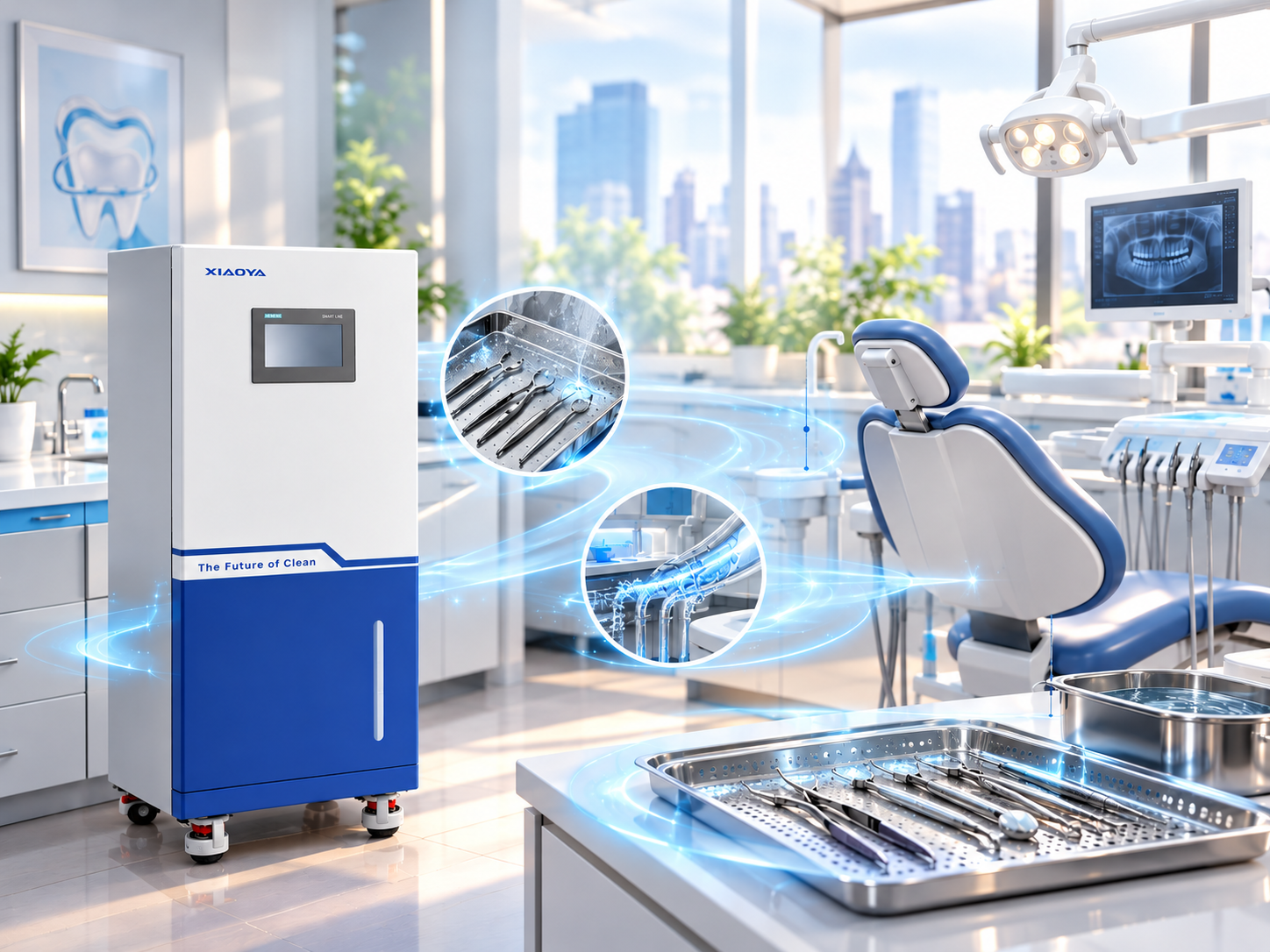
 Disinfection Empowers Orthodontic Safety: Hypochlorous Acid Generators Build a Sterile Defense Line for Dental Instruments
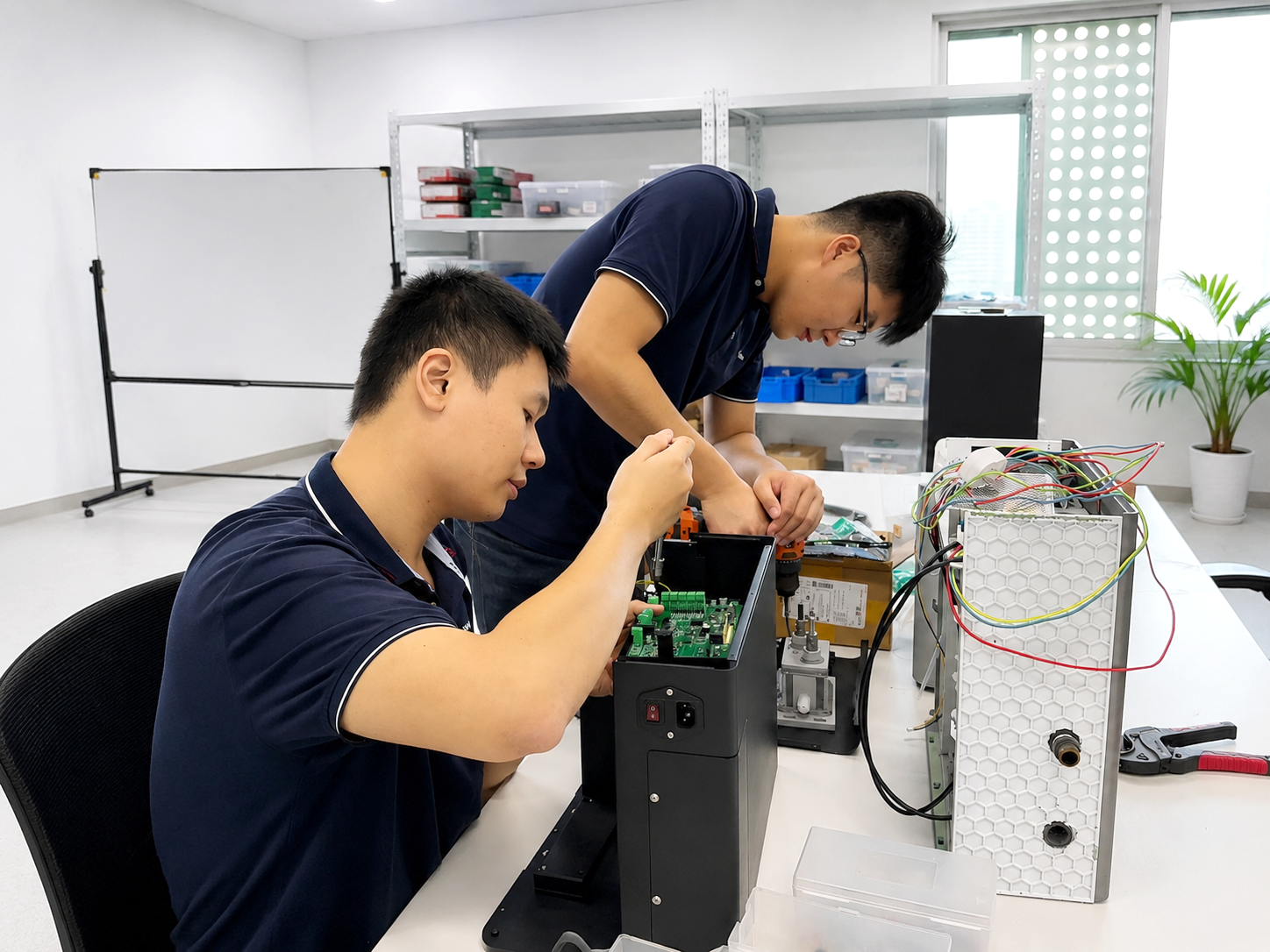
- Accumulating Strength and Reaching New Heights: A Record of the Production Breakthrough of Xiaoya Small Home Appliances' Hypochlorous Acid Generators
 Medical HOCl Generator Procurement: Service, Training, and Traceability
- Integrating a Medical HOCl Generator into Hospital Cleaning Stations
 Verifying HOCl Concentration and Contact Time for Hospital Surfaces
Leave us a message

Xiaoya Group was founded in 1979,expert in the electrolyzed water industry.
Get in Touch
*We respect your confidentiality and all information are protected.