news
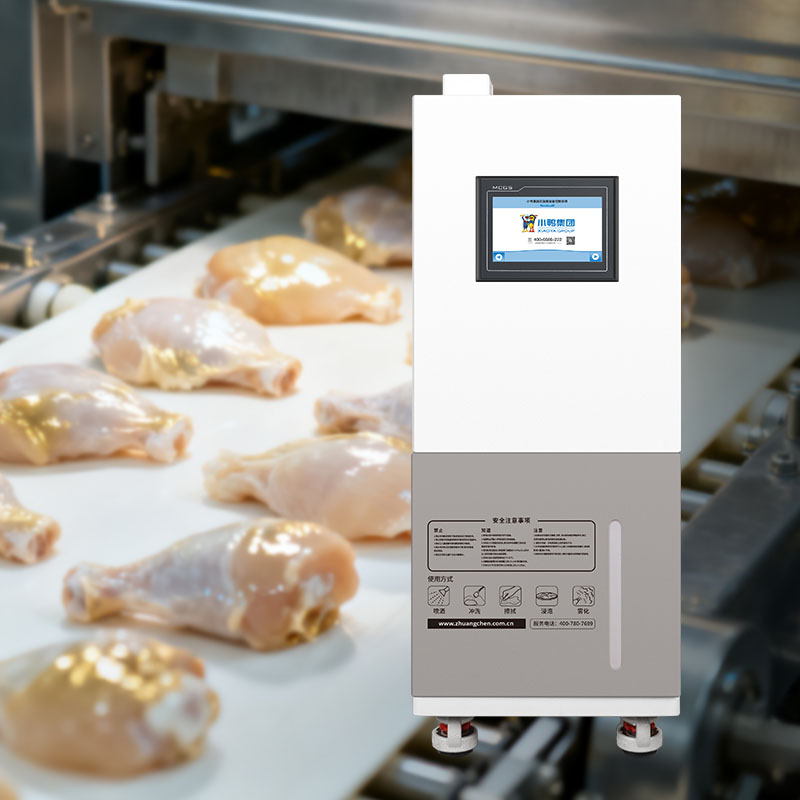
A commercial hypochlorous acid generator is worth considering when a facility needs frequent disinfection but finds that purchased chemicals create handling, storage, dilution, residue, or workflow problems. Its value is not simply that it produces a disinfectant on site. The stronger case is operational: the system can supply a consistent solution where it is used, reduce dependence on delivered chemical stock, and connect sanitation more closely to automated spraying, fogging, flushing, or dosing routines.
That case is strongest in facilities with repeatable sanitation demand: poultry houses, food-service back rooms, healthcare support areas, public washrooms, processing spaces, and large hospitality operations. For a small site using disinfectant occasionally, a generator may add unnecessary equipment, water-treatment, and maintenance requirements. For a site disinfecting multiple zones every day, on-site generation can make sanitation easier to standardize.
What a commercial generator changes in daily sanitation
Hypochlorous acid is commonly produced through electrolysis of salt and water. In a commercial system, the process is controlled so operators can prepare disinfectant at a selected concentration and use it through the facility's existing application method. That can include hand spraying, automated atomization, pipeline dosing, floor flushing, or treatment of water lines.
The practical advantage is less about replacing every sanitation chemical with one liquid and more about making routine disinfection repeatable. Manual chemical mixing introduces several variables: the wrong dilution ratio, inconsistent water volume, operator exposure, missed records, and variation between shifts. A generator with automated controls can reduce those variables, provided that the input water, salt supply, concentration setting, and application equipment are properly managed.
For operations that need different strengths for different tasks, concentration control matters more than headline production capacity. A low-concentration solution may be appropriate for a continuous or frequent application route, while heavily soiled surfaces still require cleaning before disinfection and may require a different sanitation procedure. No generator can compensate for organic buildup, poor drainage, damaged spray coverage, or a cleaning schedule that is not followed.
Where the equipment is a good fit
Commercial hypochlorous acid generation is particularly relevant where disinfectant must be available close to the point of use and where the facility has a defined hygiene workflow. Poultry production is a clear example because treatment may involve bird houses, personnel passages, equipment, farm roads, manure channels, and drinking-water lines. Each route has different requirements for concentration, contact time, application volume, and compatibility with existing equipment.
A poultry farm considering this type of system should distinguish between empty-house sanitation and in-production use. Empty houses allow more intensive washing and disinfection. In-production applications must account for animal welfare, ventilation, application frequency, droplet size, and whether the selected concentration is appropriate for the intended route. Statements such as “safe with birds present” should be evaluated against the farm's actual protocol, veterinary guidance, local requirements, and the generator supplier's operating specifications.
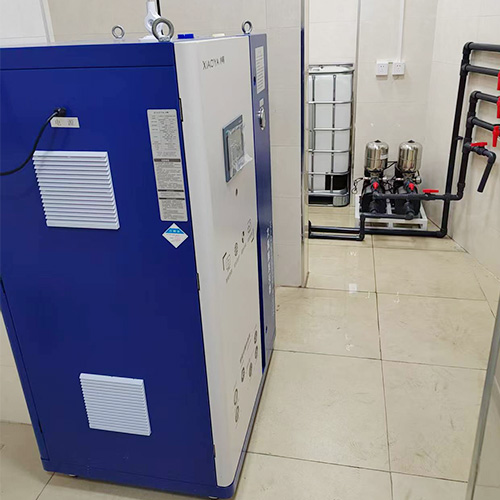
For example, a Poultry disinfection hypochlorous acid generator designed around membrane electrolysis may support atomization, spraying, pipeline dosing, and flushing rather than forcing a farm to adopt one application method. A unit producing 50 L/h may suit a defined farm workflow, but capacity must be matched to the number of houses, the volume used per treatment cycle, the desired refill time, and whether multiple zones operate at once.
Production capacity is only one sizing question
Buyers often begin with litres per hour because it is easy to compare. It is an incomplete basis for selection. A system must provide enough usable solution at the required concentration during the busiest sanitation period, not merely generate a stated volume under nominal conditions.
- Daily demand: Estimate solution use by application point, including fogging, surface spraying, line flushing, and footbath or passage treatment where applicable.
- Peak demand: Identify whether several houses or zones need treatment within the same time window.
- Required concentration: Output concentration should be adjustable within the range needed for the facility's defined applications, rather than selected solely for the highest available value.
- Holding and distribution: Tank size, recirculation, transfer pumps, pipe material, and spray hardware all affect whether generated solution reaches its destination reliably.
- Water quality: Source water can affect electrolysis performance, stability, deposits, and maintenance frequency. Water preparation should be part of the equipment discussion from the beginning.
In other words, a generator should be sized as part of a sanitation system. A 50 L/h machine with a 50 L tank may be appropriate for one operating model and undersized for another with the same floor area. The answer depends on workflow, not square metres alone.
Automation is useful only when it is observable
Commercial equipment is often described as automated because it has a touchscreen or one-touch production function. Those features are helpful, but automation should also make exceptions visible. Operators need to know whether production is active, whether concentration is within the selected range, whether the water or salt supply is interrupted, and whether a fault condition needs attention.
PLC control, status displays, alarms, and data export can improve traceability where sanitation records are important. They also reduce reliance on an operator remembering each setting. However, a touchscreen does not remove the need for routine checks. Facilities should define who verifies output concentration, who inspects filters and electrodes, who responds to alarms, and how cleaning or maintenance is documented.
Electrolysis-cell life is another selection point. A stated service life of at least 10,000 operating hours can be useful for planning, but buyers should ask how that figure is defined, what water conditions it assumes, what maintenance is required to achieve it, and how replacement is handled. The cost of a replacement cell, local technical support, and expected downtime can matter more over the equipment life than a modest difference in initial purchase price.
Claims that need a closer look
Hypochlorous acid is often presented as gentle, low-residue, and easier to handle than some conventional disinfectants. Those characteristics can be meaningful, especially where repeated application creates concerns about harsh odours, worker comfort, equipment exposure, or chemical storage. They should not be translated into an assumption that every use condition is risk-free or that no verification is required.
Concentration, pH, contact time, temperature, organic load, and application coverage all influence results. A solution that performs well on a cleaned, accessible surface may be less effective in a dirty channel, behind equipment, or in a poorly maintained water line. The same distinction applies to pathogen claims. A buyer should request the specific operating conditions and validation documents relevant to the intended use, rather than relying on a broad list of organisms on a brochure.
Compatibility also deserves attention. Hypochlorous acid solutions are often chosen to reduce material stress, yet the full delivery system includes pumps, seals, valves, pipework, nozzles, and storage components. Confirm compatibility across that entire route, especially when adapting an existing atomization network. Reusing installed pipelines can lower project cost, but only after flow, material condition, zoning, and cleaning requirements have been assessed.
Questions to settle before purchasing
A productive supplier discussion starts with the sanitation process, not the machine catalogue. Define the areas to be treated, the preferred application methods, the required daily and peak volumes, available water and power, and the staff who will operate the system. Then ask for a configuration that addresses those conditions.
- What output concentration range can the unit maintain for the intended applications?
- How is concentration checked, displayed, and recorded?
- What water treatment is required before generation?
- Can the generator integrate with existing pipes, atomizers, or dosing equipment?
- Which alarms are provided for low inputs, abnormal operation, or maintenance needs?
- What consumables, cleaning tasks, spare parts, and service support are expected during operation?
- Which certification and electrical requirements apply in the installation country?
The best commercial hypochlorous acid generator is therefore not necessarily the highest-output unit or the model with the longest feature list. It is the one that produces a verified solution at the needed rate, fits the facility's sanitation routes, and gives operators enough control to keep performance consistent after installation.
NEWS
 Disinfection Empowers Orthodontic Safety: Hypochlorous Acid Generators Build a Sterile Defense Line for Dental Instruments
- Accumulating Strength and Reaching New Heights: A Record of the Production Breakthrough of Xiaoya Small Home Appliances' Hypochlorous Acid Generators
 Medical HOCl Generator Procurement: Service, Training, and Traceability
- Integrating a Medical HOCl Generator into Hospital Cleaning Stations
 Verifying HOCl Concentration and Contact Time for Hospital Surfaces
Leave us a message

Xiaoya Group was founded in 1979,expert in the electrolyzed water industry.
Get in Touch
*We respect your confidentiality and all information are protected.