news
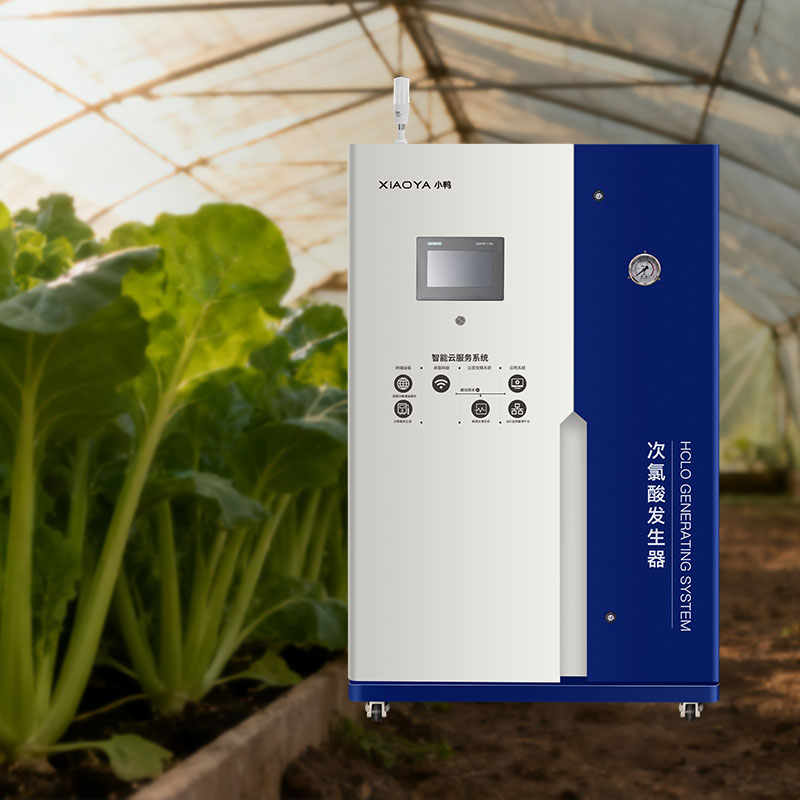
A hypochlorous acid generator manufacturer should be assessed as a process-equipment supplier, not simply as a seller of “disinfection machines.” The useful question is whether the manufacturer can repeatedly produce a specified hypochlorous acid solution under the customer’s water quality, operating temperature, hygiene protocol, electrical standard, and output demand. A unit that works in a controlled demonstration may still be unsuitable for a cold store, a food-processing loading bay, or a vehicle sanitation station if concentration stability, corrosion control, automation, or service support are poorly engineered.
This distinction matters because hypochlorous acid (HClO) is generated on site and used relatively soon after production. Its performance depends on more than the nominal available-chlorine concentration shown on a specification sheet. pH, water chemistry, salt purity, electrode condition, storage time, organic load on the target surface, and the method of application all affect practical disinfection results. A credible manufacturer needs to understand this system as a whole.
Manufacturing capability begins with control of the electrolysis process
Most on-site hypochlorous acid systems use sodium chloride, water, and electrolysis to produce an active chlorine solution. The chemistry is familiar, but consistent production is not automatic. The ratio of hypochlorous acid to hypochlorite ion changes with pH; this is important because the two forms have different disinfection characteristics. A manufacturer that only states an available-chlorine range without identifying the corresponding pH control method leaves a significant unanswered question.
For buyers evaluating a hypochlorous acid generator manufacturer, the critical technical issue is repeatability. The equipment should be able to maintain the target concentration and pH range over normal operating cycles, rather than producing an acceptable result only with ideal feedwater and newly installed electrodes. This requires coordinated design of:
- electrolytic cell configuration and current control;
- corrosion-resistant electrode materials, commonly titanium-based assemblies;
- accurate brine dosing and water flow regulation;
- monitoring for operating parameters that affect solution quality;
- safe separation, handling, or management of electrolysis by-products; and
- controls that prevent operation outside validated settings.
Electrode life deserves particular attention. Claims about long operating hours have limited value unless they are linked to operating current, water hardness, maintenance requirements, and replacement procedures. Scaling, unstable feedwater, and incorrect salt concentration can reduce performance before the nominal life of the electrolyzer is reached. Manufacturers should be able to explain which conditions invalidate expected service life and whether the design allows practical inspection and replacement of core components.
Output capacity is not the same as usable sanitation capacity
Generator capacity is often expressed in litres per hour, but this alone does not establish whether a system is correctly sized. The relevant calculation starts with the hygiene task: surface area, spray or flushing method, required contact time, disinfection frequency, desired active-chlorine concentration, and peak demand period. A facility may need modest daily volume but require rapid production before vehicles are loaded, while another may require continuous supply to a connected atomization line.
Cold-chain operations illustrate the difference. Equipment must support sanitation across vehicles, containers, cold rooms, circulation equipment, and, where permitted by the relevant food-safety programme, food-contact or fresh-preservation processes. The system also has to function around low temperatures, high humidity, and operational turnaround pressure. In this setting, a manufacturer should clarify whether the stated output is measured at the actual concentration required by the application, whether the solution is intended for immediate use, and how delivery to spray nozzles or washdown points is controlled.
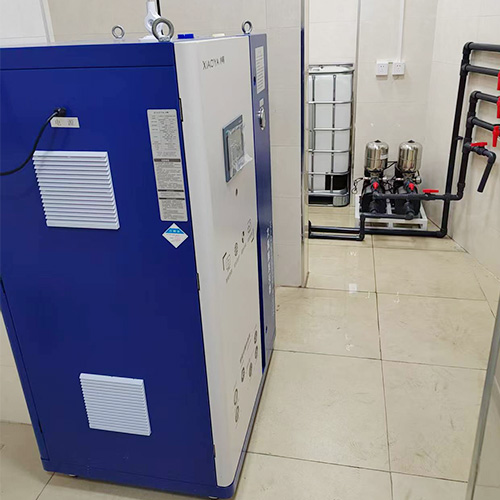
One example of the specification detail worth examining is the Electrolytic Salt Hypochlorous Acid Water Generator for Cold‑Chain Transportatio. Its XY SAEW-60 configuration is specified at 50 L/h, with adjustable available chlorine from 50 to 500 mg/L and a pH range of 5.0–6.5 for cold-chain disinfection. Those figures are meaningful only when matched to the actual disinfection protocol. A 100–200 ppm solution may be appropriate for a defined application, but the correct concentration cannot be selected solely because it is commonly cited. Soil level, contact time, surface material, local food hygiene requirements, and the intended method—atomization, flushing, soaking, or another controlled process—must be considered together.
Application engineering separates a manufacturer from an assembler
A basic generator can produce solution; an application-ready system must integrate with the site. This is especially relevant where equipment is exported into different electrical, water, and hygiene environments. Voltage and frequency compatibility, inlet water treatment, drainage, ventilation, pipe materials, dosing interfaces, and operator access all affect whether the equipment can be installed without creating a new sanitation risk.
For example, atomization systems require more than an appropriate disinfectant concentration. Droplet generation, airflow, enclosure size, worker exposure controls, settling time, and surface coverage determine whether the process is both effective and safe. Flushing systems require compatible pumps, piping, seals, and runoff management. A solution that is chemically suitable may still cause unnecessary maintenance if it is introduced into unsuitable metal components or poorly designed distribution lines.
Manufacturers should therefore provide installation boundaries rather than vague assurances of compatibility. Useful documentation identifies feedwater specifications, salt requirements, ambient temperature limits, recommended pipe and seal materials, cleaning procedures, alarm conditions, and required utility connections. It should also distinguish between the generator’s capability and the customer’s responsibility to validate a complete sanitation process.
Food, healthcare, and transport applications require different compliance evidence
“Hypochlorous acid” does not automatically mean that a system is approved for every sanitation purpose. Requirements differ according to jurisdiction, intended use, concentration, application method, and whether the solution contacts food, food-contact surfaces, medical environments, or general facilities. Equipment certification, chemical or biocidal-product rules, food hygiene rules, and occupational-safety obligations may sit under separate regulatory frameworks.
CE marking, where applicable, addresses relevant product conformity requirements for the equipment placed on the European Economic Area market; it is not a universal statement that the generated solution is authorised for every disinfection claim or food application. Similarly, conformance with a cold-chain hygiene standard can support equipment positioning in a specific operational context, but it does not replace site-level sanitation validation.
A responsible manufacturer should be precise about what its certificates cover. Buyers should request the certificate number, issuing body, product model covered, applicable directives or standards, and the scope of testing. They should also ask whether electrical components, pressure-bearing parts, and control systems are covered as assemblies. Broad statements such as “international certified” are not enough for import documentation, project approval, or quality-system review.
Data visibility matters in controlled sanitation environments
Manual preparation of disinfectant creates traceability gaps: operators may mix incorrect concentrations, skip records, or use aged solution without knowing its condition. On-site generation can reduce those gaps only if the equipment records meaningful operating data. PLC-based controls, batch records, alarms, and data export are practical features when they show what was produced, under which settings, and whether abnormal conditions occurred.
However, digital functions should not be judged by the presence of a touchscreen alone. The relevant questions are whether exported data can identify production time, concentration-related settings, faults, maintenance events, and user actions; whether records can be retained; and whether access rights prevent unauthorized parameter changes. For facilities operating under HACCP-style hygiene management or customer audit requirements, this information may be more valuable than decorative interface features.
Operating cost should be evaluated across the whole system
Hypochlorous acid generators are often considered because they can replace purchases, transport, and storage of prepared disinfectants. Food-grade salt and water may be low-cost inputs, but the full cost profile also includes electricity, water treatment, periodic cleaning, electrode replacement, pumps, filters, calibration or verification work, labor, and downtime. Where the generator feeds several sanitation points, distribution infrastructure may represent a material part of the project cost.
The comparison should also include operational risks that do not appear on a purchase invoice. Stored chemical inventories require space, handling controls, stock rotation, and disposal planning. Conversely, on-site systems depend on utilities and maintenance discipline. If production stops during a critical loading window, the facility needs a defined contingency procedure. The best economic case is therefore not “salt versus chemical price”; it is the cost and reliability of delivering a compliant sanitation process at the required time.
Questions that reveal supplier depth
Before selecting a hypochlorous acid generator manufacturer, buyers should seek direct, specific answers rather than generic product claims:
- What concentration and pH ranges can the unit sustain under the proposed water conditions?
- How are concentration-related parameters verified during commissioning and routine operation?
- Which components contact brine and generated solution, and what corrosion-control measures are used?
- What are the expected maintenance intervals, consumable parts, and electrode replacement procedure?
- What evidence supports use in the intended application rather than only general facility disinfection?
- Which certifications apply to the exact export model, voltage configuration, and destination market?
- Can the manufacturer provide installation drawings, utility requirements, operation manuals, and fault-response guidance in the required language?
The strongest manufacturers do not treat these questions as obstacles to a sale. They use them to define the operating envelope, prevent incorrect sizing, and avoid unsupported claims. For a technology that sits at the intersection of electrochemistry, hygiene control, automation, and regulatory compliance, that discipline is a more reliable indicator than capacity figures or broad statements about sterilization performance.
NEWS
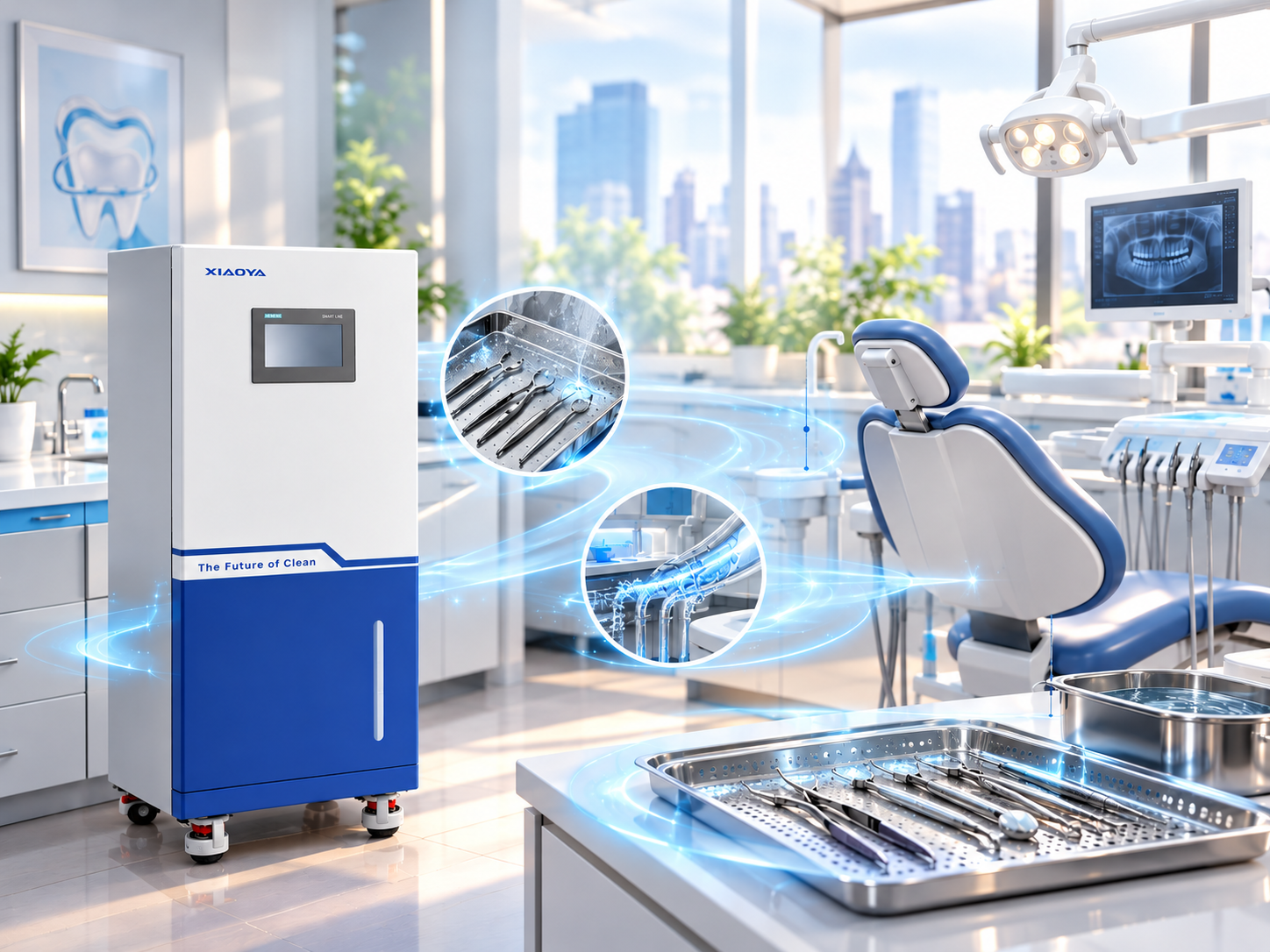
 Disinfection Empowers Orthodontic Safety: Hypochlorous Acid Generators Build a Sterile Defense Line for Dental Instruments
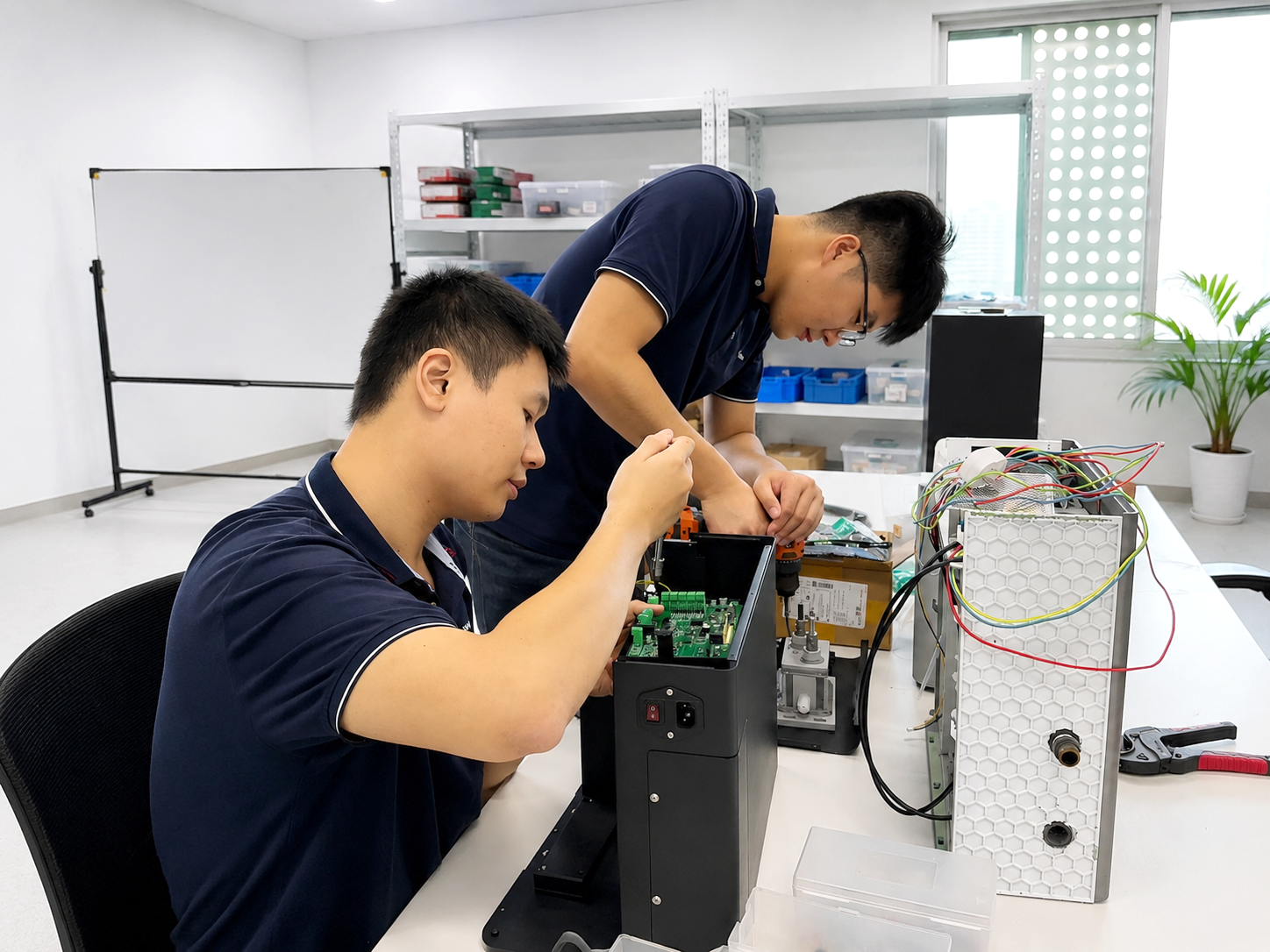
- Accumulating Strength and Reaching New Heights: A Record of the Production Breakthrough of Xiaoya Small Home Appliances' Hypochlorous Acid Generators
 Medical HOCl Generator Procurement: Service, Training, and Traceability
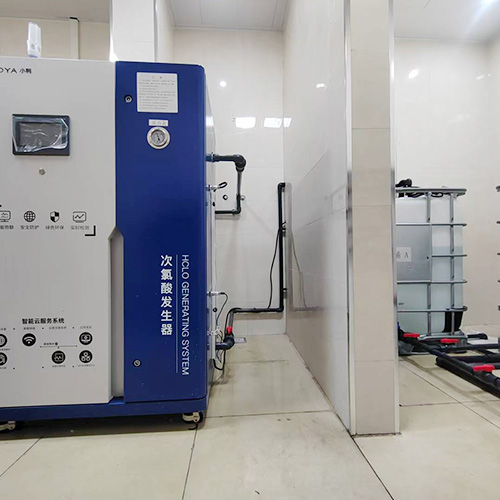
- Integrating a Medical HOCl Generator into Hospital Cleaning Stations
 Verifying HOCl Concentration and Contact Time for Hospital Surfaces
Leave us a message

Xiaoya Group was founded in 1979,expert in the electrolyzed water industry.
Get in Touch
*We respect your confidentiality and all information are protected.