news
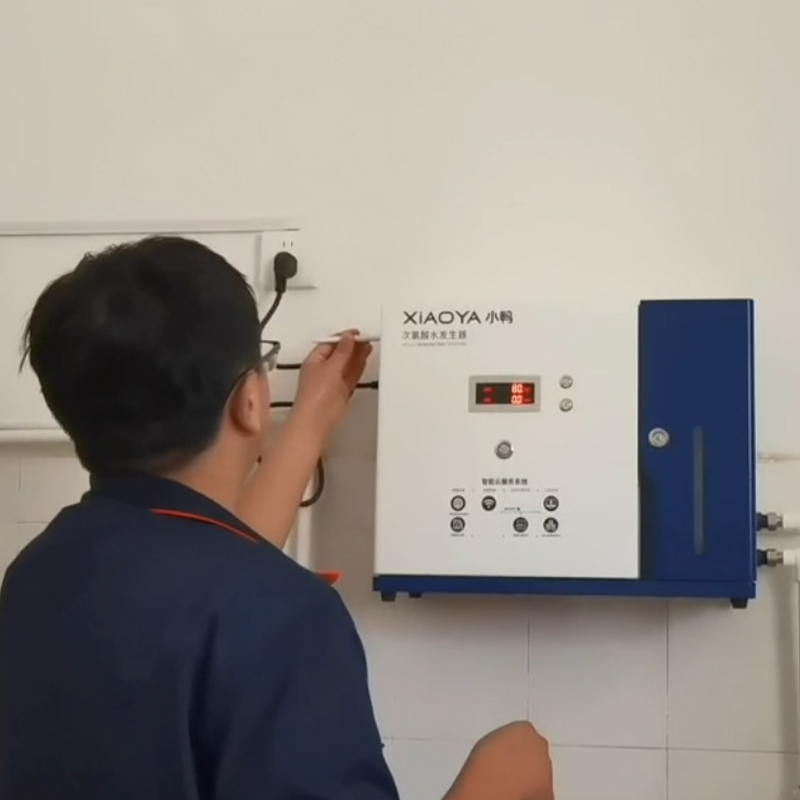
For growers, sanitation is rarely a single task. It runs through seed preparation, irrigation lines, greenhouse surfaces, harvesting tools, storage areas, and the daily effort to keep disease pressure from gaining ground. An Industrial Hypochlorous Acid Generator offers a practical way to produce a fresh disinfecting solution on site, reducing the need to store and handle large volumes of conventional chemical products.
Hypochlorous acid (HClO) is valued because it can deliver broad-spectrum antimicrobial activity at relatively low available chlorine concentrations. When generated and applied under controlled conditions, it can support fungal and bacterial disease management while fitting the operational expectations of modern planting facilities. For organic-oriented growers and large agricultural bases alike, the appeal is not only disinfection performance; it is also the prospect of a residue-conscious, automation-ready hygiene process.
Why on-demand hypochlorous acid matters in agricultural operations
A farm sanitation program often becomes complicated as production expands. Different areas may require different dilution levels, application volumes, and treatment schedules. Purchased disinfectants can create concerns around transport, storage space, chemical compatibility, worker handling, and product freshness. In contrast, an industrial hypochlorous acid generation system prepares solution where it will be used, allowing operators to adjust concentration according to the intended task.
This distinction matters because not every agricultural use calls for the same treatment strength. A low-concentration solution may be selected for routine environmental hygiene or sensitive crop-related workflows, while a different setting may be appropriate for equipment, tools, or empty growing spaces. The correct concentration, contact time, water quality, and application method should always be validated for the crop and process involved. Hypochlorous acid is a useful tool, but it is not a substitute for good ventilation, drainage, cleaning discipline, or integrated pest management.
For facilities seeking more repeatable sanitation, automation also changes the daily rhythm. Instead of relying entirely on manual mixing and estimation, teams can establish production settings, monitor output, and supply treatment solution to designated points. That consistency is especially valuable in greenhouses, nursery operations, vegetable growing sites, and planting bases where hygiene decisions are made many times a day.
From electrolysis to field use: what a generator actually does
An industrial hypochlorous acid generator typically uses electrolysis to create hypochlorous acid solution from water, salt-based electrolyte, and electrical energy. The performance of the final solution is influenced by pH, available chlorine concentration, source-water quality, and equipment controls. For crop-focused use, a mildly acidic range is commonly sought because hypochlorous acid is the more active chlorine species in that condition.
Generation is only one part of the system. A dependable installation also needs stable inlet water pressure, sensible electrolyte handling, safe drainage arrangements, accessible cleaning points, and clear procedures for testing the produced solution. Operators should measure the parameters that matter to their application rather than assuming that a set display value guarantees field performance. Test strips, meters, operating logs, and routine calibration all contribute to a more reliable program.
Industrial equipment manufacturers with experience in health, disinfection, clean-energy, and household appliance technologies increasingly bring connected controls into this category. The result is not merely a machine that makes solution; it can become a monitored part of the facility’s sanitation workflow. Remote access and status visibility can be particularly useful when a manager oversees several growing zones or needs to identify an equipment alert before it interrupts scheduled treatment.
A configuration designed for planting environments
For medium and large agricultural applications, capacity should be evaluated against real consumption rather than a headline number alone. Consider the size of the planting area, number of irrigation or spraying points, sanitation frequency, peak seasonal demand, and whether solution will be used immediately or distributed to storage and application systems.
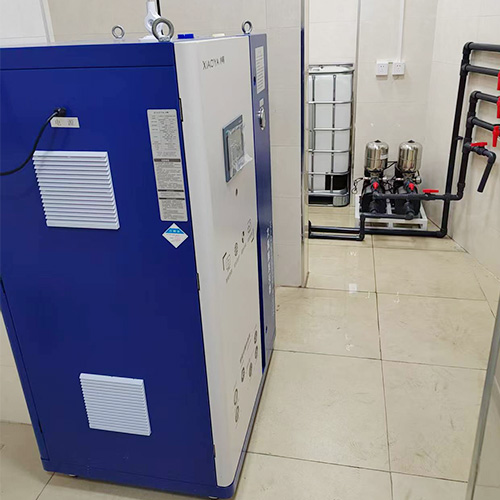
The Hypochlorous Acid Generator for Agricultural Planting is designed for settings ranging from small vegetable gardens to medium-sized plantations and large-scale planting bases. Its AQ-P1000 configuration provides an output of at least 1,000 L/h, with customization available for specific capacity requirements. Available chlorine concentration is adjustable from 10 to 300 mg/L, while the stated pH range is 5.0 to 6.5. These operating ranges give agricultural teams room to align solution production with different hygiene and crop-management workflows.
The system is rated at 220V/50Hz, with overseas voltage customization available, and has a rated power of 2,100 W. It requires inlet water pressure of 0.15–0.25 MPa and includes a 25 L electrolyte tank. For planning an equipment room or treatment station, the main unit dimensions are 900 × 700 × 1400 mm. The electrolyzer service life is specified at 5,000 hours or more, though actual service performance naturally depends on water conditions, maintenance practices, operating load, and correct use.
Where growers can use the solution thoughtfully
Seed disinfection is one frequently considered application, particularly where growers want to strengthen hygiene before germination. The treatment protocol must be crop-specific: excessive exposure, unsuitable concentration, or poor rinsing decisions can affect sensitive seed material. Small trials are a sensible starting point before a new procedure is introduced across an entire operation.
In growing areas, hypochlorous acid solution may support the prevention and control of fungal and bacterial disease pressure on surfaces, tools, trays, and selected production equipment. It can also be incorporated into cleaning routines for walkways, packing zones, containers, and irrigation-related components where biofilm management is a concern. A key principle is simple: clean visible soil and organic matter before disinfection. Heavy contamination can reduce the effectiveness of any sanitizer.
Some growers also explore hypochlorous acid within broader soil improvement and pesticide-reduction strategies. These uses deserve careful agronomic oversight. “Green” and “residue-free” do not mean that application choices can be casual. Treatment timing, crop stage, local regulations, microbial balance, and compatibility with fertilizers or biological products should be assessed before deployment. The most successful programs tend to use hypochlorous acid as one measured component of a wider cultivation plan, not as a universal cure.
Questions to ask before selecting an industrial system
- How much solution is needed during the busiest hour? Match generator capacity to peak use, not only average daily consumption.
- Which concentrations are required? Choose equipment with a controllable available chlorine range that fits the intended sanitation tasks.
- What is the source-water condition? Hardness, impurities, and unstable pressure can affect electrolysis performance and maintenance needs.
- Will the system integrate with existing workflows? Review spray equipment, tanks, pipelines, dosing points, and staff routines before installation.
- Who will monitor quality? Define responsibility for concentration checks, pH verification, maintenance, and records.
- Is remote management useful? Mobile phone or computer-based monitoring can reduce unnecessary site checks and provide earlier notice of operating changes.
It is also wise to ask whether the equipment is built for the realities of an agricultural environment: moisture, dust, extended operating periods, variable staff schedules, and seasonal surges. Industrial-quality construction and straightforward maintenance access may matter more over time than an attractive initial specification sheet.
A cleaner workflow, not a one-step promise
An Industrial Hypochlorous Acid Generator can help agricultural businesses make sanitation more controllable, responsive, and less dependent on transported chemical inventory. Its greatest value appears when output settings, application practices, cleaning routines, and crop protocols are coordinated rather than treated as separate decisions.
For growers balancing disease prevention, operational efficiency, and a move toward lower-residue cultivation, on-site hypochlorous acid generation is worth evaluating as a long-term infrastructure choice. The right system should fit the farm’s water supply, capacity needs, automation goals, and actual planting practices—then be supported by careful testing and disciplined daily use.
NEWS
 Disinfection Empowers Orthodontic Safety: Hypochlorous Acid Generators Build a Sterile Defense Line for Dental Instruments
- Accumulating Strength and Reaching New Heights: A Record of the Production Breakthrough of Xiaoya Small Home Appliances' Hypochlorous Acid Generators
 Medical HOCl Generator Procurement: Service, Training, and Traceability
- Integrating a Medical HOCl Generator into Hospital Cleaning Stations
 Verifying HOCl Concentration and Contact Time for Hospital Surfaces
Leave us a message

Xiaoya Group was founded in 1979,expert in the electrolyzed water industry.
Get in Touch
*We respect your confidentiality and all information are protected.