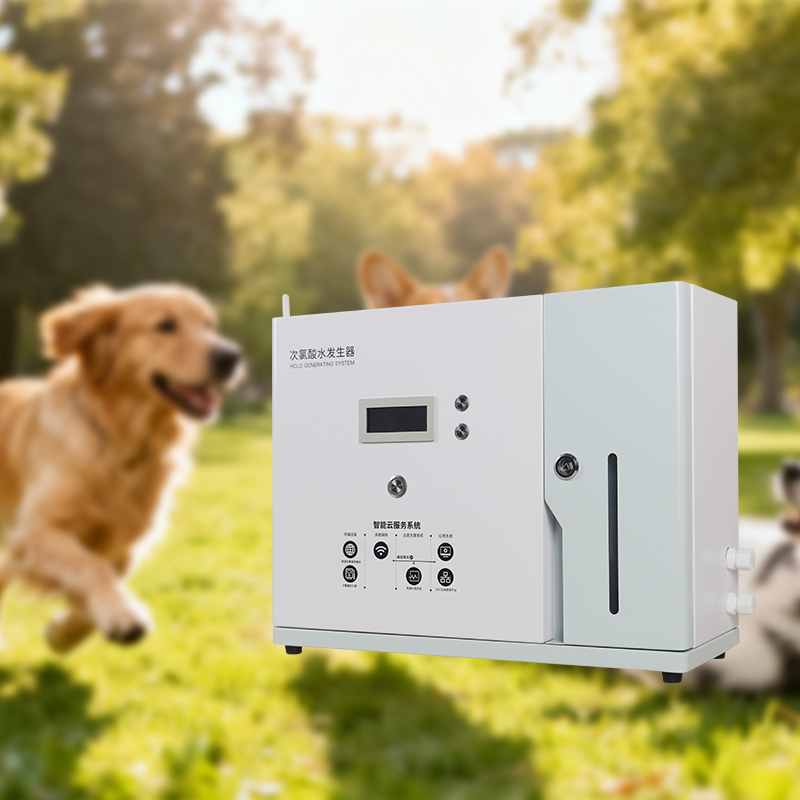
Meta Title: Can a Hypochlorous Acid Generator for Pet Disinfection and Deodorization Replace Mixed Cleaning Products?
If you are buying one spray for pet odor, another for floor cleaning, and a third for daily disinfection, the real question is simple: can one device reasonably cover most of that work? In many homes, the answer is yes, but not completely. A Hypochlorous Acid Generator for Pet Disinfection and Deodorization can reduce the number of separate products you rely on, especially for routine deodorizing, surface sanitation, and quick cleanups around pets. It is most useful when your goal is simpler daily maintenance, not when you need a heavy-duty degreaser or stain remover.
That distinction matters, because a lot of people shop for this kind of machine expecting a miracle replacement for every bottle under the sink. That is usually where disappointment starts.
Where a Hypochlorous Acid Generator for Pet Disinfection and Deodorization makes sense
For normal pet households, the workload is repetitive: wiping feeding areas, freshening litter box surroundings, cleaning crates, mopping paw prints, dealing with light urine residue, and controlling the “pet smell” that settles into fabrics and corners. These are exactly the kinds of daily tasks where hypochlorous acid solution can be practical.
The reason is not marketing language. It is chemistry and usability. Properly generated hypochlorous acid is commonly used for disinfection-related applications because it works at relatively low concentrations and is easier to fit into routine use than harsher chemical mixes. For consumers, the appeal is not just disinfecting power. It is that one system can support several day-to-day jobs that are otherwise split across deodorizer, sanitizer, and general surface spray.
So, if your current cabinet is crowded with overlapping products, a generator can often replace a large part of that mix.
A short answer, if you want one: it can replace many routine pet cleaning products, but it should not be treated as a full substitute for detergents, descalers, or strong stain-removal chemicals.
What it can replace, and what it cannot
This is the part consumers usually need before making a decision.
It can often replace: ready-made pet deodorizing sprays, some daily disinfection sprays, light-duty surface refresh products, and part of your routine cage, kennel, litter-area, and floor-wiping products.
It usually cannot replace: laundry detergent, enzyme cleaners for deep-set urine in carpets, kitchen degreasers, bathroom limescale removers, mold removers, or products designed to break down heavy organic buildup.
That is because “cleaning” and “disinfecting” are not the same job. If a surface is greasy, sticky, or loaded with visible dirt, you still need physical cleaning first. Hypochlorous acid works better as part of a maintenance routine after soil is removed, or for mild contamination that has not built up.
In real home use, this means a pet owner may go from six or seven specialty bottles down to two or three essentials, rather than down to one universal solution.
The biggest mistake buyers make
Many people compare a generator to bottled cleaners only by price per liter. That is too narrow.
The better comparison is convenience plus consistency. If you can generate fresh solution at home for ongoing use, you are less likely to “save it for later” the way people often do with expensive specialty sprays. That changes behavior. Surfaces get treated more often, odors are handled earlier, and pet areas stay more manageable.
But there is another side: generated solution still depends on the machine design, the operating process, and whether the output is appropriate for the intended use. If a unit is vague about concentration range, maintenance needs, or electrode life, that is a warning sign. In this category, convenience without control is not a good trade.
What to check before you buy
If you are evaluating a Hypochlorous Acid Generator for Pet Disinfection and Deodorization, focus less on broad promises and more on a few practical questions:
- Is the output concentration clearly stated or adjustable for different household uses?
- Does the machine explain what kind of water, salt, or electrolyte conditions it needs?
- How easy is routine maintenance, especially cleaning the electrolyzer and storage parts?
- Is the device sized for home use, or is it closer to light commercial equipment?
- Does the manufacturer actually have background in disinfection or appliance production, rather than only reselling generic units?
That last point gets ignored too often. In automated equipment, design quality shows up in stability, safety, and service life. A company working across kitchen and bathroom appliances, health care and disinfection appliances, clean energy, and small household appliances, while also handling R&D, production, and operation, is generally in a better position to build consistent equipment than a seller focused only on short-term trading. For consumers, that does not guarantee the perfect machine, but it does improve the odds that the product was engineered rather than simply relabeled.
Who should buy one, and who probably should not
You are a good fit if you have pets at home, clean pet-contact surfaces frequently, dislike storing multiple chemical products, and want a simpler daily routine. Homes with dogs that track in dirt, cats with litter odor issues, or multi-pet households usually feel the benefit faster because the cleaning cycle is constant.
You may not be a good fit if your main problem is deep carpet contamination, old urine embedded in soft surfaces, or heavy-duty household grime unrelated to pet care. In those cases, a generator can still help, but it will not solve the core issue on its own.
It is also not the best choice for buyers who want zero upkeep. Any device that generates solution through electrolysis involves some maintenance discipline. If you know you prefer grab-and-go products and will not maintain the unit, bottled solutions may still be more realistic.
One useful way to judge equipment quality
Sometimes it helps to look at how a manufacturer handles hypochlorous acid equipment outside the household category. For example, Hypochlorous Acid Generator for Agricultural Planting is presented for larger-scale use cases such as organic planting, seed disinfection, and disease control, with details like adjustable available chlorine concentration, defined pH range, and service-life information for the electrolyzer. That does not mean a farm-oriented unit is suitable for pet owners; it usually is not. But it does show what serious equipment documentation looks like: application clarity, measurable parameters, and operating transparency.
That is a helpful benchmark when comparing consumer models. If a household product gives you no meaningful technical information at all, be careful.
What matters more than the headline feature
In actual use, three details matter more than flashy claims.
First, freshness of solution. Hypochlorous acid is most valuable when used appropriately and stored according to product guidance. Second, matching concentration to task. Too weak and the effect may be underwhelming; too strong and you may be wasting consumables or using the wrong setting for the job. Third, workflow. A machine only earns its place if it makes your daily routine easier, not more complicated.
That is why the best buying decision is usually not “Which unit has the most features?” It is “Which unit will I actually use three or four times a week without hassle?”
So, can it replace mixed cleaning products?
For many pet households, yes, to a meaningful degree. A Hypochlorous Acid Generator for Pet Disinfection and Deodorization can consolidate odor control, routine surface disinfection, and part of your everyday pet-area cleaning into one system. That can save storage space, reduce product overlap, and make regular upkeep more consistent.
Still, keep your expectations realistic. You will probably still need a detergent for dirt, an enzyme product for deep urine problems, and specialty cleaners for kitchen grease or bathroom scale. Think of the generator as a strong daily-maintenance tool, not a total replacement for every cleaning chemical in the house.
If you are making a buying decision, start by listing the products you use most often around pet mess, odor, and routine wiping. If most of them are doing overlapping light-duty jobs, a generator is worth serious consideration. If most of them are solving heavy-duty cleaning problems, it is probably a partial solution at best.
FAQ
Is hypochlorous acid safe to use around pets?
It depends on proper generation, concentration, and use according to product guidance. Buyers should follow the manufacturer’s instructions and avoid assuming that every machine produces the same quality of solution.
Can it remove urine stains from carpets?
Usually not by itself if the stain is old or soaked in. Deep contamination often still needs an enzyme cleaner or professional treatment.
Will it get rid of litter box odor completely?
It can help control surrounding odor on surfaces and in routine maintenance, but it does not replace litter changes, box washing, or ventilation.
Is a generator cheaper than buying sprays?
It can be over time, but that depends on how often you clean, the machine cost, maintenance needs, and how many bottled products it actually replaces in your home.
Internal Link Anchor Text Suggestions
- How hypochlorous acid generators work: educational product category page or knowledge article
- Pet odor control vs pet disinfection: comparison guide
- How to choose a home disinfection appliance: buying guide
- Daily cleaning routine for multi-pet households: practical advice article
External Authority Source Suggestions
- Government public health or environmental hygiene guidance pages
- Brand official technical documentation for hypochlorous acid equipment
- Academic or institutional research materials on hypochlorous acid disinfection performance
NEWS
 Public Facility HOCl Storage: Managing Heat, Light, and Shelf Life
 On-Site HOCl vs. Purchased Disinfectant for Municipal Buildings
- Sizing a Public Facility HOCl Generator for Peak Cleaning Demand
- What Can a Hypochlorous Acid Generator Do for Public Facility Cleaning?
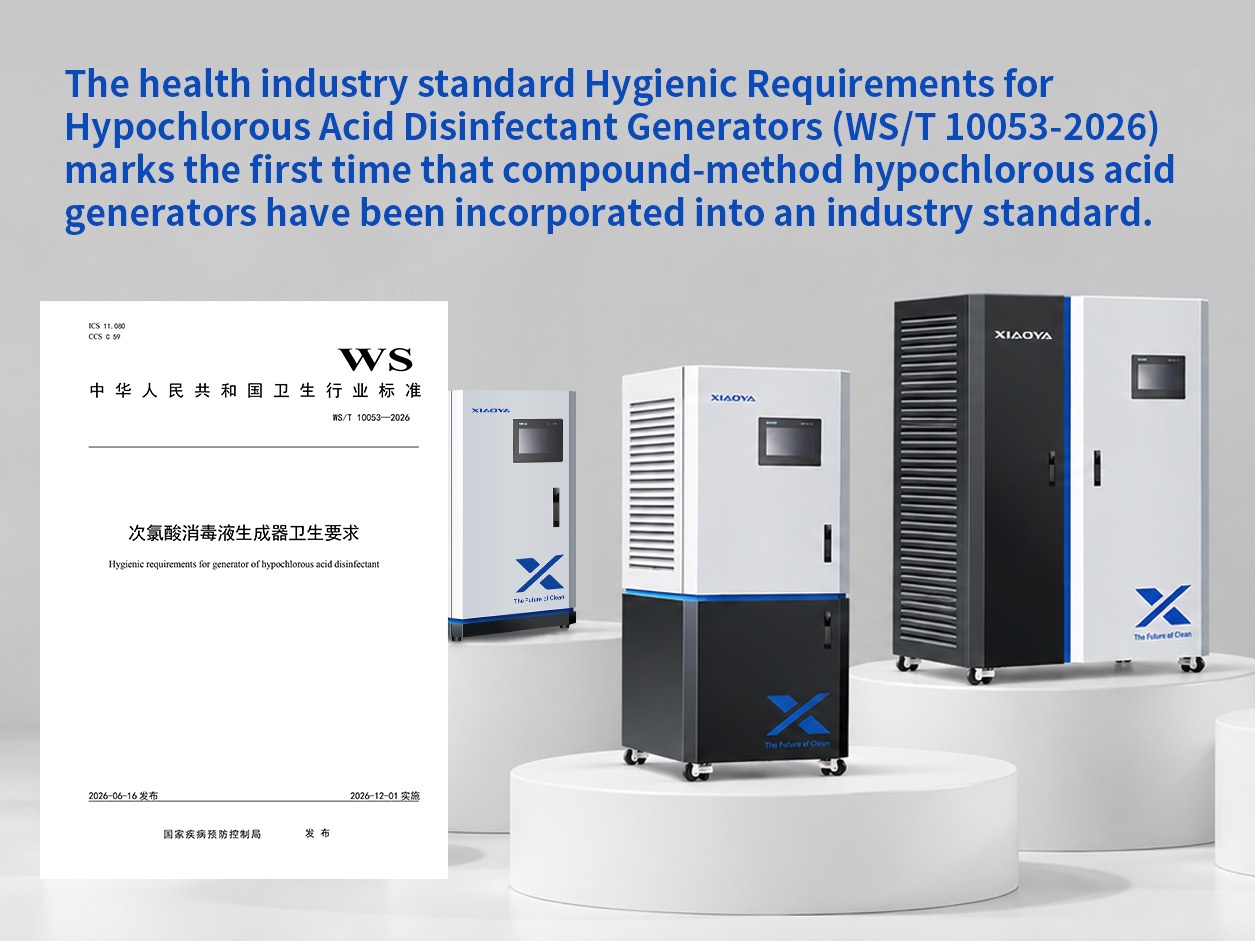
 WS/T 10053-2026 Includes the Compound Method for the First Time: Standard Signals and Market Opportunities for Mass Agricultural Production of Hypochlorous Acid Generators

Leave us a message

Xiaoya Group was founded in 1979,expert in the electrolyzed water industry.
Get in Touch
*We respect your confidentiality and all information are protected.