Meta Title: Where a portable hypochlorous acid generator makes sense for mobile sanitation teams
If your team moves from one site to another and needs reliable disinfection without carrying large volumes of prepared chemicals, a portable hypochlorous acid generator can be a sensible tool. The key point is this: it is most useful when the job changes by location, timing, and contamination level, and less useful when the work is fixed, centralized, and already supported by stable supply systems. For operators, the real question is not whether the technology sounds advanced. It is whether it reduces delays, handling risk, and inconsistency in daily field work.
That is why this equipment gets attention in sanitation work tied to kitchens, bathrooms, healthcare-related spaces, public facilities, and temporary service points. In these environments, teams often need to respond quickly, work in tight spaces, and maintain hygiene standards without building a full chemical storage setup at every stop.
Where a portable hypochlorous acid generator actually earns its place
In practice, it makes the most sense when disinfection has to happen on site and on demand.
A common example is mobile cleaning support for commercial kitchens and food preparation areas. Teams may be sent to restaurants, canteens, or temporary food service locations where hygiene expectations are high but the working conditions are different every day. Carrying ready-mixed disinfectant for every possible task is inefficient. Generating solution near the point of use gives operators more flexibility, especially when schedules shift or extra treatment is needed.
Bathrooms and washroom service routes are another good fit. These jobs are repetitive, but the level of soil and odor control needed can vary sharply from one location to the next. A portable unit can help when teams need fresh disinfectant during a route instead of rationing what they loaded in the morning.
Healthcare-adjacent work is where people need to be more careful. It may be useful in clinics, elder care facilities, recovery rooms, or non-critical support spaces, but operators should never assume that any generated solution automatically meets all medical disinfection requirements. Contact time, concentration, surface compatibility, and local compliance rules still matter. In other words, the machine does not replace protocol.
Public facilities and temporary high-traffic environments also benefit. Think event venues, transport waiting areas, school sanitation support, or emergency response cleaning. In these cases, mobility is not a convenience feature. It is the reason the system works at all.
Short answer: a portable hypochlorous acid generator makes sense when your team needs fresh disinfectant across changing sites, cannot rely on one fixed supply point, and wants better control over daily sanitation workflow.
When it may not be the right choice
Some teams buy based on the promise of portability and then discover they did not need portability in the first place.
If your operation runs from one large facility with predictable consumption, fixed dosing points, and trained staff already managing inventory well, a centralized disinfection setup may be simpler. The same applies when your sites already receive pre-verified chemicals under a strict procurement process and there is little benefit in on-site generation.
It is also a weak fit if operators do not have time to monitor water quality, basic maintenance, or correct use procedures. Portable does not mean effortless. If field teams treat it like a spray bottle instead of a piece of equipment, performance usually becomes inconsistent.
What operators usually overlook
Most hesitation is not about whether hypochlorous acid works as a disinfectant. It is about whether the generator will fit the rhythm of real work.
The first thing many people miss is output planning. A portable unit sounds convenient, but if your crew needs continuous high-volume use for long shifts, small equipment may create refill and waiting problems. You should match the generator’s actual daily output to route length, refill access, and treatment frequency. Otherwise, the team starts carrying backup chemicals anyway, which defeats the point.
The second issue is water and power conditions. On-site generation depends on stable inputs. If your crews work in older buildings, outdoor temporary sites, or locations with inconsistent utilities, check what the unit needs before rollout.
The third is training. Teams need to understand preparation steps, storage limits after generation, surface use, and what not to mix with other cleaning chemicals. A lot of performance complaints come from poor field habits rather than equipment failure.
A practical way to decide
Before choosing a portable hypochlorous acid generator, ask four simple questions:
- Do we sanitize multiple sites in one shift?
- Do our contamination levels change enough that fixed pre-mixed volume creates waste or shortage?
- Do we need faster response for unscheduled sanitation tasks?
- Can our operators handle basic equipment checks consistently?
If the answer is yes to most of these, the equipment is probably worth evaluating.
In companies working across kitchen and bathroom appliances, healthcare and disinfection appliances, clean energy, and small household appliances, this kind of judgment matters because sanitation is rarely isolated from the rest of the operating environment. Teams are not only cleaning surfaces; they are working around equipment, utilities, user traffic, and maintenance schedules. An enterprise that combines R&D, production, and operation usually sees this more clearly, because the sanitation tool has to fit the broader workflow, not just look good on paper.
Think in systems, not just in one machine
There is another detail experienced teams tend to understand earlier: disinfection performance is shaped by the full site setup. In some projects, sanitation work is paired with nearby steam or hot-water support for cleaning, rinsing, or process hygiene. When a distributed installation is needed, compact utility equipment can be easier to place close to the work zone. For example, Thermal Engine is the kind of supporting equipment some facilities may review when they want local steam capacity with a small footprint, no separate boiler room, and lower maintenance burden. That does not replace a portable hypochlorous acid generator, but it shows the bigger decision logic: mobile sanitation works best when the surrounding utility setup also matches field reality.
This matters more in semi-fixed service points, satellite kitchens, care facilities, and distributed sanitation stations. If a site needs both flexible disinfection and compact thermal support, looking at the overall arrangement can save more trouble than optimizing one device in isolation.
Common mistakes that create poor results
One mistake is assuming “portable” means suitable for every route. Weight, refill frequency, and operator fatigue still affect daily use.
Another is treating all surfaces the same. Operators should always confirm material compatibility and required dwell time for the actual task. Fast application is not the same as complete disinfection.
A third mistake is buying on lab claims alone. Field conditions are messy. Good decisions come from trial use across real locations: one kitchen, one restroom route, one healthcare-related site, one public facility. If the workflow improves in all four, the case becomes much stronger.
There is also a management mistake: rolling out equipment without a simple checklist. Even a short routine covering startup, generation, labeling, use window, and end-of-shift cleaning prevents many avoidable problems.
Final judgment
A portable hypochlorous acid generator is a practical answer for mobile sanitation teams that need fresh disinfectant, fast response, and less dependence on transported chemical stock. It is especially useful across changing service environments such as kitchens, bathrooms, healthcare support spaces, and public facilities. It is less compelling for fixed, high-volume operations that already have stable centralized systems.
The best next step is not to ask whether the technology is modern. Ask whether it fits your route pattern, operator habits, utility conditions, and hygiene targets. That is where a portable hypochlorous acid generator either proves its value or becomes just another piece of equipment on the cart.
FAQ
Is a portable hypochlorous acid generator better than carrying pre-mixed disinfectant?
It can be, especially for multi-site work. If your team often runs short, over-carries, or faces changing sanitation needs, on-site generation is usually more practical.
Can it be used in healthcare spaces?
Yes, in some healthcare-related environments, but only under the site’s hygiene rules. Required concentration, contact time, and compliance standards need to be verified locally.
What is the biggest operating risk?
Inconsistent field use. Poor maintenance, unclear labeling, incorrect storage, or weak operator training causes more problems than the core technology itself.
Does portability automatically mean easy deployment?
No. You still need to check output capacity, water access, power conditions, and the crew’s ability to handle routine checks.
Internal Link Anchor Text Suggestions
- hypochlorous acid disinfection equipment: product category page
- mobile sanitation system planning: solution page
- commercial kitchen hygiene equipment: industry application page
- healthcare disinfection workflow basics: knowledge base article
External Authority Source Suggestions
- government public health or environmental hygiene guidance pages
- brand official technical documentation for disinfectant generation equipment
- academic or institutional research on hypochlorous acid disinfection performance
NEWS
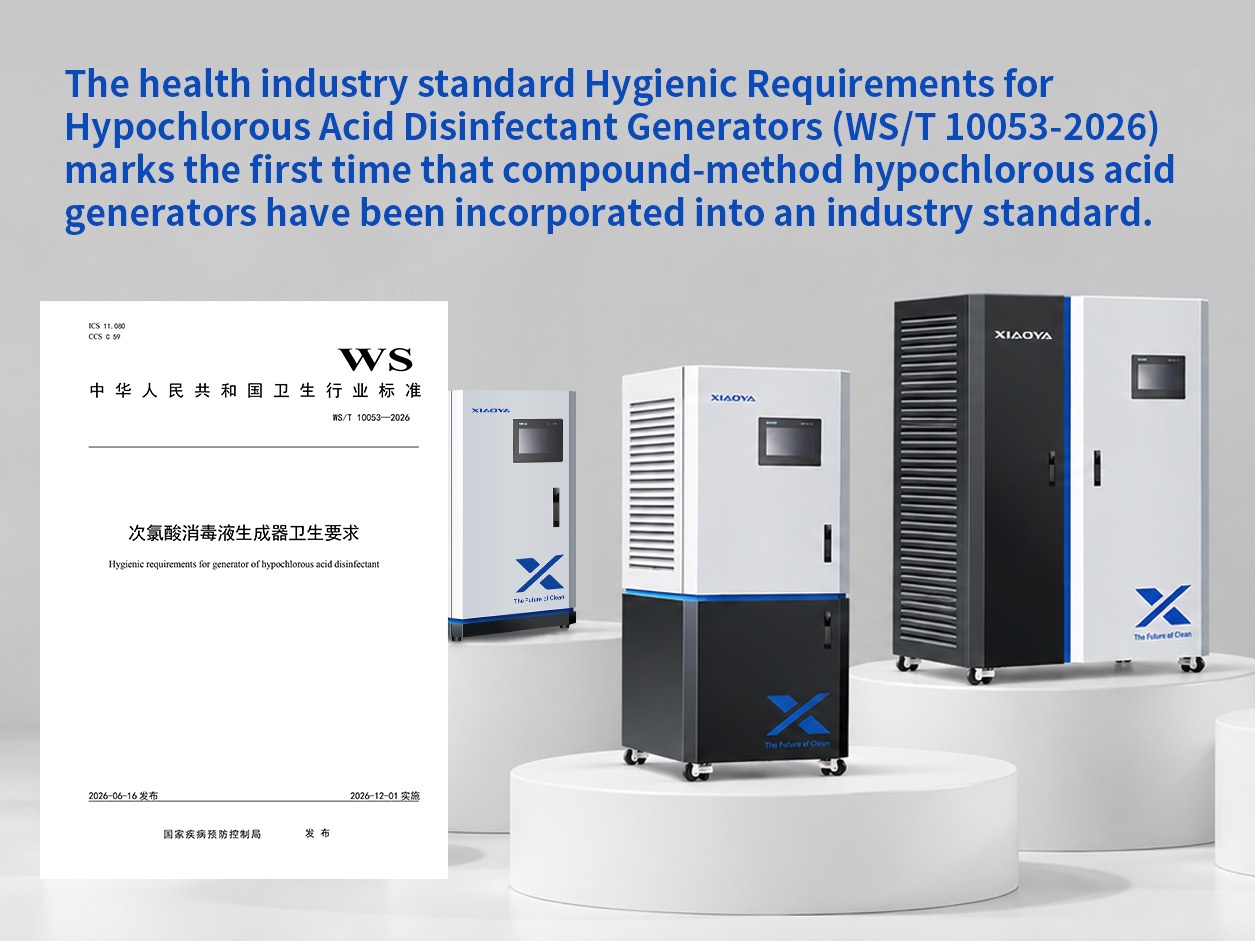
 WS/T 10053-2026 Includes the Compound Method for the First Time: Standard Signals and Market Opportunities for Mass Agricultural Production of Hypochlorous Acid Generators
 Evaluating HClO Generator Lifecycle Costs Beyond the Initial Equipment Price
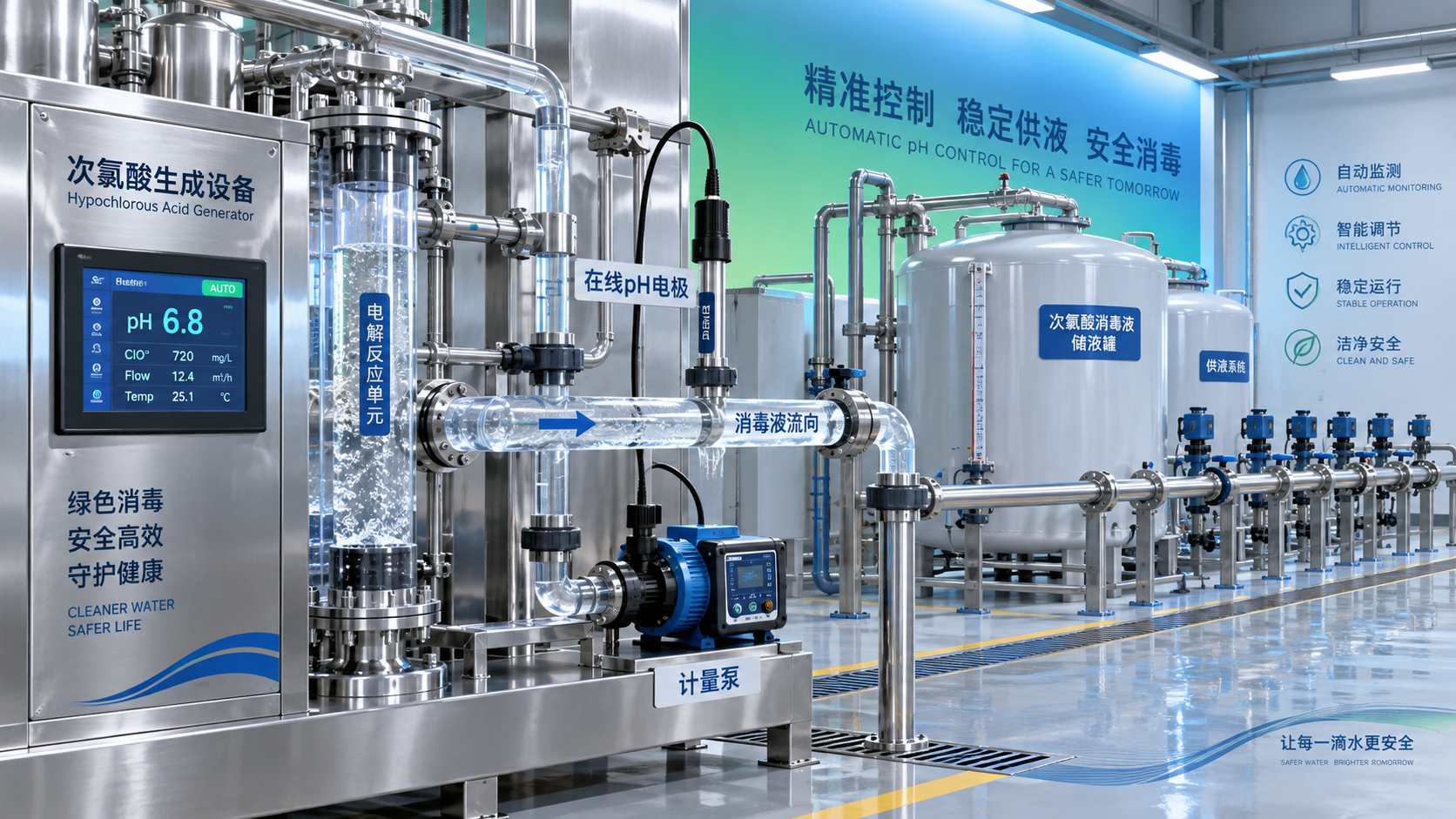
 HClO Generator pH Control: Why It Determines Disinfection Performance
- Which Safety Features Matter Most When Buying an HClO Generator?
 Troubleshooting Low ORP Readings on a Hypochlorous Acid Machine
Leave us a message

Xiaoya Group was founded in 1979,expert in the electrolyzed water industry.
Get in Touch
*We respect your confidentiality and all information are protected.