news
Start with output stability, not the marketing claim
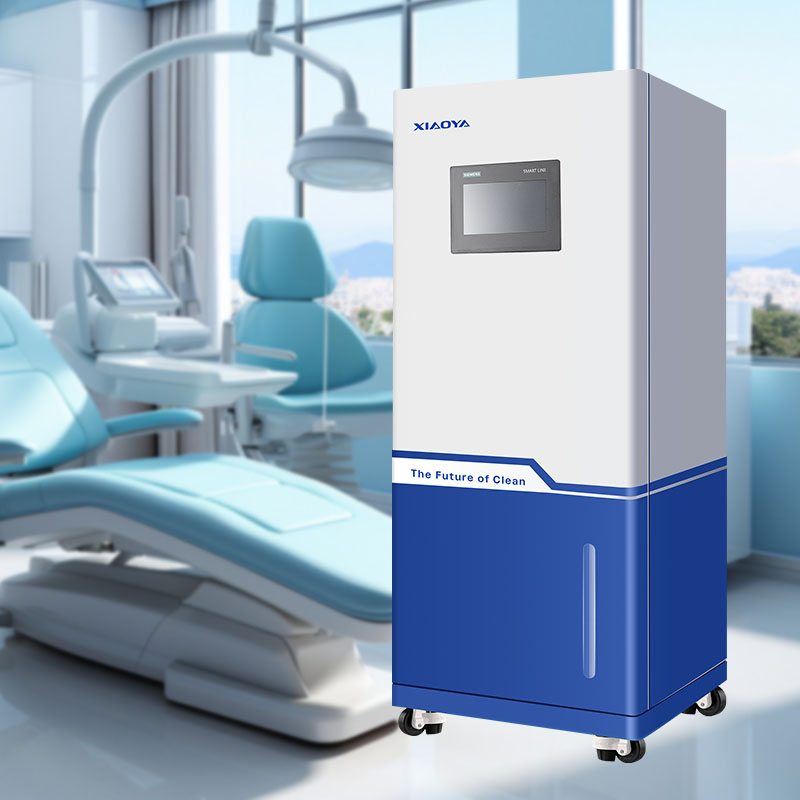
If you are comparing a Dentistry Hypochlorous AcidGenerator for oral care disinfection, the first thing to check is not whether the machine can make hypochlorous acid at all. Most of them can. The real question is whether it can keep producing usable solution at a stable range, day after day, with the same water source, the same operating routine, and the same hygiene target.
For end users, unstable output usually shows up in practical ways: odor changes, inconsistent cleaning results, more frequent maintenance than expected, or a unit that works well in week one and feels weak a month later. In dental settings, where disinfection is tied to repeatable daily routines, stability matters more than headline claims.
What to check before you trust the disinfection result
A useful buyer checklist starts with a few technical points that directly affect whether the generated solution remains effective.
- Available chlorine concentration range: This tells you how much active disinfecting content the system can deliver. A unit with adjustable concentration is easier to match to different uses than one fixed at a single point.
- pH control: Hypochlorous acid performance depends heavily on pH. If the unit cannot hold solution within a workable range, the bactericidal effect may drift even when the concentration number looks acceptable.
- Water quality sensitivity: Hard water, inlet pressure swings, and inconsistent electrolyte dosing can all change output. Ask what conditions the machine expects and how much adjustment is built in.
- Core component life: Electrolyzer wear directly affects consistency. A machine that loses output as the cell ages becomes expensive long before it actually stops running.
This is where many buyers get misled. They compare only output volume, but a large hourly figure means very little if the concentration drifts or the pH moves out of range during normal use.
How to judge stability in a way that actually means something
When people ask whether a Dentistry Hypochlorous AcidGenerator is “stable,” they often mean several different things at once. Break it into checks you can actually use.
- Check whether the output can be adjusted for the use case. Oral care and surface disinfection do not always need the same concentration. A wider adjustable range gives you more control and less waste.
- Check whether pH remains in the effective band under local water conditions. A unit may perform differently depending on source water. If adjustment is possible without losing disinfection effect, that is a practical advantage.
- Check the relationship between output rate and daily demand. Oversized systems can create handling and storage issues; undersized systems push staff to stretch solution use longer than they should.
- Check maintenance rhythm. If stable output depends on frequent cleaning, calibration, or part replacement, factor that into the real cost of ownership.
A practical example from adjacent disinfection applications helps here. The Hypochlorous Acid Generator for Educational Institutions (AQ-P100-4G) lists adjustable available chlorine at 10-80ppm, pH at 5.0 to 6.5, and electrolyzer life of at least 5000 hours. Even if your target application is dental rather than campus use, those are the kinds of fields worth checking because they affect repeatability much more than broad claims like “high efficiency” on their own.
Do not confuse production capacity with usable disinfection performance
A common mistake is assuming that more liters per hour automatically means better results. It does not. What matters is whether the generated solution reaches the right concentration, stays within the right pH range, and is used within the workflow it was intended for.
Ask how the machine behaves in routine use
This is where technical specifications meet real operation. For consumers and smaller clinics, the better question is not “What is the maximum output?” but “What happens after repeated starts, partial-load days, missed cleaning, and ordinary tap water?”
Look for details such as inlet water pressure requirements, electrolyte tank size, power demand, and operating simplicity. A machine that requires a narrow pressure range, for example 0.15 to 0.25MPa, needs an installation environment that can actually support it. If that part is ignored, poor output may get blamed on the chemistry when it is really a plumbing issue.
The same goes for operation. One-key start and straightforward maintenance sound basic, but they matter because disinfection routines fail when equipment becomes fussy. In practice, the most stable system is often the one people can operate correctly every day.
How to read “safe” and “non-irritating” claims carefully
These claims should never be treated as blanket proof that any generated solution is suitable for every oral or dental use. Safety depends on concentration, pH, exposure route, contact conditions, and the exact task being performed. For a buyer, the right move is to connect the claim back to measurable settings.
If a unit offers adjustable concentration and pH, that is more meaningful than a vague safety label because it gives you a way to control the output for a defined scenario. It also helps explain why some multi-use generators can serve different environments. For instance, a model such as the educational-use AQ-P100-4G combines disinfection-oriented output with low-power operation at 170W and a compact main unit size of 500380190mm, which makes sense for facilities that need routine deployment rather than heavy industrial handling.
A short buyer sequence that works
If you want a clean way to evaluate a Dentistry Hypochlorous AcidGenerator without getting buried in sales language, use this order:
- Match the machine to your daily disinfection task, not to its maximum advertised output.
- Check adjustable concentration and pH range first.
- Review inlet water pressure, voltage, and operating conditions to see whether your site can support stable generation.
- Look at electrolyzer life and maintenance frequency before comparing price.
- Treat broad safety or sterilization claims as incomplete until they are tied to actual operating parameters.
That sequence usually gets you to the right decision faster than chasing the biggest capacity number. For end users, consistent output is the foundation. Disinfection results come after that, not before.
NEWS
 Upgrade in Healthy Living: Hypochlorous Acid Generators Become the New Standard for Luxury Villas
- The Ultimate Solution to Pet Shop Disinfection Challenges! XIAOYA Hypochlorous Acid Generator: Safe Pet Protection with Peace of Mind
 Hypochlorous Acid Generator vs Sodium Hypochlorite Generator
- Hypochlorous Acid Generator Supplier
- Hypochlorous Acid Generator Manufacturer
Leave us a message

Xiaoya Group was founded in 1979,expert in the electrolyzed water industry.
Get in Touch
*We respect your confidentiality and all information are protected.