news
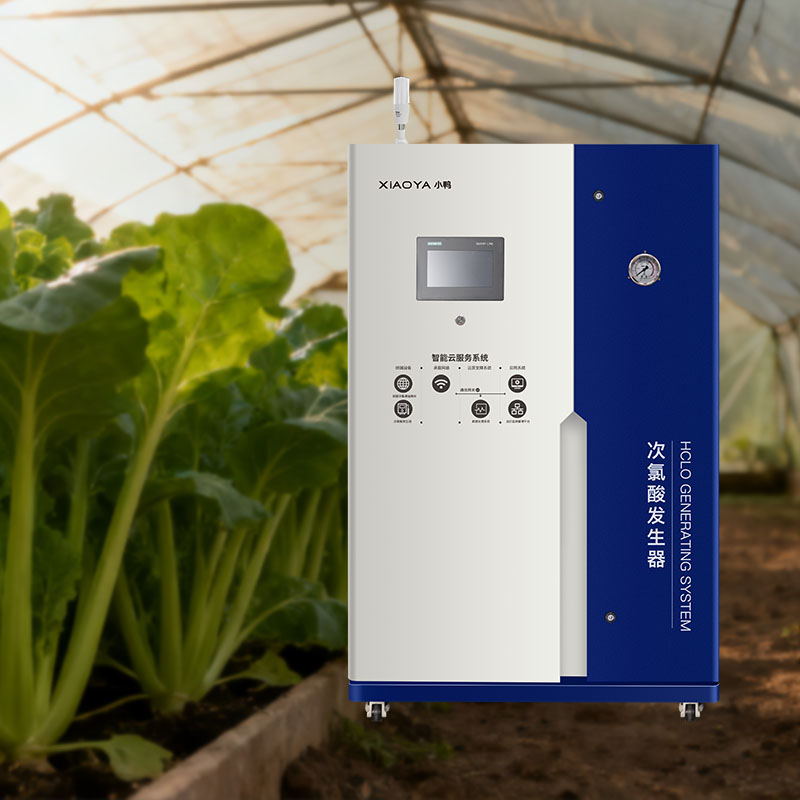
Yes, sodium hypochlorite generators can work well when the application, water quality, concentration control, and maintenance routine are matched correctly. In automation equipment settings, they are used because they produce disinfectant on site, reduce handling of bulk chemical stock, and make dosing easier to standardize. The useful answer is not a simple yes or no. Their performance depends on whether the generator can keep available chlorine output stable, whether the contact time fits the contamination load, and whether the treated surface or air path actually receives even coverage.
A sodium hypochlorite generator typically produces disinfectant by electrolyzing a dilute salt solution. Inside the unit, an electrolyzer, electrodes, flow paths, seals, and a control section work together to convert brine and water into an oxidizing solution. In practical use, that means the machine is part chemical process equipment and part automation equipment. If either side is weak, results become inconsistent. Good disinfection is not created by the cell alone; it also depends on pump calibration, electrical stability, water pressure, and how the generated solution is stored or sprayed after production.
Where the equipment actually succeeds
These generators tend to perform best where disinfection must be repeated, traceable, and integrated into a routine process. That may include sanitation loops in appliance production areas, wash-down zones, waste handling points, worker protection stations, or equipment surfaces that need frequent treatment without complicated chemical mixing. In those environments, on-site generation can simplify logistics because the solution is produced when needed and used close to the point of application.
That advantage becomes more obvious in places with odor control demands as well as microbial reduction. Waste collection rooms, transfer stations, and enclosed handling areas often have both problems at the same time. In such conditions, a hypochlorite or hypochlorous acid generation system may be selected not just for sterilization but also for deodorization, provided ventilation, spray coverage, and runoff management are designed properly.
Why results differ from one installation to another
The most common mistake is assuming that “chlorine generated” automatically means “effective disinfection.” It does not. Available chlorine concentration matters, but so do pH, organic load, temperature, and residence time. If the water contains too many impurities, scale-forming minerals, or unstable pressure, the electrolysis process may drift. If the generated solution is held too long before use, active components can decay. If the spray nozzles are poorly positioned, much of the disinfectant may never contact the surfaces that matter.
Material compatibility also needs attention. Sodium hypochlorite solutions can affect metals, elastomers, and some plastics over time, especially at higher concentration or with poor rinsing control. Stainless steel grades, tubing materials, gasket selection, and valve body construction should be reviewed against the actual chemical concentration and exposure cycle. In automated lines, corrosion rarely appears as a dramatic early failure; more often it shows up later as pitting, seal swelling, sticky valves, or shortened service intervals.
Another source of disappointment is oversizing or undersizing the machine. A unit that produces more disinfectant than the process consumes may leave solution aging in the tank or circulation loop. A unit that is too small may force operators to stretch dosing cycles or reduce concentration below the intended range. Matching output to the real operating rhythm is more useful than choosing by maximum capacity alone.
What good engineering looks like
A well-configured system usually has stable inlet water conditions, controlled salt dosing, predictable current or voltage behavior in the cell, and a simple way to verify output concentration. In some installations, automatic adjustment is needed because raw water quality changes across shifts or seasons. In others, manual setpoints are enough if the source water is already treated and process demand is steady.
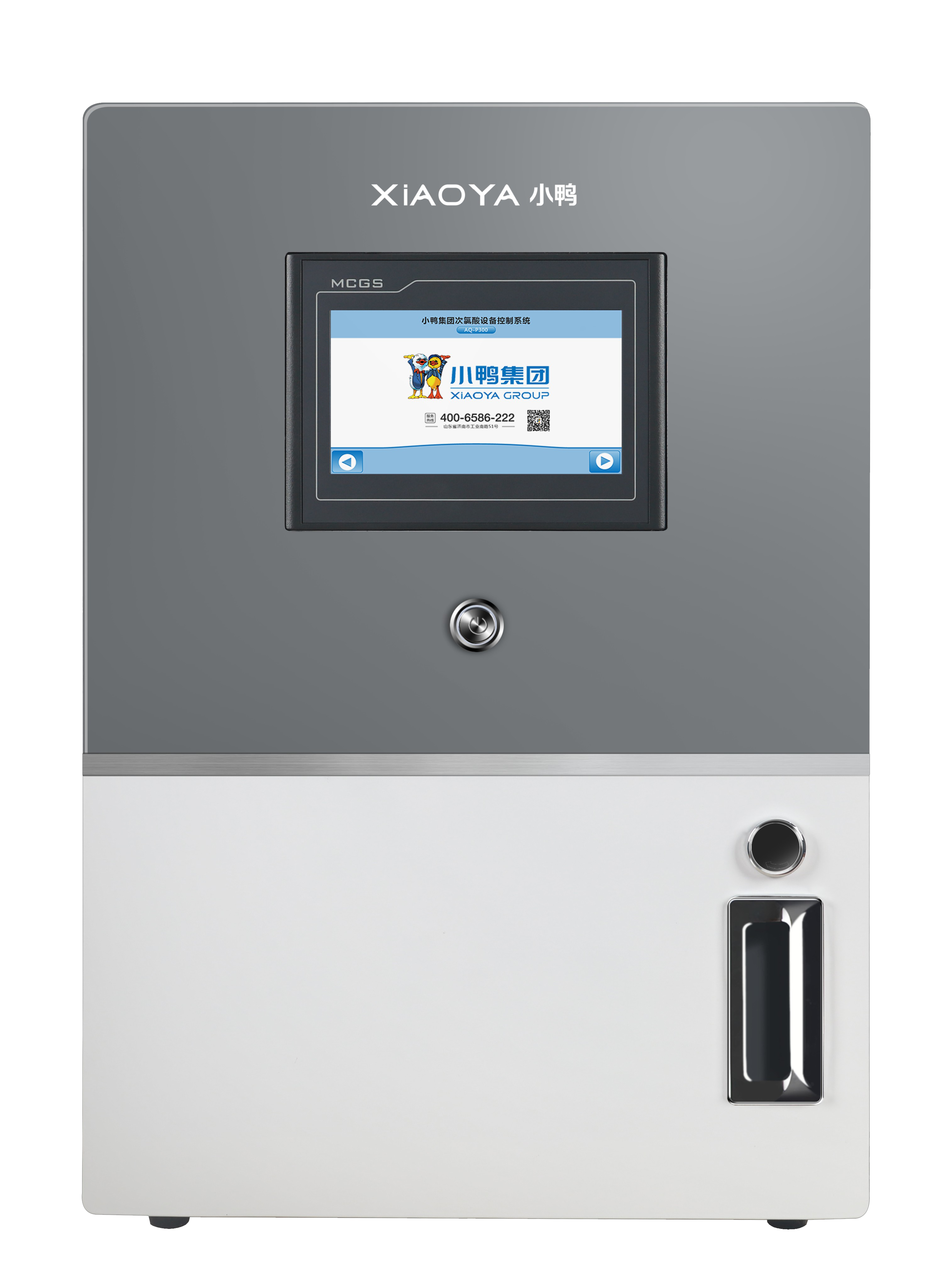
For applications that need a milder but effective disinfectant profile, hypochlorous acid generation may be preferred because pH control can influence the dominant active species. One example in this area is Hypochlorous Acid Generator for Garbage Disinfection (AQ-P300-W) , which is specified with hypochlorous acid output of 120-300L/h, adjustable pH in the 5.0-6.5 range, and available chlorine concentration adjustable from 10-200ppm. Those numbers matter because they show the unit is designed for operating flexibility rather than a single fixed condition. In actual field use, that flexibility only has value when the setting corresponds to the contamination level, spray method, and dwell time.
Power and installation details are less glamorous but often decide whether the equipment works reliably. A rated supply such as 220V/50Hz, or a customized 110V/60Hz configuration for overseas use, needs to match the site. Inlet water pressure cannot be treated as a minor note either. If the design calls for 0.15-0.25MPa and the site pressure fluctuates outside that window, output consistency may suffer. The same is true for electrolyte handling. A 5L electrolyte tank may be sufficient in one process but inconvenient in another if refill intervals interrupt operation.
Maintenance is part of performance
Electrolytic disinfection equipment does not usually fail because the idea is wrong. It fails because deposits build up, electrodes age, filters clog, or concentration verification is skipped. Scale on the cell can reduce efficiency. Salt contamination or poor-quality feed water can shorten component life. A unit may still power on and circulate liquid while producing weaker disinfectant than expected, which makes underperformance easy to miss.
- The cell should be inspected for fouling and cleaned according to the water condition and runtime, not only according to the calendar.
- Concentration testing should be tied to actual operation. Spot checks near commissioning are not enough if production demand changes later.
- Pumps, tubing connections, and spray endpoints need attention because leaks, blocked nozzles, and air ingress change delivery even when the generator section remains normal.
Core component life is another practical measure. If an electrolyzer is rated for at least 5000 hours, that gives a rough maintenance planning reference, but not a guarantee of identical life in every site. Hard water, poor cleaning practice, frequent start-stop cycling, or unstable power can reduce service life. Equipment selection should therefore consider replacement access, downtime tolerance, and the ease of servicing electrodes and seals.
Transport, installation, and operating environment
Even before startup, handling conditions matter. Electrolysis equipment contains electrical parts, liquid paths, and internal components that can be affected by impact or improper storage. During transport, vibration protection and upright positioning may be necessary depending on the structure of the unit. After arrival, installers should verify floor support, drainage, ventilation, and access clearance for maintenance. A compact footprint such as 390*340*910mm may suit narrow utility spaces, but only if service doors, hose routing, and refill access are still practical.
Harsh working environments create another layer of complexity. Waste rooms and collection stations may expose equipment to moisture, odor, aerosol residue, and aggressive cleaning routines. In those conditions, enclosure protection, cable routing, and corrosion-resistant fittings are just as important as chemical output. Industrial durability is often claimed loosely, but in real use it should mean the unit can tolerate vibration, frequent operation, and contaminated surroundings without drifting out of specification too quickly.
Common misunderstandings
One misunderstanding is that a stronger concentration is always better. Excess concentration may increase material stress, leave more residual odor, or create handling issues without improving practical sanitation on lightly contaminated surfaces. Another is treating generated disinfectant like a permanent stored chemical. On-site generation is often most useful when the solution is consumed soon after production.
There is also confusion between sodium hypochlorite and hypochlorous acid systems. They are related chlorine-based disinfectant approaches, but pH influences which species dominates and how the solution behaves in use. In some scenarios, especially where worker exposure sensitivity, odor treatment, or surface compatibility matter, a hypochlorous acid-oriented design may fit better than a conventional hypochlorite approach. That is why equipment data such as adjustable pH, available chlorine range, and mode selection deserve attention instead of relying on a generic label.
In garbage disinfection environments, a unit such as the Hypochlorous Acid Generator for Garbage Disinfection (AQ-P300-W) may be applied in domestic waste sorting drop-off points, collection stations, transfer stations, vehicles, disposal plants, and worker protection areas. That range of use suggests the machine is intended for variable field conditions, but the same machine can still perform differently from site to site depending on drainage layout, spray pattern, contact time, and the amount of organic matter present.
So, do sodium hypochlorite generators work? They do when the chemistry, mechanics, and operating conditions stay aligned. In automation equipment practice, the machine is effective only as part of a controlled process: clean enough water, correct concentration, appropriate application method, and routine maintenance. When those pieces are ignored, the generator may still run, but the disinfection result can fall short in quiet, hard-to-detect ways.
NEWS
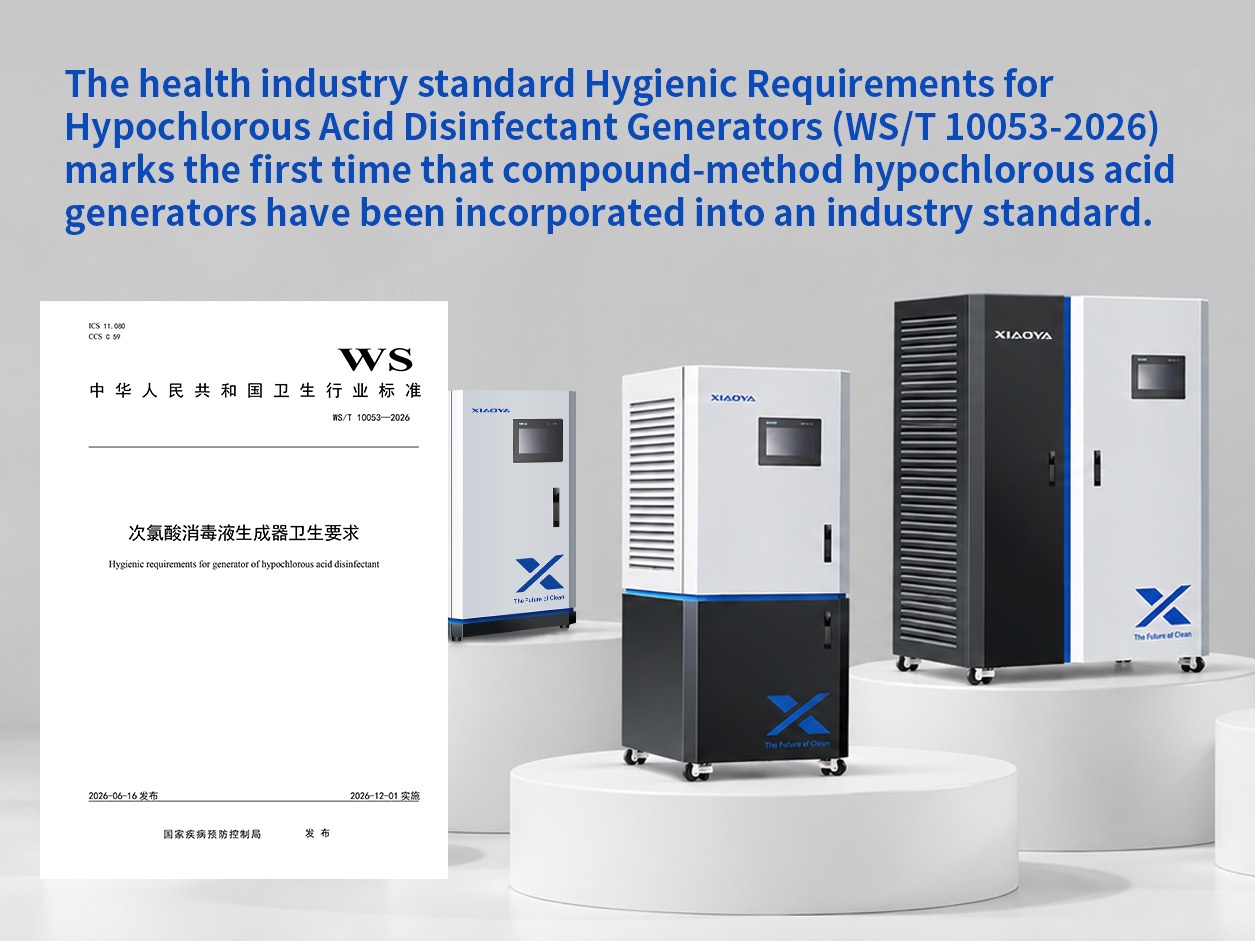
 WS/T 10053-2026 Includes the Compound Method for the First Time: Standard Signals and Market Opportunities for Mass Agricultural Production of Hypochlorous Acid Generators
 Evaluating HClO Generator Lifecycle Costs Beyond the Initial Equipment Price
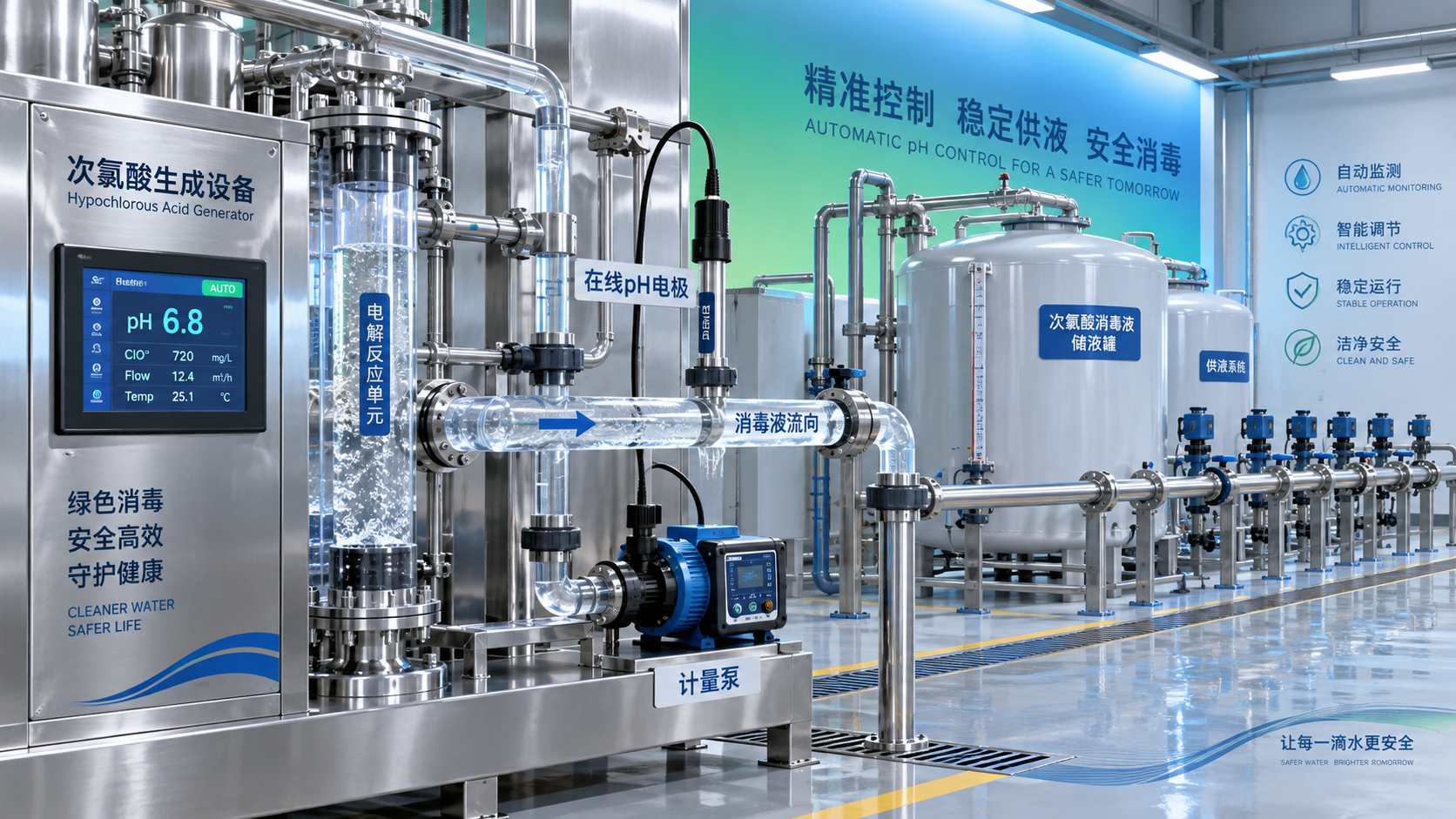
 HClO Generator pH Control: Why It Determines Disinfection Performance
- Which Safety Features Matter Most When Buying an HClO Generator?
 Troubleshooting Low ORP Readings on a Hypochlorous Acid Machine
Leave us a message

Xiaoya Group was founded in 1979,expert in the electrolyzed water industry.
Get in Touch
*We respect your confidentiality and all information are protected.