news
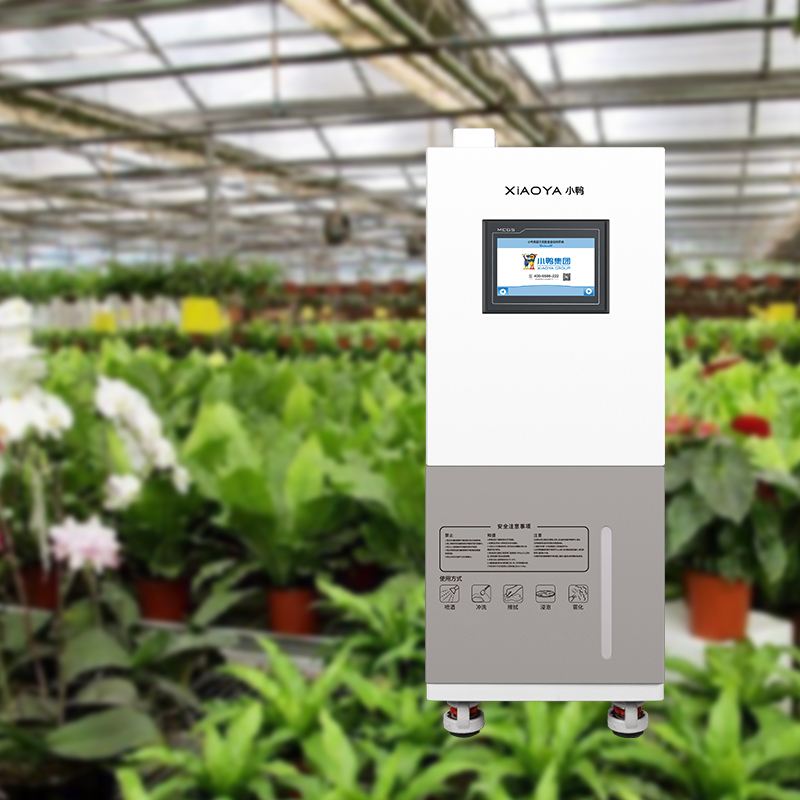
What Determines the Cost of a Hypochlorous Acid Generator?
The cost of a hypochlorous acid generator is rarely just the price shown on a quotation. For a small facility, a compact unit may appear inexpensive because it produces enough solution for daily surface cleaning. For a commercial kitchen, healthcare-related cleaning operation, water-treatment system, or centralized disinfection room, the same purchase decision involves production capacity, installation conditions, water quality, operating controls, safety provisions, and the cost of keeping the system productive over time.
A useful starting point is to separate purchase cost from delivered disinfection cost. A lower-priced generator can be the better choice when demand is limited and usage is irregular. It can become the more expensive choice when staff must refill it frequently, concentration is difficult to control, electrodes wear early, or the unit cannot supply enough solution during peak cleaning periods. Buyers should therefore assess cost against the required volume, concentration range, operating hours, and the consequences of running short.
Capacity Has the Largest Effect on Equipment Price
Generator size is usually the first major cost driver. Small countertop or light-duty units intended for kitchens, bathrooms, clinics, or housekeeping teams generally have lower equipment and installation costs. Their limitations become visible when several areas need solution at the same time or when the operation requires a repeatable supply every shift.
Larger systems cost more because they need higher-output electrolysis cells, circulation components, controls, storage or dosing arrangements, and more robust electrical and plumbing connections. The price difference is justified only when the site can use the output. Buying an oversized system ties up capital and may leave generated solution sitting too long before use. Buying too small a system can create a hidden labor problem: operators wait for batches, transport containers between areas, or supplement output with purchased chemicals.
Instead of asking only, “How many liters per hour can it make?”, procurement teams should define the daily requirement in operational terms:
- How much disinfecting solution is used in a normal day and during busy periods?
- Is solution needed continuously, or can it be produced in batches before cleaning begins?
- Will one generator serve a single room, multiple floors, or several buildings?
- Does the application require a stable concentration range at the point of use?
- Is there enough space for salt preparation, solution storage, ventilation, and routine service access?
These questions prevent a common budgeting error: comparing generators by nameplate output while ignoring the actual workflow around them.
Hypochlorous Acid and Sodium Hypochlorite Systems Should Not Be Priced as Identical Equipment
Buyers often use “hypochlorous acid generator” as a broad search term for on-site chlorine-based disinfectant production. In practice, the chemistry and intended use can differ. Some systems are designed to generate hypochlorous-acid-dominant solutions for defined disinfection applications. Others generate sodium hypochlorite solution from diluted saltwater and are selected for water treatment, equipment disinfection, or applications where on-site bleach generation is appropriate.
That distinction affects both capital cost and operating requirements. The target chemistry influences cell design, salt concentration, pH management, controls, materials of construction, storage expectations, and verification methods. A buyer should not assume that a system producing one chlorine-based solution can automatically replace another without confirming concentration, pH, compatibility, application requirements, and site procedures.
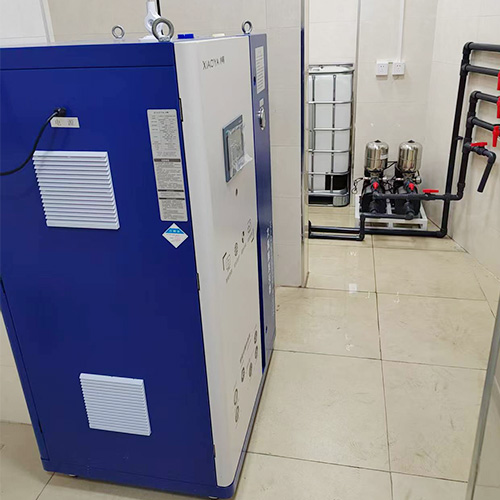
For operations evaluating on-site sodium hypochlorite generation, a Sodium Hypochlorite Electrolyzer based on membrane-free electrolysis may reduce dependence on delivered chemical products by using a low-concentration sodium chloride solution. This type of system should still be assessed as a complete installation rather than an electrolysis cell alone. Hydrogen is a byproduct of electrolysis, so the design of circulation, venting, and hydrogen removal has a direct bearing on system safety and installation cost. Equipment using push-type hydrogen removal through high-flow circulation may simplify the process arrangement, but it does not eliminate the need to evaluate the room, ventilation path, local safety practices, and maintenance access.
The Least Visible Costs Are Often the Most Important
Equipment quotations can be relatively easy to compare. Lifecycle costs are less obvious because they are distributed across utility consumption, consumables, labor, maintenance, and downtime. These items should be discussed before selecting a model, particularly when the generator will become part of a routine sanitation process.
Water quality deserves particular attention. A generator may use ordinary water in principle, yet hardness, dissolved solids, suspended matter, or inconsistent supply conditions can affect scaling, electrode performance, and cleaning frequency. A low purchase price does not compensate for an installation that requires repeated shutdowns for descaling or produces inconsistent solution because feedwater conditions were ignored.
Automation Features Can Lower Operating Cost, but Only When They Match the Process
Automation increases generator cost when it adds sensors, concentration monitoring, alarms, dosing controls, remote status functions, automatic flushing, or integration with other equipment. These features make sense when the system serves a repeatable, high-frequency process or when manual handling creates quality and labor concerns. They may offer limited value for a small operation that produces a modest batch once or twice a day under direct supervision.
For larger facilities, automated concentration control and output monitoring can be more valuable than a higher maximum production rate. Cleaning and disinfection programs depend on consistent application. If operators must continually guess whether a batch is ready, manually adjust solution strength, or record production parameters by hand, the equipment introduces variation into a process that was supposed to become more controlled.
Automation should also be judged by serviceability. A complex interface with no clear diagnostic information can delay repairs. Buyers should ask how alarms are presented, whether operators can identify common causes of interruption, which service tasks can be performed on site, and how replacement parts are supported. The purpose of automation is predictable operation, not simply a longer feature list.
How to Build a Practical Budget Comparison
A sound comparison uses at least three figures: installed cost, annual operating cost, and cost per usable volume of solution. The calculation does not need false precision. It needs realistic assumptions about demand, operating days, replacement parts, electricity, water, salt, labor, and expected maintenance.
Start with the daily volume required at the concentration suitable for the intended task. Then identify the generator output needed within the available production window. Add site preparation costs, including utility connections and safety provisions. Finally, estimate the recurring cost of cell replacement and routine service over a meaningful operating period. This approach exposes whether a low-capacity unit will force inconvenient operating patterns, or whether a premium system is carrying capabilities the site will never use.
It is also sensible to budget for verification. The generated solution should be checked according to the application’s internal sanitation procedures and any applicable requirements. A generator creates disinfectant; it does not by itself prove that the cleaning process, dosing method, contact time, surface compatibility, or staff practice is effective.
When a Generator Is Likely to Deliver Better Value
On-site generation tends to be easier to justify where there is steady demand, frequent chemical replenishment, limited storage appetite for delivered products, or a need for a controlled supply close to the point of use. It can be particularly relevant for structured cleaning workflows in kitchens, bathrooms, institutional facilities, water-treatment operations, and disinfection equipment systems.
It is less compelling where usage is occasional, demand is highly variable, qualified staff are unavailable to maintain the unit, or installation conditions make ventilation and utility work disproportionately expensive. In those cases, purchasing prepared solution may remain operationally simpler even if the per-unit chemical cost is higher.
The best cost decision comes from treating the generator as part of an operating system. Match output to demand, verify the chemistry required by the application, price installation and maintenance alongside the machine, and examine the controls that will shape daily use. That produces a more defensible investment decision than selecting the lowest quoted generator or the largest available capacity.
NEWS
 Disinfection Empowers Orthodontic Safety: Hypochlorous Acid Generators Build a Sterile Defense Line for Dental Instruments
- Accumulating Strength and Reaching New Heights: A Record of the Production Breakthrough of Xiaoya Small Home Appliances' Hypochlorous Acid Generators
 Medical HOCl Generator Procurement: Service, Training, and Traceability
- Integrating a Medical HOCl Generator into Hospital Cleaning Stations
 Verifying HOCl Concentration and Contact Time for Hospital Surfaces
Leave us a message

Xiaoya Group was founded in 1979,expert in the electrolyzed water industry.
Get in Touch
*We respect your confidentiality and all information are protected.