news
Choosing a Generator Type Starts With the Disinfection Workflow
Hypochlorous acid generators are often grouped by size or output, but that is only part of the buying decision. The more useful distinction is how the machine produces, stores, controls, and delivers solution into a specific sanitation workflow. A compact unit that works well for a restaurant prep area may be impractical for a healthcare laundry room; a high-output system designed for greenhouse irrigation may create unnecessary handling and concentration-control problems in a small facility.
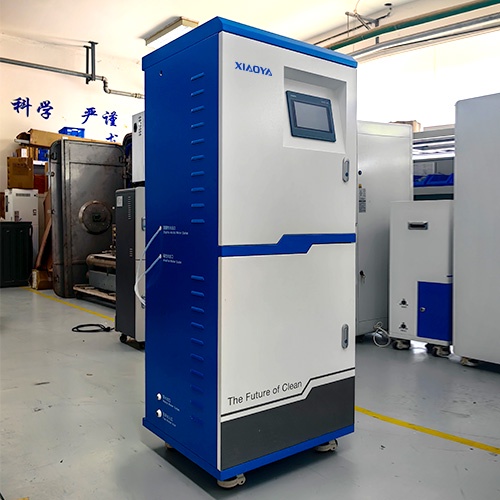
For most buyers, the main generator types fall into four practical categories: portable or countertop units, point-of-use commercial units, centralized high-capacity systems, and automated application-integrated systems. Each addresses a different balance of volume, operator involvement, water quality requirements, and process control.
Portable and Countertop Units
Portable generators are intended for low-volume, on-demand use. They are commonly considered for household cleaning, small kitchens, washrooms, care rooms, and small work areas where staff need a fresh disinfecting solution without maintaining bulk chemical inventory.
The attraction is straightforward: the unit can generate solution close to the point of use, reducing the need to transport and store pre-mixed disinfectants. These machines are generally appropriate when daily demand is modest and operators can prepare batches as part of their normal routine.
However, portability should not be confused with process consistency. Small units depend heavily on correct water input, salt or electrolyte dosing where applicable, generation time, and cleaning discipline. If the solution is used across several shifts or applied to surfaces with different soil loads, buyers should establish how concentration and pH will be checked. A portable unit is convenient, but it does not automatically create a controlled disinfection program.
Point-of-Use Commercial Generators
Point-of-use commercial systems sit between household equipment and plant-scale installations. They are usually installed in a fixed location and serve a defined department, such as a food preparation area, clinic cleaning room, hotel housekeeping station, or a particular processing line.
This type is often the most practical choice when a site needs regular production but does not need a central distribution network. It can supply spray bottles, floor-cleaning equipment, soaking tanks, or small transfer containers while keeping the production process close to the users. Compared with compact consumer-style machines, commercial equipment should offer more stable output, clearer control settings, and a design suited to repeated use.
Selection should go beyond litres per hour. Buyers should ask how the output changes across available chlorine concentration settings, whether the unit can support the expected peak demand, and how operators verify that the generated solution remains within the intended operating range. The source-water specification matters as well. Water hardness, pressure, suspended solids, and pretreatment arrangements can affect electrolyzer condition and solution quality.
Centralized High-Capacity Systems
Centralized generators are designed for facilities that use hypochlorous acid at multiple points or in substantial daily volumes. They may serve commercial cleaning operations, medical support functions, food-related sanitation, large wash areas, or agricultural operations that require regular solution supply for treatment and irrigation-related processes.
The advantage is scale and repeatability. A properly sized system can reduce repetitive batch preparation, provide a more consistent supply, and support fixed storage or delivery arrangements. Yet centralization also introduces more engineering questions. The buyer must determine how long solution will be held before use, how it will be transferred, whether storage materials are compatible, and whether concentration can be preserved through the full distribution route.
High capacity is useful only when it matches consumption. An oversized generator can produce more solution than a site can use within its practical holding period. A system selected only on maximum output may therefore increase waste or lead staff to use aged solution because it is already available. Production capacity should be calculated from peak consumption, application concentration, batch frequency, and the distance between generation and use.
Automated and Application-Integrated Systems
The most specialized type combines generation equipment with automated dosing, monitoring, remote access, or delivery into an operational process. This category is relevant where the solution is part of a repeated sanitation, washing, irrigation, or treatment cycle rather than a manually filled spray-bottle workflow.
In agricultural planting, for example, a generator may need to support seed treatment, disease-management routines, soil-related applications, or controlled delivery through site equipment. Here, adjustable concentration and operating visibility can be more valuable than a simple high-output rating. The system must fit the farm's water supply, treatment schedule, labour model, and application method.
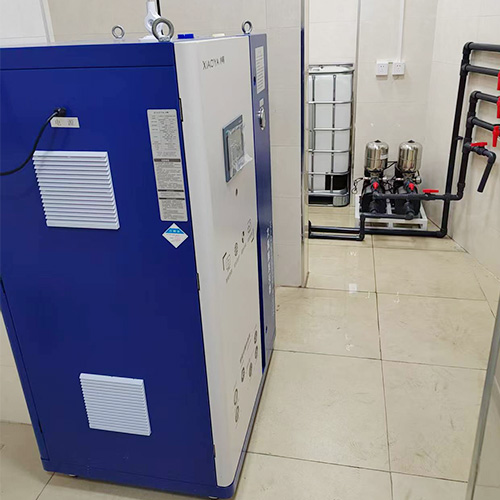
An example is the Hypochlorous Acid Generator for Agricultural Planting, which is configured for adjustable available chlorine concentration from 10 to 300 mg/L and a pH range of 5.0 to 6.5. Its stated output of at least 1000 L/h places it in a production-oriented category rather than a small-batch cleaning unit. For a planting base, the more relevant questions would be whether the required concentration differs by crop task, whether the water pressure stays within the equipment requirement, and how the generated solution will be applied and monitored across the site.
The Technology Label Is Less Important Than Control Capability
Buyers may encounter descriptions based on electrolysis configuration, such as acidic, neutral, or mixed oxidant systems. These labels can be useful, but they do not replace an operational assessment. Hypochlorous acid performance is affected by pH, available chlorine concentration, water quality, solution age, organic load, contact time, and the target application. Two machines described with similar chemistry may perform very differently in daily operation if one has weak dosing control or unsuitable inlet-water conditions.
Before comparing suppliers, define the working specification:
- What volume is required during the busiest hour and over a normal day?
- Which applications require different concentrations or delivery methods?
- Will solution be used immediately, stored temporarily, or distributed to multiple locations?
- What inlet-water pressure and quality are available at the installation point?
- Who will clean, inspect, replenish, and document the system?
- What happens when the electrolyzer reaches its service interval or when monitoring detects an out-of-range condition?
These questions often narrow the equipment category quickly. A manual cleaning team may need simple controls and reliable small-batch production. A multi-department facility may benefit from a fixed commercial system with documented operating procedures. A farm or large sanitation operation may justify automated generation and remote status monitoring, provided the application infrastructure is ready to use the output consistently.
Do Not Treat “Chemical-Free” as a Substitute for Process Design
On-site generation can reduce reliance on transported, pre-packaged disinfectants, but it does not remove the need for safe handling, cleaning procedures, compatible materials, and validation of the intended use. Hypochlorous acid solution can lose effectiveness when storage, light exposure, contamination, or operating conditions are poorly controlled. Surface cleaning also still requires removal of heavy soil before disinfection can perform as intended.
The best generator type is therefore the one that produces the required solution quality at the point and rate of use, while giving operators a realistic way to keep the process within specification. Capacity, automation, and remote control are valuable only when they make that daily discipline easier rather than adding equipment that the site cannot maintain.
NEWS
 Disinfection Empowers Orthodontic Safety: Hypochlorous Acid Generators Build a Sterile Defense Line for Dental Instruments
- Accumulating Strength and Reaching New Heights: A Record of the Production Breakthrough of Xiaoya Small Home Appliances' Hypochlorous Acid Generators
 Medical HOCl Generator Procurement: Service, Training, and Traceability
- Integrating a Medical HOCl Generator into Hospital Cleaning Stations
 Verifying HOCl Concentration and Contact Time for Hospital Surfaces
Leave us a message

Xiaoya Group was founded in 1979,expert in the electrolyzed water industry.
Get in Touch
*We respect your confidentiality and all information are protected.