news
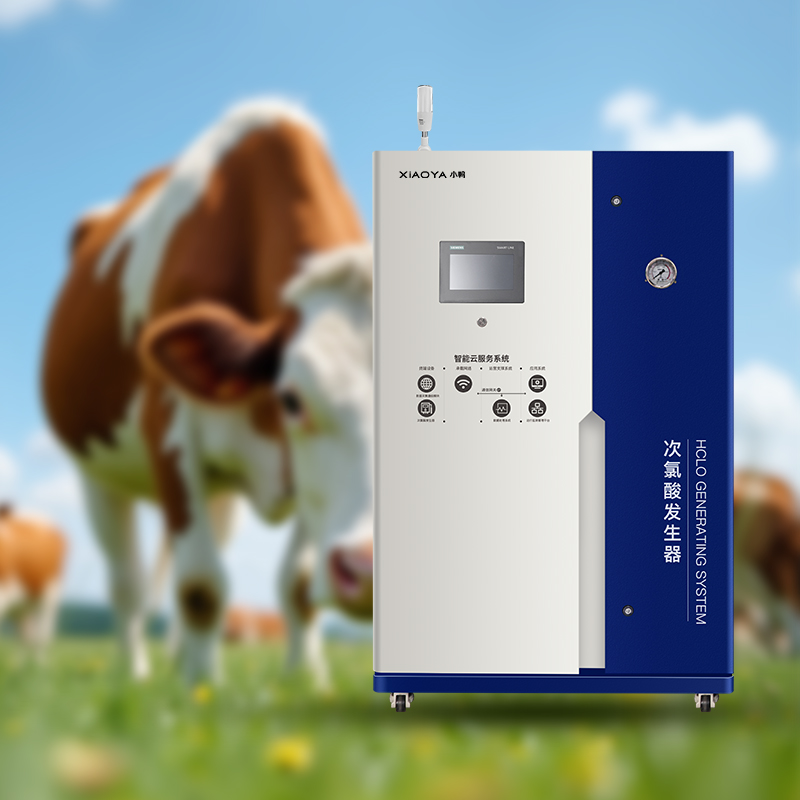
A hypochlorous acid generator should be specified around the job it must perform, not around the largest output figure on a product sheet. A small appliance designed to refresh a countertop spray bottle, a commercial unit supplying multiple cleaning stations, and an on-site system for water treatment operate under very different demands. The useful question is: can the generator repeatedly produce a stable disinfecting solution at the required volume, concentration, and workflow speed?
That distinction matters because hypochlorous acid solutions are sensitive to production conditions and storage time. A unit may be able to make a solution, yet still be a poor fit if it cannot maintain the intended concentration, tolerate the available water supply, or run safely in its installation space. When comparing hypochlorous acid generator specifications, start with the complete operating system: water, salt or other feed materials, electrolysis cell, controls, storage or immediate-use method, and ventilation.
Match output capacity to actual consumption
Output is often shown as solution volume per hour, per batch, or per day. This specification is meaningful only when it is paired with the intended available chlorine concentration and the required duty cycle. A generator that makes a large volume of weak solution is not automatically equivalent to one that produces less volume at a usable concentration.
Estimate demand from the cleaning routine before selecting a model. Consider how many rooms, surfaces, refill points, or process tanks need solution; whether demand happens steadily or in short peaks; and whether the solution will be used immediately or held in a reservoir. A facility with concentrated shift-change cleaning may need faster batch recovery, while a continuously dosed water-treatment application may value stable, automated low-rate production.
Oversizing has costs beyond the initial purchase. Larger systems can require more installation space, more electrical capacity, more water circulation, and more disciplined management of stored solution. Undersizing creates a different problem: operators may stretch solution beyond its intended use or interrupt sanitation work while waiting for the next batch.
Concentration control is more useful than a single concentration claim
Hypochlorous acid and sodium hypochlorite systems are often discussed together because both rely on chlorine chemistry, but they should not be treated as interchangeable products. The final solution chemistry depends on factors including electrolysis design, feed solution, pH management, water composition, and operating conditions. Buyers should identify the concentration range the application requires and then ask how the equipment monitors, controls, or verifies the output.
A credible specification discussion includes the target concentration, acceptable operating range, sampling method, and response when conditions move outside that range. For an automated cleaning appliance, simple repeatable production may be the priority. For a disinfection process tied to documented procedures, the ability to check output consistently becomes more important than a broad theoretical range.
Do not assume that a stronger solution always improves the result. Surface material compatibility, odor, corrosion risk, worker handling, contact time, and the cleaning protocol all influence the appropriate concentration. Soil must also be removed before disinfection; no generator specification eliminates the need for proper cleaning practice.
Water quality and feed requirements can decide whether the system works well
Water is not a passive input. Hardness, dissolved minerals, suspended solids, and changes in source-water quality can affect electrolysis performance, scale formation, and maintenance frequency. A specification sheet may state water quality limits or recommend pretreatment such as filtration or softening. These requirements should be reviewed against the site’s actual supply before purchase, especially for equipment intended to run automatically with minimal operator attention.
Feed chemistry deserves the same scrutiny. Some equipment uses diluted sodium chloride solution, while other designs may require different inputs or controls. Confirm the required salt quality, preparation method, storage conditions, and whether dosing is manual or automated. An apparently low-cost generator can become inconvenient if it depends on frequent, error-prone feed preparation.
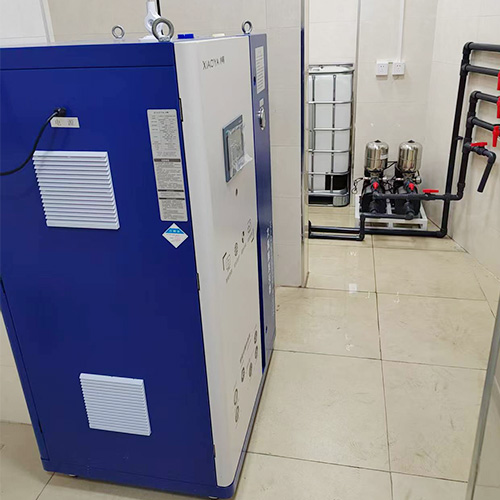
For systems using sodium chloride electrolysis, a membrane-free design can simplify the process by producing sodium hypochlorite from low-concentration brine without additional chemical agents. In water treatment equipment and electrolytic disinfection devices, an option such as the Sodium Hypochlorite Electrolyzer is relevant when the project requires on-site generation from a circulating salt solution. Its push-type hydrogen removal approach is also a specification worth examining: electrolysis produces hydrogen as a by-product, so removal and ventilation must be treated as part of the installation design, not as a minor accessory.
Safety specifications should be read as an installation checklist
Hydrogen handling is one of the most important practical considerations for electrolytic systems. Ask where hydrogen is released, how it is carried away, what ventilation the equipment needs, and how the unit responds to restricted flow or abnormal operating conditions. A compact footprint does not remove the need for adequate air movement and sensible equipment placement.
Other safety-related specifications include leak detection, low-water or low-salt protection, over-temperature protection, electrical enclosure design, alarms, emergency shutoff behavior, and access control for settings that affect chemical output. The right level of automation depends on who will operate the unit. A household appliance may need clear prompts and simple consumable replacement, while a commercial installation may need remote status signals, fault history, or integration with a broader sanitation process.
Power consumption is only one operating-cost factor
Electrical load should be checked against the available supply, including voltage, phase, circuit protection, and expected operating hours. Yet energy use alone does not describe operating cost. Water consumption, salt use, pretreatment media, electrode maintenance, cleaning cycles, replacement components, and labor for testing or refilling may have a greater effect over the working life of the system.
For appliance manufacturers working across kitchen and bathroom products, health and disinfection equipment, clean-energy products, and small household devices, the physical integration details can be as important as electrochemical performance. Available space, fill access, drain routing, noise, heat, user prompts, and service access determine whether a generator can become a reliable part of the finished product rather than a difficult subsystem to maintain.
Compare specifications in the order they affect the application
- Define the use point: surface disinfection, appliance-integrated cleaning, water treatment, or centralized solution supply.
- Calculate demand: required volume, peak-use periods, refill frequency, and whether stored solution is acceptable.
- Set the output requirement: concentration range, repeatability, and the method used to verify it.
- Check site inputs: water quality, feed materials, electrical supply, drainage, and ventilation.
- Review maintenance: electrode care, descaling, filters, consumables, cleaning access, and alarm response.
- Assess integration: enclosure dimensions, control interface, automatic dosing options, and service access.
A common purchasing mistake is comparing units only by production capacity and price. Capacity matters, but the better choice is the generator whose output, input tolerance, safety design, and maintenance routine fit the real operating environment. That is what turns on-site electrolysis from a promising feature into a dependable automated disinfection process.
NEWS
 Disinfection Empowers Orthodontic Safety: Hypochlorous Acid Generators Build a Sterile Defense Line for Dental Instruments
- Accumulating Strength and Reaching New Heights: A Record of the Production Breakthrough of Xiaoya Small Home Appliances' Hypochlorous Acid Generators
 Medical HOCl Generator Procurement: Service, Training, and Traceability
- Integrating a Medical HOCl Generator into Hospital Cleaning Stations
 Verifying HOCl Concentration and Contact Time for Hospital Surfaces
Leave us a message

Xiaoya Group was founded in 1979,expert in the electrolyzed water industry.
Get in Touch
*We respect your confidentiality and all information are protected.