news
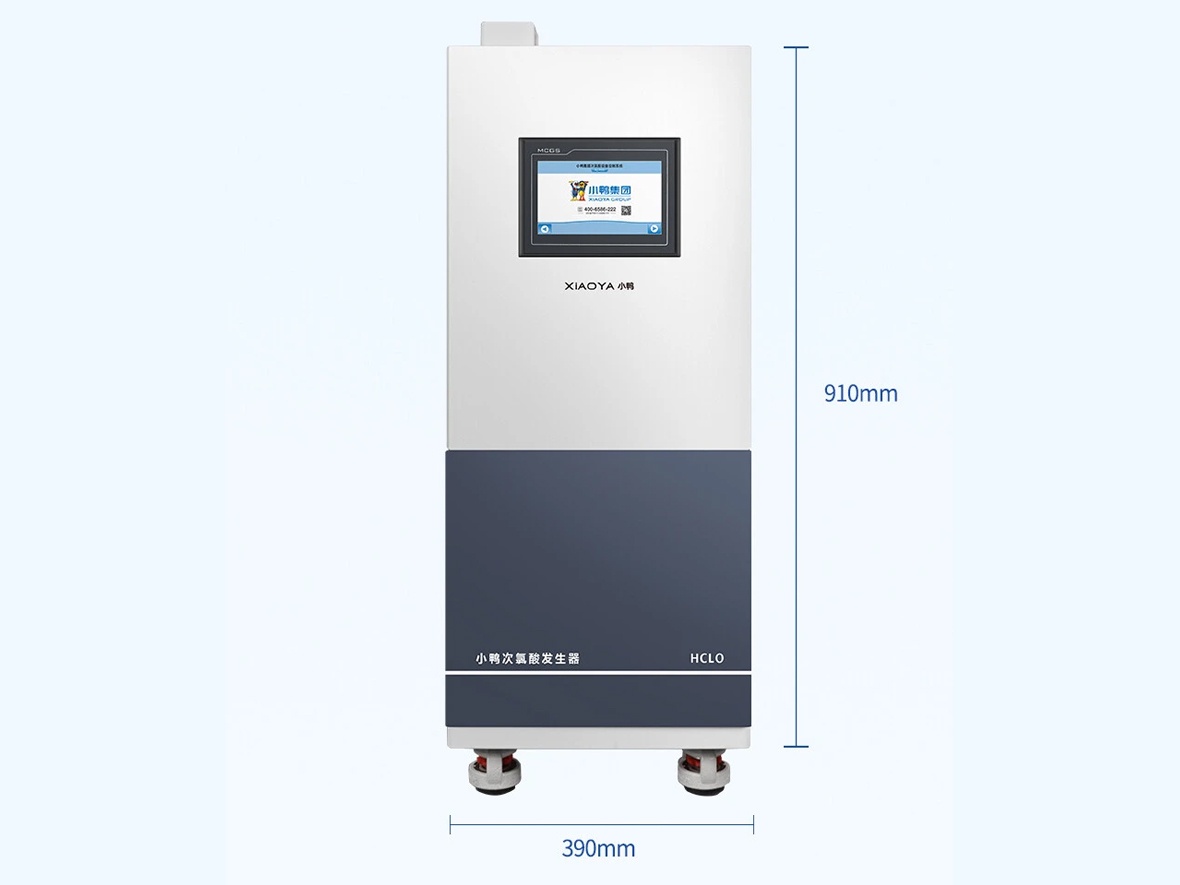
For quality control and safety managers in pharmaceutical operations, choosing the right disinfection method for purified water systems directly affects compliance, product integrity, and operational efficiency. As interest in hclo water treatment continues to grow, many teams are asking whether it can deliver effective microbial control without compromising system materials, validation requirements, or regulatory expectations. This article examines its suitability, key benefits, and practical considerations for pharmaceutical purified water applications.
When does hclo water treatment make sense in pharmaceutical purified water systems?
In pharmaceutical water management, the answer is not simply yes or no. hclo water treatment can be suitable, but only under defined operating conditions, validated dosing strategies, and strict material compatibility review.
For quality control personnel, the main concern is microbial risk reduction without adding process uncertainty. For safety managers, the focus is chemical handling, system integrity, and audit readiness. Both need a method that works in real production environments.
Hypochlorous acid-based disinfection is attractive because it offers broad antimicrobial action at relatively low concentration. In automated equipment environments, it can also be integrated into controlled dosing and monitoring workflows, which supports repeatability.
- It is generally more suitable for sanitization steps than for uncontrolled continuous addition in highly critical loops.
- It requires assessment of stainless steel condition, elastomer compatibility, and residual management.
- It performs best when supported by automation, sensor feedback, and documented standard operating procedures.
Why interest is increasing now
Manufacturers serving health care and disinfection appliances are already familiar with controlled sanitation technologies. Companies with integrated R&D, production, and operation capabilities are increasingly transferring this automation experience into pharmaceutical support equipment and water treatment subsystems.
That matters because modern plants want lower operator dependence, faster response to microbial excursions, and easier data capture. hclo water treatment fits this trend when it is part of a designed, monitored, and validated process rather than a simple chemical addition.
What benefits and risks should QC and safety teams evaluate first?
Before approving hclo water treatment, teams should compare expected sanitation gains against regulatory and engineering risks. The table below highlights the most practical review points for purified water systems in automated facilities.
The key takeaway is clear: hclo water treatment is not a plug-and-play decision. It is suitable only when its antimicrobial benefits are balanced with testable controls for residue, compatibility, and requalification.
Primary decision criteria
- Whether the purified water loop has recurring microbial deviation or biofilm risk that justifies chemical sanitization support.
- Whether the system design minimizes stagnation zones where oxidizing agents can accumulate.
- Whether quality teams can verify removal or acceptable residual levels before release.
- Whether safety management can control storage, dosing, ventilation, and emergency response procedures.
How does hclo water treatment compare with other sanitization options?
Pharmaceutical sites rarely evaluate one option in isolation. They compare hclo water treatment with heat sanitization, ozone, and other chemical methods based on microbial performance, downtime, and validation effort.
In practice, many facilities use more than one strategy. A plant may rely on thermal sanitization as the baseline and consider hclo water treatment as a targeted corrective or periodic support measure where microbial control needs improvement.
Where thermal support equipment fits
If a facility is comparing chemical and thermal approaches, utility efficiency becomes part of the purchasing decision. In distributed sanitization or steam-support applications, compact high-efficiency equipment such as Thermal Engine can help engineering teams evaluate localized thermal support without relying on a large boiler room layout.
For example, models XY-0.5-1.2-T and XY-1.0-1.2-T offer rated steam capacity options of 500 kg and 1000 kg, rated pressure of 1.0 mpa, PT100 temperature sensing, and a compact 2㎡ footprint. That can be relevant when purified water sanitization planning must align with space limits and automated monitoring requirements.
What technical and compliance checks are necessary before implementation?
Any decision to introduce hclo water treatment into a pharmaceutical purified water system should go through a formal change-control process. Quality and engineering should review not only efficacy but also effects on water quality attributes and routine release testing.
Minimum validation and risk review checklist
- Define the use case clearly: routine sanitization, deviation response, startup control, or seasonal microbial risk management.
- Establish concentration limits, exposure time, rinse requirements, and sampling points before execution.
- Review compatibility of tanks, valves, welds, seals, instruments, and elastomeric components.
- Confirm that conductivity, TOC, microbial count, and any relevant residual measurements remain within acceptable limits.
- Document alarm strategy, batch impact assessment, and requalification triggers if deviations occur.
Facilities operating in highly regulated environments often align this work with GMP principles, risk assessment methodology, and internal validation master plans. The exact regulatory expectation may vary by market, but the requirement for documented control does not.
Typical red flags
- Assuming antimicrobial performance in a lab automatically predicts performance in a full loop with dead legs and varying flow.
- Ignoring the effect of repeated oxidizing exposure on aged components.
- Launching hclo water treatment without a clear release decision rule after sanitization.
How should buyers evaluate equipment and automation support?
For quality and safety managers, the chemical itself is only part of the decision. The delivery system, monitoring capability, and utility support determine whether hclo water treatment remains stable and auditable over time.
The table below can be used during supplier review, especially in automated equipment projects where disinfection, clean energy, and integrated manufacturing expertise affect final performance.
This is where an enterprise that integrates R&D, production, and operation offers practical value. Cross-industry experience in health care appliances, disinfection systems, clean energy, and small appliance manufacturing often translates into better control logic, compact layouts, and more disciplined production quality.
FAQ: what do pharmaceutical teams ask most about hclo water treatment?
Is hclo water treatment acceptable for continuous use in a purified water loop?
Not as a default assumption. Continuous use must be justified by design, validated against water quality requirements, and proven not to damage system materials or interfere with release criteria. Many sites consider it for controlled sanitization events rather than unrestricted continuous dosing.
What is the biggest compliance concern?
The biggest concern is demonstrating that microbial control improves without introducing unacceptable residues or variability. Auditors and internal reviewers usually look for documented rationale, defined parameters, and objective verification after treatment.
Can hclo water treatment replace thermal sanitization completely?
Usually that is not the starting point. In many systems, it is better evaluated as part of a layered strategy. Thermal methods remain important because they avoid chemical residual concerns, while chemical methods may add flexibility for specific microbial challenges.
What should buyers ask equipment suppliers first?
Ask about dosing accuracy, sensor integration, material compatibility support, documentation package scope, and utility requirements. If thermal support is part of the sanitation strategy, also review compact steam solutions such as Thermal Engine, including combustion adjustment ratio, power consumption, and installation footprint.
Why choose us for selection support and project discussion?
For teams working across automation equipment, disinfection appliances, and clean energy applications, the real challenge is not finding one technology term. It is building a workable, auditable solution around it. That requires coordination between process needs, safety controls, utility design, and production reality.
Because our business integrates R&D, production, and operation across kitchen and bathroom appliances, health care and disinfection appliances, clean energy, and small household appliances, we can support practical discussions that connect equipment design with real implementation constraints.
- Confirm whether hclo water treatment fits your purified water application, sanitation frequency, and compliance expectations.
- Review parameter matching for dosing, monitoring, steam support, and installation conditions.
- Discuss product selection, utility interface details, delivery timing, and customization options.
- Clarify documentation needs for validation support, operating procedures, and internal approval workflows.
- Request quotation communication based on your target capacity, layout limits, and safety management requirements.
If your team is evaluating whether hclo water treatment is the right choice, a focused technical review can save time and reduce project risk. The most useful next step is to share your system configuration, target sanitation method, and key approval concerns so that parameters, equipment options, and implementation boundaries can be assessed accurately.
NEWS
 Upgrade in Healthy Living: Hypochlorous Acid Generators Become the New Standard for Luxury Villas
- The Ultimate Solution to Pet Shop Disinfection Challenges! XIAOYA Hypochlorous Acid Generator: Safe Pet Protection with Peace of Mind
 Hypochlorous Acid Generator vs Sodium Hypochlorite Generator
- Hypochlorous Acid Generator Supplier
- Hypochlorous Acid Generator Manufacturer
Leave us a message

Xiaoya Group was founded in 1979,expert in the electrolyzed water industry.
Get in Touch
*We respect your confidentiality and all information are protected.