news
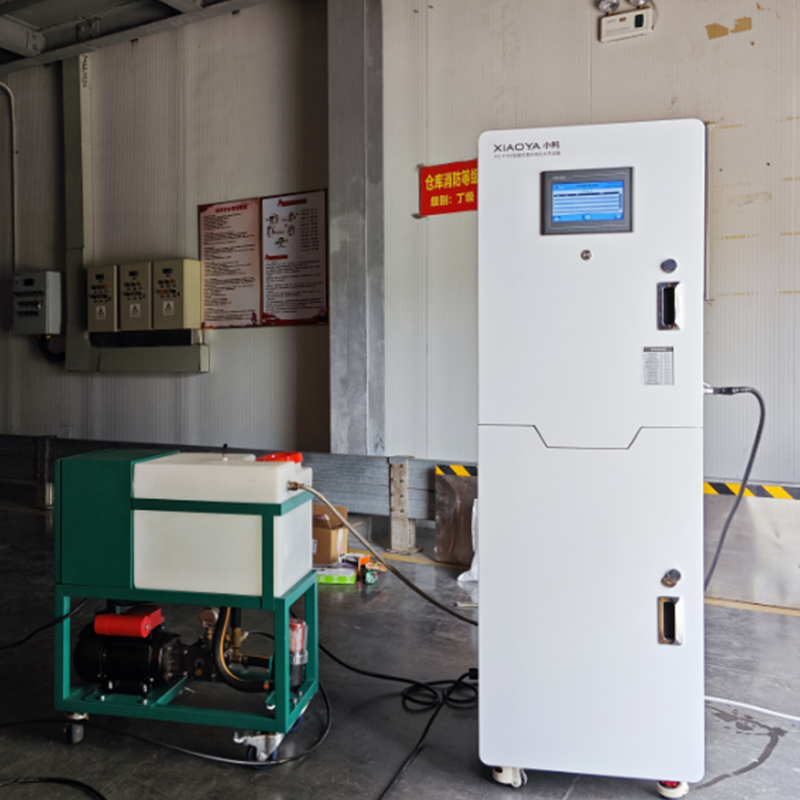
In today’s automation-driven appliance industry, hypochlorous acid is gaining attention as a safer, smarter solution for disinfection and everyday hygiene. From kitchen and bathroom appliances to health care and clean energy applications, its proven safety profile and eco-friendly performance make it highly relevant for modern manufacturing and healthier living. Understanding the science of safety behind hypochlorous acid reveals why it is becoming a valuable innovation for both human health and environmental protection.
Why is hypochlorous acid becoming important in automated equipment?
For manufacturers of kitchen and bathroom appliances, health care and disinfection devices, clean energy systems, and small household appliances, safety is no longer judged only by cleaning power. Buyers now compare residue risk, material compatibility, operator exposure, automation readiness, and environmental impact.
Hypochlorous acid fits this shift well. It is widely recognized as an effective disinfecting substance that can work at relatively low available chlorine levels while maintaining a mild pH range when properly generated. That combination supports safer use scenarios than many conventional harsh chemicals.
For an enterprise integrating R&D, production, and operation, the value is practical. Automated equipment needs repeatable output, stable operating logic, and easy integration into different appliance platforms. Hypochlorous acid systems can support those needs when the generator, control system, and application design are engineered together.
- Lower chemical handling burden for operators in production and maintenance environments.
- Reduced concern about strong odor, aggressive residues, and secondary pollution in end-use scenarios.
- Better alignment with intelligent appliance trends, where disinfection functions are expected to be controlled, monitored, and standardized.
What problem does it solve for appliance and automation buyers?
Procurement teams often struggle with a familiar trade-off: strong disinfection performance versus user safety and environmental acceptance. In automated equipment, another challenge appears: not every chemical is suitable for stable dosing, remote monitoring, and long-term equipment compatibility.
Hypochlorous acid helps narrow that gap. When generated and applied correctly, it supports hygiene goals without forcing manufacturers to rely only on more aggressive chemistry that can complicate transport, storage, or user experience.
How does the science of safety work?
The safety profile of hypochlorous acid is closely linked to how it behaves in solution. It is the main bactericidal factor in properly controlled systems and is valued because it can inactivate a broad range of microorganisms while remaining suitable for many hygiene-oriented applications.
Performance depends on several technical variables: pH value, available chlorine concentration, water quality, contact time, and generation stability. In automation equipment, these variables matter even more because buyers need predictable output rather than occasional lab success.
This is why R&D capability matters. A company serving multiple appliance sectors can apply the same engineering discipline across disinfection appliances, compact systems, and industrial-use modules. The result is not just a liquid, but a controllable process.
The table below shows why hypochlorous acid is often discussed as a balanced option in automated disinfection equipment.
This comparison does not mean one chemistry fits every task. It shows why hypochlorous acid is attractive in equipment categories where safety, intelligent control, and environmental responsibility must coexist.
Which application scenarios benefit most?
The strongest opportunities appear where automated equipment must deliver hygiene outcomes repeatedly and safely. That includes consumer-facing appliances and professional systems with strict operating consistency.
Key scenarios across the automation equipment sector
- Kitchen and bathroom appliances: surface treatment, internal circulation hygiene, odor control support, and routine sanitation functions.
- Health care and disinfection appliances: controlled output for hygiene routines where stability and usability are critical.
- Small household appliances: added-value sanitation features that improve product differentiation without making the user experience complex.
- Clean energy and utility-related environments: ancillary sanitation processes where environmentally conscious operation is preferred.
A related extension appears in agricultural automation. For growers seeking cleaner disease management and remote control, Hypochlorous Acid Generator for Agricultural Planting shows how the same safety logic can move beyond appliances into smart planting systems.
Its application range includes organic planting, small vegetable gardens, medium-sized plantations, and large-scale planting bases. That matters for equipment buyers who want one technical platform to serve multiple business lines without changing the core disinfection principle.
What technical parameters matter when selecting a system?
Procurement mistakes often happen because teams focus only on output volume. In reality, a hypochlorous acid system should be judged by output, pH stability, concentration adjustment range, power requirements, service life, and control capability.
The next table summarizes a practical parameter example for automated planting use, which also helps buyers understand what to ask for in other automation equipment categories.
These parameters illustrate a broader rule: a good system is not defined by one high number. It is defined by whether performance, controllability, durability, and installation conditions match the target workflow.
Functions that add value beyond disinfection
In automation, smart features often determine return on investment. A system with mobile or computer remote control and real-time operating status monitoring can reduce manual inspection frequency and improve fault response speed.
For agricultural scenarios, the AQ-P1000 model also supports seed disinfection, soil improvement, fungal disease prevention, bacterial disease control, and pesticide reduction with efficiency enhancement. These functions show how hypochlorous acid technology can create process value, not just sanitation value.
How should buyers compare solutions and control cost?
Cost evaluation should not stop at equipment price. Buyers in automation equipment need to compare installation conditions, component life, concentration range, labor input, maintenance frequency, and whether the solution reduces dependence on other chemicals.
The table below gives a practical framework for comparing procurement options.
For many manufacturers, on-site generation becomes more attractive when they need stable process control, multi-scenario use, and lower manual dependence. However, the right choice still depends on scale, local infrastructure, and compliance requirements.
What should procurement teams check before ordering?
A practical selection checklist
- Confirm the target application: appliance sanitation, process hygiene, agricultural planting, or mixed use. This affects required concentration and output range.
- Check utility conditions such as inlet water pressure, rated voltage, and installation space. A strong system that does not fit the site creates hidden delays.
- Ask about control options. Remote control and real-time monitoring are especially valuable for distributed equipment or labor-sensitive operations.
- Review service-life expectations for the electrolyzer and other key parts to estimate maintenance intervals and spare-part planning.
- Request guidance on concentration setting, application method, and operator training so the safety benefits of hypochlorous acid are not lost in poor implementation.
This is where an integrated manufacturer has a clear advantage. When R&D, production, and operation work together, the supplier can respond faster on parameter confirmation, customization, and delivery coordination across different equipment categories.
FAQ: what do buyers often misunderstand?
Is higher concentration always better?
No. Higher available chlorine concentration is not automatically safer or more effective. The right level depends on the application, contact time, material compatibility, and control logic. Adjustable concentration, such as 10 to 300 mg/L, is usually more useful than one fixed output.
Can one system serve very different scenarios?
Often yes, if output and control ranges are designed properly. That is why customizable output, voltage adaptation, and intelligent monitoring matter. They allow one platform to support different regions, capacities, and workflows more efficiently.
Does eco-friendly mean weak performance?
No. This is a common misconception. Hypochlorous acid is valued precisely because it can combine broad-spectrum disinfection potential with a more user-friendly and environmentally conscious profile when generated and used correctly.
What implementation risk is most often ignored?
Many buyers underestimate water conditions, maintenance planning, and operator settings. Even a technically capable system can underperform if the inlet pressure, control logic, or usage procedure does not match the site. Early technical review reduces that risk.
Why choose us for hypochlorous acid automation solutions?
Because the real value is not only the device, but the ability to translate hypochlorous acid science into usable equipment for kitchen and bathroom appliances, health care and disinfection appliances, clean energy applications, and small household appliances. An enterprise that integrates R&D, production, and operation can support that translation more efficiently.
- We can discuss parameter confirmation based on your target output, concentration range, pH expectations, and installation conditions.
- We can support product selection for different automation scenarios, from consumer appliance integration to larger process-oriented applications.
- We can review delivery timing, overseas voltage customization, and site-specific configuration needs before procurement is finalized.
- We can help evaluate smart control requirements, sample support expectations, and quotation scope so your project moves forward with fewer unknowns.
If you are comparing hypochlorous acid solutions for automated equipment or need a more specialized application such as Hypochlorous Acid Generator for Agricultural Planting, contact us to discuss technical matching, customization options, and practical implementation details.
NEWS
 Accumulating Strength and Reaching New Heights: A Record of the Production Breakthrough of Xiaoya Small Home Appliances' Hypochlorous Acid Generators
 Can a Public Facility HOCl Generator Pay Back Its Installation Cost?
 Public Facility HOCl Storage: Managing Heat, Light, and Shelf Life
- On-Site HOCl vs. Purchased Disinfectant for Municipal Buildings
- Sizing a Public Facility HOCl Generator for Peak Cleaning Demand

Leave us a message

Xiaoya Group was founded in 1979,expert in the electrolyzed water industry.
Get in Touch
*We respect your confidentiality and all information are protected.