news
Why this comparison matters in automated food sanitation
For technical evaluations, hclo water treatment and chlorine dioxide should not be judged by kill rate alone. The better choice depends on line design, dosage control, residue expectations, and maintenance rhythm.
In food plants, sanitation is part of the automation system. It touches pumps, valves, nozzles, PLC logic, sensor feedback, operator safety, and downtime planning.
That matters even more in enterprises spanning appliances, healthcare and disinfection equipment, clean energy, and small household device manufacturing, where process consistency and scalable operation are both critical.
Start with these practical checks
- Check whether the sanitation loop needs continuous inline generation, or if batch chemical preparation is acceptable. This single point often decides whether hclo water treatment fits better than chlorine dioxide.
- Review all wetted materials first. Gaskets, stainless grades, misting heads, and dosing pumps may tolerate hclo water treatment differently from chlorine dioxide under repeated daily exposure.
- Map the real use points, not just the central room. Spray bars, dip tanks, conveyor rinses, knife stations, and cold storage fogging each need different concentration stability.
- Look at operator handling steps. If a process depends on frequent manual mixing, calibration, or chemical transfer, automation reliability usually drops and audit risk goes up.
- Compare sanitation with product quality goals. Some lines need strong oxidation, while others need lower residue, less odor, and gentler treatment on fresh meat surfaces.
The core performance difference
Hclo water treatment is often preferred when food-contact safety, fast action, and easier on-site generation matter. It is especially attractive where rinse, spray, and atomization are built into automated equipment.
Chlorine dioxide can perform well too, especially in certain water treatment or environmental disinfection tasks. But it usually needs tighter management for preparation, ventilation, and chemical handling.
Where hclo water treatment often wins
In meat and poultry lines, sanitation is not limited to floors and drains. It touches carcass rinsing, cutting tools, worktables, crates, and cold-chain transfer points.
Here, hclo water treatment often stands out because concentration can be matched to the process, while preserving product quality and supporting high-frequency sanitation cycles.
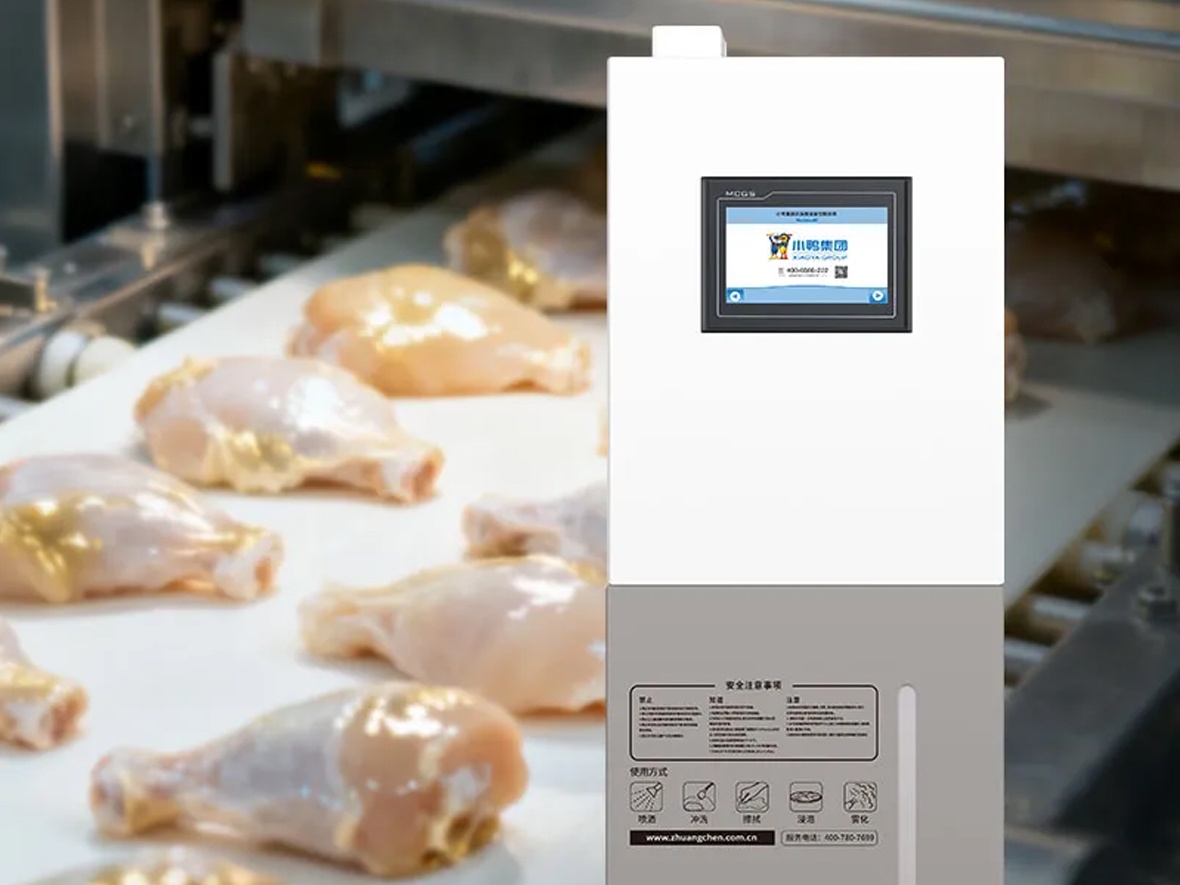
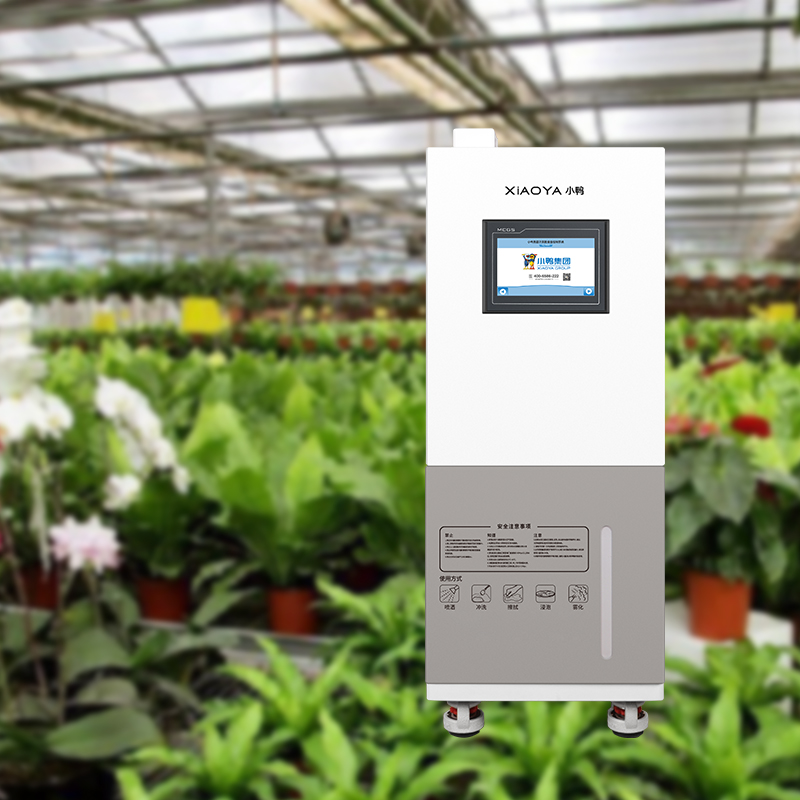
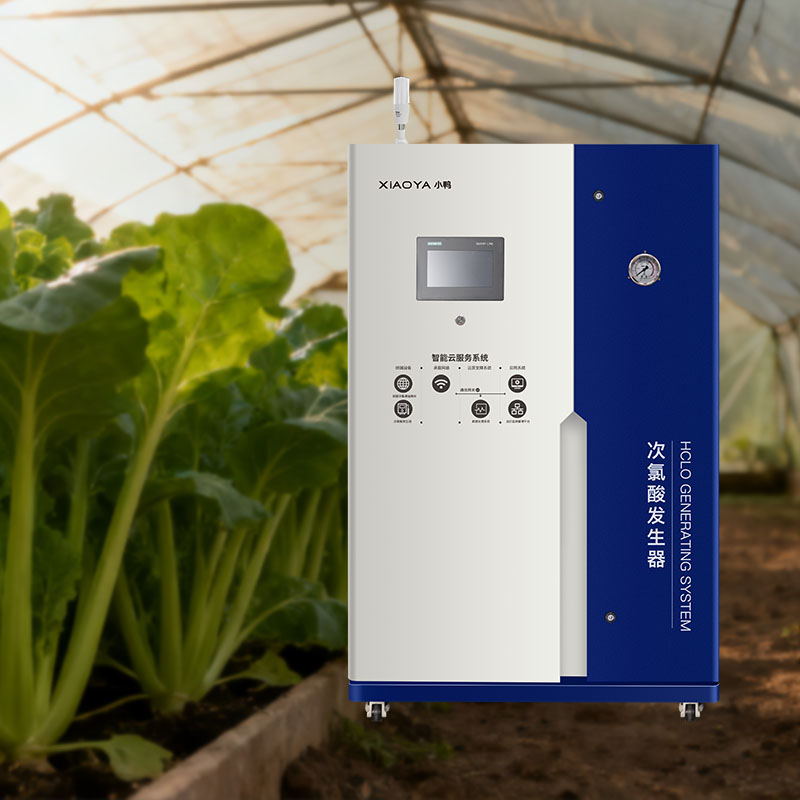
A useful example is Hypochlorous Acid Generator for Meat Product Disinfection and Fresh-keeping. It supports poultry and livestock slaughtering, deep meat processing, and cold-chain distribution.
Its AQ-P300-W configuration offers 160-300 L/h output, pH 5.0-6.5, and available chlorine from 10-120 ppm, which is practical for automated rinse or spray programs.
For slaughtering and primary processing
The key check is whether the sanitizer can run steadily during peak throughput. Interruption here causes line delays and uneven sanitation performance across stations.
Hclo water treatment is easier to place near the point of use, which reduces transfer loss and supports rapid response to changing contamination loads.
For deep processing and packaging areas
These zones need both microbial control and surface compatibility. Blades, conveyors, contact belts, and packaging interfaces should be checked for repeated exposure under real cleaning frequency.
In many cases, hclo water treatment works well because it can be used by soaking, rinsing, spraying, or atomization without adding complicated manual dosing steps.
What gets overlooked during selection
- Do not evaluate chemistry without checking sensor strategy. ORP, flow, pressure, and concentration verification must match the sanitizer, or automated control becomes misleading.
- Do not ignore maintenance windows. Electrolyzer life, pump cleaning, tank refill frequency, and nozzle scale buildup all affect real uptime more than brochure claims.
- Do not assume stronger smell means stronger sanitation. In food plants, the better option is often the one that achieves targets with safer handling and less disruption.
- Do not skip product-contact trials. Meat color, moisture retention, drip loss, and shelf-life response should be verified before full deployment on an automated line.
A simple way to decide between the two
Choose hclo water treatment first when the project prioritizes food-grade safety, lower residue concerns, compact equipment integration, and stable use across multiple contact points.
Choose chlorine dioxide only after confirming that preparation control, ventilation, compatibility, and operator safeguards can be managed without adding unnecessary operational risk.
If the line also needs fresh-keeping support, pathogen reduction, and flexible concentration control, a compact generator with CE, FDA, USDA, and other recognized references deserves attention.
The best next step is simple: map each sanitation point, define required ppm and contact method, then test hclo water treatment against actual automation logic, materials, and product response.
NEWS
 Upgrade in Healthy Living: Hypochlorous Acid Generators Become the New Standard for Luxury Villas
- The Ultimate Solution to Pet Shop Disinfection Challenges! XIAOYA Hypochlorous Acid Generator: Safe Pet Protection with Peace of Mind
 Hypochlorous Acid Generator vs Sodium Hypochlorite Generator
- Hypochlorous Acid Generator Supplier
- Hypochlorous Acid Generator Manufacturer
Leave us a message

Xiaoya Group was founded in 1979,expert in the electrolyzed water industry.
Get in Touch
*We respect your confidentiality and all information are protected.