news
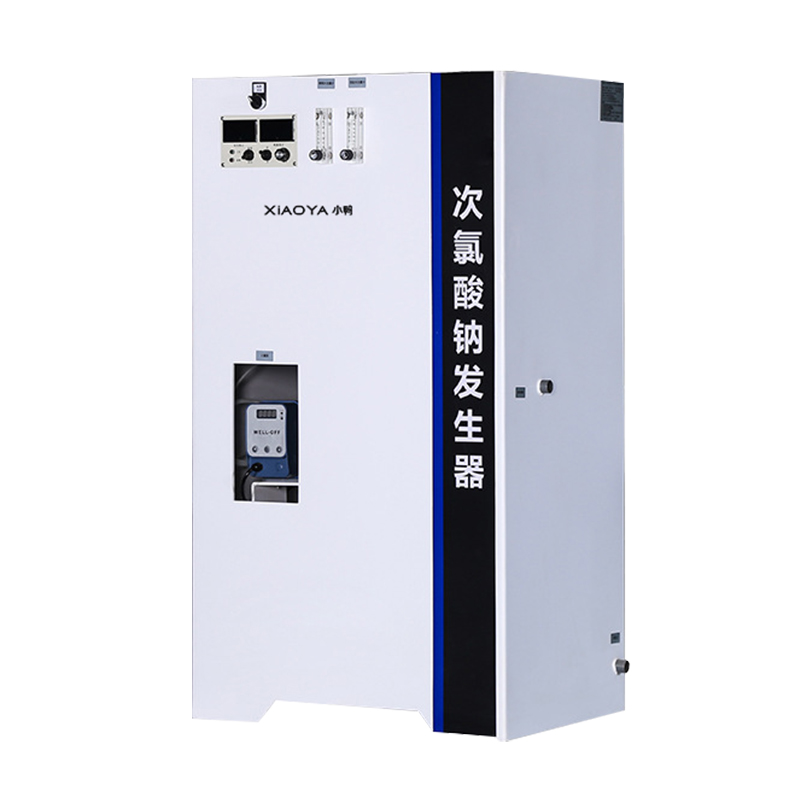
Choosing the best hypochlorous acid generator starts with one practical question: can the system produce stable, safe, and application-ready hypochlorous acid under real operating conditions, not just in a brochure. For buyers in automation equipment, healthcare, disinfection, and household appliance sectors, the right equipment should balance output consistency, compliance, operating cost, maintenance burden, and scalability.
This matters because a poor equipment choice can create quality instability, shorten component life, raise service costs, and damage downstream product reliability. A well-matched generator, on the other hand, supports safer disinfection performance, smoother integration, and stronger long-term value across industrial and commercial use cases.
The best buying decision is rarely based on price alone. It comes from comparing electrolysis quality, material durability, control accuracy, safety design, maintenance requirements, and supplier capability. When these factors are evaluated together, buyers can choose a hypochlorous acid generator that fits both operational goals and market expectations.
What is the core buying concern for most hypochlorous acid generator buyers?
Most buyers are not simply looking for a machine that can generate hypochlorous acid. They want a system that can deliver consistent concentration, stable pH range, safe operation, and predictable performance over time.
In practical terms, the biggest concern is whether the generator can support the intended application without causing process variation. This is especially important in healthcare disinfection, appliance integration, food-contact cleaning, and automated sanitation systems.
Buyers also need confidence that the equipment will remain reliable under continuous or repeated use. If concentration drifts, electrodes degrade quickly, or control systems fail under load, the total cost of ownership rises fast.
How to judge output quality instead of relying on marketing claims
The first technical factor to compare is output stability. A hypochlorous acid generator should produce solution within a controlled concentration range and maintain that range consistently across operating cycles.
pH control is equally important because the disinfection effectiveness of hypochlorous acid depends heavily on chemical balance. If the pH moves too far from the optimal range, actual performance may decline even when labeled concentration looks acceptable.
Ask suppliers for repeatability data, water quality requirements, and test conditions behind their stated output. Reliable vendors should be able to explain how source water, salt purity, runtime, and temperature affect final solution quality.
You should also check whether the machine provides real-time monitoring for concentration, flow, and operating status. Better visibility reduces operator guesswork and helps maintain product consistency in commercial environments.
Which applications should shape your buying decision?
Not every hypochlorous acid generator is built for the same use case. Some are designed for compact household or appliance integration, while others are better suited to clinical settings, commercial sanitation, or industrial automation workflows.
If your business serves kitchen and bathroom appliances, small household appliances, or health-related devices, the equipment should be compact, easy to integrate, and stable under repetitive on-demand use. Space efficiency and simplified controls become more important in these scenarios.
For healthcare and disinfection applications, stronger emphasis should be placed on validated safety performance, traceable operating parameters, and consistent disinfection output. In these cases, uncertainty is more costly than a higher initial purchase price.
For automated equipment manufacturers, integration compatibility matters just as much as chemical performance. Control interfaces, power requirements, sensor feedback, and service accessibility all affect how efficiently the system fits into a broader product platform.
What materials and internal design say about long-term reliability
One of the fastest ways to compare generators is to look at core materials and internal component quality. Electrodes, reaction chambers, seals, tubing, and fluid-contact parts must resist corrosion and maintain stable performance over time.
Low-grade materials may reduce the initial price, but they often increase maintenance frequency and shorten service life. For equipment expected to run in humid, disinfectant-heavy, or continuous-use environments, this tradeoff rarely works in the buyer’s favor.
Internal design should also support efficient operation and straightforward maintenance. A machine that is difficult to clean, calibrate, or inspect can create avoidable downtime and raise technician workload.
In adjacent thermal and disinfection equipment markets, buyers often favor systems built around measurable efficiency and robust monitoring. For example, Thermal Engine reflects how industrial buyers increasingly value compact structure, intelligent real-time monitoring, durability, and lower maintenance cost when selecting critical equipment.
How important are safety systems and compliance features?
Safety should be treated as a primary buying criterion, not a secondary checklist item. Hypochlorous acid generation involves electrical systems, water flow control, chemical conversion, and in some models, pressure-related operating considerations.
A dependable generator should include safeguards for abnormal voltage, water shortage, overheating, sensor failure, and unstable output conditions. These protections help prevent equipment damage while also protecting operators and end users.
Compliance readiness is also important, particularly for buyers serving regulated sectors. Depending on the market, you may need documentation related to material safety, electrical conformity, sanitation standards, or manufacturing quality systems.
If a supplier cannot clearly explain certifications, testing procedures, or quality control methods, that is a purchasing risk. Strong documentation is often a better signal of professionalism than broad performance promises.
How to calculate real operating cost beyond the purchase price
Many buyers make the mistake of comparing only the equipment price. A better evaluation considers consumables, energy use, electrode lifespan, maintenance labor, spare parts, downtime risk, and expected service life.
A lower-cost generator may become expensive if it requires frequent replacement parts or unstable calibration. On the other hand, a system with a higher upfront cost can be more economical if it delivers consistent output and lower maintenance demands.
Ask for a realistic operating cost model based on your expected daily volume and usage pattern. This should include water quality requirements, salt consumption, cleaning intervals, and recommended service cycles.
For business buyers, return on investment often depends on reliability as much as efficiency. Stable operation protects product reputation, reduces support incidents, and helps maintain predictable production planning.
What supplier capabilities should buyers verify before making a decision?
The machine itself is only part of the purchase decision. Supplier capability has a direct impact on equipment quality, lead time stability, customization support, and after-sales service.
Because this market often serves appliance manufacturing, health care, and disinfection applications, buyers should prioritize partners with real R&D capacity, production control, and experience in integrated equipment development.
It is useful to confirm whether the supplier can support parameter adjustment, product integration, private labeling, or market-specific compliance needs. These capabilities become especially valuable when your business serves multiple regions or application categories.
You should also ask how technical issues are handled after delivery. Response time, spare parts availability, remote troubleshooting, and training support can significantly affect operational continuity.
A practical checklist for choosing the best hypochlorous acid generator
Before placing an order, buyers should narrow their decision using a simple but disciplined checklist. Start by defining the target application, required output range, installation environment, and expected duty cycle.
Next, compare output consistency, pH stability, material durability, control systems, and safety protections. Do not rely on one standout feature while ignoring maintenance difficulty or operating instability.
Then review supplier strength, quality documentation, customization ability, and service responsiveness. A generator is a long-term operational asset, so procurement should reflect lifecycle value rather than short-term pricing pressure.
If possible, request sample performance data or a live demonstration under realistic conditions. Buyers who validate real-world performance usually make better long-term decisions than those who buy from specification sheets alone.
Final thoughts: what defines the best choice?
The best hypochlorous acid generator is the one that fits your actual application with stable output, dependable safety, manageable operating cost, and supplier support you can trust. There is no universal best model for every buyer.
For companies in automation equipment, household appliances, healthcare, and disinfection sectors, the smartest approach is to evaluate the generator as part of a complete operating system. That means looking at performance, integration, service life, and business impact together.
When buyers focus on consistency, compliance, durability, and long-term value, they reduce procurement risk and improve downstream product reliability. That is the real standard for choosing the best hypochlorous acid generator.
NEWS
 Public Facility HOCl Storage: Managing Heat, Light, and Shelf Life
 On-Site HOCl vs. Purchased Disinfectant for Municipal Buildings
- Sizing a Public Facility HOCl Generator for Peak Cleaning Demand
- What Can a Hypochlorous Acid Generator Do for Public Facility Cleaning?
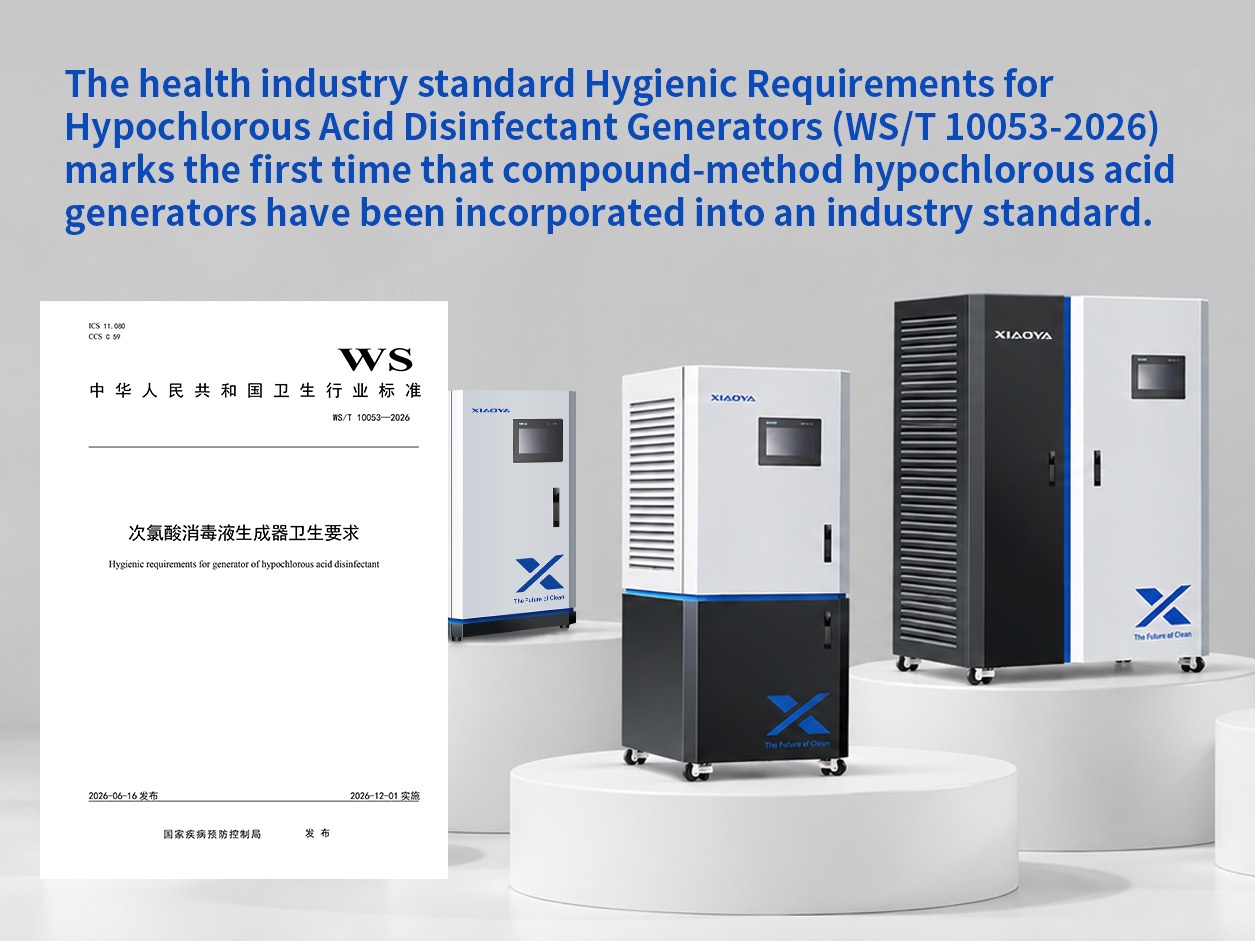
 WS/T 10053-2026 Includes the Compound Method for the First Time: Standard Signals and Market Opportunities for Mass Agricultural Production of Hypochlorous Acid Generators

Leave us a message

Xiaoya Group was founded in 1979,expert in the electrolyzed water industry.
Get in Touch
*We respect your confidentiality and all information are protected.