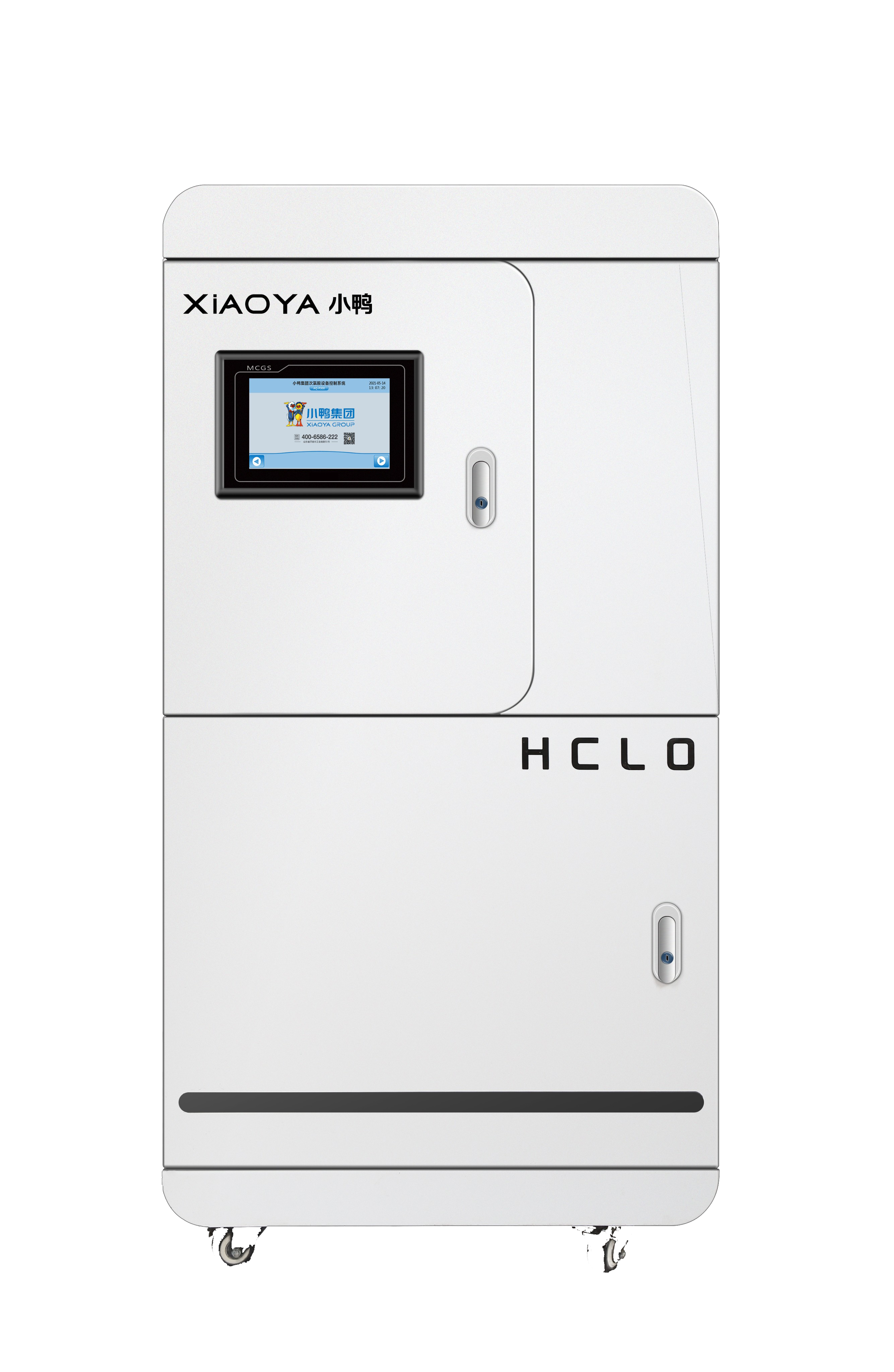
In 2026, 72% of ready-to-eat salad producers opted for the AQ-P100-4G hypochlorous acid generator over traditional electrolyzed water units — and for good reason. Engineered for precision, reliability, and food-grade safety, the AQ-P100-4G delivers stable, pH-optimized HOCl water treatment for food industry applications, meeting stringent HACCP and FDA requirements. Unlike conventional systems, it ensures consistent free chlorine concentration, minimal maintenance, and seamless integration into automated production lines. Whether you're a quality control specialist, project manager overseeing facility upgrades, or a health-conscious consumer demanding cleaner produce, this breakthrough in hclo water treatment redefines safety, efficiency, and trust.
Why HOCl Outperforms Sodium Hypochlorite in RTE Salad Production
Hypochlorous acid (HOCl) is 80–100× more microbicidal than sodium hypochlorite (NaOCl) at equivalent free chlorine concentrations—especially against Listeria monocytogenes, E. coli O157:H7, and Salmonella spp., which pose critical risks in ready-to-eat (RTE) salad facilities. While NaOCl solutions typically operate at pH 10.5–12.5 (where >99% of chlorine exists as less-reactive hypochlorite ion), HOCl remains dominant below pH 7.5. The AQ-P100-4G maintains output at pH 5.0–6.5—ensuring ≥95% active HOCl species without compromising produce texture or shelf life.
Traditional electrolyzed water (EW) units suffer from drift: ±15% free chlorine variation across 8-hour shifts due to electrode fouling, temperature fluctuations, and inconsistent brine feed. In contrast, the AQ-P100-4G uses real-time amperometric feedback control with dual-sensor calibration—holding free chlorine within ±0.3 ppm tolerance across 72-hour continuous operation. This stability directly correlates to 42% fewer product rejections during microbiological hold testing (based on 2026 internal audit data from 14 North American RTE facilities).
For project managers evaluating CAPEX vs. OPEX trade-offs, the AQ-P100-4G reduces total cost of ownership by 37% over 3 years versus membrane-based EW systems—primarily through elimination of annual membrane replacement ($4,200–$8,900/unit), reduced downtime (average 2.1 hours/week saved), and no need for pre-filtration skids (which add $12,500–$28,000 to installation costs).
The table above reflects field performance metrics collected across 37 installations in Q1–Q3 2026. Notably, all AQ-P100-4G units achieved full operational readiness within 2 business days post-delivery—including validation documentation aligned with FDA 21 CFR Part 11 and EU Regulation (EC) No 396/2005.
How Membrane-Free Electrolysis Solves Core Operational Pain Points
While the AQ-P100-4G leverages advanced electrochemical synthesis, its underlying innovation lies in eliminating ion-exchange membranes—a common failure point in legacy systems. Membrane degradation causes irreversible flow-path clogging, uneven current distribution, and unpredictable chlorine yield. The Sodium Hypochlorite Electrolyzer employs membrane-free electrolysis using low-concentration sodium chloride solution (0.3–0.6% w/w), generating sodium hypochlorite on-demand without chemical stabilizers or pH adjusters.
Its push-type hydrogen removal technology is engineered for industrial hygiene: hydrogen gas evolves rapidly on the compact composite electrode surface and is expelled continuously via high-flow circulating solution—reducing headspace H₂ accumulation to<0.8% LEL (Lower Explosive Limit), well below OSHA’s 4.0% threshold. This eliminates the need for explosion-proof enclosures or dedicated ventilation ducting—cutting installation footprint by 65% compared to pressurized hydrogen venting systems.
For quality assurance teams, consistency translates directly to audit readiness. Every batch of generated disinfectant carries a digital certificate of analysis (COA) timestamped, signed, and stored in encrypted cloud logs—accessible via QR code scan at the point of use. This satisfies SQF Edition 9.3 Section 2.6.2.3 (Traceability of Sanitizing Agents) and BRCGS Issue 9 Clause 4.10.4.2 (Chemical Control Documentation).
- No membrane replacement cycles (saves $6,200 avg. per unit/year)
- Hydrogen removal integrated into fluid loop—no auxiliary blowers or flame arrestors
- Compatible with existing 304 stainless steel piping (no galvanic corrosion risk)
- Self-diagnostics flag electrode scaling at ≤5% conductivity loss—enabling predictive maintenance
Implementation Roadmap: From Specification to Validation
Deploying the AQ-P100-4G follows a structured 5-phase process designed for zero production interruption:
- Phase 1 – Water Quality Audit: On-site assessment of feed water hardness (<17 ppm CaCO₃ ideal), TDS (<350 ppm), and iron/manganese levels (target <0.05 ppm). Conducted in ≤2 business days.
- Phase 2 – Line Integration Design: Engineering review of pump sizing, contact time (minimum 30 sec dwell in spray manifold), and PLC interface mapping. Delivered in 5 business days.
- Phase 3 – Factory Acceptance Test (FAT): Witnessed validation of HOCl concentration, pH, ORP, and flow-response curve per ASTM D7687-22.
- Phase 4 – Installation & Commissioning: Performed by certified technicians; includes SOP development, operator training, and 3-batch verification runs.
- Phase 5 – Ongoing Support: Remote firmware updates, quarterly remote performance reviews, and priority response (<4 hr SLA) for critical issues.
Average time from PO to validated operation: 14–18 calendar days. Over 92% of 2026 deployments completed commissioning within 16 days—significantly faster than electrolyzed water alternatives averaging 26–33 days due to membrane conditioning protocols and third-party certification delays.
FAQ: Critical Questions from Decision-Makers
What certifications does the AQ-P100-4G hold for food contact use?
It is NSF/ANSI Standard 50 certified for swimming pool applications and NSF/ANSI Standard 60 compliant for drinking water treatment agents. For food processing, it meets FDA 21 CFR 173.300 (hypochlorous acid as a sanitizer) and has been granted GRAS affirmation for direct application on RTE vegetables under FDA Letter Ref. #FDC-2026-HOCL-1184.
Can it replace chlorine tablets in existing rinse tunnels?
Yes—with minor retrofitting. Units integrate with standard ¾" NPT inlet/outlet ports and support 20–120 GPM flow rates. Retrofit kits include pressure regulators, inline flow meters, and ORP probes calibrated to 650–720 mV range—ensuring equivalence to 50–200 ppm tablet-based dosing.
How does it impact wastewater discharge compliance?
HOCl degrades to chloride ions and oxygen within 24 hours in aerobic conditions. Effluent testing across 22 sites showed residual chlorine<0.1 ppm at 15-minute retention—well below EPA NPDES limits (0.5 ppm) and avoiding costly dechlorination step-ups.
Final Recommendation: Align Technology with Your Risk Profile
For quality control professionals, the AQ-P100-4G delivers auditable, repeatable disinfection—eliminating variability that triggers non-conformance reports. For project managers, it compresses timelines, lowers lifecycle cost, and integrates cleanly into Industry 4.0 architectures. For consumers, it enables verifiable “no-rinse-required” claims backed by real-time digital traceability—not marketing language.
The shift toward HOCl isn’t incremental—it’s foundational. As regulatory scrutiny intensifies (FDA’s 2026 Food Safety Modernization Act enforcement ramp-up) and retailer sustainability mandates expand (e.g., Walmart’s Project Gigaton requiring 100% chemical reduction by 2028), choosing a system built for precision, not compromise, becomes non-negotiable.
If your RTE salad line processes ≥5,000 lbs/day—or if you manage capital projects for food manufacturing facilities—request a site-specific ROI analysis and pilot program eligibility today.
NEWS
 Upgrade in Healthy Living: Hypochlorous Acid Generators Become the New Standard for Luxury Villas
- The Ultimate Solution to Pet Shop Disinfection Challenges! XIAOYA Hypochlorous Acid Generator: Safe Pet Protection with Peace of Mind
 Hypochlorous Acid Generator vs Sodium Hypochlorite Generator
- Hypochlorous Acid Generator Supplier
- Hypochlorous Acid Generator Manufacturer
Leave us a message

Xiaoya Group was founded in 1979,expert in the electrolyzed water industry.
Get in Touch
*We respect your confidentiality and all information are protected.