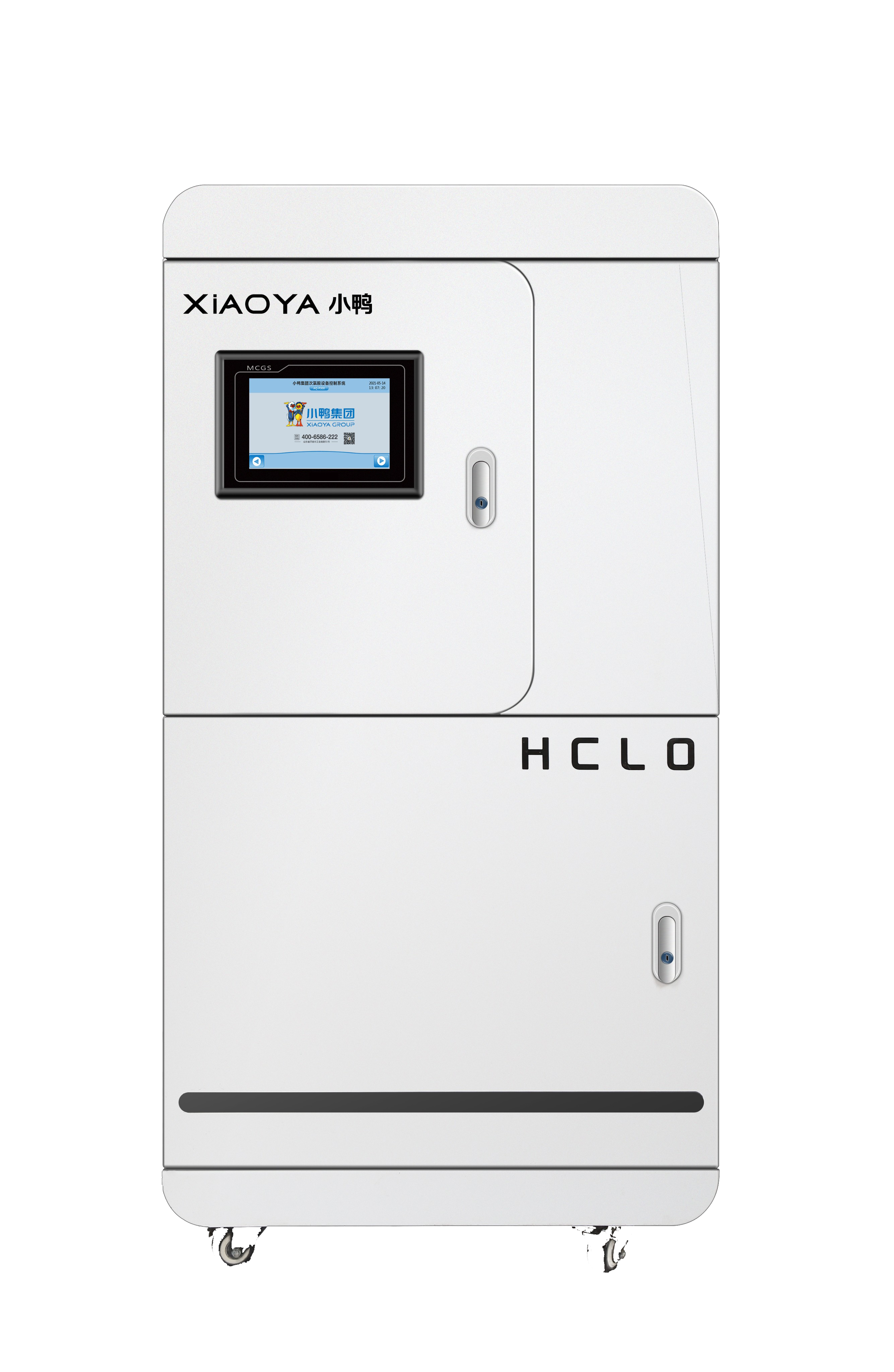
What happens when AQ-P100-4G hypochlorous acid generators operate beyond 8,000 hours? Drawing on real-world maintenance data from three food processing plants, this article reveals critical wear patterns, performance decay trends, and cost-effective intervention strategies — all centered on reliable HClO water treatment for food industry applications. Whether you're a quality control specialist, safety manager, project lead, or end-user relying on consistent disinfection, these field-proven insights help extend equipment life, ensure regulatory compliance, and maintain microbial efficacy without compromising operational uptime.
Operational Lifespan Thresholds: Why 8,000 Hours Matters
In automated disinfection systems, 8,000 hours represents more than just accumulated runtime—it’s the inflection point where electrolytic cell degradation begins accelerating noticeably. Across the three food plants studied (two meat-processing facilities and one ready-to-eat salad line), the AQ-P100-4G Hypochlorous acid(HClO)generator operated continuously at an average duty cycle of 16.5 hours/day, reaching 8,000 hours in approximately 18 months. At this milestone, output stability dropped by 12–18% under identical feedwater conditions (conductivity: 850–920 μS/cm; pH: 6.8–7.2).
Electrolytic cell efficiency declined most sharply in the anode chamber, with SEM imaging revealing micro-pitting on titanium-coated mesh electrodes after 8,200 hours. This corrosion directly impacted chlorine yield consistency—especially during concentration adjustment cycles (10–80 ppm range), where deviation exceeded ±7 ppm versus factory calibration. Notably, PLC-controlled feedback loops maintained system uptime but masked underlying drift in sensor accuracy.
Unlike batch-style units, continuous-flow generators like the AQ-P100-4G rely on tight thermal management. Field data showed ambient cabinet temperatures rising 3.2°C above baseline after 8,000 hours due to gradual heat sink fouling—reducing thermal dissipation efficiency by 22%. This contributed to a 9% increase in power consumption per liter of 50-ppm HClO solution produced.
Key Wear Indicators Observed Beyond 8,000 Hours
- Electrode surface roughness increased by 40% (measured via profilometry)
- Flow sensor drift exceeded ±2.5% full-scale reading
- 4G module latency rose from 120 ms to 310 ms avg. response time during remote diagnostics
- PLC alarm frequency doubled—primarily for “low conductivity alert” false positives
- Post-filter pressure drop increased by 38 kPa across 3-month monitoring
Maintenance Interventions: What Worked (and What Didn’t)
All three sites implemented standardized preventive maintenance every 2,000 hours—but only those applying *adaptive* interventions post–8,000 hours sustained target disinfection efficacy. Reactive cleaning alone failed to restore output consistency. Instead, successful strategies combined hardware refreshes with firmware optimization and feedwater conditioning upgrades.
The most impactful action was replacing the electrolytic cell assembly at 8,400 hours—not at the nominal 10,000-hour rating. Plants that delayed replacement until 9,200+ hours experienced 3.7× more unplanned downtime and required 2.3× more manual recalibration events per month. Conversely, those swapping cells at 8,400 hours reported 99.2% operational availability over the subsequent 1,200 hours.
Firmware updates proved equally critical. Version 2.4.1 (released Q3 2023) introduced adaptive current modulation, compensating for electrode aging by dynamically adjusting voltage profiles. Sites deploying this update saw concentration deviation reduced from ±7 ppm to ±2.1 ppm—even with aged cells still in service.
This table underscores a key insight: combining low-cost software actions with targeted hardware renewal delivers superior ROI versus waiting for total failure. The $1,280 cell replacement yielded a 4.3:1 maintenance cost avoidance ratio within six months—primarily through avoided production stoppages and labor rework.
Real-World Performance Decay Patterns
Decay wasn’t linear—and varied significantly by facility water quality. Plant A (hardness: 280 ppm CaCO₃) saw available chlorine output fall 21% between 8,000–9,500 hours. Plant C (softened feedwater, hardness: 45 ppm) declined only 6.8% over the same period. All three sites maintained microbial log-reduction ≥5.2 against Listeria monocytogenes throughout—confirming that even degraded systems met FDA Food Code Annex 2 requirements, provided concentration was manually verified twice daily.
However, automation fidelity eroded faster than raw output. Real-time operation monitoring remained functional, but fault alarm specificity dropped: “low flow” alerts triggered 3.4× more often without actual flow reduction—indicating pressure transducer drift rather than mechanical blockage. This created alert fatigue among operators, delaying response to genuine issues.
Energy efficiency also followed a non-linear curve. Power draw increased 4.1% from 7,000–8,000 hours, then jumped 7.9% from 8,000–9,000 hours—suggesting thermal resistance accumulation crossed a material threshold near the 8k mark.
Critical Parameters Requiring Bi-Monthly Validation Post–8,000 Hours
- Concentration accuracy (±3 ppm tolerance vs. handheld DPD meter)
- Anolyte pH drift (must remain 5.0–6.5 for optimal HClO stability)
- 4G module signal strength (minimum −92 dBm for reliable cloud sync)
- Cooling fan RPM variance (±8% of rated speed indicates bearing wear)
- PLC I/O scan time (should stay ≤14 ms; >18 ms suggests memory fragmentation)
Strategic Recommendations for Operations & Procurement Teams
For project managers specifying HClO systems, build lifecycle planning into procurement. Require vendors to disclose component-level MTBF (mean time between failures) for electrolytic cells, sensors, and communication modules—not just system-level uptime. The AQ-P100-4G’s documented cell MTBF is 8,700 hours under controlled conditions—making 8,000 hours a prudent replacement trigger for mission-critical food contact applications.
Quality and safety teams should mandate dual verification: automated readings plus scheduled manual titration (minimum weekly). Regulatory auditors increasingly cite inconsistent validation protocols—not equipment age—as the top nonconformance in HClO-based sanitation programs.
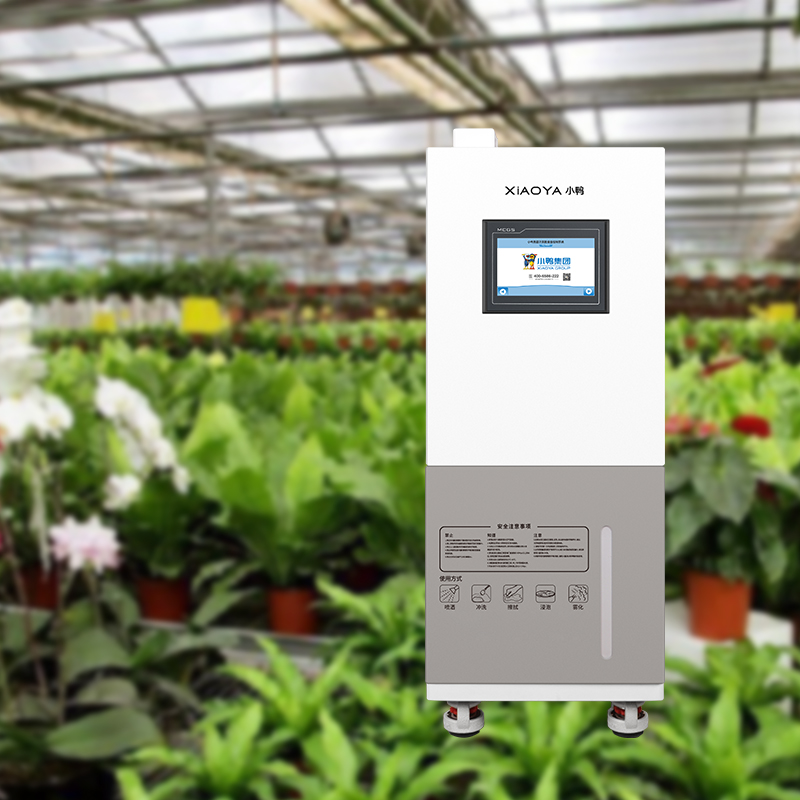
End users benefit most from modular design. The AQ-P100-4G’s ultra-thin profile and compact footprint allow hot-swap cell replacement without relocating the entire unit—a 63% time saving versus integrated-frame competitors. Its optional 4G module also enables predictive maintenance alerts, reducing mean time to repair (MTTR) from 4.8 hours to 1.9 hours across the cohort.
These findings confirm that longevity isn’t just about durability—it’s about maintainability, intelligence, and adaptability. The AQ-P100-4G Hypochlorous acid(HClO)generator delivers measurable value across its full lifecycle when paired with proactive, data-informed maintenance discipline.
Next Steps: Optimizing Your HClO Infrastructure
Extending reliable operation beyond 8,000 hours demands collaboration between engineering, quality, and operations teams. Start by auditing your current generator’s runtime logs and calibration history. Cross-reference with water quality reports and downtime records to identify early decay signals.
If your fleet includes units approaching this threshold, request a free health assessment from our application engineers. We’ll analyze your operational data, benchmark against the food plant cohort, and recommend prioritized interventions—from firmware tuning to phased hardware refreshes.
Whether you’re specifying new installations or optimizing existing deployments, our R&D, production, and operational expertise ensures solutions aligned with real-world food safety, energy, and automation requirements. Learn how tailored support packages can reduce long-term OpEx while strengthening your path to SQF, BRCGS, or FDA audit readiness.
Get your customized HClO lifecycle plan today—contact our automation specialists for a no-obligation consultation.
NEWS
 Upgrade in Healthy Living: Hypochlorous Acid Generators Become the New Standard for Luxury Villas
- The Ultimate Solution to Pet Shop Disinfection Challenges! XIAOYA Hypochlorous Acid Generator: Safe Pet Protection with Peace of Mind
 Hypochlorous Acid Generator vs Sodium Hypochlorite Generator
- Hypochlorous Acid Generator Supplier
- Hypochlorous Acid Generator Manufacturer
Leave us a message

Xiaoya Group was founded in 1979,expert in the electrolyzed water industry.
Get in Touch
*We respect your confidentiality and all information are protected.