news
Commercial vs. Industrial Hypochlorous Acid Generator: Scenario-Based Selection Guide
Choosing between a Commercial vs. Industrial Hypochlorous Acid Generator is essential for reliable, efficient, and scalable disinfection.
The right system improves hygiene, reduces chemical handling risks, and supports automated operations across production and service environments.
In automation equipment, disinfection is no longer a separate manual task. It is part of process control, compliance, and daily operating stability.
Why Scenario Judgment Matters Before Equipment Selection
A Commercial vs. Industrial Hypochlorous Acid Generator comparison should begin with usage conditions, not only rated output.
Commercial sites often need compact equipment, easy operation, and moderate solution output for frequent cleaning cycles.
Industrial sites usually require higher capacity, continuous dosing, PLC linkage, and stronger tolerance for long operating periods.
The same disinfectant target can lead to different equipment choices when workflow, water quality, and automation level change.
Commercial Sites: When Compact Output and Simplicity Are Enough
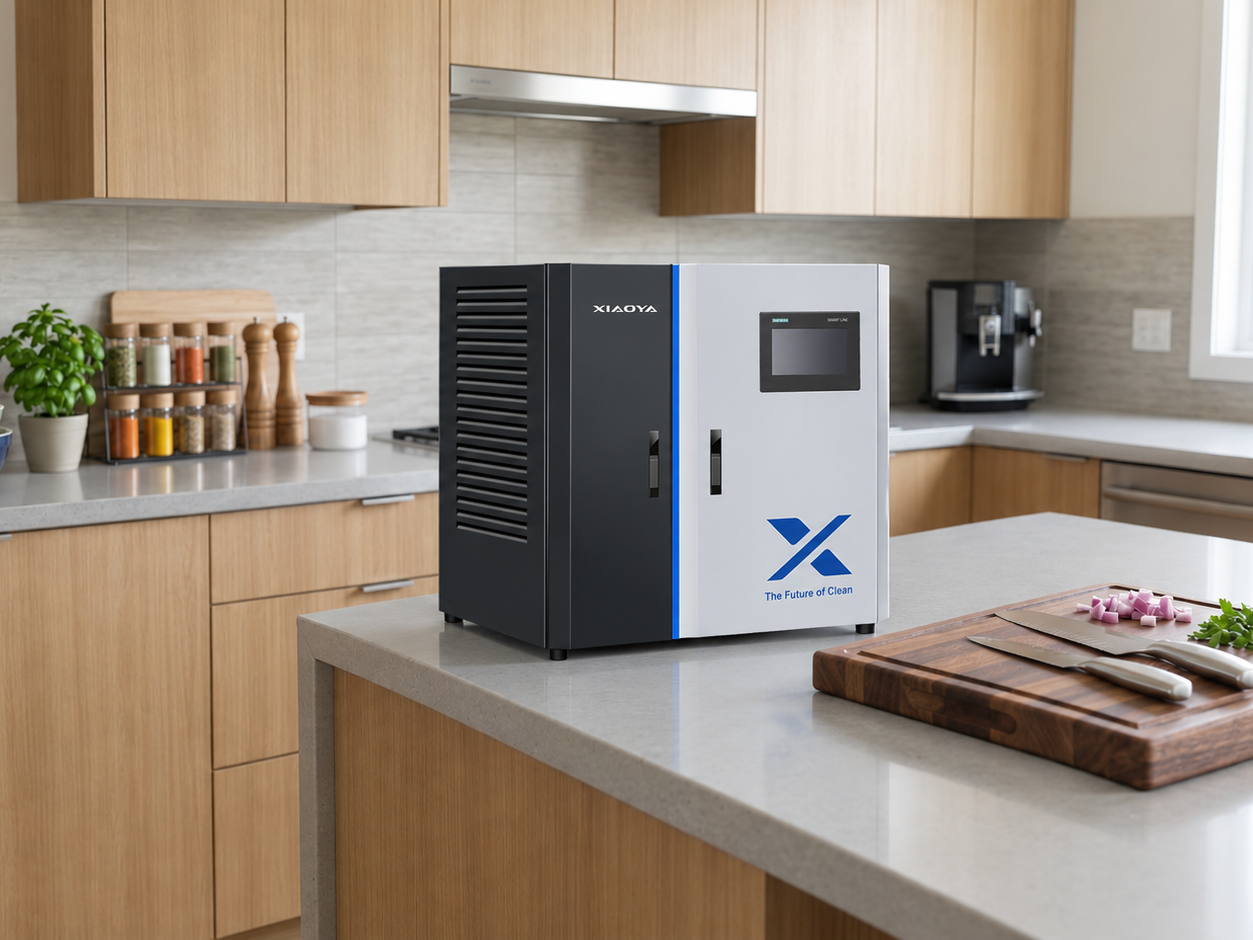
Commercial applications include schools, kindergartens, clinics, kitchens, small pools, and public cleaning areas.
These scenarios value safe on-site generation, simple startup, low storage risk, and predictable disinfectant concentration.
For a Commercial vs. Industrial Hypochlorous Acid Generator decision, daily consumption is the first judging point.
If disinfection is intermittent, a commercial unit may avoid unnecessary capital cost and complex installation.
Kitchen, Bathroom, and Small Appliance Environments
Appliance-related facilities often need clean surfaces, odor control, and safe sanitation around assembly or testing areas.
Commercial-grade systems fit localized cleaning points where solution demand is stable but not continuous.
The key is matching output with cleaning frequency, storage volume, and operator access.
Industrial Sites: When Capacity, Automation, and Stability Decide
Industrial applications include food factories, wastewater treatment, tap water pre-oxidation, aquaculture, and large swimming pool disinfection.
These environments need stronger flow capacity, robust control, and reliable dosing under changing load conditions.
An industrial Commercial vs. Industrial Hypochlorous Acid Generator assessment should include peak demand, not only average consumption.
Peak cleaning, shift changes, seasonal microbial load, and water turnover can all raise real demand.
Automated Production and Utility Integration
Industrial generators should communicate with pumps, sensors, storage tanks, and alarms.
PLC control helps maintain output consistency and supports unattended or semi-automated disinfection routines.
For clean energy facilities, controlled sanitation can protect water systems, auxiliary rooms, and shared process areas.
Typical Technical Reference for On-Site Disinfection Systems
Some sites prefer on-site preparation because it reduces procurement, transportation, storage, and handling risks.
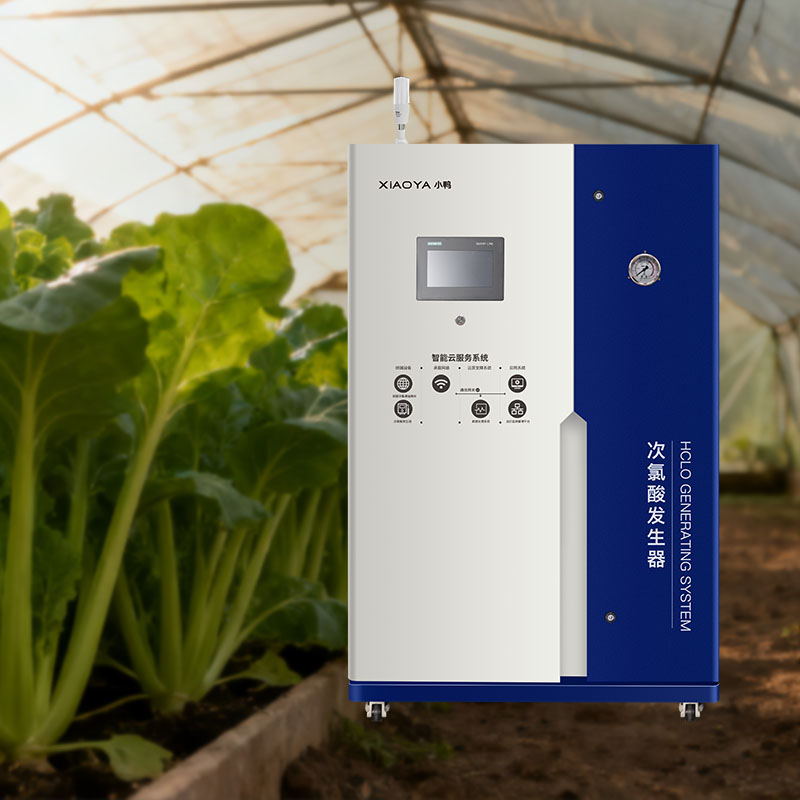
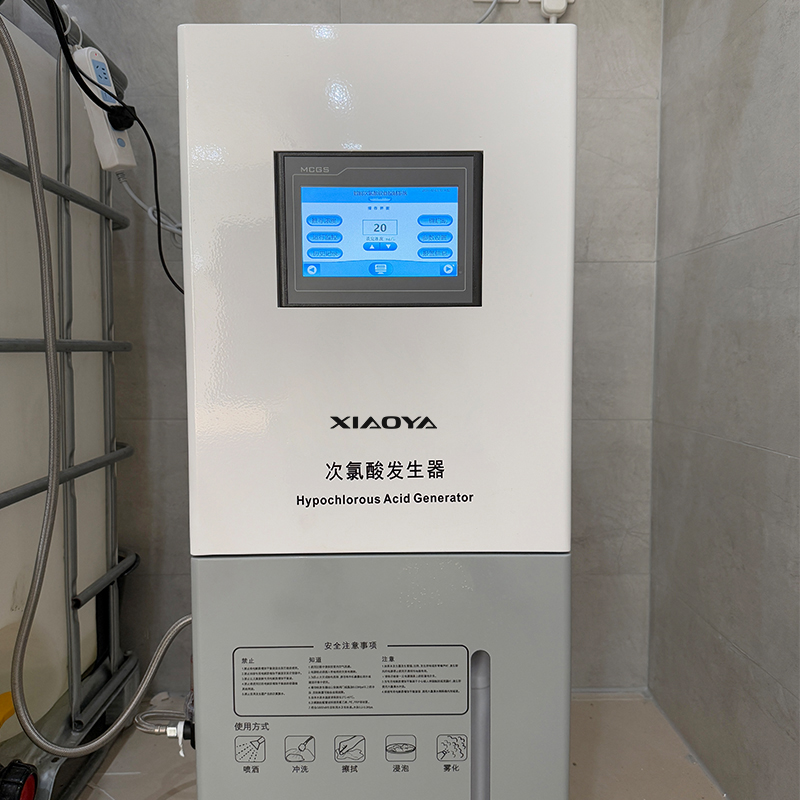
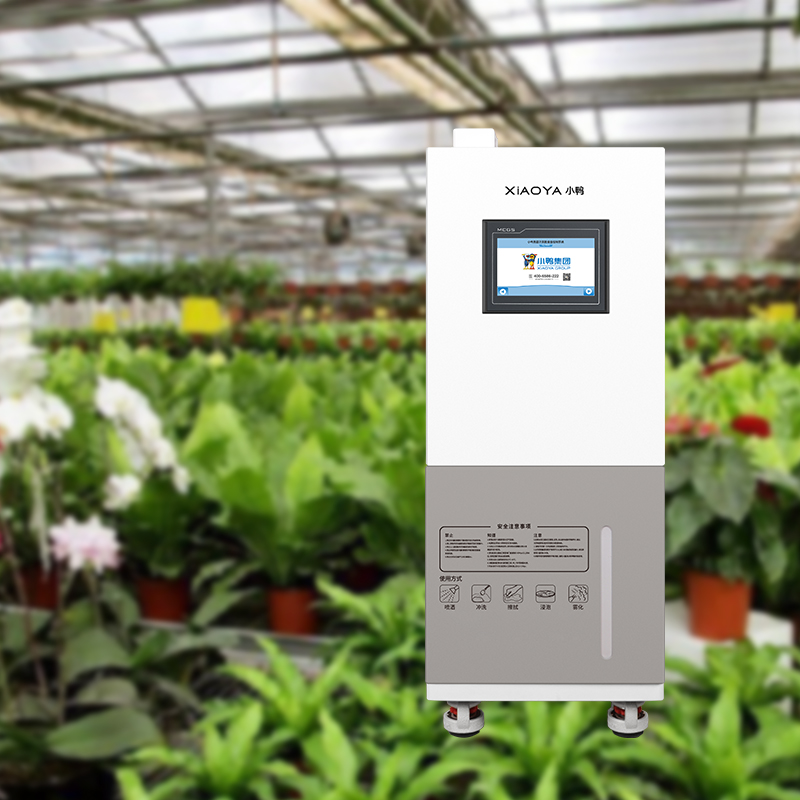
A practical example is the Sodium hypochlorite generator, designed for broad disinfection scenarios.
It uses food-grade salt and tap water, with PVC shell material and PLC control.
Typical references include 6.3L/H production, 50g/h single chlorine production, and 0.5kW rated power.
Other parameters include 30L salt tank capacity, 30L storage tank capacity, and 9L/h dosing pump flow.
The main bactericidal factor is hypochlorite, with pH value around 5–6.5 and effective chlorine concentration of 10–120mg/L.
Different Scenario Requirements at a Glance
How to Match Generator Type to Real Demand
A Commercial vs. Industrial Hypochlorous Acid Generator choice should follow measurable operating conditions.
- Calculate daily solution demand and peak hourly consumption.
- Check required effective chlorine concentration for each cleaning point.
- Confirm whether dosing must connect with PLC or sensors.
- Review installation space, ventilation, drainage, and power supply.
- Compare salt, water, electricity, maintenance, and downtime costs.
Commercial systems work well when demand is predictable, localized, and limited.
Industrial systems are better when multiple endpoints need synchronized disinfection or continuous treatment.
Cost Differences Beyond the Purchase Price
Initial price is only one part of a Commercial vs. Industrial Hypochlorous Acid Generator evaluation.
Long-term cost includes electrolyte use, replacement parts, maintenance labor, installation, and compliance documentation.
Industrial units may cost more upfront but reduce manual dosing, chemical storage, and repeated handling.
Commercial units can be more economical when usage is smaller and automation requirements are limited.
Common Misjudgments in Scenario Selection
One common mistake is selecting by room size instead of actual solution consumption.
Another mistake is ignoring peak demand during cleaning shifts, outbreaks, or seasonal production increases.
Some projects also overlook storage tank capacity, causing interruptions even when generator output appears sufficient.
Ignoring water quality can reduce stability, shorten service life, or increase maintenance frequency.
In automated facilities, weak control integration may create manual workarounds and inconsistent disinfection records.
Practical Selection Recommendations
- Use a commercial model for local cleaning with limited daily consumption.
- Use an industrial model for continuous dosing or multi-point sanitation.
- Prioritize PLC control when records, alarms, or process linkage are required.
- Choose larger storage capacity when demand fluctuates during peak periods.
- Verify pH, effective chlorine range, and electrolyzer service life before installation.
A balanced Commercial vs. Industrial Hypochlorous Acid Generator decision should support hygiene, automation, and operating economy together.
Next Step for a Reliable Disinfection Plan
Before final selection, map every disinfection point, required concentration, daily volume, and control requirement.
Then compare commercial and industrial generator options against actual workflow, not theoretical capacity alone.
This approach helps build a safer, cleaner, and more automated disinfection system for long-term operation.
NEWS
 Upgrade in Healthy Living: Hypochlorous Acid Generators Become the New Standard for Luxury Villas
- The Ultimate Solution to Pet Shop Disinfection Challenges! XIAOYA Hypochlorous Acid Generator: Safe Pet Protection with Peace of Mind
 Hypochlorous Acid Generator vs Sodium Hypochlorite Generator
- Hypochlorous Acid Generator Supplier
- Hypochlorous Acid Generator Manufacturer
Leave us a message

Xiaoya Group was founded in 1979,expert in the electrolyzed water industry.
Get in Touch
*We respect your confidentiality and all information are protected.