




news
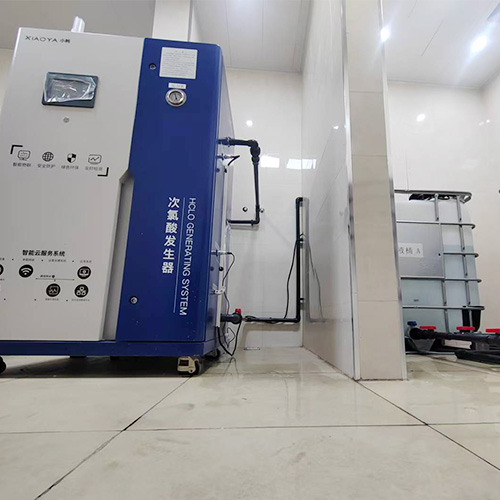
As demand rises for safer, smarter, and more sustainable disinfection solutions, hypochlorous acid generator technology is entering a new era of innovation.
From automated concentration control to compact appliance integration, these systems are becoming more efficient, user-friendly, and energy-conscious.
For automation equipment applications, future-ready hypochlorous acid generators can support hygiene management, clean living, healthcare spaces, and intelligent household disinfection.
Why a Checklist Matters for Hypochlorous Acid Generator Technology
Hypochlorous acid generator technology connects electrochemistry, fluid control, sensing, automation, and safety design in one compact system.
A checklist helps separate practical innovation from marketing claims, especially when evaluating reliability, maintenance, output stability, and integration potential.
It also supports better decisions for kitchen appliances, bathroom devices, healthcare disinfection units, and small household appliances.
Core Innovation Checklist for Future Systems
- Verify real-time concentration control using sensors, algorithms, and feedback loops to keep hypochlorous acid output stable during different water and salt conditions.
- Assess electrode durability by checking coating quality, anti-scaling design, operating lifespan, and replacement convenience under frequent disinfection cycles.
- Confirm automated dosing accuracy so the generator can deliver suitable concentration levels for surfaces, air treatment, produce washing, or healthcare cleaning.
- Review water quality adaptability, including tolerance for hardness, chlorine ions, temperature variation, and filtration requirements before electrolysis begins.
- Check energy efficiency through low-power electrolysis modules, standby management, optimized flow paths, and reduced waste during start-stop operation.
- Evaluate safety interlocks, including leakage detection, overcurrent protection, dry-run prevention, child lock functions, and automatic shutdown logic.
- Inspect human-machine interaction through clear indicators, app connectivity, cartridge reminders, maintenance prompts, and simple operating modes.
- Measure output consistency across production batches, because reliable automation equipment must maintain repeatable disinfection performance after scaling.
- Plan modular architecture so pumps, electrolytic cells, sensors, and controllers can be upgraded without redesigning the full appliance platform.
- Document compliance requirements for electrical safety, materials contact, disinfectant concentration, labeling, transport, and local regulatory expectations.
Automation Trends Shaping Next-Generation Generators
Smarter Sensing and Closed-Loop Control
Future hypochlorous acid generator technology will rely more on ORP, pH, conductivity, flow, and temperature sensors.
Closed-loop control can adjust electrolysis intensity automatically, reducing concentration drift and improving hygiene consistency across different usage conditions.
Compact Design for Appliance Integration
Smaller electrolytic cells and integrated fluid channels will make hypochlorous acid generators easier to embed into household products.
This matters for smart faucets, toilet cleaning systems, countertop sprayers, washing equipment, and disinfection modules inside kitchen appliances.
Lower Energy Use and Cleaner Production
Energy-conscious design is becoming a key purchasing factor in automation equipment and household disinfection appliances.
Low-voltage operation, efficient power conversion, and optimized electrolysis timing can reduce electricity consumption without weakening disinfection performance.
Application Notes for Different Use Scenarios
Kitchen and Food-Contact Areas
Kitchen applications require stable output, food-safe materials, and easy rinsing procedures.
Hypochlorous acid generator technology can support produce cleaning, cutting board disinfection, sink hygiene, and odor control when concentration is properly managed.
Bathroom and High-Humidity Spaces
Bathrooms place stronger demands on waterproofing, anti-corrosion materials, and automatic drainage.
Future systems should combine compact generators with humidity-resistant electronics, touch-safe interfaces, and periodic self-cleaning cycles.
Healthcare and Public Hygiene
Healthcare settings need traceability, validated concentration ranges, and predictable operating records.
Data logging, batch identification, and remote monitoring can strengthen confidence in hypochlorous acid disinfection workflows.
Supporting Energy Systems and Process Stability
Some automated production environments need steam, heat, or distributed thermal support beside disinfection equipment.
In these cases, a linked solution such as Thermal Engine may help stabilize adjacent process requirements.
Its compact footprint, intelligent monitoring, flameless combustion, and waste heat recovery align with energy-aware automation planning.
Commonly Overlooked Risks
Ignoring water variability: Water hardness and ion content can affect electrolysis efficiency, concentration stability, and electrode lifespan.
Overlooking material compatibility: Seals, tubes, tanks, and spray nozzles must tolerate oxidizing liquid during repeated use.
Skipping calibration planning: Sensors need calibration routines, service intervals, and diagnostic prompts to avoid silent performance decline.
Underestimating user behavior: Poor refill habits, blocked filters, or incorrect salt dosage can weaken system reliability.
Focusing only on concentration: Effective disinfection also depends on contact time, surface coverage, organic load, and application method.
Practical Execution Guide
- Define target applications first, then match concentration range, flow rate, reservoir size, and operating cycle to actual disinfection tasks.
- Build prototypes with replaceable electrolysis modules, so electrode materials and control parameters can be tested quickly.
- Run accelerated aging tests under high-frequency use, hard water, humidity, and temperature variation.
- Add fault simulation testing for blocked water paths, empty tanks, sensor failure, abnormal voltage, and leakage conditions.
- Create maintenance instructions that use simple prompts, visual parts, and clear replacement intervals.
- Validate performance using repeatable testing methods, not only one-time laboratory concentration readings.
Future Outlook and Action Direction
The next stage of hypochlorous acid generator technology will be defined by automation, compact integration, data visibility, and low-energy operation.
Systems that combine stable electrolysis, intelligent monitoring, safe materials, and practical maintenance will stand out in disinfection appliance markets.
Start by building a scenario-based checklist, then test every module against water quality, safety, durability, and user operation requirements.
This approach turns future innovation into measurable engineering progress, supporting cleaner homes, safer healthcare spaces, and smarter automation equipment.
NEWS
 Disinfection Empowers Orthodontic Safety: Hypochlorous Acid Generators Build a Sterile Defense Line for Dental Instruments
- Accumulating Strength and Reaching New Heights: A Record of the Production Breakthrough of Xiaoya Small Home Appliances' Hypochlorous Acid Generators
 How Do HOCl Generators Turn Salt and Water into Cleaning Solutions?
 Medical HOCl Generator Procurement: Service, Training, and Traceability
- Integrating a Medical HOCl Generator into Hospital Cleaning Stations
Leave us a message

Xiaoya Group was founded in 1979,expert in the electrolyzed water industry.
Get in Touch
*We respect your confidentiality and all information are protected.