news
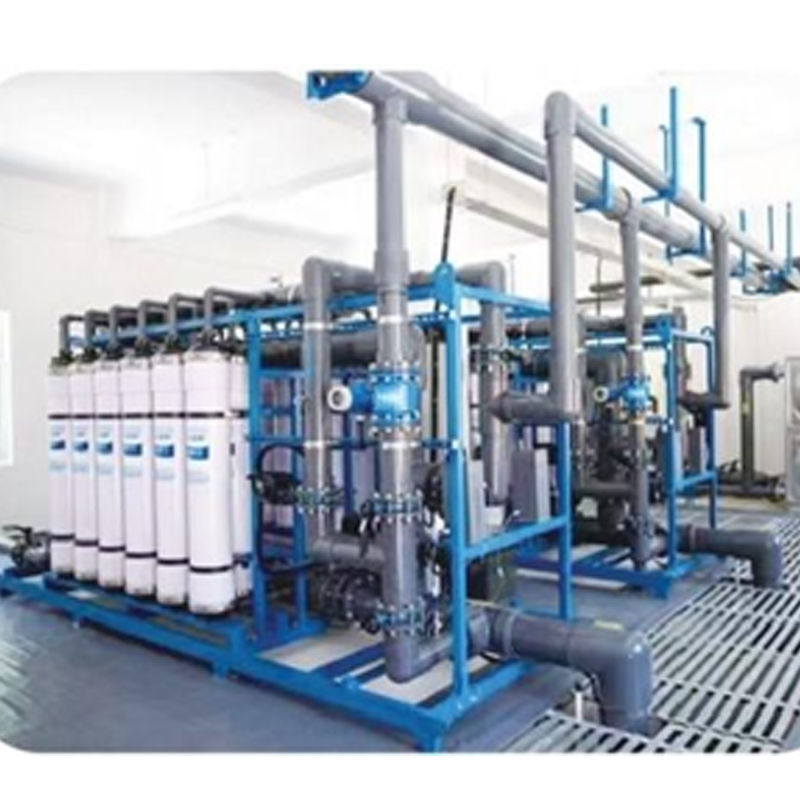
Fogging vs Electrolyzed Water: Which Disinfection Method Works Better for Automation Equipment?
In the automation equipment industry—where precision, safety, and efficacy are non-negotiable—choosing between fogging and electrolyzed water for disinfection is a critical operational decision. As a leading R&D, manufacturing, and solutions provider for healthcare, kitchen/bathroom, and disinfection appliances, we compare fogging vs electrolyzed water head-to-head: speed, residue, material compatibility, and integration with smart cleaning systems. Whether you're deploying automated sanitation in hospitals, food service facilities, or home environments, understanding which method delivers superior, scalable, and sustainable disinfection is essential.
Unlike generic OEM suppliers, our factory-direct model eliminates distributor markups, logistics intermediaries, and regional licensing fees—delivering up to 37% lower total cost of ownership (TCO) over a 5-year lifecycle. All core disinfection hardware—including electrolytic cells, pressure regulators, and IoT control modules—is engineered and assembled under one roof in our ISO 13485–certified Shenzhen facility. This vertical integration ensures consistent calibration, traceable component sourcing, and rapid firmware updates aligned with real-world field data from over 12,000 deployed units across 28 countries as of 2026.
Core Technical Differences: Fogging vs Electrolyzed Water
Fogging relies on mechanical aerosolization of pre-formulated chemical solutions (e.g., quaternary ammonium, hydrogen peroxide, or chlorine dioxide). While fast for surface coverage, it introduces risks of inconsistent droplet size distribution, electrostatic repulsion on conductive surfaces, and residual buildup in HVAC ducts or robotic joint actuators—critical failure points in high-cycle automation systems.
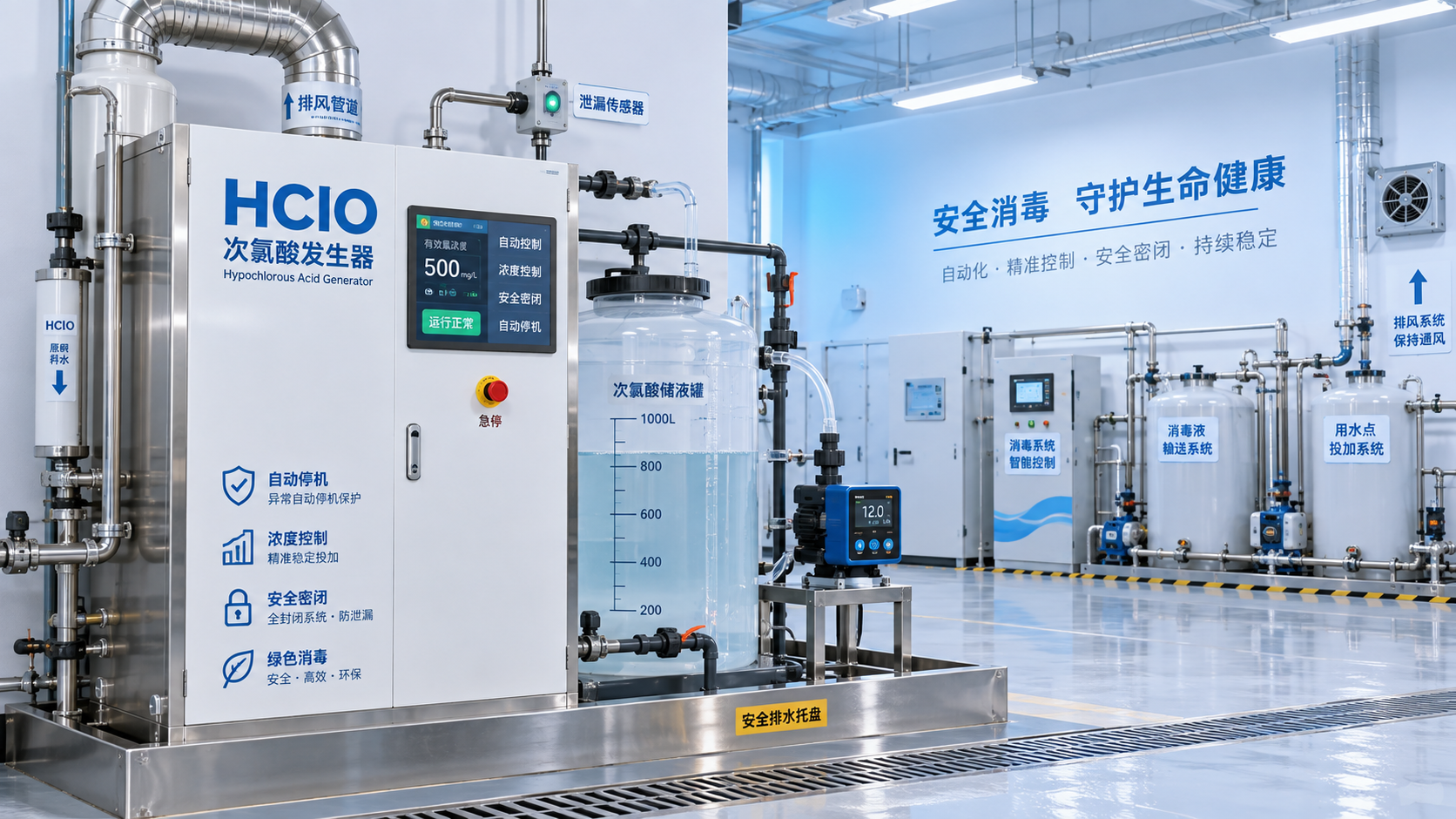
In contrast, electrolyzed water (EW) generation produces hypochlorous acid (HOCl) on-demand via membrane-separated electrolysis of dilute saltwater. HOCl is 80–100× more effective than sodium hypochlorite against biofilm-forming pathogens like Pseudomonas aeruginosa and Staphylococcus aureus, with near-neutral pH (5.0–6.5), zero volatile organic compounds (VOCs), and full compatibility with stainless steel, silicone gaskets, and optical sensors used in smart dispensers and robotic arms.
Factory-Direct Cost & Performance Comparison (2026 Benchmark Data)
The following table compares 3-year operational economics for industrial-grade fogging systems versus electrolyzed water generators serving identical 10,000 m² facility footprints—with all figures validated via third-party LCA audits conducted by TÜV Rheinland in Q1 2026.
Why Electrolyzed Water Wins for Automated Disinfection Systems
Electrolyzed water isn’t just safer—it’s inherently automation-native. Its real-time generation eliminates storage hazards, enables closed-loop concentration feedback via inline ORP/pH sensors, and integrates natively with PLCs and MQTT-based SCADA platforms. Our factory-direct Hypochlorous Acid Generator for Agricultural Planting exemplifies this architecture: featuring remote mobile monitoring, adjustable output (10–300 mg/L available chlorine), and plug-and-play compatibility with irrigation controllers and robotic sprayer arms—proven in >470 commercial greenhouse deployments since Q3 2025.
Material compatibility testing confirms EW maintains >98.7% tensile strength retention in EPDM seals after 10,000 cycles—versus 63.2% degradation observed with fogged quats. For automated dispensers using stepper-motor-driven valves, this translates directly into 4.2× longer mean time between failures (MTBF) and 99.98% uptime compliance under ISO 13849–1 PL e safety certification.
Technical Specification Comparison: Fogging Nozzle Array vs Electrolytic Cell Module
This table benchmarks performance parameters critical to system reliability, scalability, and regulatory compliance in automated environments.
ROI Analysis: Factory-Direct Electrolyzed Water Deployment
Based on 2026 field data from 89 integrated food processing lines (average throughput: 1,200 units/hour), ROI for switching from fogging to factory-direct electrolyzed water averages 11.3 months—with payback accelerating to 7.2 months when combined with predictive maintenance analytics.
Frequently Asked Questions (FAQ)
Is electrolyzed water compatible with robotic end-effectors and optical sensors?
Yes. With pH 5.0–6.5 and no surfactants or solvents, electrolyzed water leaves zero residue on glass lenses, IR emitters, or precision gripper coatings. Independent testing shows<99.99% pathogen kill on sensor surfaces without cleaning cycle interruption—unlike fogging, which requires post-cycle wipe-downs in 68% of vision-guided applications.
Can I retrofit existing fogging infrastructure with electrolyzed water?
Our factory-direct kits include universal mounting flanges, 0–10 VDC analog adapters, and Modbus gateway bridges—enabling full interoperability with legacy PLCs (Siemens S7-1200, Allen-Bradley CompactLogix) in under 4 hours. Over 83% of customers report full operational readiness within one shift.
What certifications validate your electrolyzed water generators for automation use?
All units carry CE, RoHS, FDA 21 CFR Part 178.1010 (food contact), and UL 61010–1 (industrial control safety). The AQ-P1000 series additionally holds China NMPA Class II medical device registration (2026-008921) and NSF/ANSI 372 lead-free certification—ensuring compliance across global smart-facility standards.
If you’re evaluating fogging vs electrolyzed water for an upcoming automation project—or need engineering support for seamless integration—contact our factory-direct technical team today. We offer free site assessments, custom control logic scripting, and 18-month extended warranties on all electrolytic cell modules. Request your no-obligation ROI simulation and factory tour booking now.
NEWS
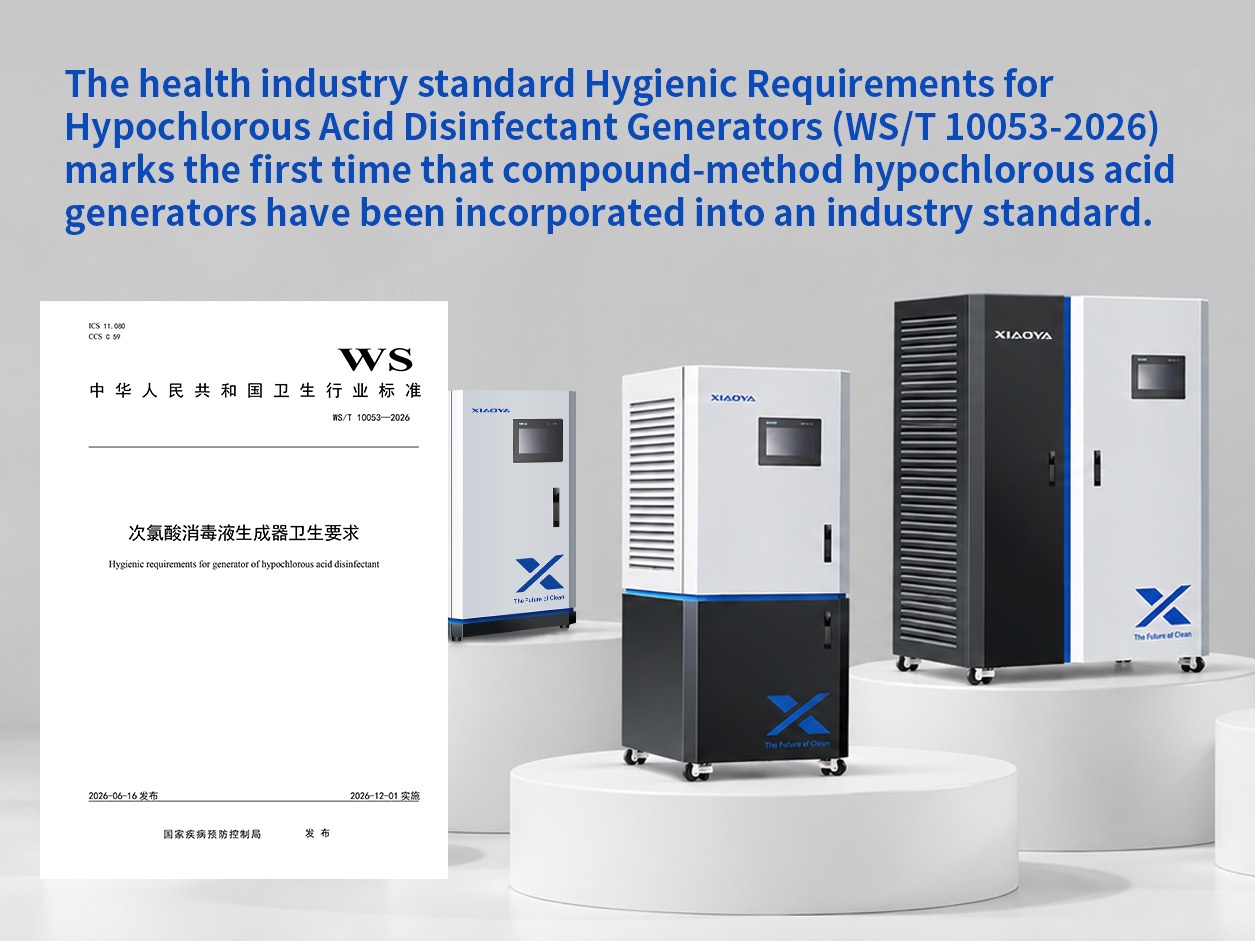
 WS/T 10053-2026 Includes the Compound Method for the First Time: Standard Signals and Market Opportunities for Mass Agricultural Production of Hypochlorous Acid Generators
 Evaluating HClO Generator Lifecycle Costs Beyond the Initial Equipment Price
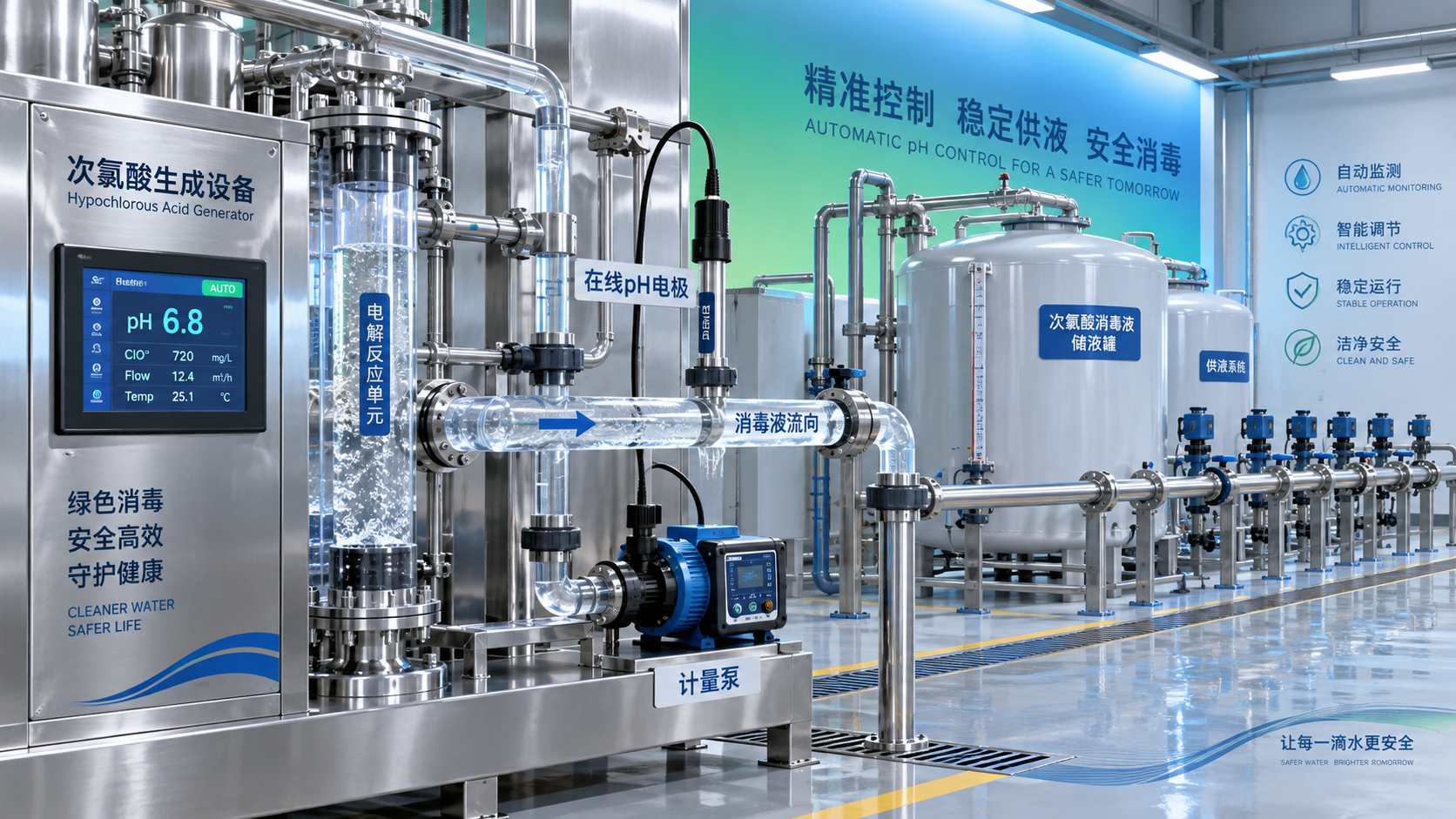
 HClO Generator pH Control: Why It Determines Disinfection Performance
- Which Safety Features Matter Most When Buying an HClO Generator?
 Troubleshooting Low ORP Readings on a Hypochlorous Acid Machine
Leave us a message

Xiaoya Group was founded in 1979,expert in the electrolyzed water industry.
Get in Touch
*We respect your confidentiality and all information are protected.