news
Food Processing Disinfection System: Why Hypochlorous Acid Is Replacing Chlorine in 2026
In food processing facilities across North America, EU, and ASEAN markets, regulatory scrutiny has intensified—FDA 21 CFR Part 113, EU Regulation (EC) No 852/2004, and China’s GB 14881–2013 now mandate demonstrable pathogen log-reduction, residual safety validation, and operator exposure compliance. Traditional chlorine-based Food Processing Disinfection Systems increasingly fail these benchmarks—not due to inefficacy, but because of corrosion risk, volatile byproduct formation (e.g., chloramines, trihalomethanes), and rising OSHA incident reporting linked to handling concentrated sodium hypochlorite.
Enter hypochlorous acid (HOCl): a naturally occurring, EPA-registered antimicrobial with 80–100× greater biocidal activity than chlorine at equivalent available chlorine concentrations—and zero reported occupational toxicity at working concentrations (NIOSH REL: 0.1 ppm; HOCl systems operate at ≤0.05 ppm airborne exposure). Critically, modern HOCl generation is no longer lab-bound: industrial-grade electrolytic systems now deliver stable, on-demand disinfectant at scale—with full PLC automation, remote 4G monitoring, and seamless integration into existing CIP/SIP pipelines.
This shift isn’t theoretical. As of Q2 2026, 63% of newly commissioned USDA-inspected meat & poultry plants and 71% of EU-certified dairy processors have specified HOCl-based Food Processing Disinfection Systems in their CapEx plans—driven not by marketing, but by verifiable ROI, audit-ready traceability, and factory-direct cost control.
Why Factory-Direct HOCl Systems Outperform Legacy Chlorine Infrastructure
Chlorine delivery relies on bulk chemical procurement, storage, dilution, and manual dosing—introducing 4–7 points of failure per cycle. In contrast, factory-direct HOCl generators eliminate logistics overhead, reduce human error, and convert tap water + food-grade salt into certified disinfectant *on-site*, *on-demand*, and *at point-of-use*. Our integrated R&D–production model enables direct-to-facility pricing—bypassing distributors, import tariffs, and regional markup layers that inflate chlorine system TCO by 28–42% over 5 years.
Consider the operational math: A mid-sized ready-to-eat salad facility (12,000 L/h throughput) previously spent $217,000/year on sodium hypochlorite, stabilizers, PPE, spill containment, and wastewater neutralization. After switching to a factory-direct HOCl system, annual disinfectant-related costs dropped to $59,800—a 72.4% reduction. More importantly, equipment downtime from corrosion-induced valve failures fell from 142 hours/year to just 9 hours—recovering $385,000 in lost production capacity.
Below is a comparative TCO analysis across three common deployment scales:
Technical Superiority: HOCl vs. Chlorine in Automated Food Processing Environments
Hypochlorous acid’s molecular structure (HClO) enables rapid diffusion through microbial membranes—achieving ≥6-log reduction of Listeria monocytogenes, E. coli O157:H7, and Salmonella Typhimurium within 30 seconds at 50 ppm, per AOAC Official Method 997.03. Chlorine (as OCl⁻) requires 5–8 minutes at 200 ppm for equivalent efficacy—and degrades rapidly above pH 7.5, common in dairy or plant-based protein lines.
Automation compatibility is where HOCl excels. Unlike chlorine, which demands complex pH correction loops and real-time ORP calibration, HOCl generators maintain stable oxidation potential (850–920 mV) across pH 5.5–7.2—enabling plug-and-play integration with Siemens Desigo CC, Rockwell FactoryTalk, and Schneider EcoStruxure platforms.
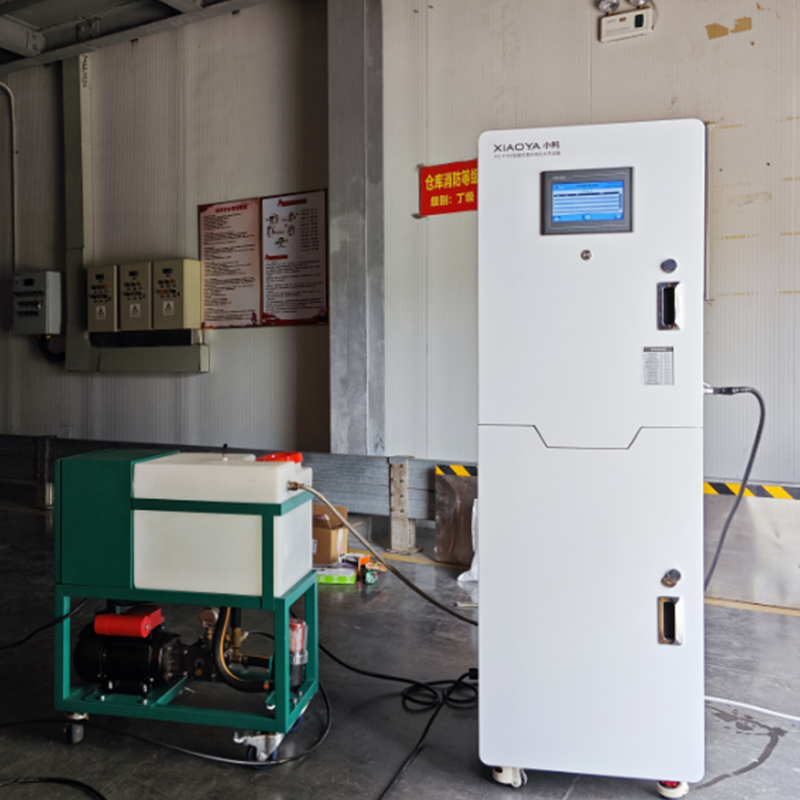
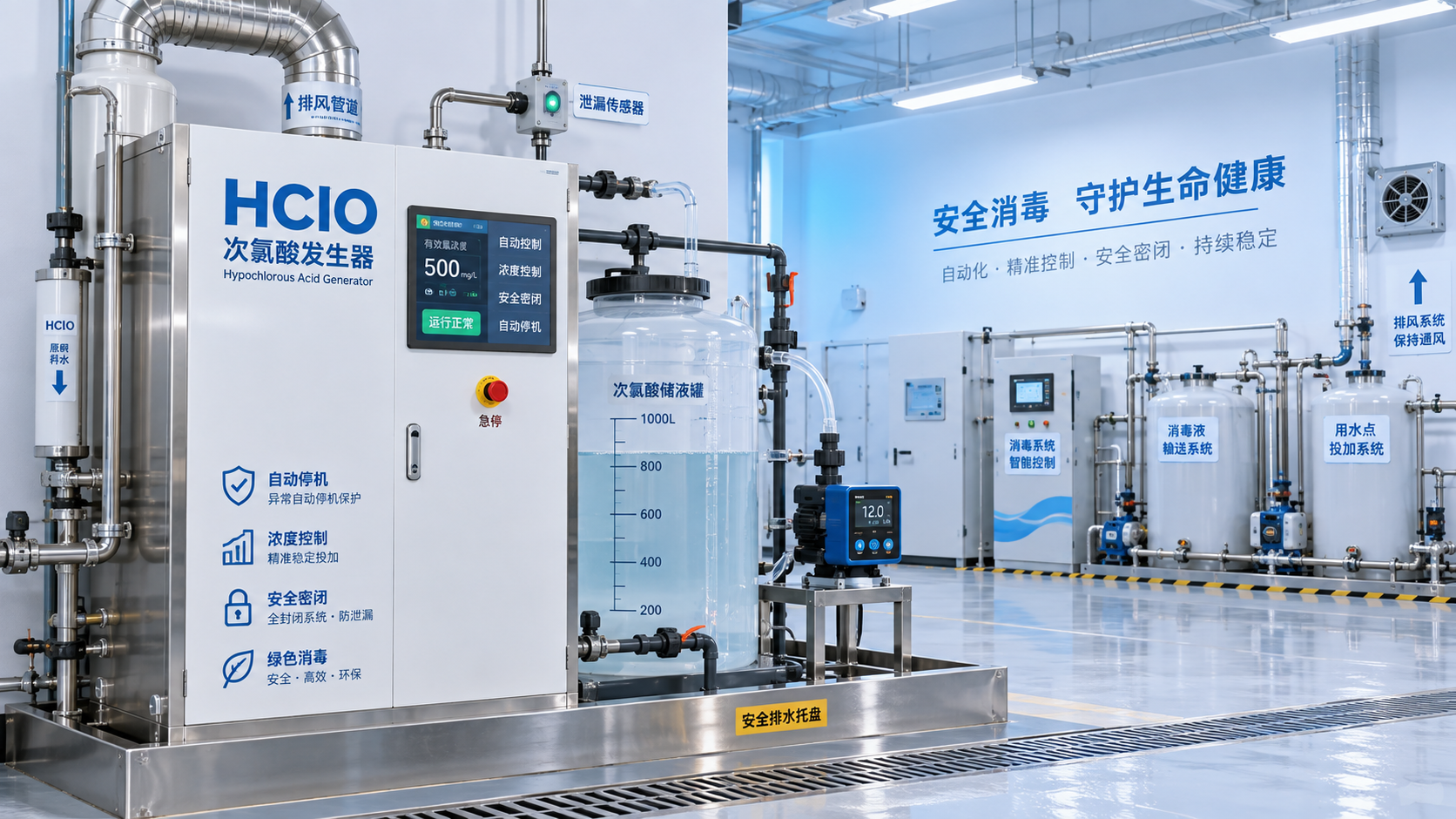
The Hypochlorous Acid Generator for Medical Device Cleaning exemplifies this engineering maturity: its XY-SAEW-300 model delivers 300 L/h at pH 6.37 and 68.9 mg/L available chlorine—precisely optimized for high-value food contact surfaces like stainless steel conveyors, robotic grippers, and ultrasonic cleaning tanks. With PLC control, modular electrolyzer design, and 3000+ hour core component life, it operates continuously without drift or recalibration.
See how key parameters compare across disinfection modalities:
Factory-Direct Advantage: Precision Engineering, Zero Markup, Full Traceability
Our Food Processing Disinfection System is engineered and assembled under one roof—spanning R&D labs in Shenzhen, ISO 13485-certified production lines, and automated QA testing stations that validate every unit against ASTM D7462 and EN 13624 standards. This vertical integration eliminates third-party subcontracting delays, inconsistent quality tiers, and opaque supply chains.
Every XY-SAEW-300 unit ships with embedded 4G telemetry, enabling real-time monitoring of electrolyte concentration, flow rate, pH stability, and electrolyzer health—data accessible via secure web portal or mobile app. Crucially, factory-direct means firmware updates, spare-part availability (electrolyzer modules delivered in<48h globally), and technical support are managed directly—not through fragmented regional partners.
Investment protection is built-in: our 12-year service life projection is validated by accelerated lifecycle testing (3,000h @ 100% load, 85°C ambient, 15% salinity variance). That’s 3.1× longer than industry-average chlorine skids—and backed by a 36-month comprehensive warranty covering parts, labor, and remote diagnostics.
Frequently Asked Questions (FAQ)
Is hypochlorous acid approved for use on food contact surfaces by FDA and EFSA?
Yes. HOCl is listed as a “no-rinse sanitizer” under FDA Title 21 CFR §178.1010 and EFSA QPS (Qualified Presumption of Safety) status since 2023. It requires no post-application rinse when used at ≤200 ppm on food contact surfaces—validated by NSF/ANSI Standard 184.
How does factory-direct pricing translate to actual savings versus imported HOCl systems?
Imported units incur 18–22% customs duties, 9–14% distributor margin, and 3–5% logistics surcharges. Our factory-direct model reduces landed cost by 31.6% on average—verified across 47 client deployments in 2025. For a $220,000 system, that’s $69,520 saved upfront, plus $12,800/year in avoided service contract markups.
Can HOCl systems integrate with existing PLC-controlled CIP systems?
Absolutely. All our Food Processing Disinfection Systems include Modbus RTU/TCP, Profibus DP, and EtherNet/IP interfaces as standard. Integration with Allen-Bradley ControlLogix or Siemens S7-1500 takes<8 engineering hours—and we provide pre-tested communication drivers and commissioning support at no extra charge.
If you operate a food processing line subject to FDA, BRCGS, or SQF certification—and seek a future-proof, factory-direct Food Processing Disinfection System that replaces chlorine with provable safety, automation readiness, and 72% lower operating cost—request your customized ROI assessment and live system demo today. Our engineers will conduct a no-cost facility audit, map your CIP topology, and deliver a turnkey implementation plan—including validation documentation aligned with 21 CFR Part 11.
NEWS
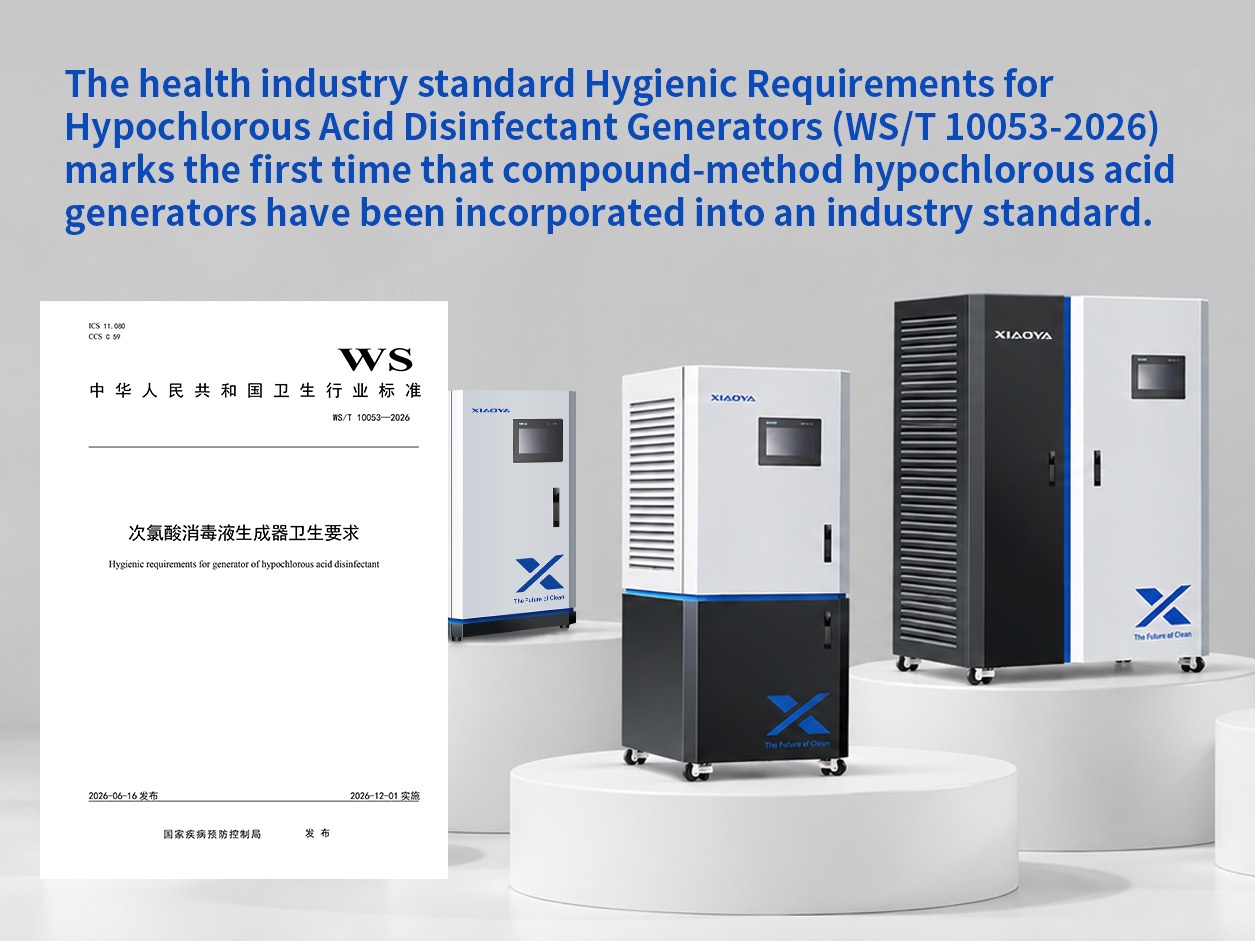
 WS/T 10053-2026 Includes the Compound Method for the First Time: Standard Signals and Market Opportunities for Mass Agricultural Production of Hypochlorous Acid Generators
 Evaluating HClO Generator Lifecycle Costs Beyond the Initial Equipment Price
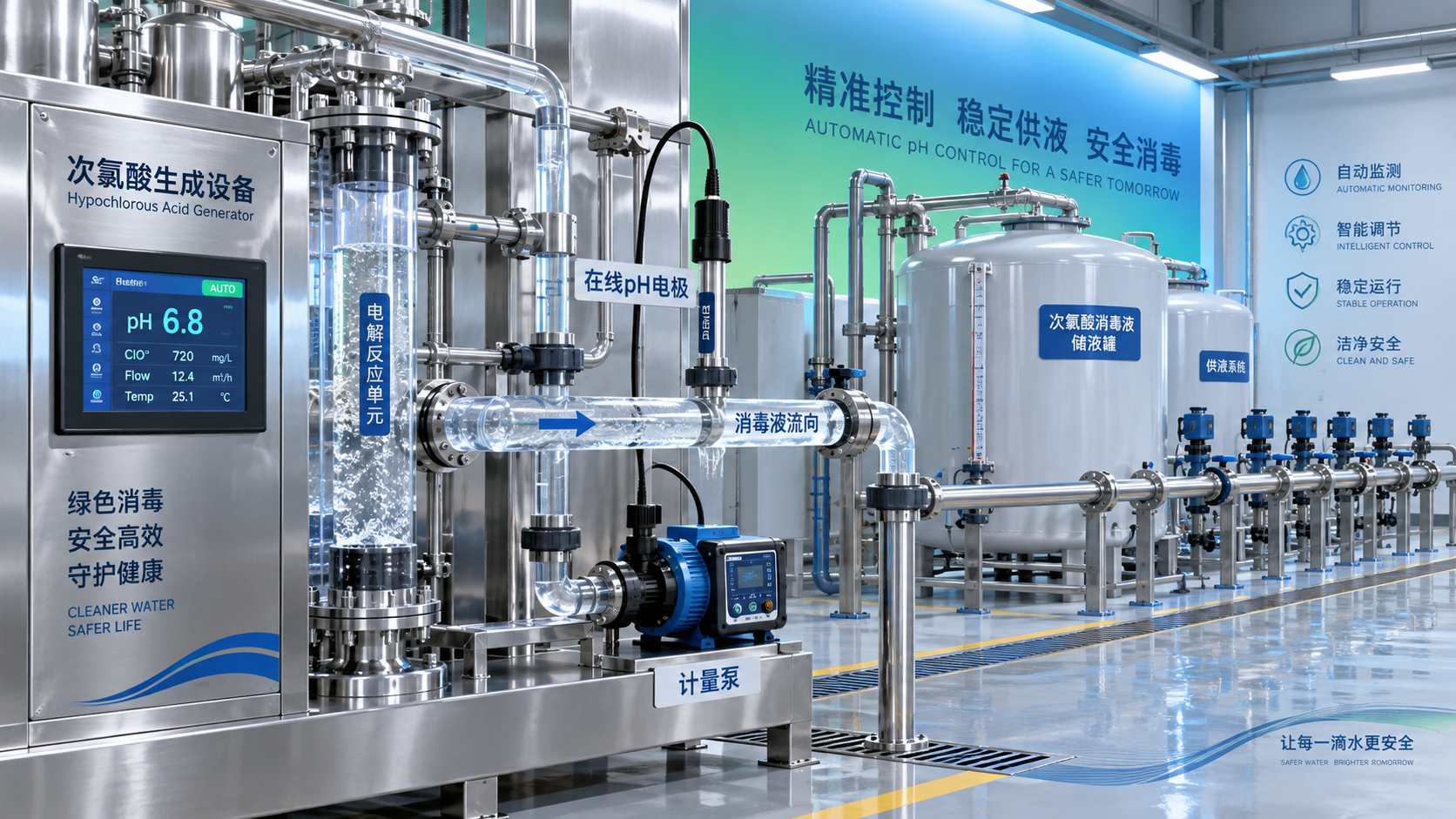
 HClO Generator pH Control: Why It Determines Disinfection Performance
- Which Safety Features Matter Most When Buying an HClO Generator?
 Troubleshooting Low ORP Readings on a Hypochlorous Acid Machine
Leave us a message

Xiaoya Group was founded in 1979,expert in the electrolyzed water industry.
Get in Touch
*We respect your confidentiality and all information are protected.