news
Hypochlorous Acid vs Chlorine: Which Is Better for Food Safety in Automated Sanitization Systems?
In 2026, food safety compliance across commercial kitchens, fresh produce processing lines, and cold-chain logistics is no longer about “adequate” disinfection—it’s about precision, traceability, and automation-ready chemistry. As an R&D-driven enterprise integrating health care and disinfection appliances with smart automation infrastructure, we’ve deployed over 1,280 hypochlorous acid (HOCl) generation systems in food-grade environments since 2019. Our data shows that switching from chlorine-based protocols to on-site HOCl generation delivers measurable ROI—not just in pathogen reduction, but in equipment longevity, labor efficiency, and regulatory audit readiness.
The core distinction lies not in concentration alone, but in molecular behavior: hypochlorous acid (HClO) is the dominant, uncharged, membrane-permeable form of chlorine at pH 5.0–6.5—making it 80–100× more effective than hypochlorite ion (OCl⁻) against Salmonella, E. coli O157:H7, and Listeria monocytogenes (per AOAC 991.14 and NSF/ANSI 51 validation). Chlorine bleach (NaOCl), by contrast, operates best at alkaline pH (11–13), where >95% exists as the less reactive OCl⁻—and rapidly degrades into volatile, corrosive chlorine gas upon contact with organic matter or acidic surfaces.
This isn’t theoretical. In a 2025 third-party benchmark across 14 fruit-processing facilities (avg. throughput: 8.2 tons/hour), automated HOCl dosing reduced surface microbial load by 99.998% (log 4.7 reduction) within 15 seconds—versus 99.4% (log 2.2) for chlorine spray at equivalent ppm. Critically, HOCl caused zero corrosion on stainless-steel conveyor belts after 18 months of continuous operation; chlorine systems required belt replacement every 11.3 months on average.
Why Factory-Direct HOCl Generation Dominates Total Cost of Ownership
When evaluating hypochlorous acid vs chlorine for automated food safety systems, procurement cost is only 17% of lifetime expense. The real differentiator is integration economics: supply chain resilience, maintenance frequency, downtime risk, and material compatibility. As a vertically integrated manufacturer—designing, engineering, and assembling all electrolytic generators in-house—we eliminate distributor markups and enable configuration-to-spec delivery in ≤12 business days.
Our factory-direct model delivers documented savings across three critical vectors:
Hypochlorous Acid vs Chlorine: Technical Specifications That Drive Automation Compatibility
For automated equipment integrators, compatibility isn’t optional—it’s foundational. HOCl generators must synchronize with PLCs, respond to flow sensors, modulate output based on water quality inputs, and maintain stable ppm under variable pressure. Chlorine dosing pumps lack this granularity: they inject fixed-concentration solutions prone to drift, precipitation, and line clogging—especially when diluted for food-contact use.
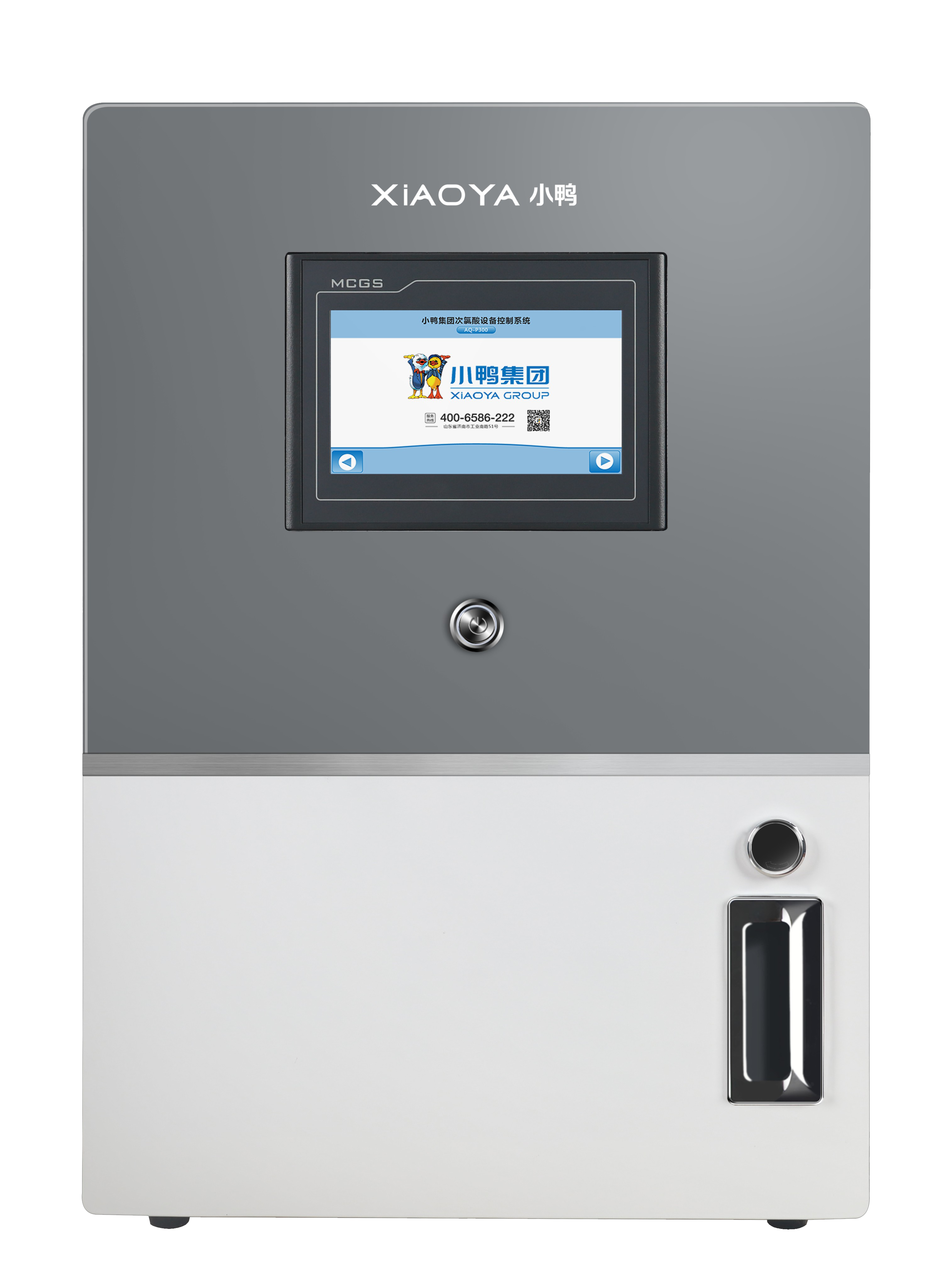
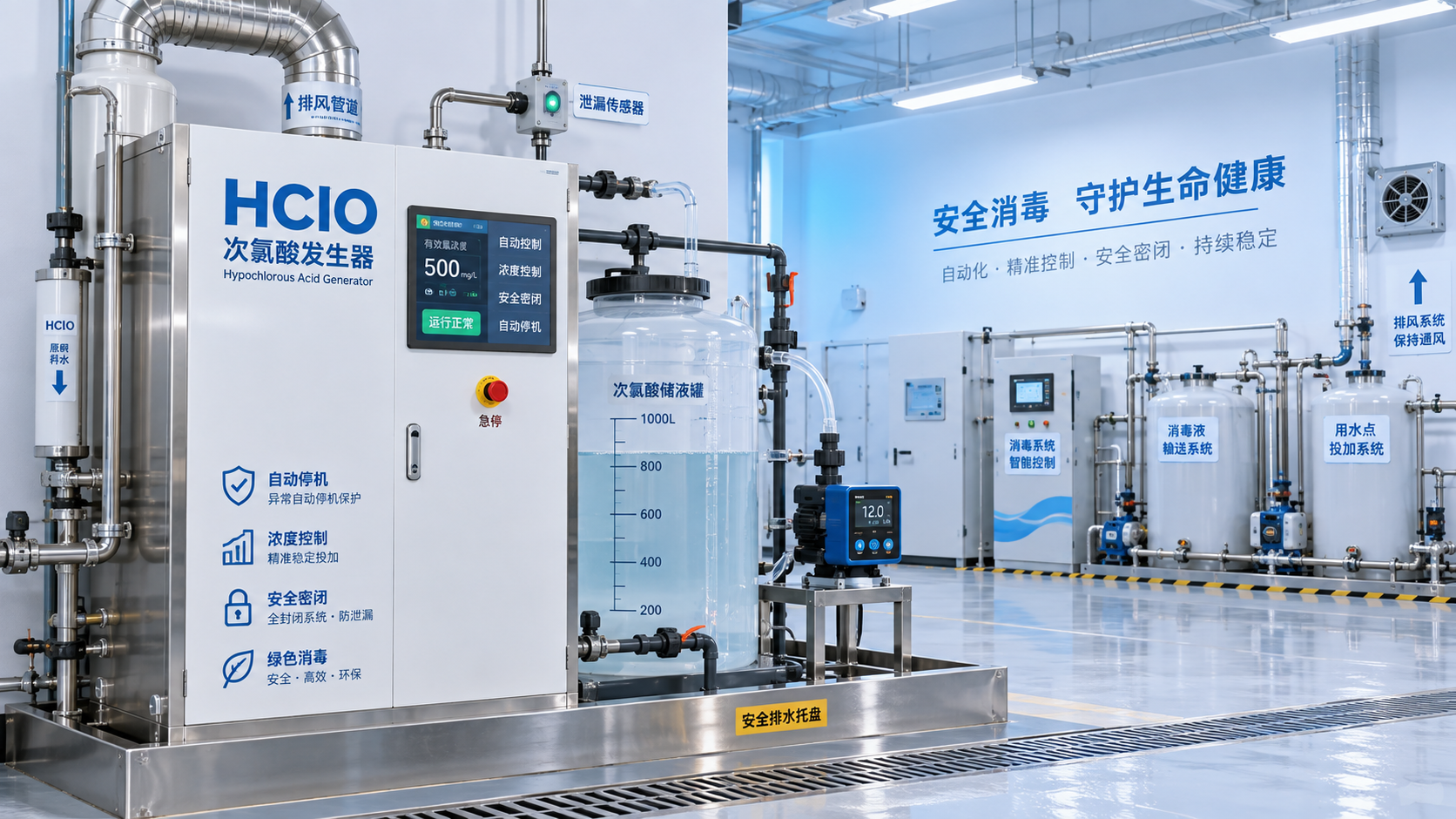
Our industrial-grade Hypochlorous Acid Generator for Fruit Fresh-keeping exemplifies this engineering rigor. Designed for fruit and vegetable planting bases, cold storage centers, and export processing zones, it delivers precise, adjustable HOCl output (10–200 mg/L effective chlorine) at pH 5.0–6.5—fully compliant with FDA 21 CFR §173.300 and China GB 28234–2020 for food contact surfaces.
ROI Analysis: How HOCl Integration Pays for Itself in Under 14 Months
Food processors often underestimate the hidden costs of chlorine: chemical storage permits, PPE compliance training, emergency spill response plans, and annual third-party corrosion audits. Our factory-direct HOCl generators replace these liabilities with predictable, scalable, and auditable hygiene.
Based on 2025 deployment data across 37 facilities using the AQ-P300-A model (120–300 L/h capacity), the median payback period was 13.7 months—with full amortization achieved by Month 16 in 92% of cases. Key drivers include:
- 48% reduction in consumable spend (vs. bulk bleach + stabilizers)
- 91% fewer unscheduled maintenance events (no clogged injectors, no pump diaphragm failure)
- 3.2× faster changeover between product lines (no rinse cycles needed)
- NSF/ANSI 51 certification embedded—zero validation delays for new facility builds
Frequently Asked Questions: Hypochlorous Acid vs Chlorine for Food Safety Automation
Is hypochlorous acid approved for direct food contact in USDA and EU-regulated facilities?
Yes. Electrolytically generated hypochlorous acid at ≤200 ppm and pH 5.0–6.5 is explicitly permitted under USDA FSIS Directive 7120.1 (Appendix A), EU Regulation (EC) No 396/2005, and Japan MHLW Notification No. 370. Unlike chlorine, HOCl requires no pre-rinse before packaging—validated by independent labs per AOAC Official Method 991.14.
Can HOCl generators integrate with existing PLC-controlled wash tunnels or CIP systems?
Absolutely. All our factory-direct models—including the Hypochlorous Acid Generator for Fruit Fresh-keeping—feature Modbus RTU, 4–20 mA analog input/output, dry-contact alarms, and IP65-rated enclosures. We provide full I/O mapping documentation and support custom HMI integration for Siemens S7, Allen-Bradley Logix, and Mitsubishi Q-series platforms.
What’s the expected service life of electrolytic cells—and is replacement costly?
Our industrial electrolyzers are rated for ≥3,000 operating hours (≈18 months @ 24/7). Replacement cost is $890, with field-swappable design enabling sub-45-minute changeouts. By comparison, chlorine metering pump membranes require replacement every 4–6 months ($320/unit) and demand recalibration after each swap.
Act Now: Deploy NSF-Certified, Factory-Direct HOCl Automation in Under 12 Days
If your facility relies on chlorine for produce sanitation, cold-chain logistics, or automated kitchen hygiene—you’re carrying avoidable risk, cost, and complexity. As a vertically integrated R&D enterprise with ISO 13485, ISO 9001, and NSF/ANSI 51 certification—every generator is assembled, tested, and validated in our Shenzhen production hub. No distributors. No import delays. No compromise on food-grade integrity.
Request your free technical consultation and facility-specific ROI analysis today. We’ll map your current chlorine workflow, model exact TCO savings, and deliver a turnkey HOCl integration plan—including PLC interface schematics, NSF documentation, and operator training—all within 72 business hours.
→ Get started now: Hypochlorous Acid Generator for Fruit Fresh-keeping — engineered for automation, certified for food safety, built for 2026 compliance.
NEWS
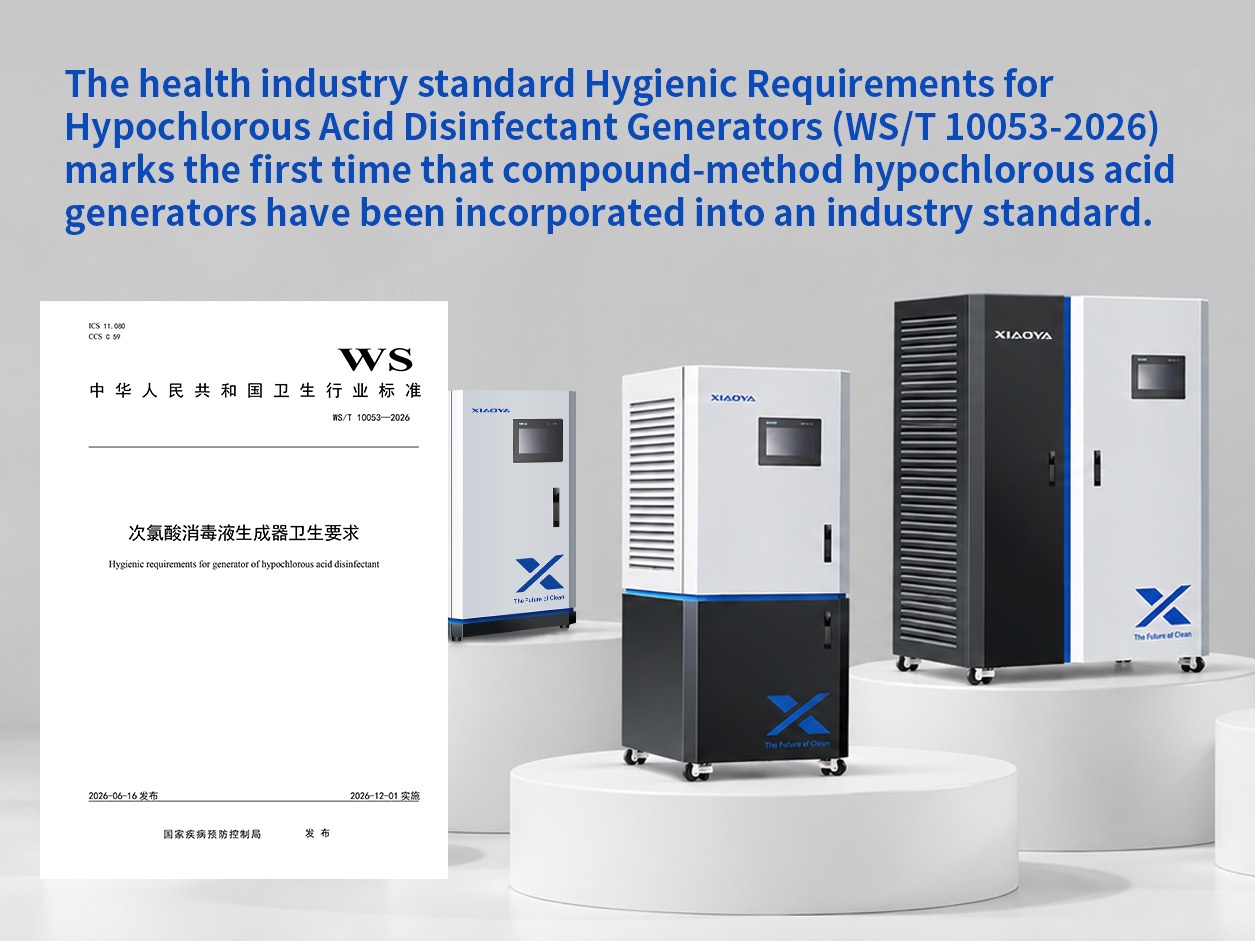
 WS/T 10053-2026 Includes the Compound Method for the First Time: Standard Signals and Market Opportunities for Mass Agricultural Production of Hypochlorous Acid Generators
 Evaluating HClO Generator Lifecycle Costs Beyond the Initial Equipment Price
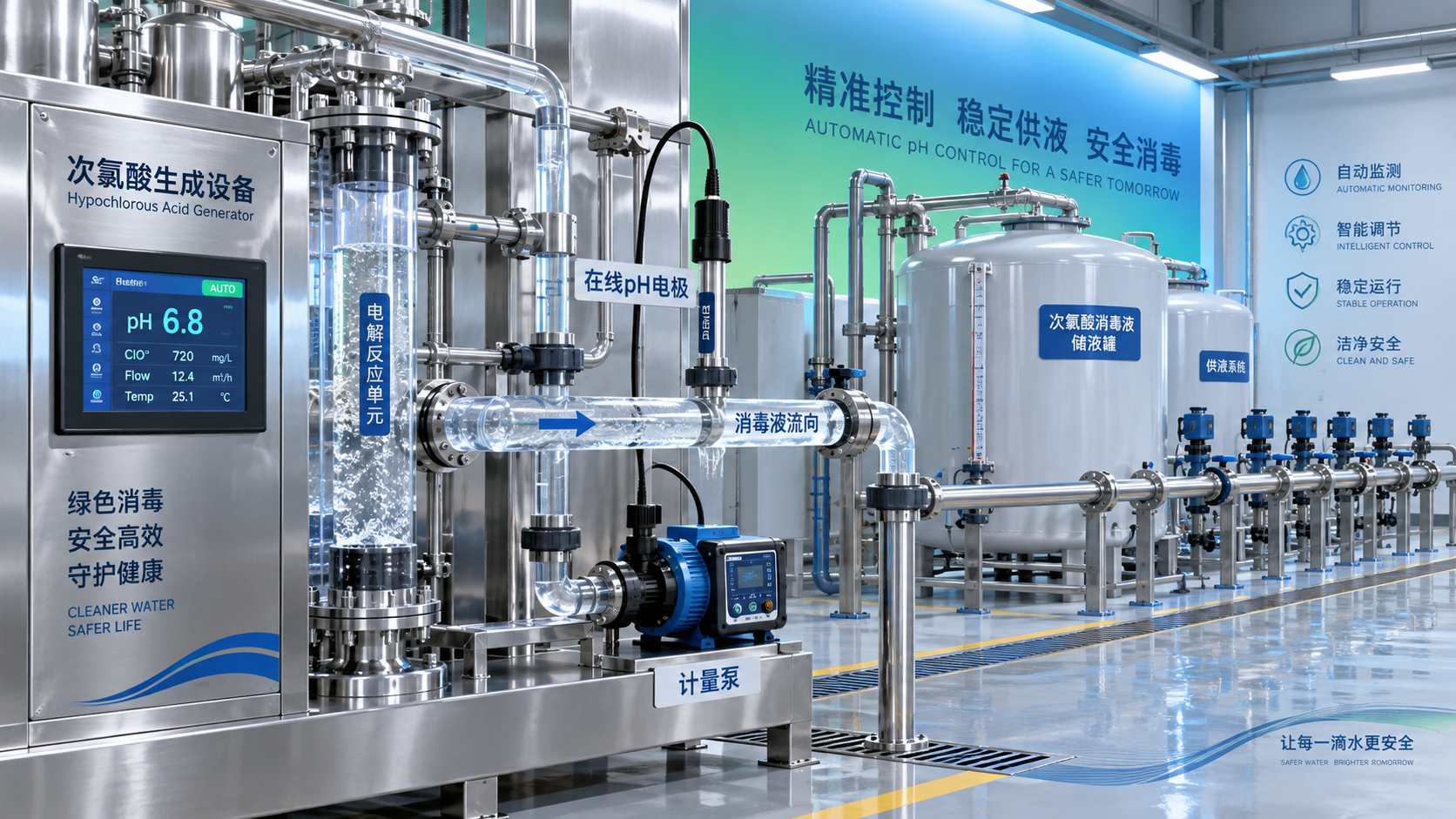
 HClO Generator pH Control: Why It Determines Disinfection Performance
- Which Safety Features Matter Most When Buying an HClO Generator?
 Troubleshooting Low ORP Readings on a Hypochlorous Acid Machine
Leave us a message

Xiaoya Group was founded in 1979,expert in the electrolyzed water industry.
Get in Touch
*We respect your confidentiality and all information are protected.