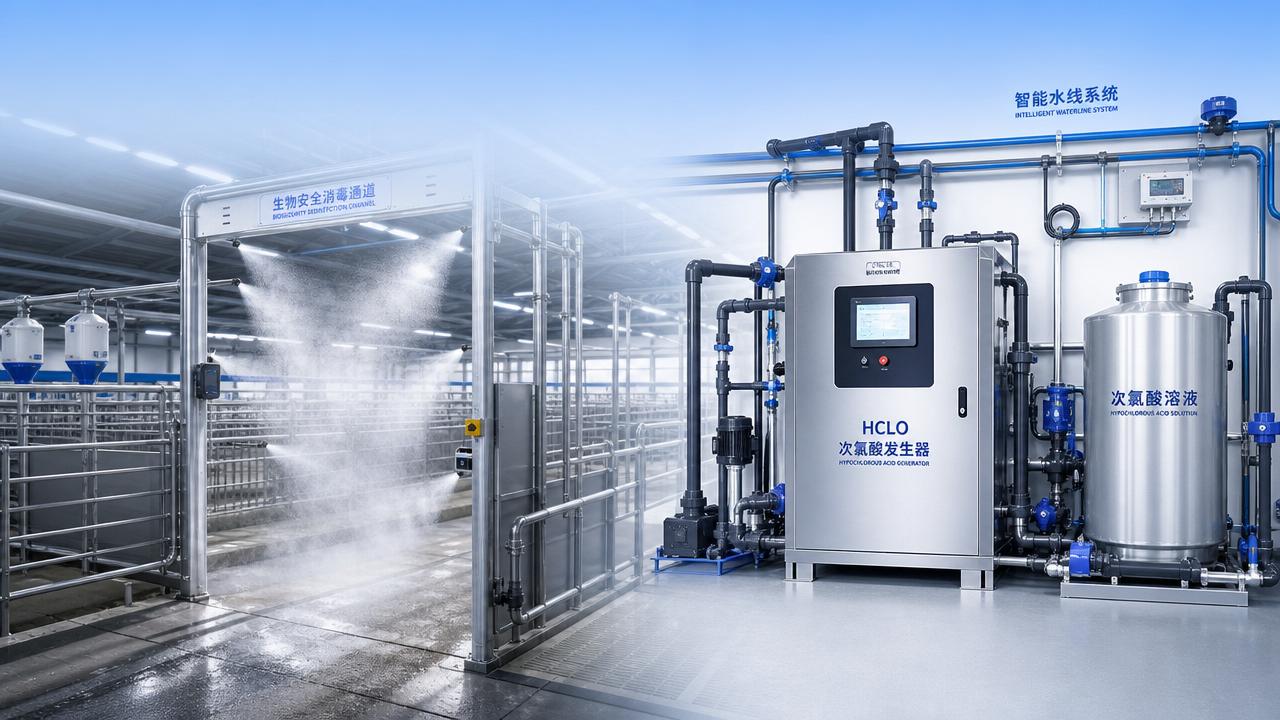
In modern livestock production, bio-security is no longer optional—it is essential for herd health, productivity, and sustainable growth. Livestock facilities are increasingly adopting hypochlorous acid (HClO) generators to strengthen daily disinfection, reduce pathogen spread, and support safer automated operations. As bio-security standards rise, these advanced systems are becoming a practical solution for farms seeking efficient, reliable, and scalable sanitation management.
Why livestock bio-security needs change by operating scenario
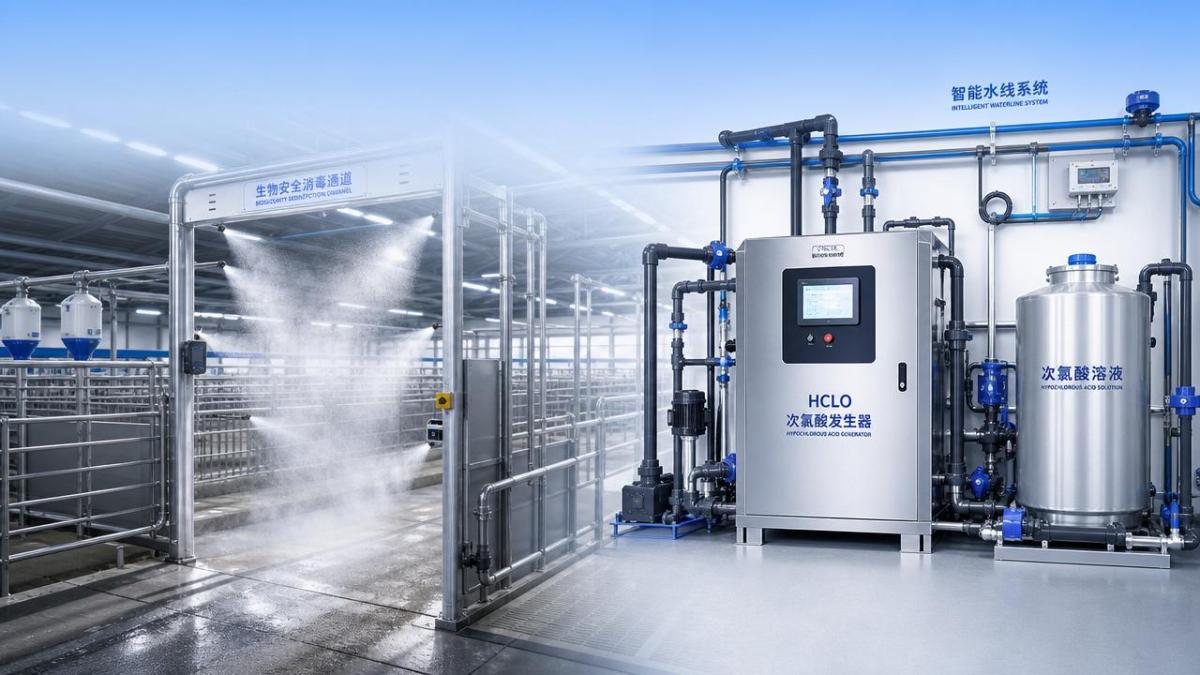
Livestock bio-security is not identical across all facilities.
Breeding barns, feeding areas, transport zones, and water lines face different contamination risks.
That is why hypochlorous acid generators matter in automated equipment planning.
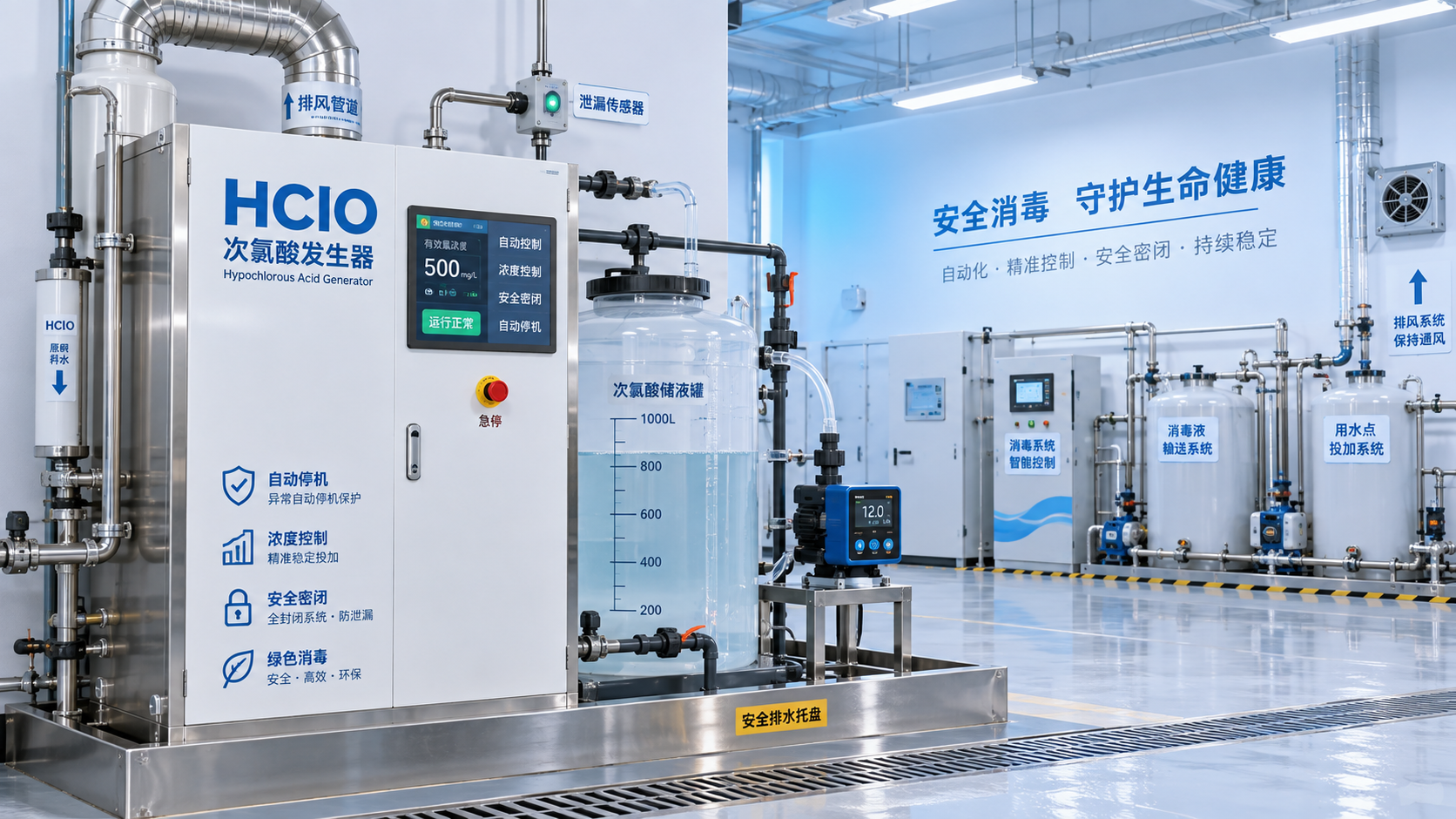
They deliver stable disinfectant output, simpler dosing, and repeatable sanitation cycles.
Which livestock settings benefit most from HClO generator deployment
High-density housing areas
Crowded housing increases contact surfaces, airborne droplets, and organic load.
In these settings, hypochlorous acid generators support frequent disinfection without complex chemical handling.
Automated spraying or misting systems can integrate generated HClO into daily routines.
Water delivery and drinking line sanitation
Water systems often hide biofilm, bacteria, and cross-contamination risks.
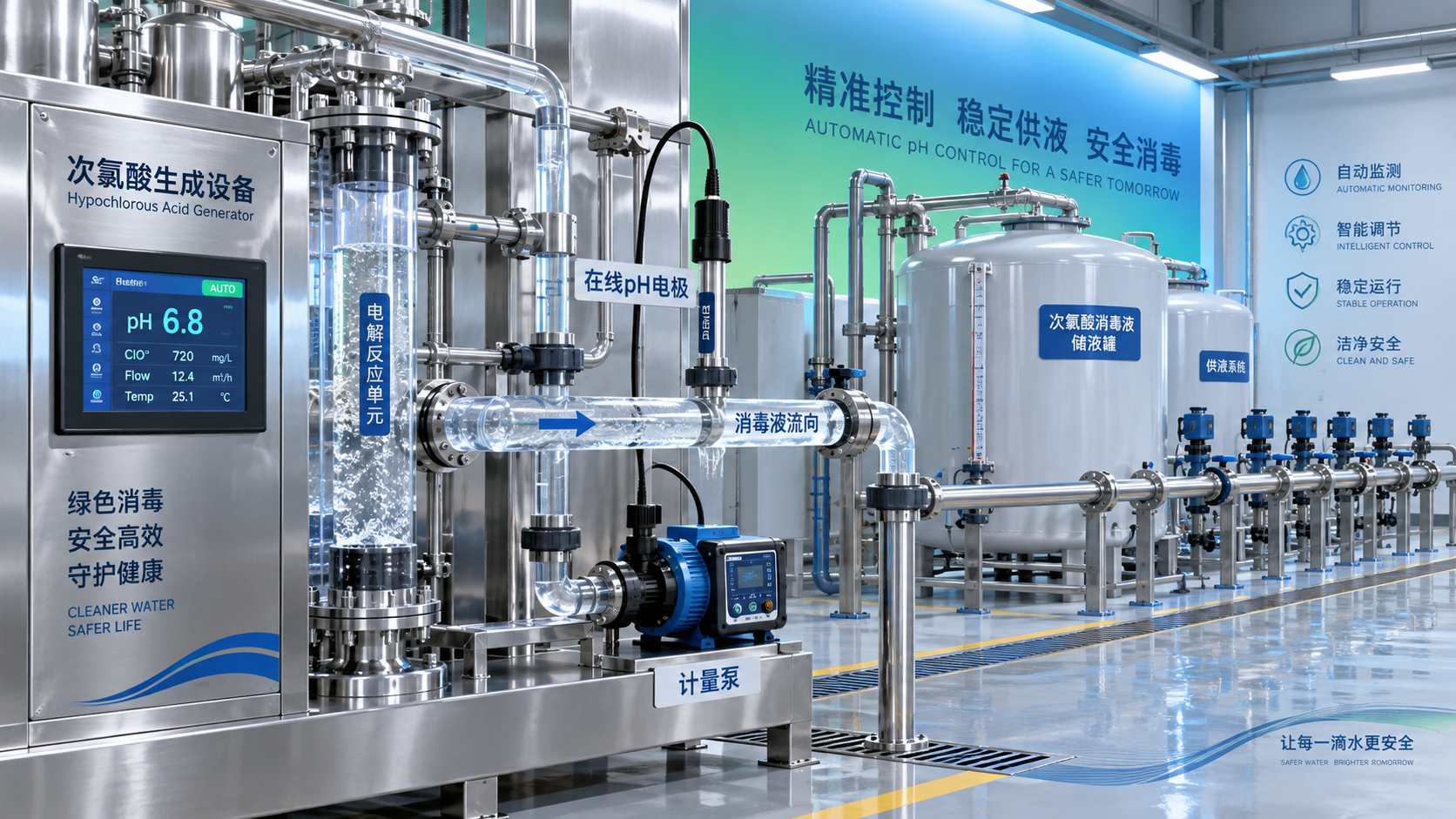
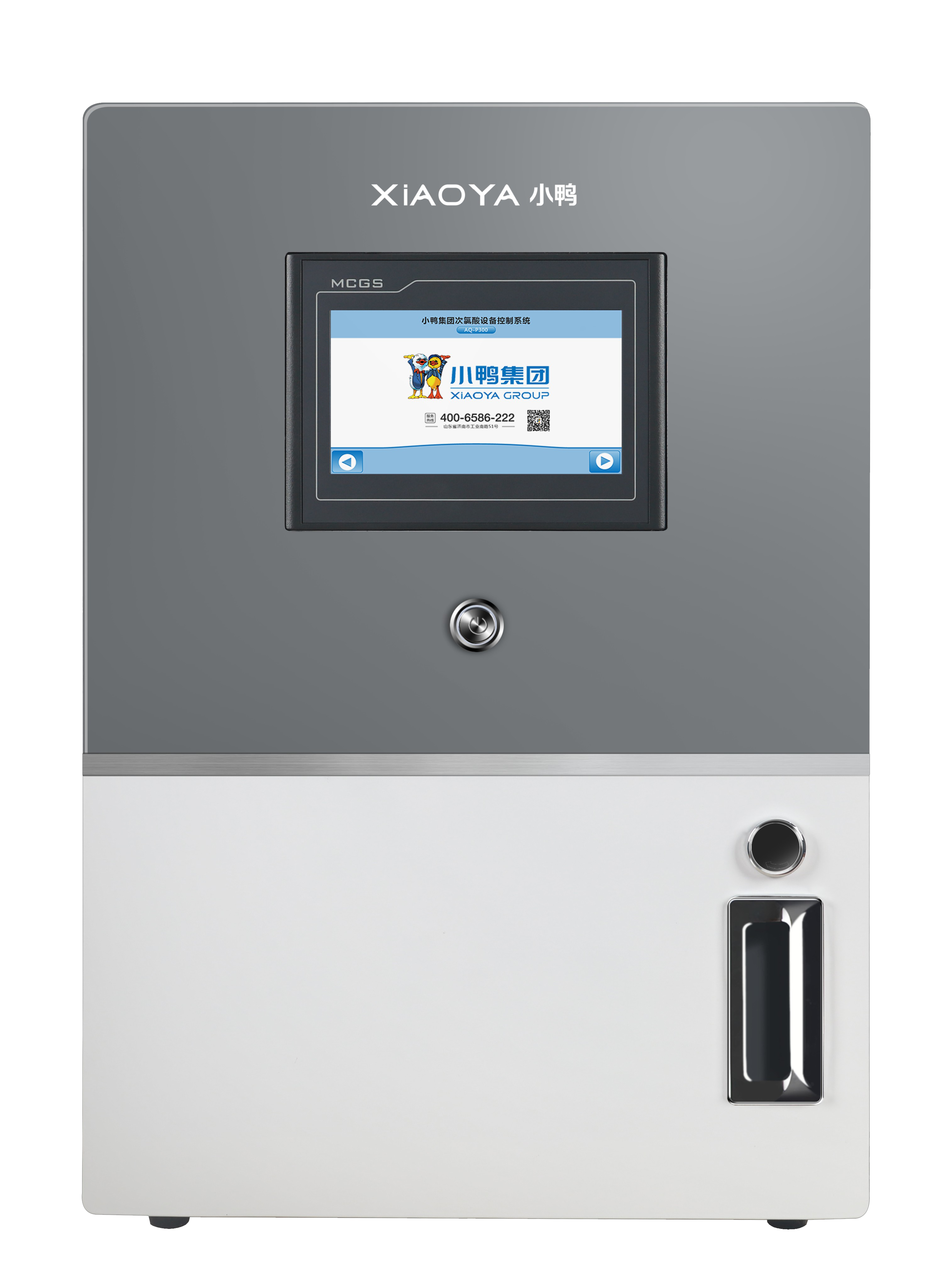
A practical option is the water supply system, designed for bactericidal support using hypochlorite.
Its production capacity reaches 60-100L/H, supporting continuous sanitation in automated livestock environments.
With effective chlorine concentration from 10-120mg/L and pH 5-6.5, it fits flexible disinfection needs.
Entry points, tools, and transfer routes
Vehicle wheels, boots, cages, and handling tools often transfer pathogens between zones.
HClO generator systems help standardize sanitation at entry barriers and equipment stations.
This is especially useful where manual disinfection produces uneven results.
How scenario requirements differ across livestock operations
What to check before matching an HClO generator to your site
- Confirm whether sanitation is area-based, water-based, or equipment-based.
- Check required disinfectant output against operating hours and cycle frequency.
- Review power conditions, such as 220V~/50Hz compatibility.
- Evaluate maintenance intervals and electrolyzer service life over 8000 hours.
- Match installation space with dimensions like 1050*302*400mm.
Common mistakes when upgrading livestock bio-security automation
One mistake is treating all livestock bio-security risks as surface cleaning issues.
Another is selecting equipment without considering water line contamination.
Some sites also overlook continuous operation needs, rated power, and tank capacity.
For automated sanitation, consistency matters more than occasional high-intensity treatment.
Next steps for stronger livestock bio-security planning
Start by mapping high-risk livestock zones and ranking sanitation frequency.
Then compare generator output, chlorine range, and integration suitability with existing automation.
Where water hygiene is critical, review solutions like a dedicated supply and disinfection platform.
A well-matched hypochlorous acid generator can improve livestock bio-security, reduce pathogen pressure, and support cleaner automated operations.
NEWS
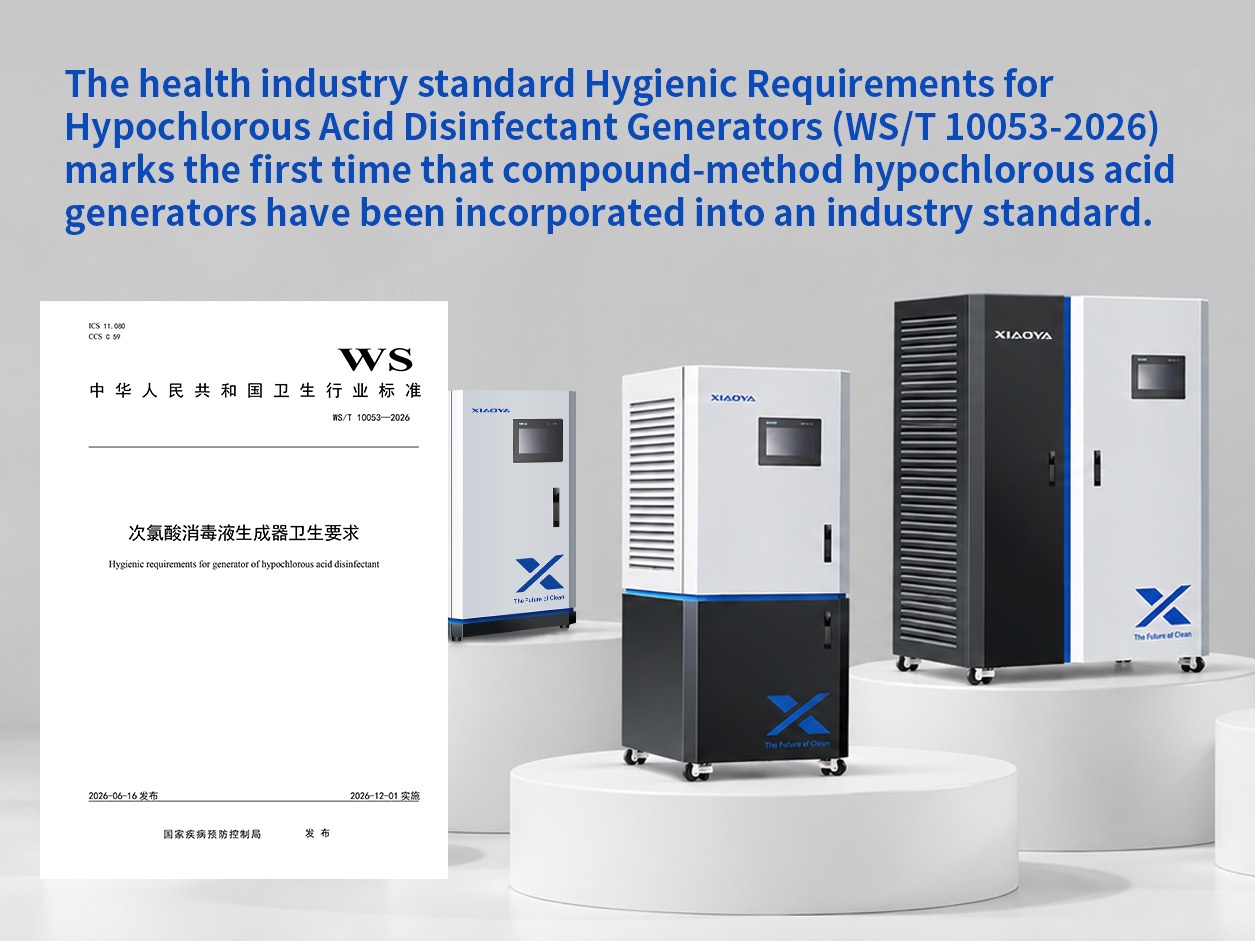
 WS/T 10053-2026 Includes the Compound Method for the First Time: Standard Signals and Market Opportunities for Mass Agricultural Production of Hypochlorous Acid Generators
 Evaluating HClO Generator Lifecycle Costs Beyond the Initial Equipment Price
 HClO Generator pH Control: Why It Determines Disinfection Performance
- Which Safety Features Matter Most When Buying an HClO Generator?
 Troubleshooting Low ORP Readings on a Hypochlorous Acid Machine
Leave us a message

Xiaoya Group was founded in 1979,expert in the electrolyzed water industry.
Get in Touch
*We respect your confidentiality and all information are protected.