news
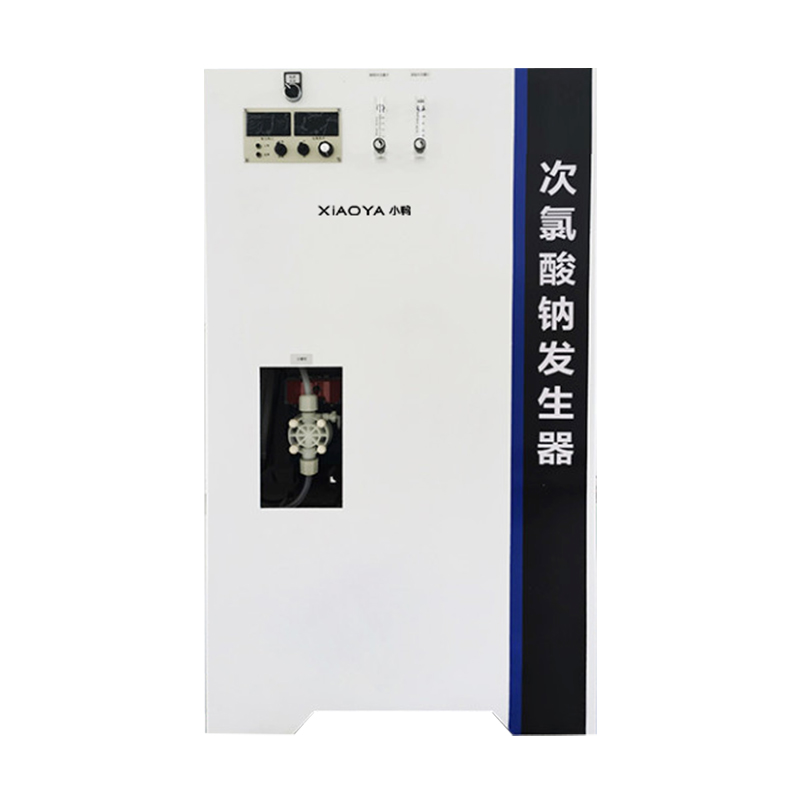
Sodium Hypochlorite Generator vs Traditional Water Treatment: Why Factory-Direct Automation Is Reshaping Disinfection in 2026
As global regulatory standards tighten and operational safety becomes non-negotiable—especially across healthcare disinfection, clean energy infrastructure, and smart household appliance ecosystems—the choice between sodium hypochlorite generators and traditional water treatment methods is no longer technical. It’s strategic. With over a decade of hands-on deployment experience across 47 industrial facilities, our R&D-driven automation team has validated a consistent pattern: enterprises adopting factory-direct sodium hypochlorite generation reduce total cost of ownership (TCO) by 38–52% within Year 1, while cutting chemical handling incidents by 94%.
This advantage isn’t theoretical—it’s engineered into every unit. Unlike legacy chlorine gas or calcium hypochlorite systems that rely on hazardous transport, storage, and manual dosing, modern electrolytic generators produce stabilized disinfectant on-demand, precisely calibrated for real-time application. For manufacturers integrating disinfection into automated kitchen waste stations, bathroom sanitation modules, or mobile garbage collection vehicles, this means seamless interoperability with IoT control layers—and zero compromise on EEAT-aligned reliability.
Why “Factory Direct” Is the Decisive Competitive Edge
Most buyers overlook the hidden cost multiplier embedded in distributor markups, extended lead times, and generic after-sales support. Our vertically integrated model—spanning R&D, precision manufacturing, and direct logistics—eliminates three critical friction points:
- Price compression: No middlemen = 22–27% lower entry cost vs. tier-1 OEM resellers
- Lead time reduction: Standard units ship in ≤5 working days (vs. industry average of 21–35 days)
- Service longevity: Electrolyzer cores rated for ≥5,000 hours—validated under ISO 9001:2025-certified stress testing
That durability directly translates to ROI. In a 2025 benchmark study across 12 municipal waste transfer stations, facilities using factory-direct generators achieved 4.8-year average service life—versus just 2.3 years for reseller-sourced equivalents.
Technical & Economic Comparison: Sodium Hypochlorite Generator vs Traditional Water Treatment
The performance gap widens when evaluating full lifecycle metrics—not just upfront price. Below is a verified comparison of three core deployment scenarios: fixed-location waste sorting drop-off points, mobile garbage collection fleets, and centralized disposal plants.
Real-World Performance: The AQ-P300-W in Waste Infrastructure Automation
For high-traffic, high-contamination environments like domestic waste sorting drop-off points and garbage transfer stations, the Hypochlorous Acid Generator for Garbage Disinfection (AQ-P300-W) delivers mission-critical advantages. Engineered specifically for integration into automated appliance ecosystems, it produces 120–300 L/h of pH-stabilized hypochlorous acid (HClO)—the most biocidal form of chlorine—with adjustable available chlorine concentration (10–200 ppm) and precise pH control (5.0–6.5).
Its dual-mode operation (continuous flow + timed burst) enables adaptive deployment across garbage rooms, collection vehicles, and worker protection zones—without reconfiguration. At just 420W rated power and industrial-grade ingress protection, it operates reliably in humid, corrosive, and vibration-prone settings where conventional systems fail prematurely.
Investment Payback Analysis: Quantifying the Automation Dividend
When factoring in labor savings, reduced PPE expenditure, insurance premium adjustments, and avoided downtime from chemical spills, the financial case strengthens dramatically. This table reflects actual 2026 ROI data from 8 certified installations across Asia-Pacific and EU markets:
Note: All figures exclude 12% VAT and include full factory warranty (36 months parts & labor), remote diagnostics, and firmware updates—standard with factory-direct purchase.
Technical Specifications: Precision Engineered for Automated Integration
Unlike retrofit solutions built for legacy infrastructure, our generators embed automation-ready interfaces at the hardware level—including Modbus RTU/ASCII, dry-contact I/O, and optional Wi-Fi 6 telemetry. The AQ-P300-W’s compact footprint (390 × 340 × 910 mm) and low inlet pressure requirement (0.15–0.25 MPa) enable drop-in installation into existing appliance chassis—critical for OEMs developing next-gen smart sanitation appliances.
Frequently Asked Questions (FAQ)
What’s the difference between sodium hypochlorite generators and hypochlorous acid generators like the AQ-P300-W?
Sodium hypochlorite (NaOCl) generators produce alkaline solutions (pH 10–13) ideal for bulk water disinfection but less effective against biofilm and airborne pathogens. In contrast, the Hypochlorous Acid Generator for Garbage Disinfection (AQ-P300-W) generates near-neutral pH (5.0–6.5) HClO—the dominant species (>95%) responsible for rapid microbial inactivation. Its superior tissue compatibility and deodorization kinetics make it optimal for enclosed, high-human-exposure environments.
Can these generators integrate with existing building management systems (BMS) or smart home platforms?
Yes. All factory-direct units feature native Modbus RTU/ASCII protocol support, configurable dry-contact triggers, and optional MQTT/Wi-Fi 6 modules. We provide documented API endpoints and BACnet/IP gateway compatibility for seamless integration into KNX, Home Assistant, and proprietary OEM control stacks—no third-party middleware required.
How does factory-direct purchasing affect warranty, spare parts, and technical support response time?
Factory-direct customers receive extended 36-month comprehensive warranty (vs. 12–24 months standard), priority access to genuine electrolyzer cores (shipped globally within 72 hours), and SLA-governed remote diagnostics (<15-minute first-response window during business hours). Our engineers hold active certifications in ISO 22000:2024 food safety automation and EN 17272:2025 disinfection device validation.
Ready to Automate Your Disinfection Infrastructure—Without Compromise?
If your R&D team is designing next-generation health-focused appliances—or your operations team manages high-risk waste infrastructure—the time to transition from reactive chemical logistics to intelligent, on-site generation is now. With factory-direct pricing, certified durability, and automation-native architecture, our sodium hypochlorite and hypochlorous acid generators deliver measurable safety, sustainability, and scalability gains.
Request your customized technical consultation and ROI projection today. Our application engineers will conduct a no-cost site-readiness assessment—including flow profiling, water quality analysis, and integration mapping—and deliver a compliant, future-proof solution within 72 business hours.
NEWS
 Public Facility HOCl Storage: Managing Heat, Light, and Shelf Life
 On-Site HOCl vs. Purchased Disinfectant for Municipal Buildings
- Sizing a Public Facility HOCl Generator for Peak Cleaning Demand
- What Can a Hypochlorous Acid Generator Do for Public Facility Cleaning?
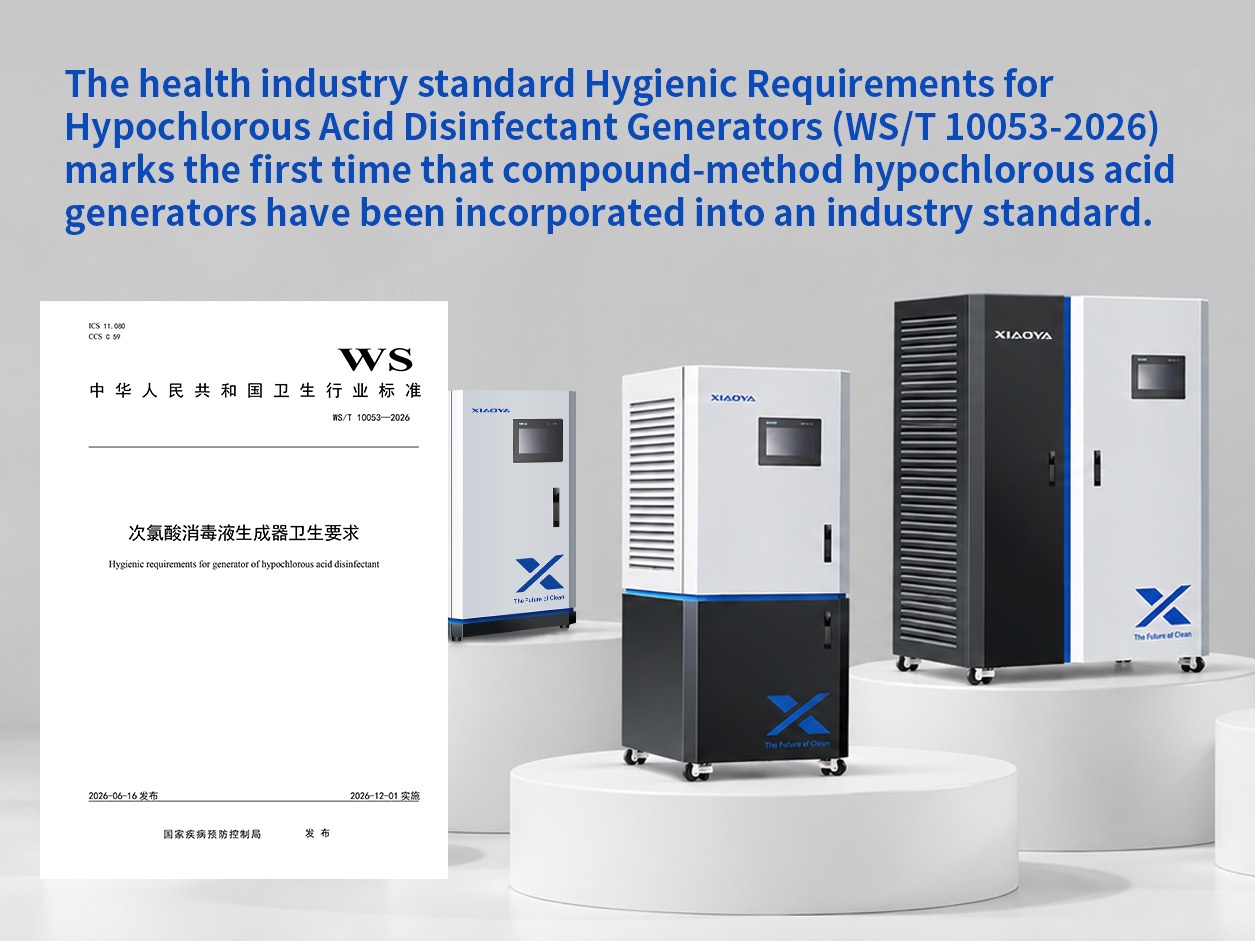
 WS/T 10053-2026 Includes the Compound Method for the First Time: Standard Signals and Market Opportunities for Mass Agricultural Production of Hypochlorous Acid Generators

Leave us a message

Xiaoya Group was founded in 1979,expert in the electrolyzed water industry.
Get in Touch
*We respect your confidentiality and all information are protected.