news
What Is a Hypochlorous Acid Generator?
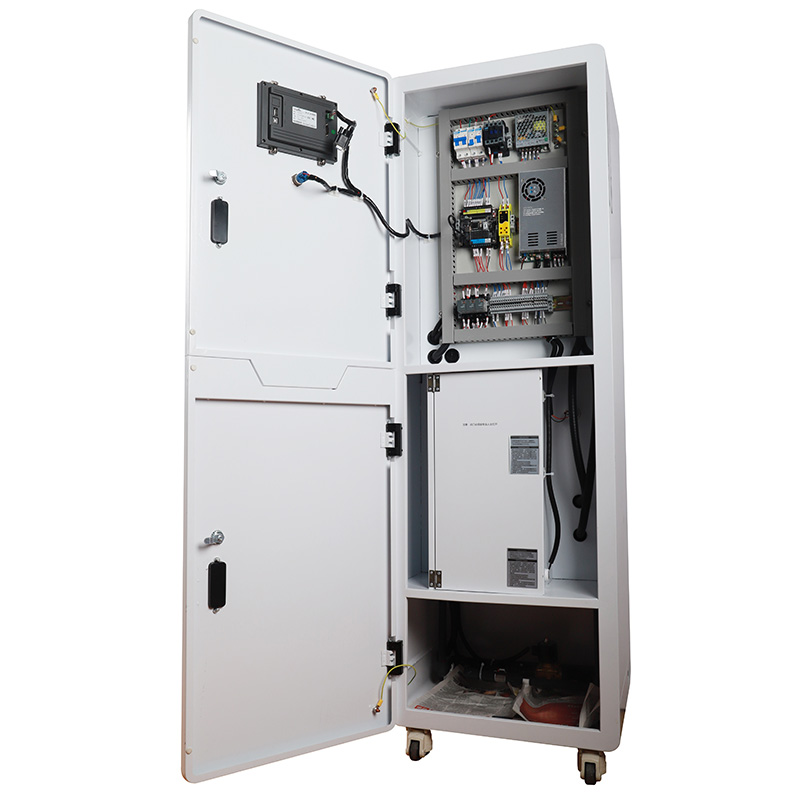
A hypochlorous acid generator is an automated device that produces hypochlorous acid (HOCl) solution on site, usually from purified water, salt, and electricity. Rather than receiving, storing, diluting, and disposing of conventional chemical disinfectants, the user generates a fresh sanitizing solution close to the point of use.
That simple description hides an important distinction: a generator is not merely a chemical mixer. It is an electrochemical system whose output depends on water quality, salt quality, membrane or cell design, operating current, flow rate, pH control, and cleaning routines. For food processors, central kitchens, healthcare-related facilities, and appliance manufacturers, those details determine whether the equipment is practical for daily use or just impressive in a specification sheet.
Hypochlorous acid is valued because it can provide antimicrobial activity at relatively low concentrations. It is often considered for surface sanitation, produce washing processes, equipment cleaning, odor control, and hygiene applications where operators want to reduce reliance on transported chemical stock. The right use concentration, contact time, material compatibility, and local compliance requirements still need to be confirmed for each application.
How the Equipment Produces HOCl
Most hypochlorous acid generators use electrolysis. Salt dissolved in water becomes an electrolyte, and an electrical current drives reactions inside the electrolytic cell. Depending on the design and operating conditions, the system may produce a solution containing hypochlorous acid, hypochlorite-related species, and other chlorine-based components. The objective is not simply to generate “available chlorine,” but to create a stable, usable proportion of HOCl for the intended sanitation task.
pH is central to that objective. At lower pH levels, hypochlorous acid generally represents a greater share of the active chlorine species. As pH rises, more of the solution shifts toward hypochlorite ion, which behaves differently. This is why buyers should not compare generators only by ppm. Two solutions with the same reported available chlorine concentration may perform differently if their pH, oxidation-reduction potential (ORP), temperature, and organic load are not comparable.
In automated equipment, a controller typically manages water intake, brine dosing, electrolysis, output flow, and, in more advanced systems, pH adjustment and self-cleaning. This automation matters in high-frequency environments. A kitchen team, for example, needs a repeatable sanitation solution without asking staff to manually measure concentrated chemicals during busy shifts. A produce-processing line needs output that can be matched to wash-water demand rather than prepared in unpredictable batches.
Why On-Site Generation Changes the Operating Model
The main attraction is operational, not theoretical. Traditional disinfectants can involve chemical procurement, storage space, manual dilution, container handling, and the risk of using an old or incorrectly mixed solution. An on-site hypochlorous acid generator replaces much of that process with water, salt, power, and programmed operation.
This does not mean every site should replace every disinfectant. Heavy soil still needs cleaning before sanitizing. Some applications require chemistry with specific detergent, degreasing, or residual-performance characteristics. Sensitive metals, seals, coatings, and electronics should be assessed for compatibility. The useful question is narrower: where does fresh, low-concentration HOCl fit into the facility’s actual hygiene workflow?
It can fit particularly well where solution is consumed frequently and close to the point of production: fruit and vegetable processing, meat and aquatic-product handling areas, bakery and snack-food operations, central kitchens, and cold-chain warehousing. In household and commercial appliance development, compact generators may also be integrated into kitchen, bathroom, healthcare, and disinfection appliances. This requires more than electrolysis know-how; it calls for coordinated work across fluid paths, controls, material selection, enclosure design, safety logic, and after-sales maintenance.
The Parameters That Actually Deserve Attention
When evaluating a hypochlorous acid generator, capacity is a sensible starting point, but it is not enough. A 100 L/H unit may be appropriate for one wash station and inadequate for a multi-point distribution system if demand peaks at the same time. Buyers should map when and where solution is used, whether it will be sprayed, circulated, dosed into wash water, or transferred into containers, and how much reserve output is needed.
Concentration range and pH control are equally important. Different processes may call for different operating windows, and a system should provide a controllable output rather than a nominal figure that cannot be maintained in real conditions. Ask how the concentration is verified, whether pH is measured or calculated, what happens when inlet-water quality changes, and how the system alerts operators to abnormal conditions.
Electrolytic-cell life, salt use, power consumption, and cleaning design affect ownership more than many first-time buyers expect. Mineral scale, deposits, and membrane or electrode deterioration can gradually alter output. Automatic water flushing, self-cleaning, and acid-cleaning functions can reduce routine intervention, but they do not eliminate the need for a maintenance plan. The supply of purified water and food-grade salt should also be treated as part of the system design, not as an afterthought.
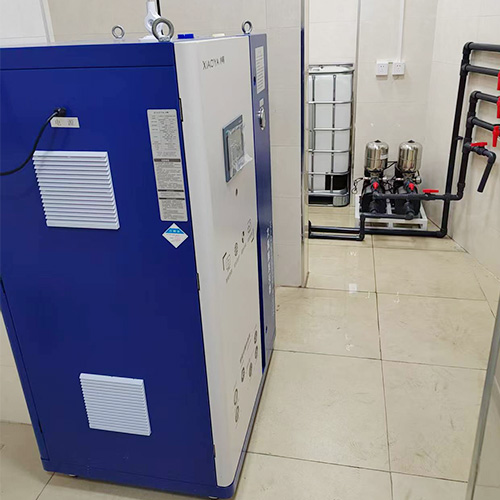
One example is the XY-SAEW-100 configuration in the Food Hypochlorous AcidGenerator / table salt (NaCl) range. Its stated output is 100 L/H, with adjustable effective chlorine concentration from 10 to 1000 ppm and adjustable pH from 2.5 to 12. The equipment uses a perfluorosulfonic acid proton exchange membrane, and its stated design includes automatic water flushing, self-cleaning, and acid cleaning. For a food-oriented project, those features are more relevant than headline capacity alone because they relate directly to output control and long-term operating discipline.
Common Misunderstandings Before Installation
A frequent mistake is treating HOCl as a universal replacement for cleaning chemicals. Sanitizers do not remove grease, protein deposits, or visible residue on their own. In food facilities especially, the sequence matters: remove soil, clean as required, rinse where appropriate, then apply the sanitation step under validated operating conditions.
Another mistake is assuming a generator’s laboratory output will remain unchanged after installation. Inlet-water hardness, conductivity, temperature, storage duration, exposure to light, and contamination from reused containers can all influence the delivered solution. If output is stored or distributed through long pipe runs, the project team should consider sampling points, tank material, circulation logic, and verification procedures.
There is also a regulatory boundary. A machine may be technically capable of producing a solution, but permitted claims and approved uses vary by market and application. Food-contact use, medical environments, worker safety, discharge requirements, and product-labeling rules should be checked against local requirements. Equipment selection should support compliance work; it cannot replace it.
Choosing a Generator for an Automation Project
The strongest projects begin with the process, not the machine. Define the use point, target output, duty cycle, required concentration range, water conditions, available power, drainage arrangement, and cleaning responsibility. Then decide whether the unit will stand alone, feed a centralized sanitation system, or become part of a finished appliance.
For appliance makers, integration capability may be decisive. A supplier working across kitchen and bathroom appliances, health care and disinfection appliances, clean-energy equipment, and small household appliances can help bridge the gap between an electrolysis module and a reliable end product. R&D, production, and operating experience should translate into practical decisions about interface design, service access, customized dimensions, control logic, and manufacturability.
A hypochlorous acid generator is therefore best understood as a controlled sanitation platform. Its value comes from producing a usable solution when needed, while reducing the handling burden associated with conventional chemical inventory. Before selecting one, confirm the sanitation objective, site conditions, maintenance approach, and applicable requirements. Those checks will reveal whether on-site HOCl generation is a sensible operational tool or an unnecessary layer of complexity.
NEWS
 Disinfection Empowers Orthodontic Safety: Hypochlorous Acid Generators Build a Sterile Defense Line for Dental Instruments
- Accumulating Strength and Reaching New Heights: A Record of the Production Breakthrough of Xiaoya Small Home Appliances' Hypochlorous Acid Generators
 Medical HOCl Generator Procurement: Service, Training, and Traceability
- Integrating a Medical HOCl Generator into Hospital Cleaning Stations
 Verifying HOCl Concentration and Contact Time for Hospital Surfaces
Leave us a message

Xiaoya Group was founded in 1979,expert in the electrolyzed water industry.
Get in Touch
*We respect your confidentiality and all information are protected.