




news
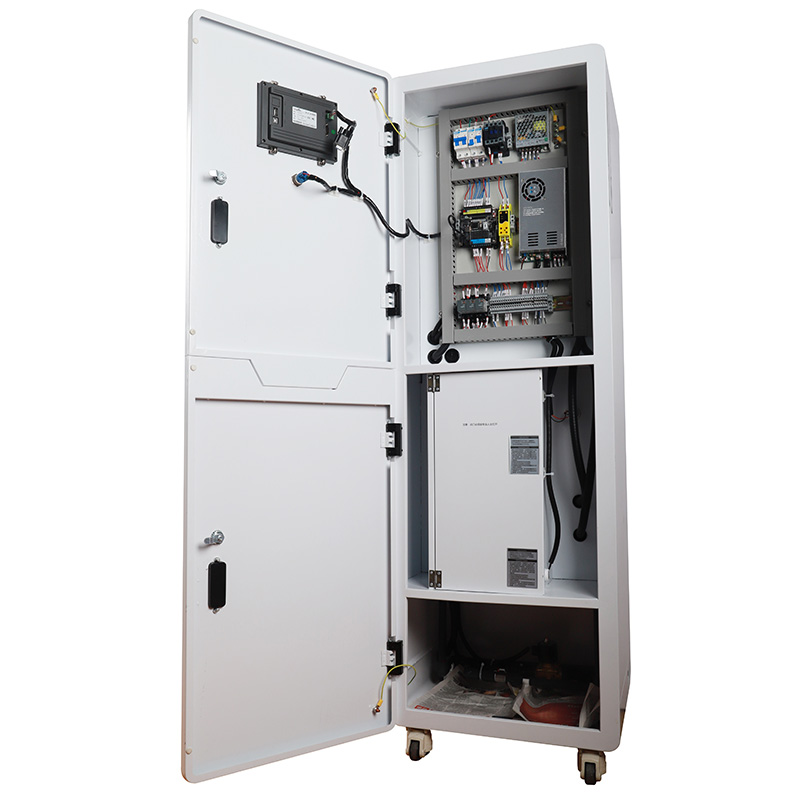
A hypochlorous acid generator is an on-site disinfection equipment system that produces hypochlorous acid (HOCl) from water, salt, and electricity through an electrochemical process. Because it can produce disinfectant on demand, these systems are increasingly used in agriculture, livestock farming, food processing, healthcare, water treatment, commercial facilities, and other applications.
Choosing the right system requires more than comparing equipment prices. Buyers need to consider the generator type, production capacity, available chlorine concentration, pH, water quality, salt consumption, control system, installation requirements, maintenance, and the supplier's technical support.
This guide explains what a hypochlorous acid generator is, how it works, the main types and specifications, capacity selection, cost factors, maintenance requirements, industrial and commercial applications, and how to choose a reliable manufacturer or supplier.
What Is a Hypochlorous Acid Generator?
A hypochlorous acid generator is a device designed to produce hypochlorous acid solution on site through an electrochemical process.
Instead of purchasing and transporting large quantities of finished disinfectant, users can produce HOCl when and where it is needed. A typical system uses water, salt, and electricity as the primary inputs, although the exact process and system configuration vary by equipment design.
The resulting solution can be used for applications such as:
Surface disinfection
Equipment and facility sanitation
Livestock and poultry farm hygiene
Agricultural sanitation
Food processing
Water treatment
Healthcare environments
Commercial facility cleaning
Odor and microbial control
For B2B buyers, the main advantages of an on-site generator are production flexibility, reduced dependence on delivered chemicals, adjustable output, and the ability to design the system around a specific application.
However, not every generator is suitable for every project. Capacity, concentration, water quality, operating conditions, and application requirements should be evaluated before purchasing.
How Does a Hypochlorous Acid Generator Work?
Most hypochlorous acid generators use an electrochemical process to convert a salt solution into an available chlorine solution containing hypochlorous acid.
A simplified production process typically includes:
Water Preparation → Salt Addition → Electrolysis → HOCl Generation → Concentration / pH Control → Storage or Direct Application
During electrolysis, chloride ions participate in electrochemical reactions that generate chlorine-containing species. Depending on the system design and operating conditions, the final solution can contain hypochlorous acid and other chlorine species.
The key operating parameters include:
Salt concentration
Water quality
Electrolysis current
Electrolysis time
pH
Available chlorine concentration
Generator output
Temperature
Advanced systems may incorporate automatic monitoring and control of parameters such as pH, ORP, conductivity, flow rate, and available chlorine.
For industrial users, automated control is particularly important because stable production parameters can help improve consistency and simplify daily operation.
Hypochlorous Acid Generator Types
Hypochlorous acid generators can be classified according to production method, output, application, system configuration, and degree of automation.
Batch Hypochlorous Acid Generators
Batch systems produce a predetermined quantity of HOCl solution during each production cycle.
They can be suitable for smaller facilities or applications where disinfectant demand varies throughout the day. Their relatively simple operating process can also make them attractive for users with moderate production requirements.
Continuous Hypochlorous Acid Generators
Continuous systems are designed to produce HOCl solution continuously or at regular intervals.
They are generally more suitable for applications with stable and relatively high disinfectant demand, such as large farms, food processing facilities, water treatment systems, and industrial operations.
Automatic Hypochlorous Acid Generators
Automatic systems integrate sensors, controllers, dosing systems, and monitoring functions to reduce manual intervention.
Depending on the configuration, an automatic system may monitor and control:
pH
ORP
Available chlorine
Water flow
Salt concentration
Production time
System alarms
Industrial Hypochlorous Acid Generators
Industrial systems are designed for large-scale production and continuous operation. They normally require higher output capacity, robust components, automated control, and customized system integration.
Commercial Hypochlorous Acid Generators
Commercial systems are generally designed for businesses, institutions, service providers, farms, restaurants, hotels, schools, healthcare facilities, and other professional users.
The appropriate type depends on the required output, concentration, operating schedule, application, and available installation space.
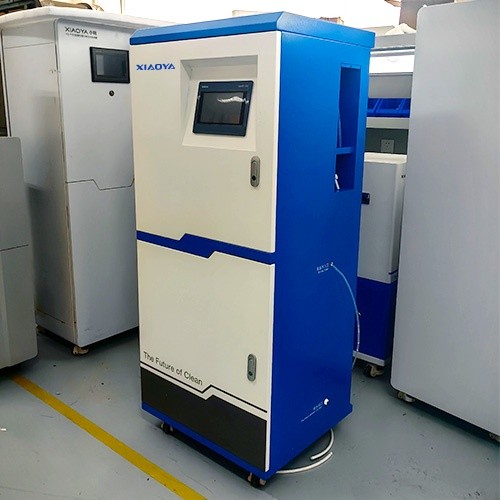
Hypochlorous Acid Generator Specifications
Specifications are one of the most important factors when comparing different generators.
A professional buyer should look beyond the equipment's physical dimensions and evaluate its actual production performance.
Important specifications may include:
Specifications should always be evaluated together.
For example, a generator with a high nominal output may not be the most economical choice if its salt or electricity consumption is significantly higher than another system.
Hypochlorous Acid Generator Capacity Guide
Generator capacity should be selected according to actual disinfectant demand rather than simply choosing the largest available model.
The first step is to estimate:
Daily HOCl Requirement = Application Demand × Operating Frequency
For example, a poultry farm may require HOCl for house spraying, equipment sanitation, drinking-water treatment, and other biosecurity procedures. A food processing facility may need a continuous supply for production-line sanitation.
Typical capacity considerations include:
Small Capacity
Suitable for:
Small farms
Offices
Retail facilities
Small restaurants
Clinics
Laboratories
Limited-area sanitation
Medium Capacity
Suitable for:
Medium-sized farms
Food processing facilities
Hotels
Schools
Commercial buildings
Agricultural operations
Large Capacity
Suitable for:
Large livestock farms
Poultry operations
Food processing plants
Municipal or industrial water treatment
Large commercial facilities
Centralized disinfection systems
When selecting capacity, buyers should also consider peak demand, future expansion, storage requirements, and whether the generator will operate continuously or intermittently.
Oversizing can increase initial investment without providing proportional benefits, while undersizing may force the system to operate continuously and fail to meet peak demand.
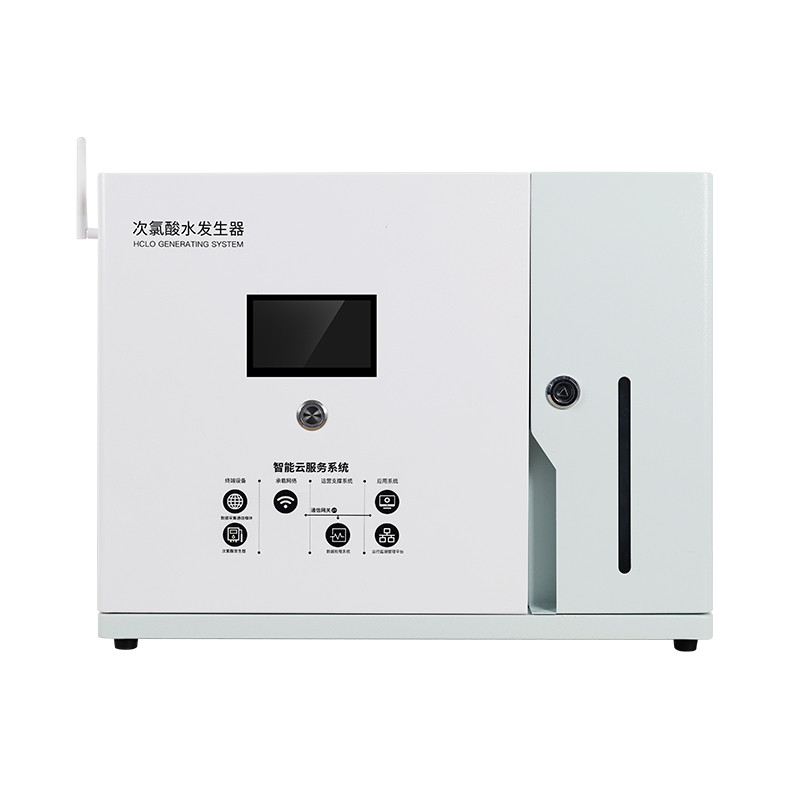
Hypochlorous Acid Generator Cost
The cost of a hypochlorous acid generator varies significantly depending on system capacity, automation, components, production technology, and customization.
The main factors affecting the total purchase cost include:
Production Capacity
Higher-capacity generators generally require larger electrolysis systems, pumps, tanks, power supplies, and control systems.
Automation
Manual systems are generally simpler, while fully automatic systems may include PLC controls, sensors, automatic dosing, alarms, and remote monitoring.
Material And Component Quality
Electrodes, pumps, valves, sensors, tanks, electrical components, and control systems can significantly affect equipment cost and service life.
Customization
A standard machine may have a lower initial price than a customized system designed for a specific production capacity, water source, concentration, installation environment, or automated dosing process.
Installation And Integration
The final project cost may also include:
Shipping
Installation
Electrical work
Water treatment
Storage tanks
Dosing systems
Piping
Commissioning
Operator training
After-sales service
Therefore, buyers should compare total cost of ownership, rather than comparing the equipment purchase price alone.
A reliable quotation should clearly identify the generator capacity, configuration, included components, production parameters, installation requirements, warranty, and after-sales support.
Hypochlorous Acid Generator Maintenance
Regular maintenance helps maintain stable production performance and extend equipment service life.
Typical maintenance tasks may include:
Daily Checks
Operators can check:
Water supply
Salt supply
Production status
Solution concentration
pH
System alarms
Leakage
Abnormal noise or vibration
Regular Cleaning
Electrolysis components and water-contact parts may require periodic cleaning to reduce scale and deposits.
The cleaning frequency depends on water quality and operating conditions.
Sensor Inspection
If the system uses pH, ORP, chlorine, conductivity, or flow sensors, these components should be inspected and calibrated according to the manufacturer's recommendations.
Electrode Maintenance
Electrodes are critical components of an electrochemical generator. Their service life depends on electrode material, water quality, operating conditions, cleaning procedures, and operating hours.
Preventive Maintenance
A preventive maintenance program should include inspection of:
Pumps
Valves
Filters
Electrodes
Sensors
Electrical components
Control cabinets
Tubing and piping
Storage tanks
For large installations, scheduled maintenance is especially important because unexpected downtime can interrupt the facility's sanitation process.
Industrial Hypochlorous Acid Generator
An industrial hypochlorous acid generator is designed for applications that require relatively high production capacity, stable operation, and integration with larger sanitation or water-treatment systems.
Industrial systems may be used in:
Large-scale agriculture
Poultry and livestock farms
Food processing plants
Water treatment
Aquaculture
Industrial sanitation
Large commercial facilities
An industrial system may include multiple electrolysis modules, automatic control, monitoring sensors, storage tanks, dosing pumps, and remote monitoring.
For industrial projects, the generator should be selected based on actual process requirements rather than equipment capacity alone.
Important factors include:
Required daily output
Peak demand
Target concentration
Water quality
Operating hours
Installation environment
Automation requirements
Expansion plans
Maintenance requirements
A manufacturer capable of engineering customized systems can be particularly valuable for large projects.
Commercial Hypochlorous Acid Generator
A commercial hypochlorous acid generator is intended for professional users who need a reliable on-site supply of HOCl without installing a large industrial production system.
Common applications include:
Hotels
Restaurants
Schools
Clinics
Gyms
Retail facilities
Cleaning companies
Farms
Food businesses
Property management companies
Commercial users generally need a system that is compact, easy to operate, reliable, and economical.
The most suitable capacity depends on daily consumption and application frequency. A system with automatic controls and clear operating indicators can also reduce training requirements for staff.
Hypochlorous Acid Generator Manufacturer
Choosing the right manufacturer is important because the generator is not simply a standard piece of equipment. Its performance depends on electrolysis technology, component quality, system design, control accuracy, and technical support.
When evaluating a hypochlorous acid generator manufacturer, buyers should consider:
Manufacturing experience
Production capability
Product range
Technical team
Quality control
Testing procedures
Customization capability
Certifications
Application experience
Installation support
Warranty
Spare parts availability
After-sales service
A qualified manufacturer should be able to provide detailed technical specifications rather than only offering a basic product brochure.
For large projects, buyers should also ask whether the manufacturer can provide complete system design, commissioning, operator training, and technical support.
Hypochlorous Acid Generator Supplier
A supplier may provide equipment from one or more manufacturers, while a manufacturer directly designs and produces the equipment.
For buyers, the distinction can be important.
A capable supplier should be able to provide:
Clear technical specifications
Capacity recommendations
Product configuration
Pricing information
Installation guidance
Spare parts
Operating instructions
Warranty terms
Technical support
Customized solutions when required
Before placing an order, buyers should provide the supplier with information such as the intended application, required output, operating hours, target concentration, water source, installation location, and expected future demand.
This allows the supplier to recommend a more appropriate system instead of simply quoting a standard model.
Hypochlorous Acid Generator vs Sodium Hypochlorite Generator
Hypochlorous acid generators and sodium hypochlorite generators are related technologies, but they are not identical systems.
The main difference is the intended product and operating configuration.
The better choice depends on the application, required chemistry, concentration, storage requirements, dosing method, regulatory environment, and project design.
Buyers should not select equipment solely based on the equipment name. The final system should be designed around the required disinfectant, production capacity, concentration, and application.
How To Choose The Right Hypochlorous Acid Generator
Before purchasing a generator, buyers should answer several key questions:
1. What Is The Application?
Determine whether the generator will be used for agriculture, livestock, poultry, food processing, healthcare, water treatment, commercial sanitation, or another application.
2. How Much HOCl Is Required?
Estimate average and peak daily demand.
3. What Concentration Is Required?
Different applications may require different available chlorine concentrations and operating conditions.
4. What Is The Water Quality?
Water hardness, conductivity, impurities, and other characteristics can influence generator performance and maintenance.
5. How Much Automation Is Needed?
Small facilities may be comfortable with manual operation, while large projects often benefit from PLC control and automatic monitoring.
6. Is Customization Required?
Large projects may require customized capacity, tanks, dosing systems, piping, control systems, or installation layouts.
7. Who Will Provide Technical Support?
Confirm whether the manufacturer or supplier provides installation guidance, commissioning, training, spare parts, troubleshooting, and after-sales service.
Hypochlorous Acid Generator Applications
Because HOCl can be generated on site, generators can be integrated into many different sanitation systems.
Common application areas include:
Agriculture
Used in agricultural sanitation, irrigation-related applications, produce handling, and farm hygiene programs.
Livestock And Poultry
Generators can support farm sanitation, equipment cleaning, drinking-water treatment, and biosecurity programs.
Food Processing
HOCl systems can be integrated into food-processing sanitation processes, equipment cleaning, and facility hygiene programs where permitted by applicable regulations.
Healthcare
Generators may be used in professional sanitation applications where the produced solution and equipment meet applicable requirements.
Water Treatment
Larger generators can be integrated into water treatment and disinfection systems.
Commercial Facilities
Hotels, restaurants, schools, cleaning companies, and other facilities can use on-site generation to support routine sanitation operations.
The exact application, concentration, dosing method, and operating procedure should always be determined according to the specific use case and applicable regulations.
Why Choose An On-Site Hypochlorous Acid Generation System?
For facilities with regular disinfectant demand, on-site generation can provide several operational advantages.
On-Demand Production
The facility can produce solution according to its actual consumption rather than depending entirely on delivered disinfectant.
Flexible Production
The equipment can be selected according to the required output and application.
Reduced Chemical Logistics
On-site production can reduce the need to transport and store large quantities of finished disinfectant, depending on the system and application.
Integrated Automation
Modern systems can integrate monitoring and control functions to simplify operation.
Customized Solutions
Industrial users can configure production capacity, storage, dosing, and control systems around their specific requirements.
Hypochlorous Acid Generator Buying Checklist
Before requesting a quotation, prepare the following information:
Application
Daily disinfectant demand
Peak demand
Required concentration
Required production capacity
Water source
Water quality
Operating hours
Installation location
Storage requirements
Automation requirements
Dosing requirements
Local electrical specifications
Required certifications
Installation requirements
After-sales service expectations
Providing this information allows a manufacturer or supplier to recommend a system based on actual operating conditions.
Frequently Asked Questions
How Long Does A Hypochlorous Acid Generator Last?
Service life depends on the electrolysis technology, electrode materials, water quality, operating hours, maintenance, and other system components. A manufacturer's recommended maintenance schedule should be followed.
Can A Hypochlorous Acid Generator Produce Different Concentrations?
Many systems can be configured or operated within a specified concentration range. The available range depends on the generator design and operating parameters.
How Much Salt Does A Hypochlorous Acid Generator Use?
Salt consumption varies according to generator design, output capacity, target concentration, water conditions, and operating efficiency. Buyers should request actual salt-consumption data from the manufacturer.
Can A Hypochlorous Acid Generator Run Continuously?
Some systems are designed for continuous operation, while others are intended for batch production. The equipment should be selected according to the required operating schedule.
Does A Hypochlorous Acid Generator Need Regular Maintenance?
Yes. Regular inspection, cleaning, sensor calibration, and component maintenance are important for maintaining stable operation.
How Do I Select Generator Capacity?
Start with the required daily and peak disinfectant demand, then consider concentration, operating hours, storage, future expansion, and the specific application.
Final Buying Advice
A hypochlorous acid generator should be selected as part of a complete production and disinfection system rather than as an isolated machine.
The most important factors are:
Application → Required Output → Concentration → Water Quality → Generator Type → Automation → Installation → Maintenance → Total Cost → Technical Support
For small commercial facilities, a compact automatic system may be sufficient. For farms, food-processing plants, water-treatment facilities, and other large operations, an industrial system with higher output, automated controls, monitoring, and customized integration may be more appropriate.
When comparing manufacturers and suppliers, do not focus only on the initial equipment price. Evaluate production capacity, actual specifications, component quality, customization capability, installation support, warranty, spare parts, and long-term technical service.
A reliable hypochlorous acid generator manufacturer should be able to help you determine the appropriate system based on your application, water source, required production capacity, concentration, and operating conditions.
For a project requiring a customized HOCl generation system, providing these technical requirements in advance will make it easier to obtain an accurate configuration and quotation
NEWS
 Disinfection Empowers Orthodontic Safety: Hypochlorous Acid Generators Build a Sterile Defense Line for Dental Instruments
- Accumulating Strength and Reaching New Heights: A Record of the Production Breakthrough of Xiaoya Small Home Appliances' Hypochlorous Acid Generators
 Medical HOCl Generator Procurement: Service, Training, and Traceability
- Integrating a Medical HOCl Generator into Hospital Cleaning Stations
 Verifying HOCl Concentration and Contact Time for Hospital Surfaces
Leave us a message

Xiaoya Group was founded in 1979,expert in the electrolyzed water industry.
Get in Touch
*We respect your confidentiality and all information are protected.